What a Three-Roll Idler Bracket Does on a Conveyor
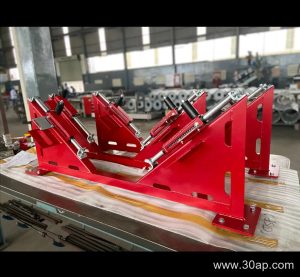
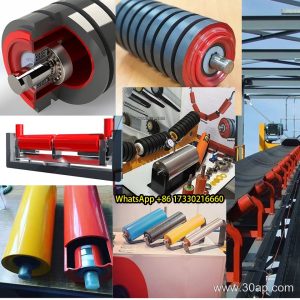
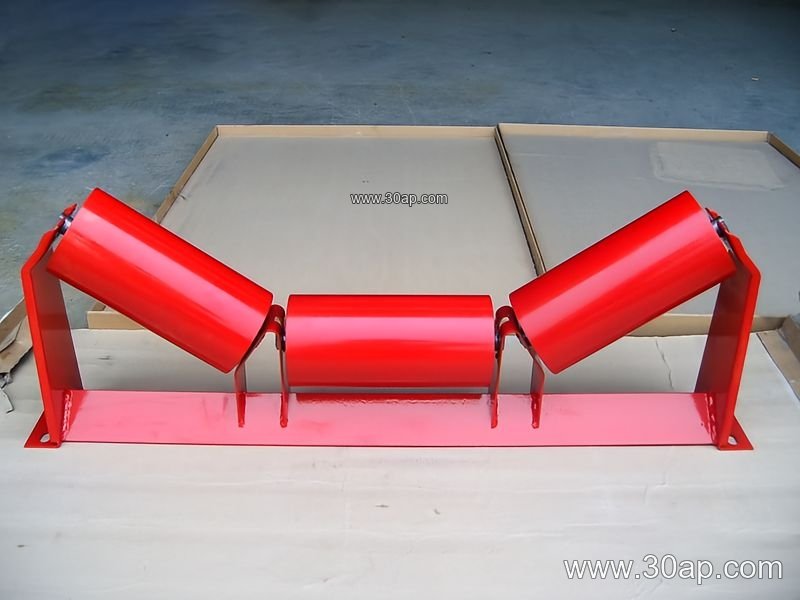
A three-roll idler bracket is the steel support that holds the three rolls of a troughing idler set in the correct position under a conveyor belt. It carries the load of the belt and material, keeps the belt in a stable trough shape, and allows the idler rollers to spin freely. In a quarry, cement plant, or coal handling system, this bracket is a small but critical part of the belt conveyor structure. It is often called a troughing idler frame or a three-roll idler stand, and it should not be confused with a drive pulley, tail pulley, or bend pulley, which serve entirely different functions.
Construction and Common Forms
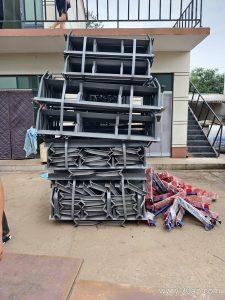
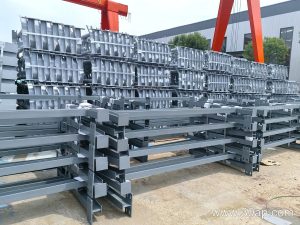
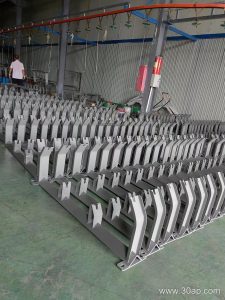
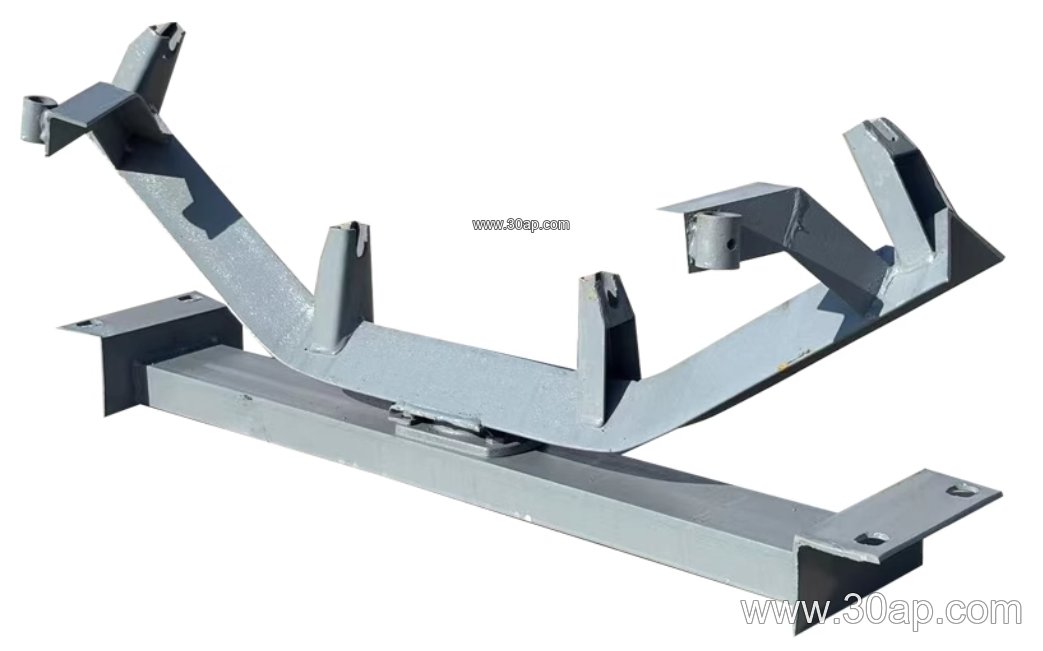
Most three-roll idler brackets are fabricated from angle steel, channel steel, or folded steel plate. The bracket has three mounting positions: one for the center roll and two for the side rolls, set at a trough angle. Common trough angles include 20, 30, 35, and 45 degrees. Adjustable brackets allow the trough angle to be changed within this range, while fixed brackets hold one angle. The side rolls may also be tilted forward by about 1.5 to 2 degrees in a forward-leaning bracket to help center the belt.
Bracket dimensions follow the belt width and the roll diameter. Typical belt widths range from B500 to B2200, and common roll diameters include Ø89, Ø108, Ø133, Ø159, and Ø194. A B800 bracket with a 35-degree trough angle and Ø108 rolls is a common combination, but it is not the only valid one. The mounting hole spacing and crossbeam length are determined by the belt width, trough angle, and idler design, so they are not fixed numbers.
Where It Fits in the Conveyor Line
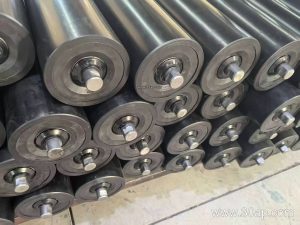
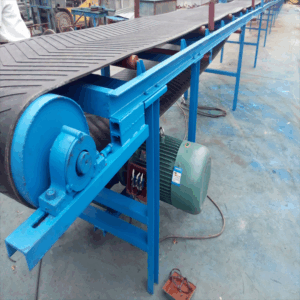
Three-roll idler brackets are used on the carrying side of a belt conveyor, typically in the middle section between the tail pulley and the head pulley. They appear in aggregate conveying at a sand and gravel line, in limestone transport at a cement plant, and in coal handling at a power plant. The bracket works together with the conveyor belt, idler roller, and conveyor pulley to keep the belt tracking and to reduce spillage. In a crushing and screening circuit, a heavy-duty three-roll bracket may be paired with impact-resistant rollers at the load point, while standard troughing brackets handle the main run.
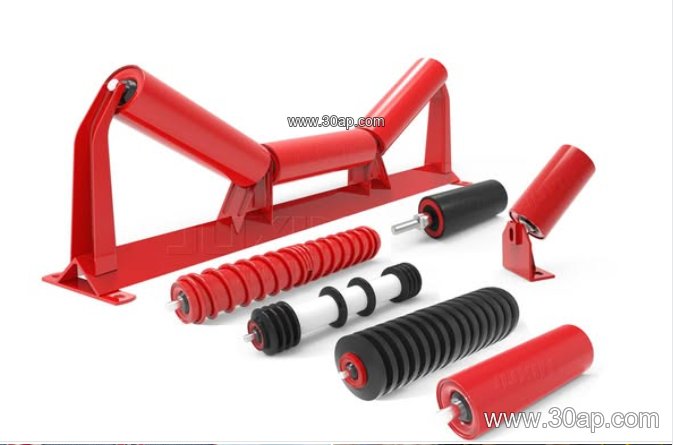
For comparison, a return bracket supports the belt on the return side and usually carries one or two rolls, while a three-roll idler bracket is specific to the carrying side and its three-roll troughing arrangement. A self-aligning bracket is another subtype used to correct belt misalignment, but it does not replace the standard three-roll support in the main carrying section.
Selection Notes for Buyers
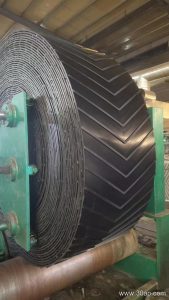
When choosing a three-roll idler bracket, match the bracket to the belt width, the idler roll diameter, and the required trough angle. Check the material and thickness of the steel, the mounting hole pattern, and whether the bracket is fixed or adjustable. For dusty or corrosive environments, consider the surface treatment of the bracket. The bracket should also be compatible with the conveyor bracket mounting points on the conveyor frame. Buyers often review the belt specification at the same time, since a heavy-duty conveyor belt or an abrasion-resistant conveyor belt may require a stronger bracket and roll set. In mining and coal applications, a flame-retardant conveyor belt is common, and the bracket must fit the same frame without interference.
Reference Dimensions and Related Parameters
The table below shows typical reference values. These are not universal specifications or a supply promise; final dimensions are confirmed by design.
| Parameter | Common Reference Values |
|---|---|
| Belt width | B500, B650, B800, B1000, B1200, B1400, B1600, B1800, B2000, B2200 |
| Trough angle | 20°, 30°, 35°, 45° (adjustable brackets can change within this range) |
| Roll diameter | Ø89, Ø108, Ø133, Ø159, Ø194 |
| Forward lean | About 1.5° to 2° for forward-leaning brackets |
| Material | Angle steel, channel steel, folded steel plate |
| Bracket type | Troughing, transition, return, V-return, impact, self-aligning, adjustable |
For example, a B1200 conveyor with a 45-degree trough angle and Ø133 rolls may use a three-roll idler bracket with a matching crossbeam. A B650 line with a 30-degree angle and Ø89 rolls uses a smaller bracket. These combinations are examples, not fixed rules.
Maintenance and Practical Tips
Inspect the bracket for loose bolts, bent steel, and worn mounting holes during routine maintenance. A misaligned or damaged bracket can cause the belt to train poorly and may accelerate wear on the idler roller and conveyor belt. Keep the bracket clean and ensure that the rolls turn freely. When replacing a bracket, confirm the belt width, trough angle, and roll diameter before installation. For sites handling abrasive materials, such as an iron ore or copper ore operation, a robust bracket and abrasion-resistant conveyor belt work together to extend service life.
Whether the conveyor is a short aggregate line or a long overland system, the three-roll idler bracket remains a straightforward but important component. Selecting the right bracket for the belt width and trough angle helps maintain belt stability and reduces downtime.