What an EP Conveyor Belt Is
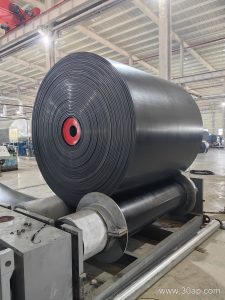
An EP conveyor belt is a fabric-reinforced rubber belt whose carcass is built from polyester warp yarns and polyamide weft yarns. The name comes from the two fiber types, and in catalogues the same product often appears as a polyester-polyamide conveyor belt or simply as an EP belt. It is one of the most widely used heavy-duty belt constructions in bulk handling, sitting between all-nylon belting and steel cord belting in terms of strength and elongation behavior.
The polyester warp gives the belt low stretch under tension, while the polyamide weft provides flexibility and resistance to impact and tearing. That combination is why EP belting is common on medium and long conveyors in mines, coal preparation plants, cement works, power stations and sand and gravel yards.
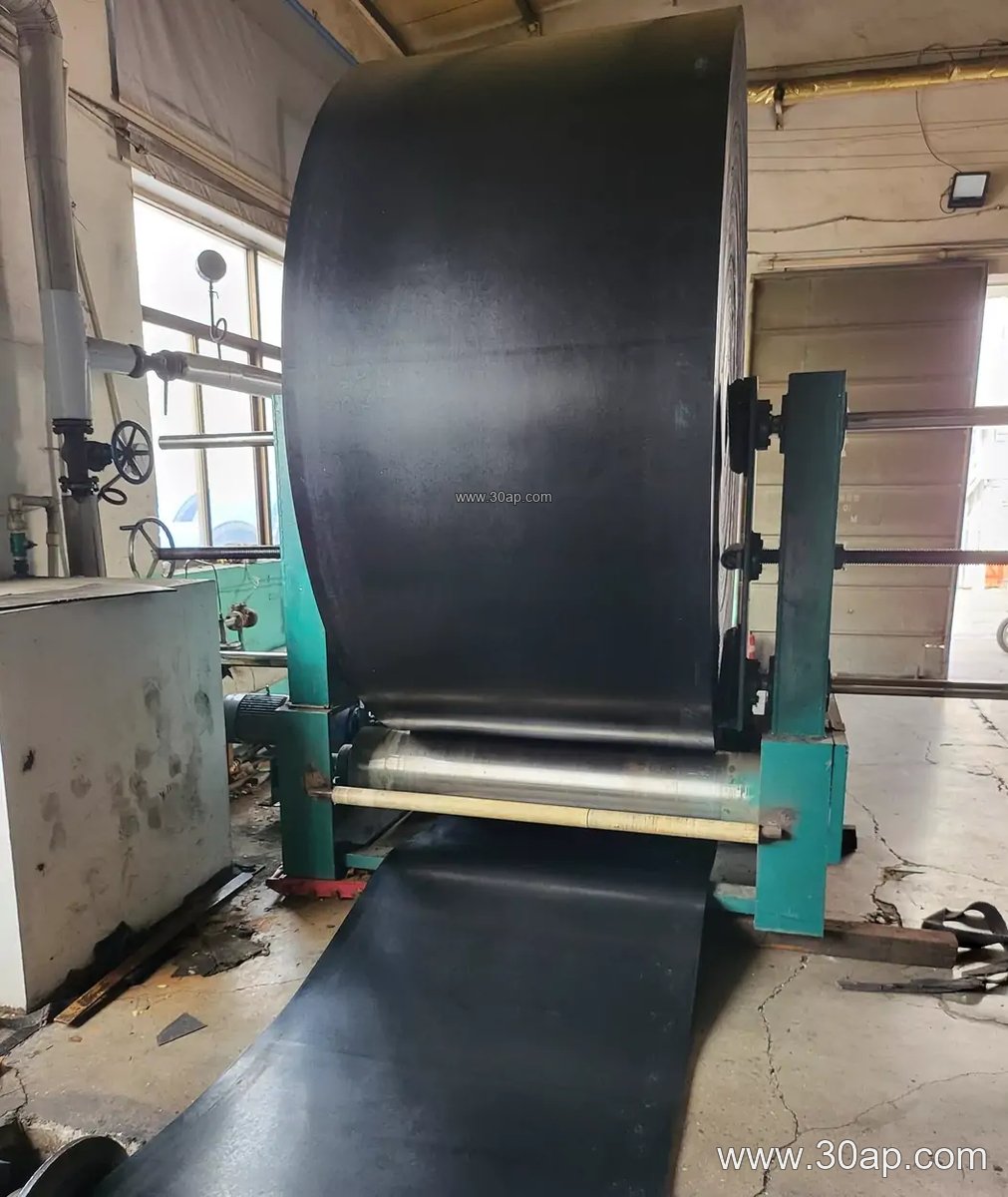
How the Belt Is Built
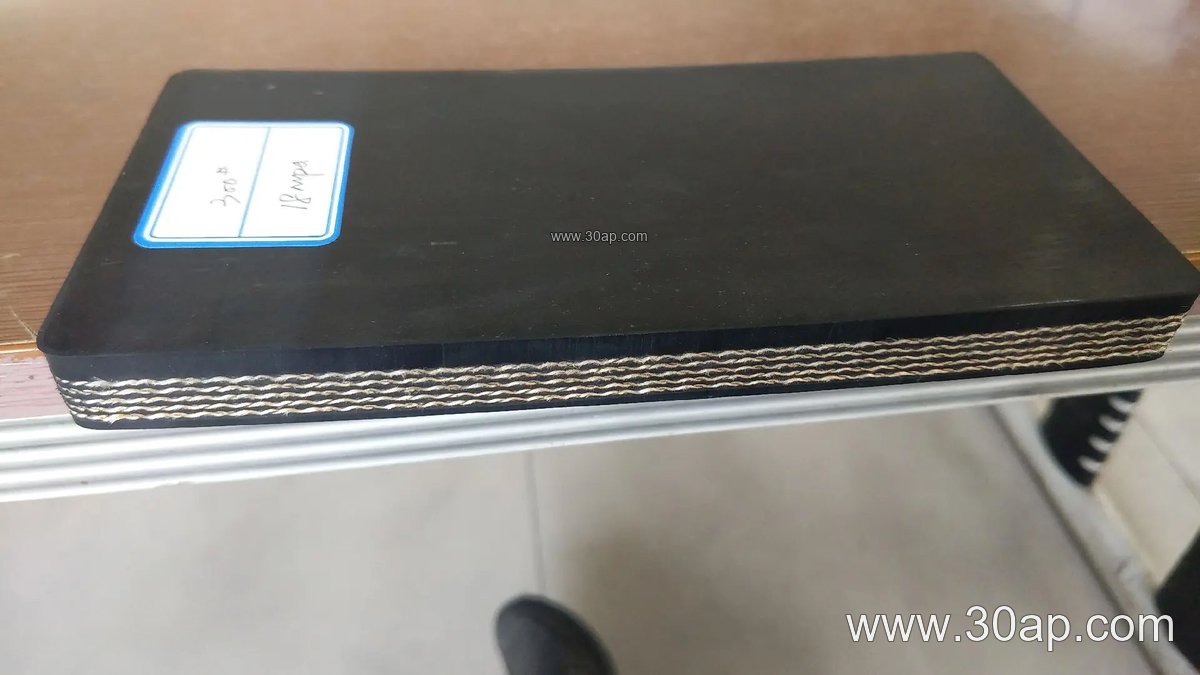
The carcass consists of two to six fabric plies, usually bonded with skim rubber and protected on both faces by cover rubber. A typical construction includes:
- Top cover rubber, selected for abrasion, heat, oil, flame resistance or antistatic behavior
- EP fabric plies, commonly 2 to 6 layers depending on duty
- Bottom cover rubber, often thinner than the top cover
- Edges cut or molded to suit the conveyor and pulley arrangement
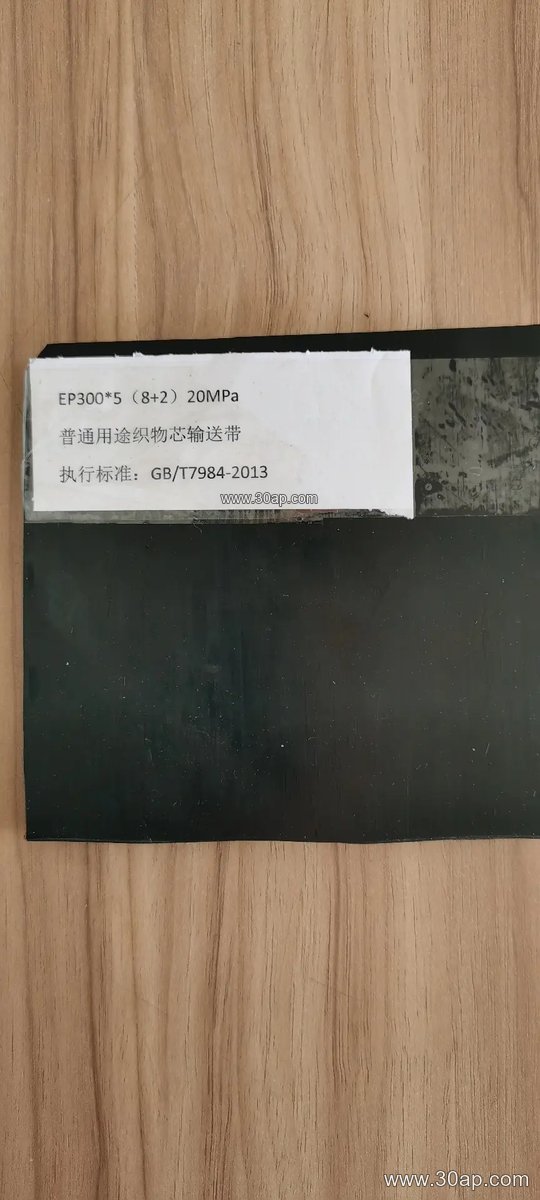
Cover thickness is usually written as a pair, for example 4+2 mm, 5+2 mm, 6+2 mm or 8+3 mm, where the first figure is the top cover and the second the bottom cover. These are common reference values; actual cover thickness should follow the conveyor design and the material being carried.
Strength Grades and Belt Widths
EP belts are graded by nominal tensile strength per unit width, expressed in N/mm. Familiar grades include EP200, EP315, EP400, EP500, EP630, EP800, EP1000, EP1250, EP1600 and EP2000. Higher grades are used where the conveyor is long, the lift is high or the belt carries heavy lump material.
| Parameter | Common reference values |
|---|---|
| Strength grade | EP200 to EP2000 |
| Belt width | B500, B650, B800, B1000, B1200, B1400, B1600, B1800, B2000 |
| Number of plies | 2 to 6 |
| Cover thickness | 3+1.5, 4+2, 5+2, 6+2, 8+3 mm |
Belt width and strength grade are chosen together with the conveyor layout. A wider belt does not automatically mean a stronger one, and belt width should not be tied to a single pulley diameter. Drive pulleys, tail pulleys and bend pulleys each have their own diameter requirements, and those are set by belt tension, ply count and the belt manufacturer’s recommendations.
Where EP Belting Fits
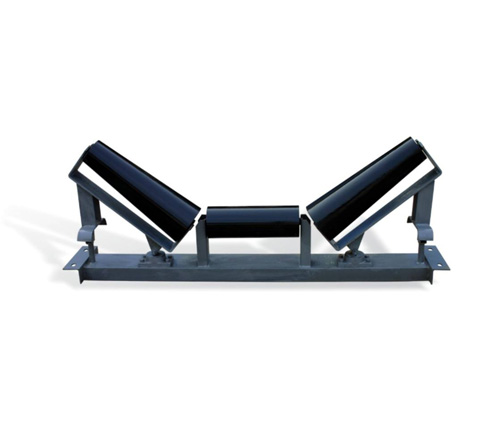
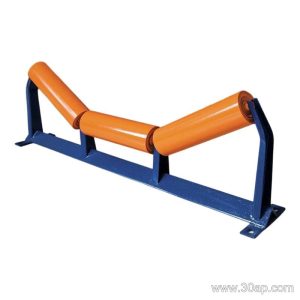
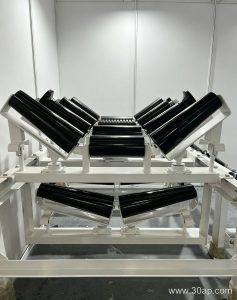
In mining and coal handling, EP belts run on troughing idler rollers and return rollers between the head and tail stations. A drive pulley pulls the belt, a tail pulley at the loading end keeps it tracking, and bend pulleys route it through tensioning devices. Conveyor brackets and frames hold the idlers and pulleys in alignment, so belt performance depends on the whole conveyor, not the belt alone.
Cement plants use EP belts for clinker, limestone and additive transport, where abrasion resistance matters. Power plants apply them to coal and ash handling lines. Sand and gravel operations favor them for cost-effective, impact-tolerant conveying. In all these settings, the belt may be specified as wear-resistant, heat-resistant, oil-resistant, flame-retardant, antistatic, cold-resistant or acid and alkali resistant, depending on the cargo and environment.
Surface Forms and Related Types
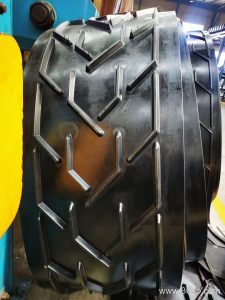
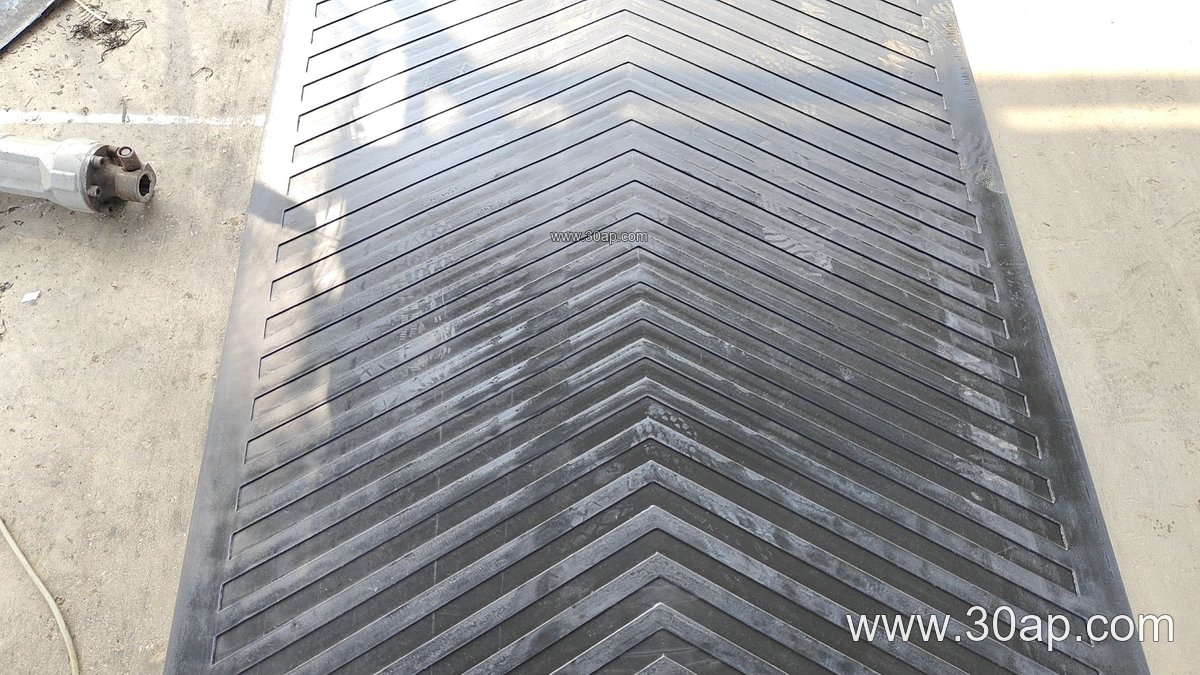
Smooth covers suit most flat and troughed conveyors. Where the belt climbs a steep incline, patterned surfaces such as chevron or herringbone profiles, or corrugated sidewall belts, may be considered. These are variants used for specific conveying angles, not substitutes for a standard EP belt on a flat run. For comparison, NN nylon conveyor belts use nylon in both warp and weft and stretch more under load, while steel cord belts carry much higher tension in very long systems.
What Buyers Should Check
- Confirm the required strength grade and ply count against the conveyor tension calculation
- Match cover thickness and rubber grade to the material, temperature and any fire or antistatic requirement
- Check belt width and edge condition against the pulley widths and idler trough angle
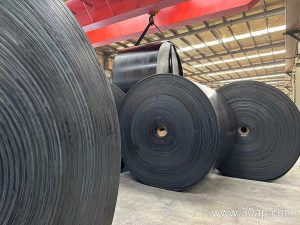
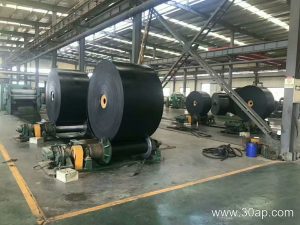
- Ask for the splice method and whether the belt is supplied in rolls or made endless
- Review storage and handling advice, since fabric belts can be damaged by sharp edges or poor support
An EP conveyor belt is a dependable general-purpose choice for bulk material handling, but the right grade, cover and width come from the conveyor design. Buyers who share the duty, material and layout with a supplier will get a more accurate recommendation than one based on belt width alone.