What a Conveyor System Pulley Does
A conveyor system pulley is the rotating drum at the heart of a belt conveyor. It carries the belt, transfers drive torque, and sets the path of the belt loop. In a quarry or a power plant coal yard, one failed drum can stop the whole line, so the pulley is never just a steel cylinder — it is a load-bearing, wear-facing component that must match the belt, the duty, and the environment.
The same product is also called a conveyor drum or belt conveyor pulley. These are equivalent names for the same item. Drive pulleys, tail pulleys, and bend pulleys are different positions with different jobs, and they are not interchangeable.
How the Drum Is Built
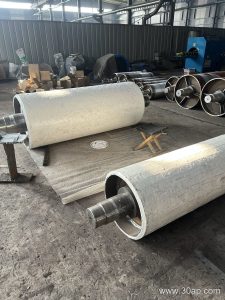
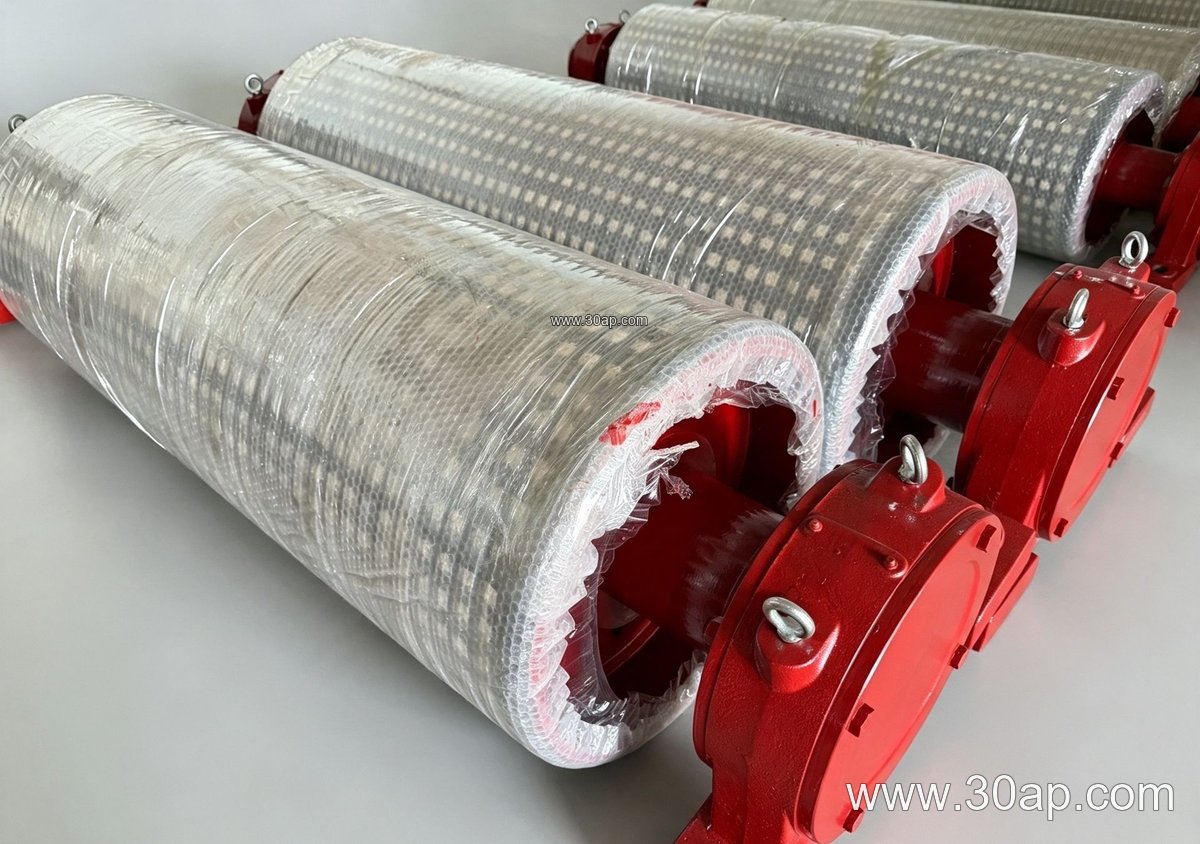
A typical unit combines a cylindrical shell, end discs, a shaft, bearing housings, and a locking assembly. The shell is usually rolled steel; the shaft is sized by torque and radial load rather than by belt width alone. Surface treatment is where most of the engineering choice sits.
- Plain shell — used where friction is adequate and material build-up is not a problem.
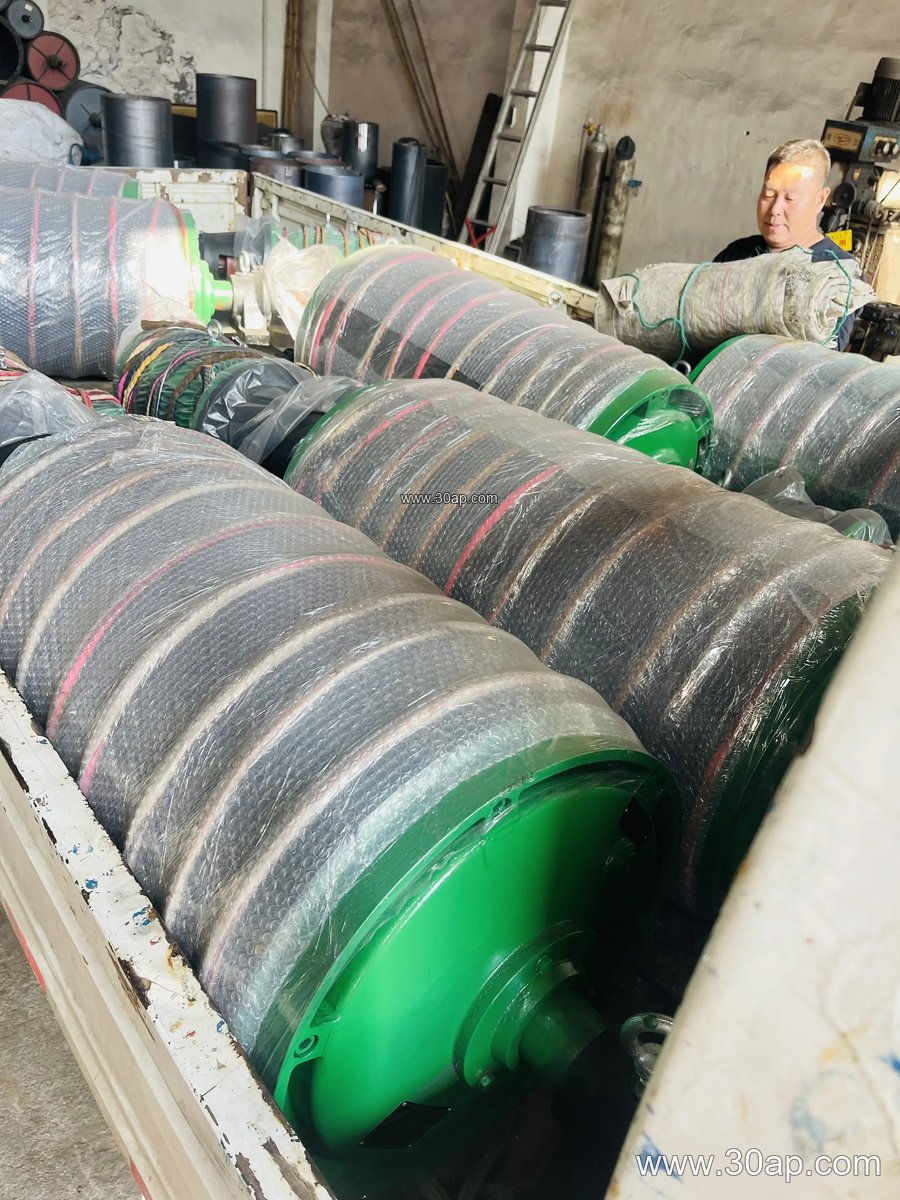
- Rubber lagging — cast rubber, cold-bonded rubber, or hot-vulcanized rubber to raise friction and protect the shell.
- Grooved lagging — diamond or herringbone patterns that shed water and fines.
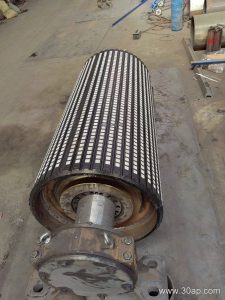
- Ceramic lagging — for high-torque drives in wet or oily conditions.
Lagging thickness commonly ranges from 8 mm to 20 mm. The right choice depends on the drive duty, not on a catalogue default.
Matching Pulley to Belt Width and Diameter
Face width normally exceeds belt width so the belt is fully supported. Common reference values look like this:
| Belt width | Typical face width |
|---|---|
| B400 | about 500 mm |
| B650 | about 750 mm |
| B800 | about 950 mm |
| B1000 | about 1150 mm |
| B1200 | about 1400 mm |
| B1400 | about 1600 mm |
| B1600 | about 1800 mm |
Diameter is a separate decision. Common drum diameters include Ø250, Ø315, Ø400, Ø500, Ø630, Ø800, Ø1000, Ø1250, and Ø1400. A B800 belt may run on Ø500 in one conveyor and Ø630 in another, depending on belt tension, wrap angle, and space. Combinations such as B800 × Ø500 or B1200 × Ø1000 are normal references, but no single width locks you into one diameter.
Shaft diameter is also independent. Common shaft sizes run from Ø50 up to Ø200, and the final value follows torque and bearing load calculations. Never pick a shaft size from belt width alone.
Where It Fits in the Line
In a limestone quarry, the head pulley discharges onto the next belt while the tail pulley keeps the return strand aligned. In a coal-fired power plant, bend pulleys route the belt around the tension take-up, and a snub pulley increases wrap angle on the drive. Aggregate lines, cement plants, and iron ore terminals all rely on the same family of drums, but the lagging and bearings change with dust, moisture, and temperature.
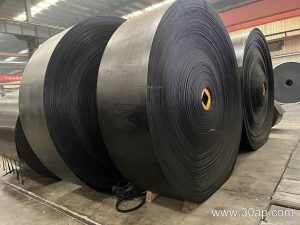
The drum also works with the rest of the conveyor: the conveyor belt, idler roller sets, and conveyor bracket assemblies all affect tracking and wear. A poorly aligned pulley will wear belt edges even if the belt itself is a quality abrasion resistant conveyor belt.
Buyer Checklist
Before ordering, confirm the belt width, the required diameter, the shaft size from the drive calculation, the lagging type and thickness, and the bearing arrangement. Ask how the pulley will be balanced and how the lagging is bonded. For hot clinker or sinter service, specify a heat resistant conveyor belt and a drum surface that tolerates temperature. For underground coal mining, flame retardant conveyor belt and anti-static conveyor belt grades are usually required, and the pulley should be specified to match.
Finally, keep spare drums for critical drives. A tail pulley and a bend pulley are cheap insurance compared with a stopped rail unloader or a halted crushing circuit.