What a Custom Conveyor Bracket Is
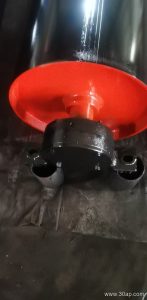
A custom conveyor bracket is the fabricated support that positions an idler roller or a conveyor pulley under a belt line when stock frames cannot fit the site, the belt width, or the trough angle. In practice it is often a single bracket rather than a complete support station, made so that the mounting holes, beam length, and tilt angle line up with the surrounding structure. Buyers in a quarry, a coal preparation plant, or a cement kiln line usually order these parts because the conveyor was modified, the steelwork was rebuilt, or a transfer point needed a different trough profile than the original drawing allowed.
The bracket is a structural part, not a wear part. Its job is to hold the roller or pulley in position, spread the load into the conveyor frame, and keep the belt line stable enough that a fabric core conveyor belt or a heavy steel cord belt can track without wandering.
Construction and Common Forms
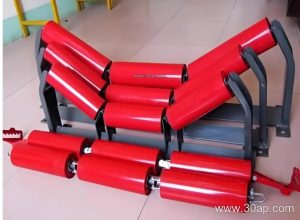
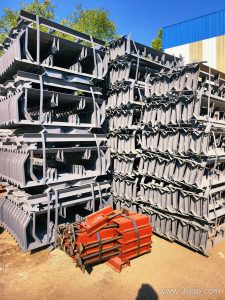
Most brackets are built from angle steel, channel steel, or folded plate, then drilled or punched to match the roller shaft. Welded brackets are common for fixed positions, while bolted brackets simplify replacement and alignment on site. The form follows the job it does:
- Troughing brackets for carrying-side idlers, usually set at 20, 30, 35, or 45 degrees
- Transition brackets near pulleys, where the belt changes from flat to troughed
- Return brackets and V-return brackets for the lower run
- Impact brackets at loading points, paired with cushion rollers
- Self-aligning and forward-tilted brackets for belt tracking
- Hanging and adjustable brackets for lines that need re-setting
The adjustable version is worth a note. A bracket that can move between trough angles lets maintenance staff correct belt contact after a roller change, instead of cutting and re-welding the frame. A forward tilt of roughly 1.5 to 2 degrees is also used on some carrying positions to help tracking.
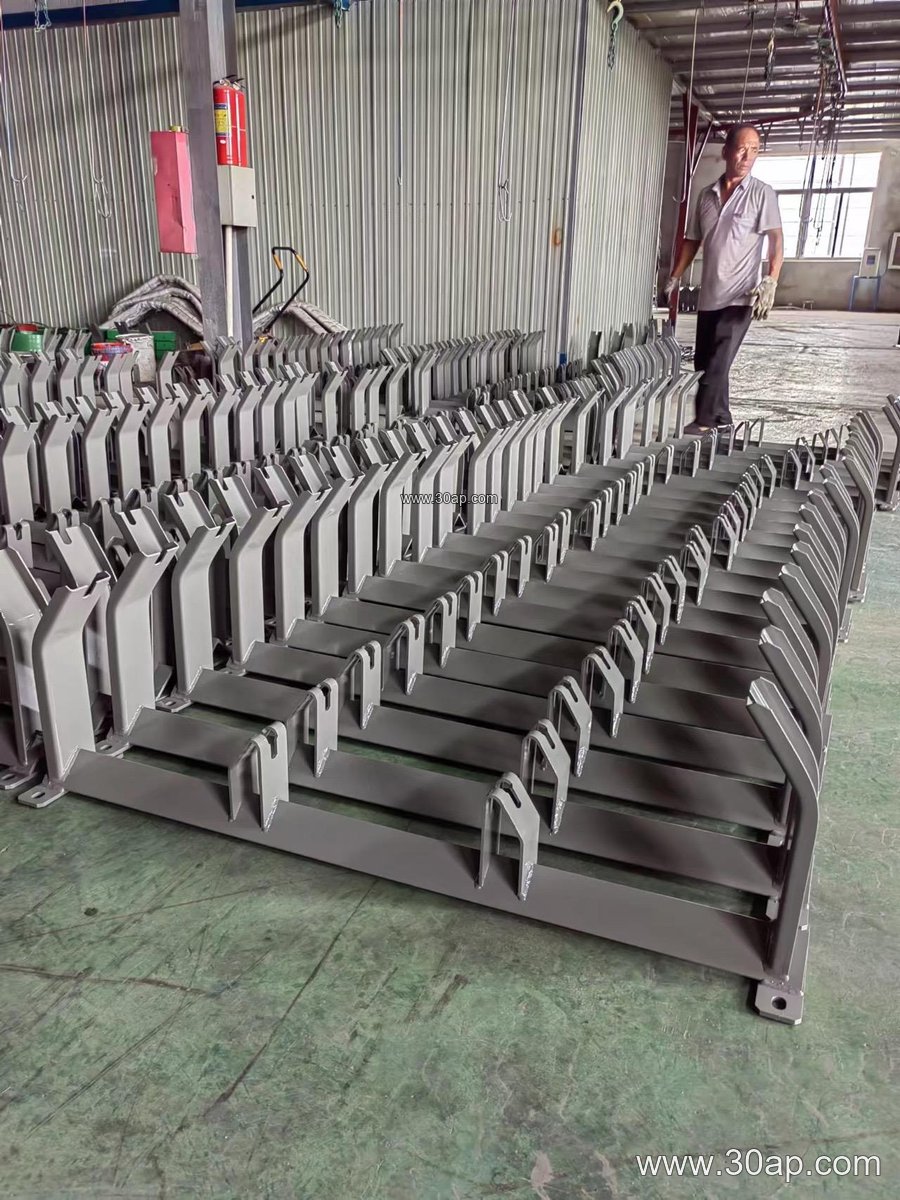
Matching Brackets to Belt Width and Roller Diameter
Bracket dimensions follow the belt width, the chosen trough angle, and the roller diameter. Hole spacing and beam length change with those values, so they are determined by design rather than picked from a single fixed number. Common belt widths run from B500 and B650 up through B800, B1000, B1200, B1400, B1600, B1800, B2000, and B2200, with roller diameters such as Ø89, Ø108, Ø133, Ø159, and Ø194.
A few combinations that appear in real layouts show how the three values work together:
| Belt width | Trough angle | Roller diameter | Typical bracket role |
|---|---|---|---|
| B650 | 30 degrees | Ø89 | Light carrying frame |
| B800 | 35 degrees | Ø108 | General troughing support |
| B1000 | 35 degrees | Ø133 | Main haulage line |
| B1200 | 45 degrees | Ø133 | Deep trough for high tonnage |
| B1600 | 35 degrees | Ø159 | Heavy burden, wide belt |
| B2000 | 45 degrees | Ø194 | Large diameter return and carrying support |
These are reference combinations only. One belt width can be paired with more than one trough angle or roller diameter, and the final choice depends on the belt stiffness, load, and the space available under the frame.
Where These Brackets Are Used
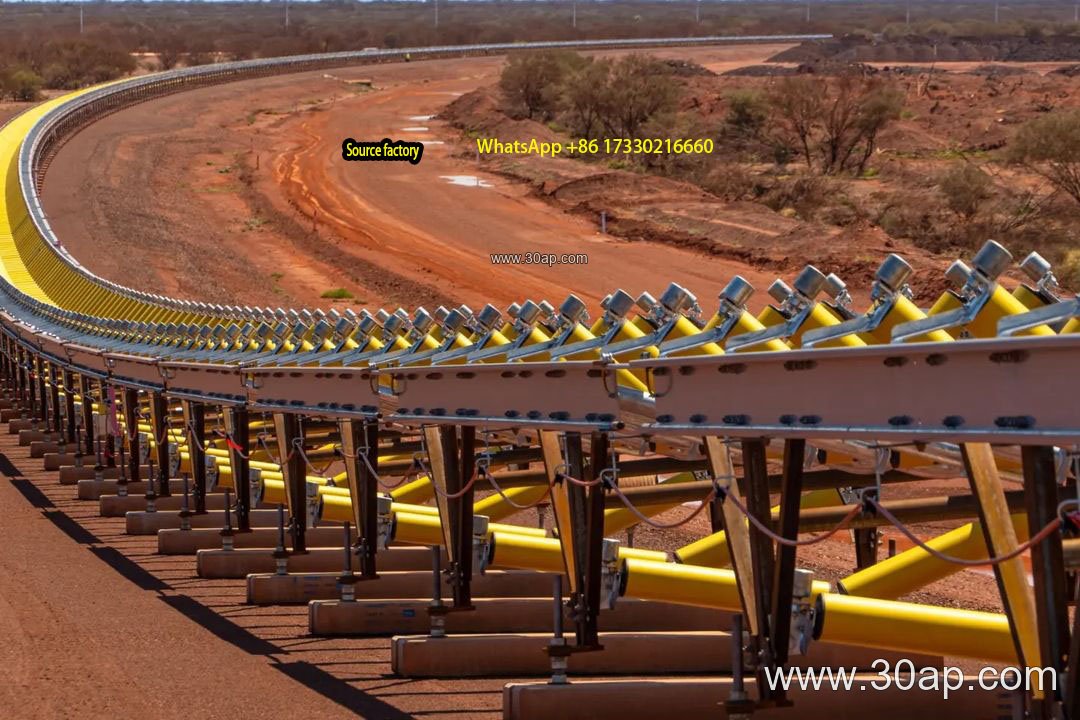
Two settings illustrate the range. In a stone crushing and screening line, custom brackets are often needed at the discharge of a crusher, where impact brackets and cushion rollers must sit close to the skirted conveyor belt and the structure is tight. In a power plant coal handling system, the same part may be required along a long transfer conveyor, where the frame was built in sections and the bracket holes no longer match a standard troughing set. Similar work appears in iron ore handling, cement plants, port ship loaders, and tunnel spoil lines.
Because the bracket carries the idler roller, it also influences how the belt wears. A poorly aligned bracket can cause edge damage on an abrasion resistant conveyor belt as quickly as a worn roller can.
What a Buyer Should Confirm Before Ordering
- Belt width, trough angle, and roller diameter, stated together
- Mounting hole spacing and beam length, measured from the existing frame
- Material and finish, especially for wet or dusty service
- Whether the position needs a fixed or adjustable bracket
- Whether the bracket sits near a pulley, where transition geometry matters
For anyone sourcing replacement parts, the useful starting point is the drawing of the existing frame and the roller it holds. A fabric core conveyor belt and a steel cord conveyor belt place different demands on the same support, so the bracket should be specified against the belt actually installed, not a catalogue default. Buyers comparing quotes can also review related components such as the conveyor pulley, idler roller, and rubber conveyor belt to keep the whole line consistent.