What a Heavy-Duty Welded Pulley Is
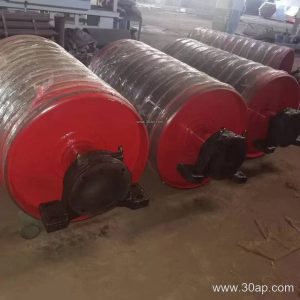
A heavy-duty welded pulley is a conveyor pulley whose shell, end discs, and hub assembly are joined by structural welding rather than by a purely cast or bolted construction. In bulk handling plants it is often called a welded conveyor pulley or a fabricated drum pulley, and it serves as the rotating body that carries and guides the conveyor belt at the head, tail, or bend points of a conveyor. The welded design allows fabricators to match shell length, diameter, shaft size, and lagging to a specific conveyor layout, which is why it appears in quarry lines, iron ore plants, coal handling systems, cement works, and power station coal yards.
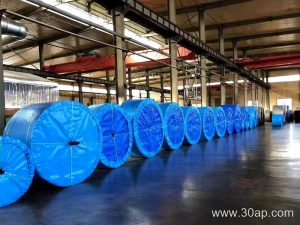
Because it is built for continuous duty, this pulley class is usually specified alongside robust belting such as abrasion resistant conveyor belt, EP conveyor belt, or steel cord conveyor belt. The pulley and the belt are a matched pair: a poorly built drum damages the belt, and an overloaded belt shortens drum life.
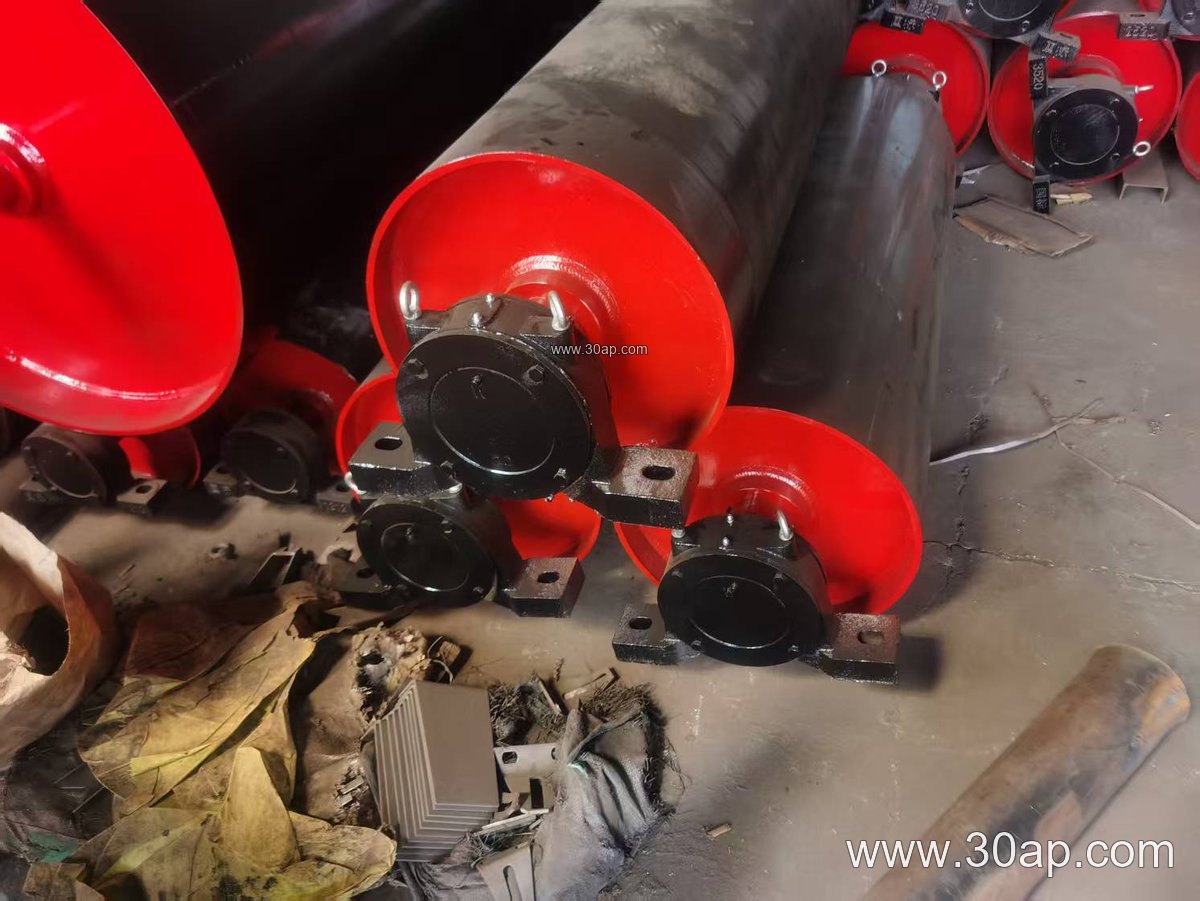
How the Welded Construction Is Put Together
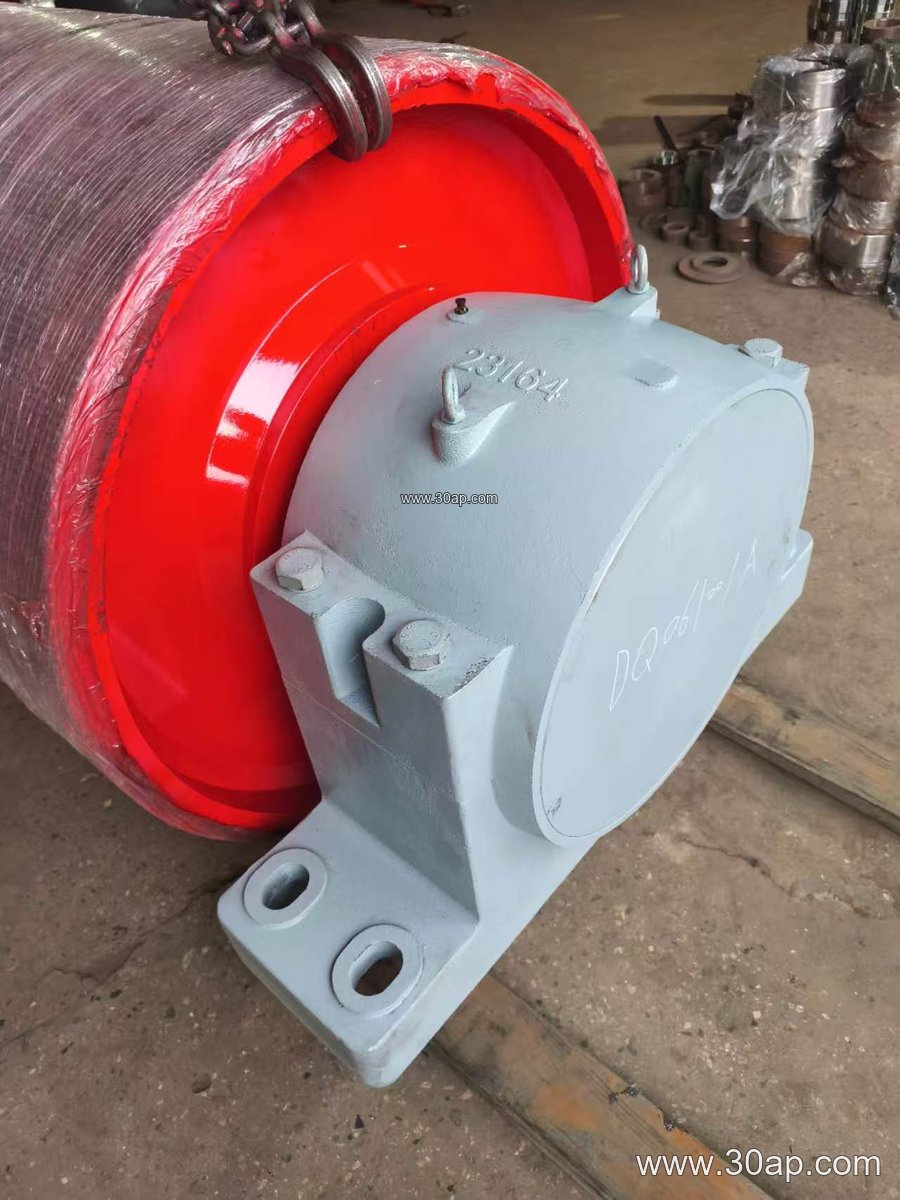
The core of the product is the shell, normally a rolled steel cylinder. End discs are welded to both ends, and the shaft is connected through hubs, with keyways or shrink-fit arrangements chosen by the designer. Reinforcement rings or internal stiffeners may be added on wider drums to limit deflection under belt tension. After welding, the shell is machined and balanced so that the belt runs without tracking drift or vibration.
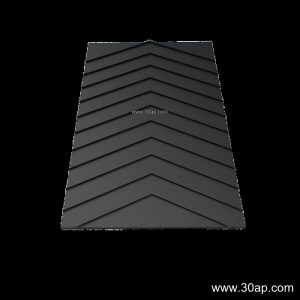
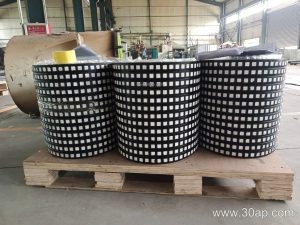
Surface treatment depends on the duty. Plain finish is used where grip is not critical, while lagging in rubber or ceramic improves friction at the drive position. Common lagging thicknesses are 8, 10, 12, 15, and 20 mm, and patterns include diamond and herringbone grooves for water shedding. The shaft is sized by torque and radial load, with common diameters ranging from Ø50 to Ø200 mm; shaft size is never fixed by belt width alone.
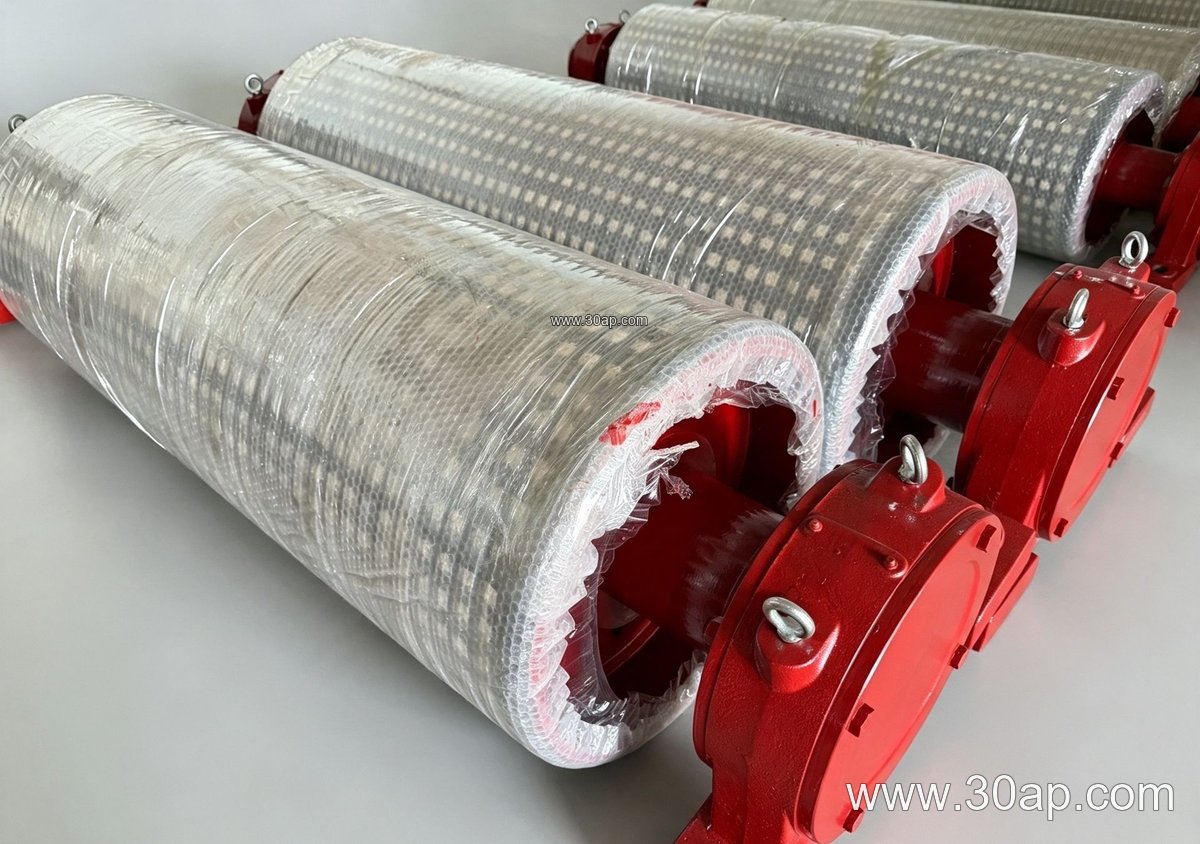
Where It Fits on the Conveyor
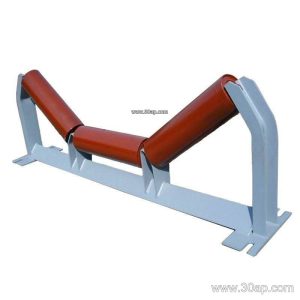
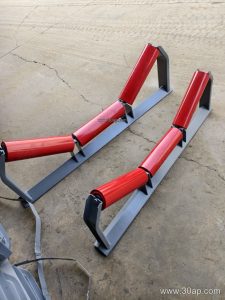
Position matters more than many buyers expect. A drive pulley transmits power and needs strong lagging and a robust shaft. A tail pulley at the loading end turns the returning belt and often works with a conveyor bracket and impact idler roller set that absorb material drop. A bend pulley changes belt direction and carries lower torque but still needs true running. These roles are not interchangeable, and a drum specified for one position should not simply be moved to another.
Typical duty sites include:
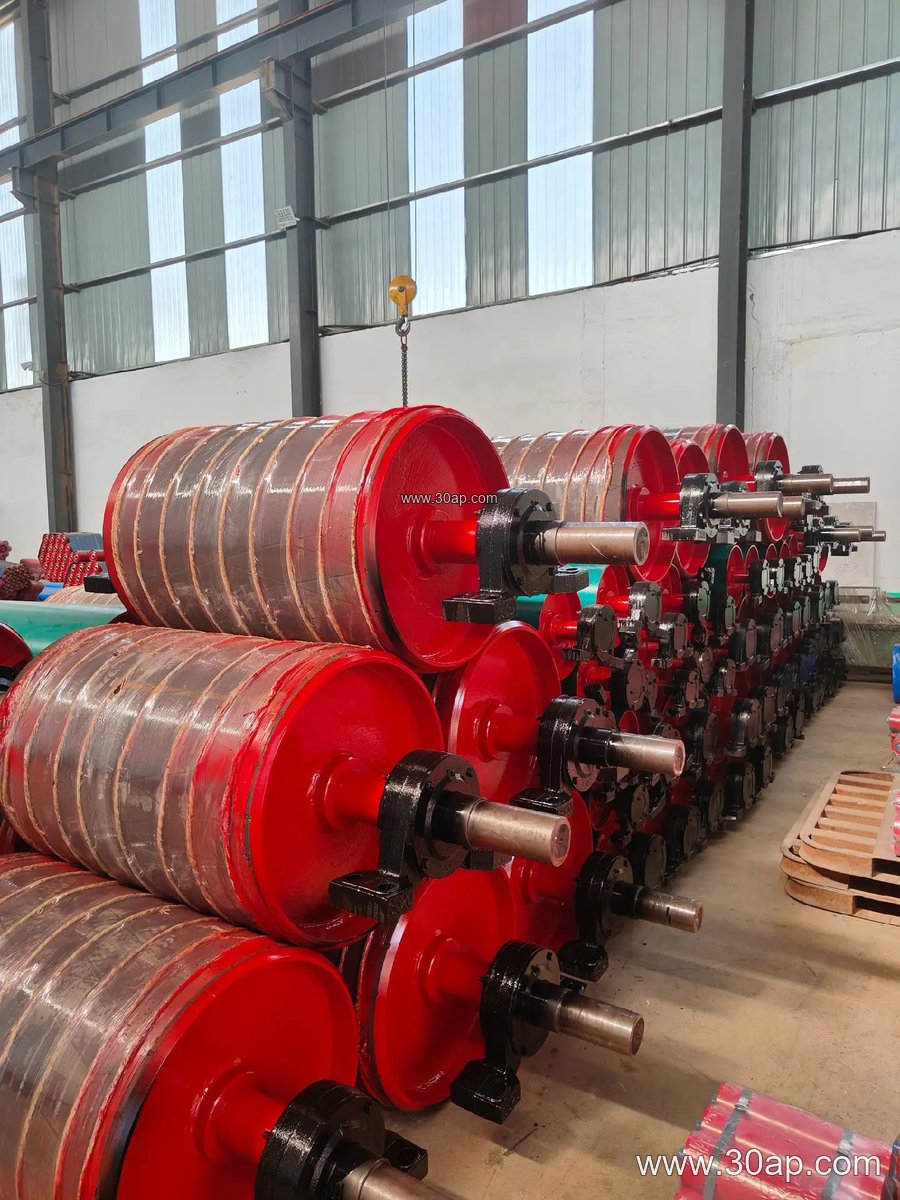
- Crushing and screening plants handling aggregate conveyor belt loads
- Iron ore and copper ore transfer stations with high abrasion
- Coal preparation plants using flame retardant conveyor belt
- Cement clinker lines and power plant coal conveying
- Port bulk terminals with wide, high-tension belts
Common Size Combinations and Reference Data
The table below shows indicative combinations used in specification discussions. Treat these as reference examples, not as fixed rules or supply promises.
| Belt width | Approx. face width | Example diameter | Typical position |
|---|---|---|---|
| B500 | 600 mm | Ø320 | Tail or bend |
| B650 | 750 mm | Ø400 | Tail |
| B800 | 950 mm | Ø500 | Drive or tail |
| B1000 | 1150 mm | Ø630 | Drive |
| B1200 | 1400 mm | Ø800 to Ø1000 | Head drive |
| B1400 | 1600 mm | Ø800 to Ø1000 | Main drive |
| B1600 | 1800 mm | Ø1000 to Ø1250 | High-tension drive |
| B1800 | 2000 mm | Ø1250 to Ø1400 | Heavy main drive |
Face width is normally slightly greater than belt width so the belt is fully supported. Diameter selection follows belt tension, wrap angle, and allowable belt bend radius, not a single formula tied to width.
Buyer Checklist Before Ordering
Start with the conveyor duty: throughput, material lump size, and whether the belt is a multi-ply fabric core conveyor belt or a high strength steel cord type. Confirm the pulley position, required wrap angle, and available space for diameter. Ask for the calculated shaft load and the resulting shaft diameter, since a Ø120 shaft and a Ø160 shaft can both appear on B1200 conveyors depending on tension.
Specify lagging type and thickness, balancing grade, bearing arrangement, and the interface with the conveyor bracket and take-up system. For dusty or wet sites, discuss sealing and surface pattern. For hot material, confirm that the drum and lagging suit the temperature of the heat resistant conveyor belt in use.
Finally, request dimensional drawings and material records for the shell and shaft. A welded pulley is only as good as its weld quality, machining tolerance, and dynamic balance, so these details deserve a place in the purchase specification. Related conveyor components such as the idler roller and belt should be reviewed together to avoid mismatched wear.