What a Bend Pulley Does on a Conveyor
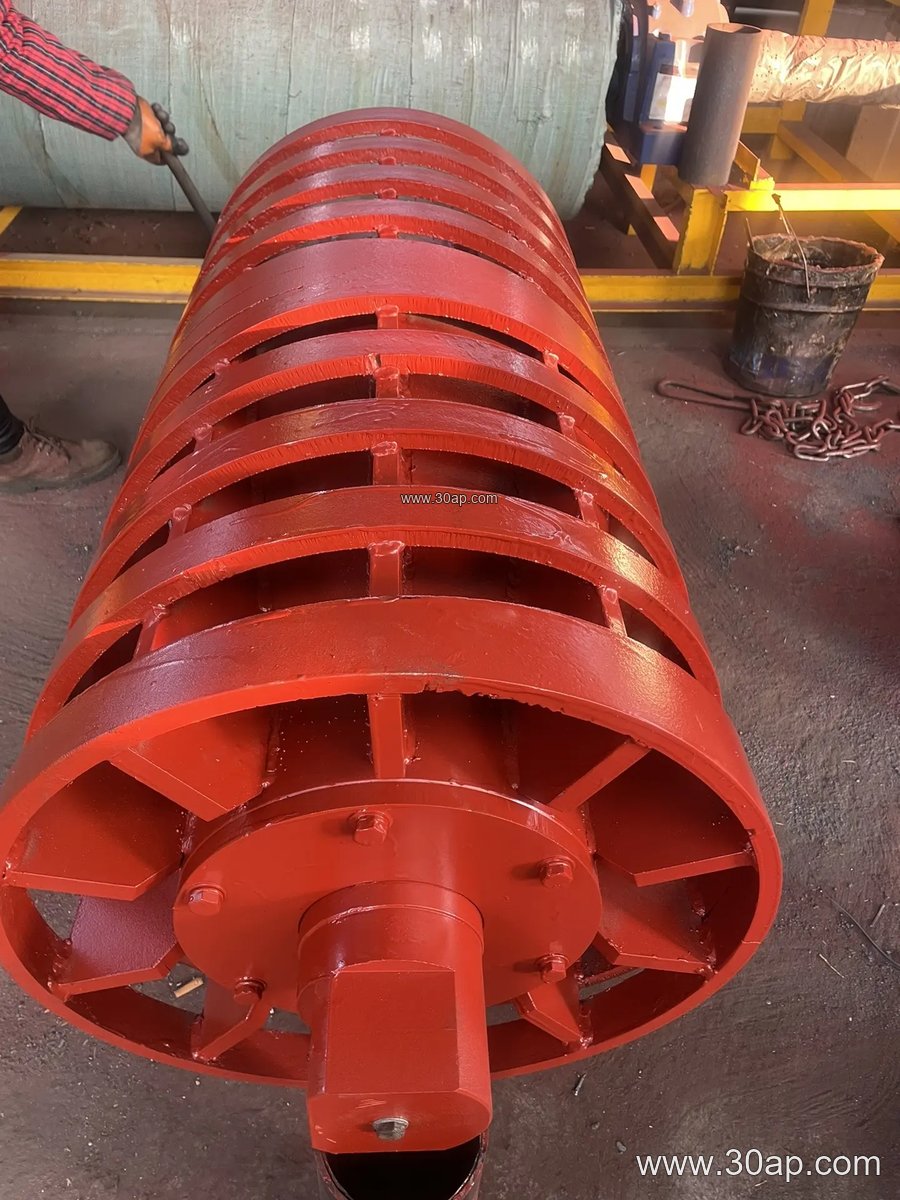
A bend pulley is the drum that redirects a conveyor belt without driving it. It sits where the belt path has to turn, usually to gain wrap on a drive pulley, to route the return strand around structure, or to feed a take-up. Because it does no power transmission, its job is to guide the belt with low resistance and keep tension even across the full belt width. On a long overland line, a correctly placed bend pulley can free up space where a larger head or tail arrangement will not fit. In a quarry or a cement plant, it often lets the return belt pass under a transfer chute instead of through it.
It is a passive drum, and this is the key difference from other conveyor pulleys. A drive pulley transmits torque through lagging and belt wrap. A tail pulley at the loading end supports the belt at the feed point. Neither is a substitute for a bend pulley, and a bend pulley should not be ordered as a replacement for either one.
Construction and Surface Options
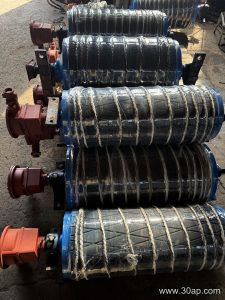
The drum is normally a welded steel shell with end discs and a through shaft, machined so the shell runs true. Larger sizes may use a rolled shell with stiffening rings. Bearings are mounted in pillow blocks on the conveyor bracket, and the shaft is sized by torque and radial load rather than by belt width alone.
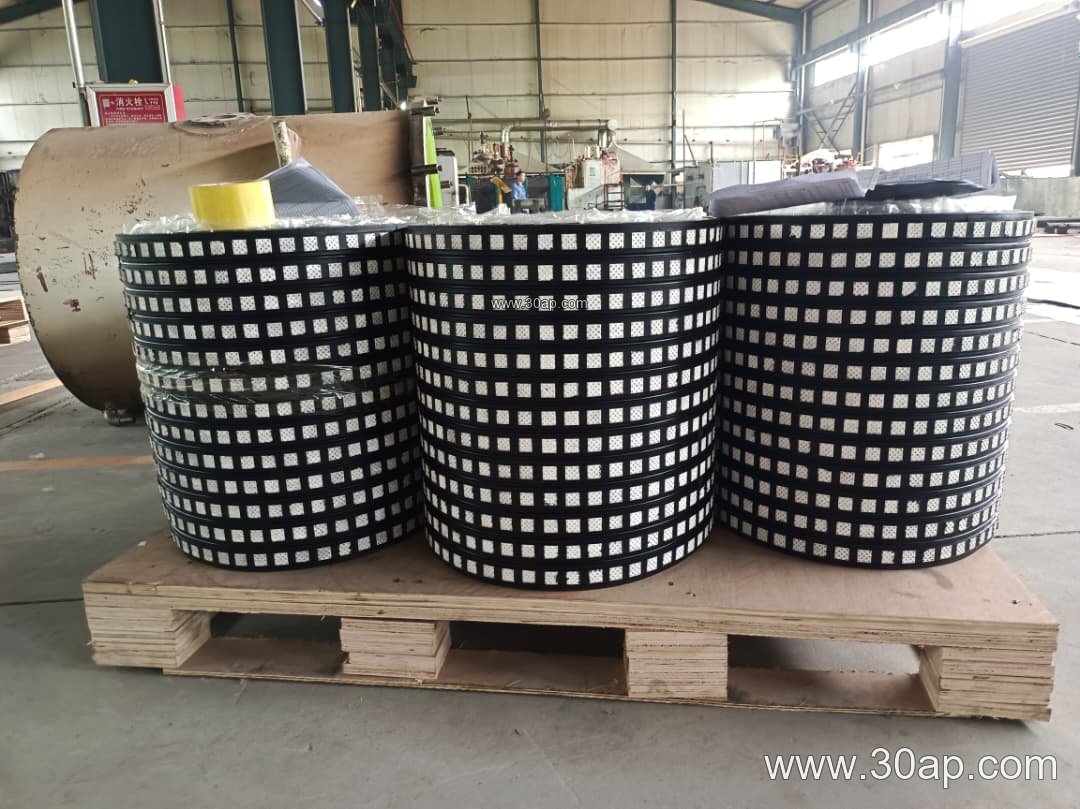
The face can be plain or covered. Plain face is common where the pulley only makes a small directional change. Rubber lagging, cold-bonded or hot-vulcanized, improves grip where the belt must not slip, and diamond or herringbone patterns help shed water and fines. Ceramic lagging is chosen in wet, abrasive service such as a wash plant or a limestone operation. Cover thickness commonly runs from 8 mm to 20 mm depending on duty.
Typical Reference Combinations
These are reference figures, not fixed pairings. Diameter follows wrap angle, belt stiffness and tension, so a B800 belt may run on Ø500 in one layout and Ø630 in another.
- B800 x Ø500, plain face, light return routing
- B1000 x Ø630, 10 mm rubber lagging
- B1200 x Ø800, diamond lagging for wet service
- B1400 x Ø1000, heavy return strand
- B1600 x Ø1250, long overland conveyor
Face width is usually a little wider than the belt: B650 around 750 mm, B1000 around 1150 mm, B1400 around 1600 mm, B1800 around 2000 mm. Shaft diameters commonly range from Ø50 to Ø200, with the final size set by the pulley manufacturer from the actual load case.
Where It Fits in the Belt Path
A bend pulley is most often found on the return side. In a coal handling system at a power plant, one may be installed ahead of the take-up to increase wrap on the take-up pulley and reduce the counterweight travel needed. In an iron ore or copper ore concentrator, several can be used to snake the return belt around thickener and pump foundations. In a sand and gravel line, a small bend pulley under the discharge zone keeps the return strand clear of spillage.
It also appears as part of a snub arrangement, where it increases contact angle on a drive pulley. That function is sometimes called a snub or wrap pulley, and it still works as a bend pulley because it redirects rather than drives.
Matching the Pulley to the Belt
Belt construction affects the choice. A stiff steel cord belt needs a larger diameter to keep bending stress low, while a flexible multi-ply fabric core belt can often use a smaller drum. On a high tension line with a steel cord conveyor belt, the bend pulley diameter and the lagging groove pattern deserve close attention. In a coal mine using a flame retardant conveyor belt, the lagging should be selected to suit the same fire-safety requirements as the belt.
Belt tracking matters too. A bend pulley that is slightly out of square with the belt centerline will pull the belt to one side, and the belt edge will wear against the conveyor bracket. Check squareness at installation and keep the drum face clean. If the belt carries wet, sticky material, a self-cleaning or spiral pattern may reduce build-up.
Buyer Checklist
- Confirm the position in the route and the wrap angle, since these set the diameter and the load.
- State belt type and tension, for example an EP conveyor belt or a heavy-duty mining belt, so the supplier can check bending stress.
- Choose face width from belt width, typically 100 to 150 mm wider.
- Decide lagging type and thickness: plain, 8 to 12 mm rubber, diamond, or ceramic for abrasive wet duty.
- Give the shaft load and bearing span rather than a guessed shaft diameter.
- Ask for the balancing grade and the shell runout, which affect vibration at speed.
For high-tonnage plants, an abrasion resistant conveyor belt paired with a well-lagged bend pulley usually gives the longest service between relagging intervals. Keep a spare drum on site for critical routes, because a seized bend pulley can damage the belt edge quickly and stop a whole crushing or ship loading circuit.