What a Double-Sealed Idler Is
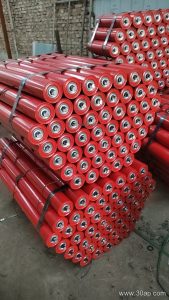
A double-sealed idler is a conveyor roller that uses two sealing elements on each bearing end to keep dust, grit, and moisture away from the bearing cavity. In rugged operations such as a quarry, limestone mine, or cement plant, fine particles and water spray are constant threats to roller life. The double-sealed idler roller addresses this by adding a secondary barrier behind the outer seal, so contaminants must pass two stages before reaching the bearing. This makes the double-sealed idler a practical choice for conveyor systems that handle abrasive bulk materials or operate in damp conditions.
Construction and Sealing Details
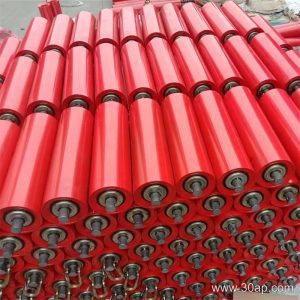
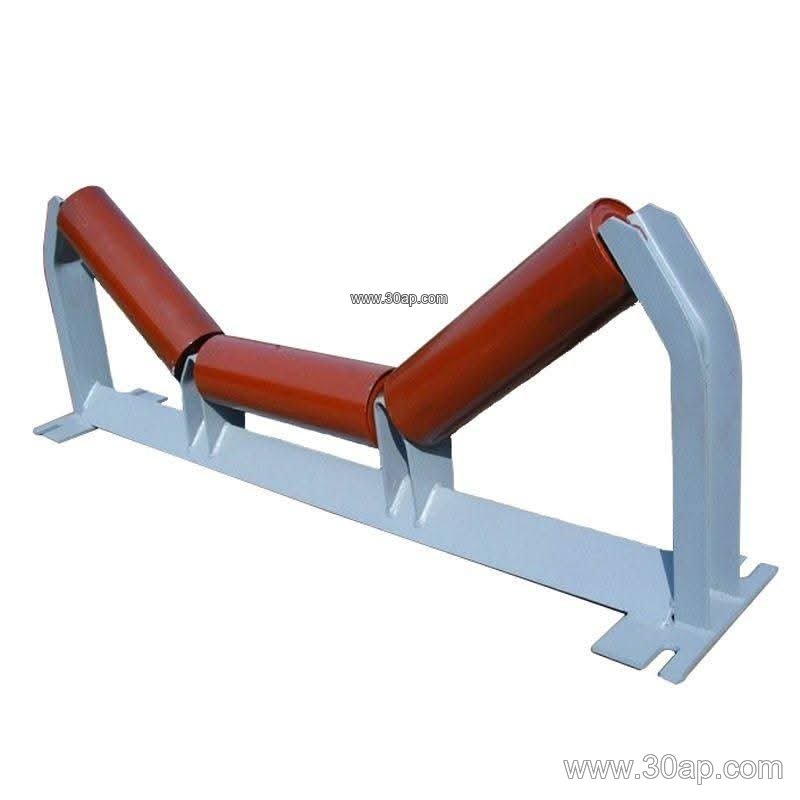
The typical double-sealed idler roller consists of a steel tube shell, a shaft, bearing housings, and two sealing stages at each end. The outer seal often acts as a dust lip, while the inner seal provides a grease-retaining barrier. Some designs use a labyrinth seal combined with a contact seal; others pair a rubber lip seal with a metal shield. The bearing itself is usually a deep-groove ball bearing, and common sizes include 6204, 6205, 6305, 6306, 6308, and 6310. These bearings are not tied to one roller diameter, and the final bearing choice depends on load and speed requirements.
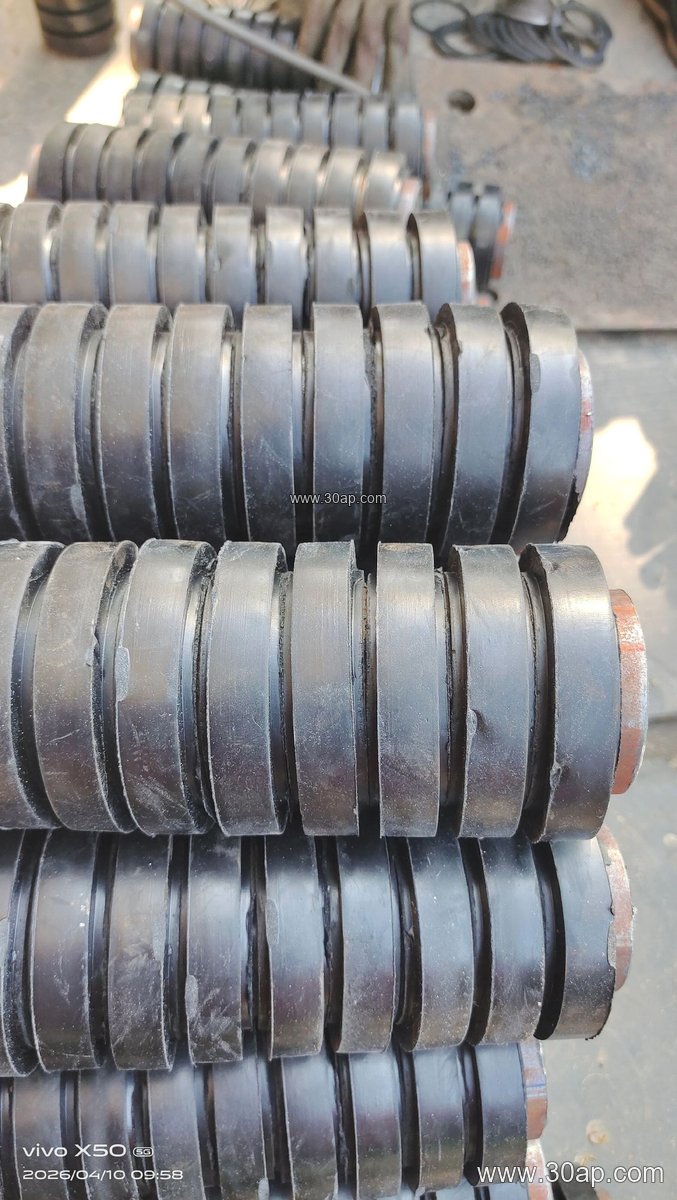
The roller surface may be plain steel, nylon, rubber rings, or ceramic in special cases. For a double-sealed idler in a dusty transfer point, a rubber-ring impact version can be used, but the sealing system remains the defining feature. The seal quality matters more than the shell material when fine dust is the main enemy.
Where Double-Sealed Idlers Fit
These idlers are often found in the following areas:
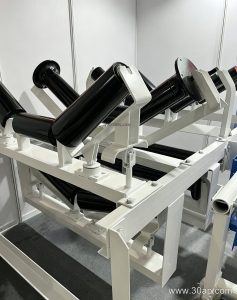
- Troughed carrying idlers on a quarry conveyor belt or aggregate conveyor belt, where dust from crushing and screening is heavy.
- Return idlers and V-return idlers on a coal mining conveyor belt or power plant coal handling line, where moisture and coal fines accumulate.
- Bend and transition zones near a conveyor pulley, where belt alignment and spillage increase contamination.
- Bulk material conveyor belt systems in a cement plant, steel plant, or fertilizer handling facility.
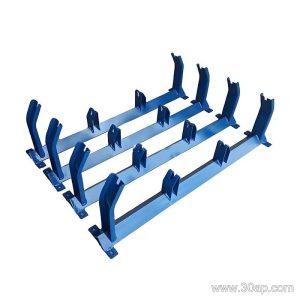
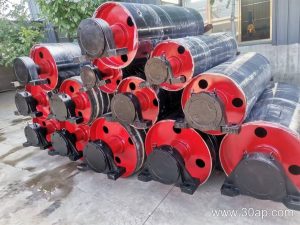
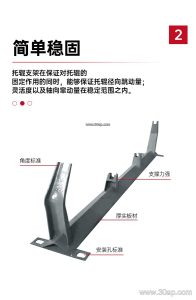
In a wash plant or port terminal, the double-sealed idler roller helps resist water spray and salt-laden air. It is not a substitute for a drive pulley or tail pulley; those are separate components with different design requirements. A conveyor pulley and a conveyor bracket work together with the idler to support the belt path, but the double-sealed idler is specifically the rolling element that supports the belt between pulleys.
Common Sizes and Configuration Notes
Roller diameter and belt width are selected together. Common roller diameters include Ø63, Ø76, Ø89, Ø102, Ø108, Ø127, Ø133, Ø159, Ø178, Ø194, and Ø219. Belt widths range from B400 to B2400, and the idler length changes with belt width, trough angle, and idler arrangement. For a three-roll troughing set, typical roll lengths are approximately 200 mm for B500, 250 mm for B650, 315 mm for B800, 380 mm for B1000, 465 mm for B1200, 530 mm for B1400, 600 mm for B1600, 670 mm for B1800, and 750 mm for B2000. These are common examples, not fixed pairings, and side rolls may differ from center rolls.
| Parameter | Common Range or Example |
|---|---|
| Roller diameter | Ø63 to Ø219 |
| Belt width | B400 to B2400 |
| Trough angle | 20°, 30°, 35°, 45° |
| Bearing size | 6204, 6205, 6305, 6306, 6308, 6310 |
| Roll surface | Steel, nylon, rubber ring, ceramic |
For a double-sealed troughing idler on an EP conveyor belt or a fabric core conveyor belt line, the seal type should be confirmed against the actual dust and water exposure. A flame retardant conveyor belt or heat resistant conveyor belt application may require a seal material that tolerates higher temperatures, but the double-sealed idler itself is primarily a contamination-control component.
Buyer Checklist
When specifying a double-sealed idler, ask for the seal arrangement drawing, bearing size, roller diameter, shell thickness, and shaft end type. Confirm whether the idler will be used as a carrying idler, return idler, or impact idler, because the seal and shell may differ. Check the belt width and trough angle so the roll length and mounting dimensions match the conveyor bracket. For a mining conveyor belt or underground coal mining conveyor belt, verify that the seal materials are compatible with the local environment and any fire safety requirements. Do not assume one belt width matches one pulley diameter; the idler and pulley are selected separately. A double-sealed idler roller is a small component, but its sealing quality directly affects bearing life and maintenance intervals in a stone crushing line, iron ore terminal, or sand making plant.