What an EP200 Conveyor Belt Is
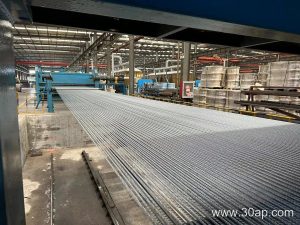
An EP200 Conveyor Belt is a fabric core rubber belt built around polyester warp and polyamide weft plies. The “EP” stands for the two fibre types, and the number 200 refers to the nominal tensile strength of the carcass in newtons per millimetre of belt width. In practice, this is a mid-range EP Conveyor Belt that sits above lighter EP100 grades and below heavy EP400 or EP500 constructions, making it a common choice for main haulage lines that carry moderately heavy loads without the cost of a steel cord carcass.
The full name is often written as EP200 rubber conveyor belt or EP200 fabric core conveyor belt. All three describe the same product. It is not the same as an NN Conveyor Belt, which uses nylon in both warp and weft, and it should not be confused with a Steel Cord Conveyor Belt, where steel ropes replace the fabric plies entirely.
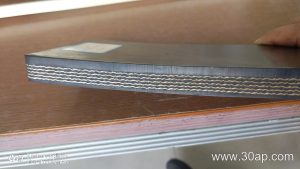
How the Belt Is Built
A typical EP200 belt combines several elements into one composite structure:
- Carcass: usually 2 to 4 plies of EP fabric, bonded with rubber skim compound between layers.
- Top cover: the carrying surface, commonly 3 mm to 8 mm thick depending on abrasion and impact severity.
- Bottom cover: the pulley side, often 1.5 mm to 3 mm, sized to suit the drive and tail pulley contact.
- Edges: cut or moulded, sometimes protected with extra rubber for long runs.
Cover compounds can be selected for different duties, so the same carcass may appear as an Abrasion Resistant Conveyor Belt, a Heat Resistant Conveyor Belt or a Flame Retardant Conveyor Belt. That flexibility is one reason the EP200 carcass is widely used in mining, quarry and cement plants.
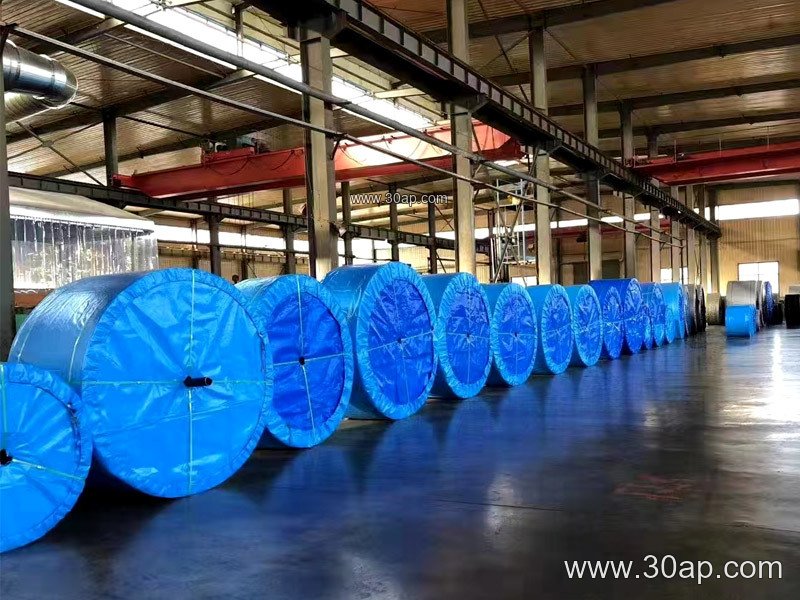
Typical Strength and Size Range
EP belts are commonly offered in a graded series. The table below shows reference values for the family; actual constructions vary by manufacturer and should be confirmed against the design duty.
| Grade | Nominal Carcass Strength | Typical Use |
|---|---|---|
| EP100 | Light duty | Short conveyors, light aggregate |
| EP200 | Medium duty | Main plant and yard conveyors |
| EP315 / EP400 | Heavier duty | Long runs, higher tonnage |
| EP500 / EP630 | Heavy duty | Primary crushing and bulk terminals |
Common belt widths for this class include B500, B650, B800, B1000, B1200, B1400 and B1600. Cover thickness might be quoted as 4+2 mm, 5+2 mm or 6+2 mm. None of these figures is mandatory for every installation; the correct combination comes from the conveyor design, the material carried and the pulley arrangement.
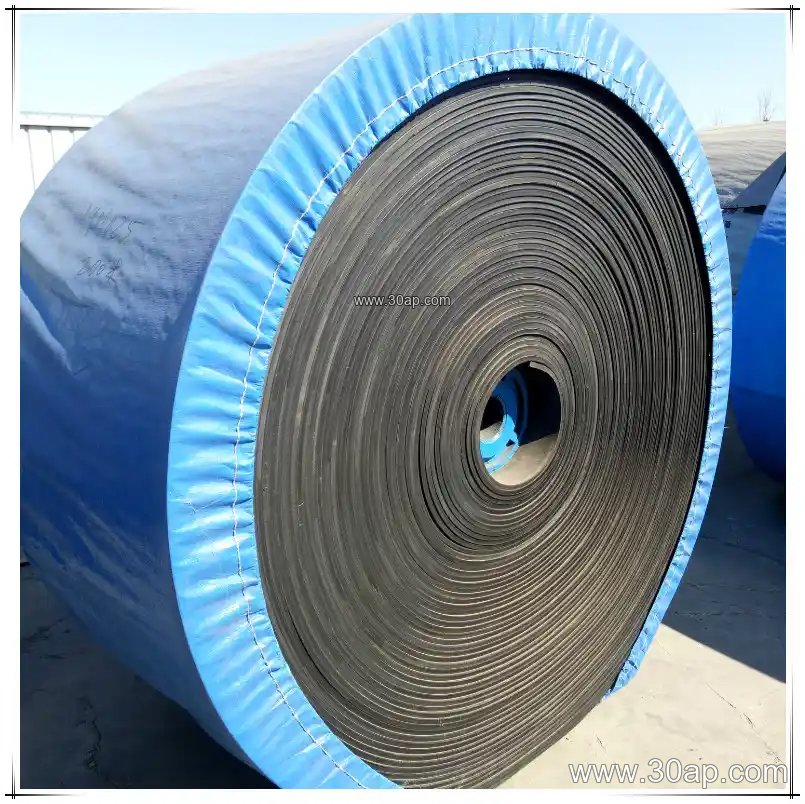
Where It Fits in the Plant
Because the EP200 carcass balances strength with flexibility, it appears in many bulk handling settings. In a sand and gravel yard it often runs as an Aggregate Conveyor Belt between screens and stockpiles. In a cement plant it may serve as a Cement Conveyor Belt on clinker or raw meal lines. Power plants use it on coal handling systems, and mines may specify a Mining Conveyor Belt or Coal Mining Conveyor Belt version with flame retardant covers for underground sections.
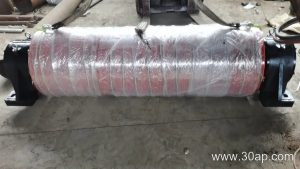
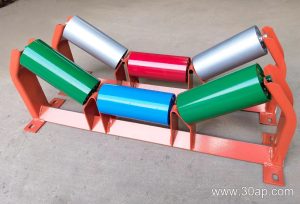
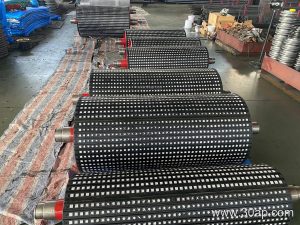
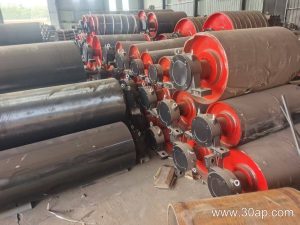
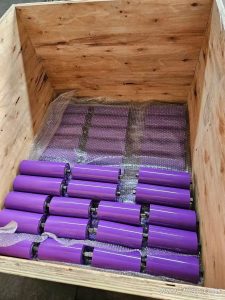
On these conveyors, the belt works together with idler roller sets, conveyor pulleys and conveyor brackets. Drive, tail and bend pulleys each perform a different job, and their diameters are chosen from the belt tension, splice type and cover thickness rather than from belt width alone. A wider belt does not automatically mean a larger pulley, and a single belt width can be matched to several pulley sizes depending on the layout.
Buyer Checklist
Before ordering, gather the following information so the supplier can propose a suitable construction:
- Material type, lump size and temperature, which guide cover grade and thickness.
- Conveyor length, incline and tonnage, which affect the required carcass strength.
- Belt width and trough angle, to match existing idler roller frames.
- Pulley diameters for drive, tail and bend positions, plus take-up details.
- Environment: oil, acid, cold, heat or fire risk, which may call for a special cover compound.
- Splice preference, since some carcasses suit vulcanised joints better than mechanical fasteners.
For steep inclines, a Chevron Conveyor Belt or Corrugated Sidewall Conveyor Belt may be a better fit than a plain EP200 belt, and for very long high-tension routes a steel cord design may be needed. In most ordinary plant conveyors, however, the EP200 fabric belt remains a practical, serviceable choice. Regular inspection of the belt surface, edges and splices, together with correct pulley and idler alignment, will do more for belt life than any single specification number.