What a Conveyor Bracket Assembly Does
A conveyor bracket assembly is the structural interface that holds idler rollers in the correct position along a conveyor frame. It connects the roller shafts to the main stringers, keeping the belt profile stable from the loading point to the discharge. In a quarry or a coal handling plant, these assemblies are often the first components inspected after a belt misalignment event, because a bent or loose bracket quickly affects roller alignment and belt tracking.
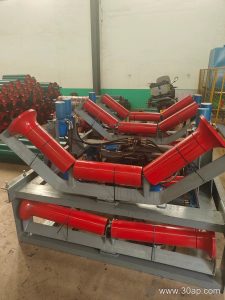
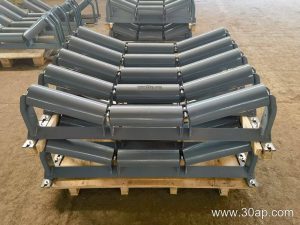
The assembly is not a single part. It usually includes a crossbeam, mounting plates, angle or channel sections, and bolt-on or welded supports for one or more idlers. The exact build depends on whether it carries the loaded top strand or the clean return strand.
Common Configurations and Where They Sit
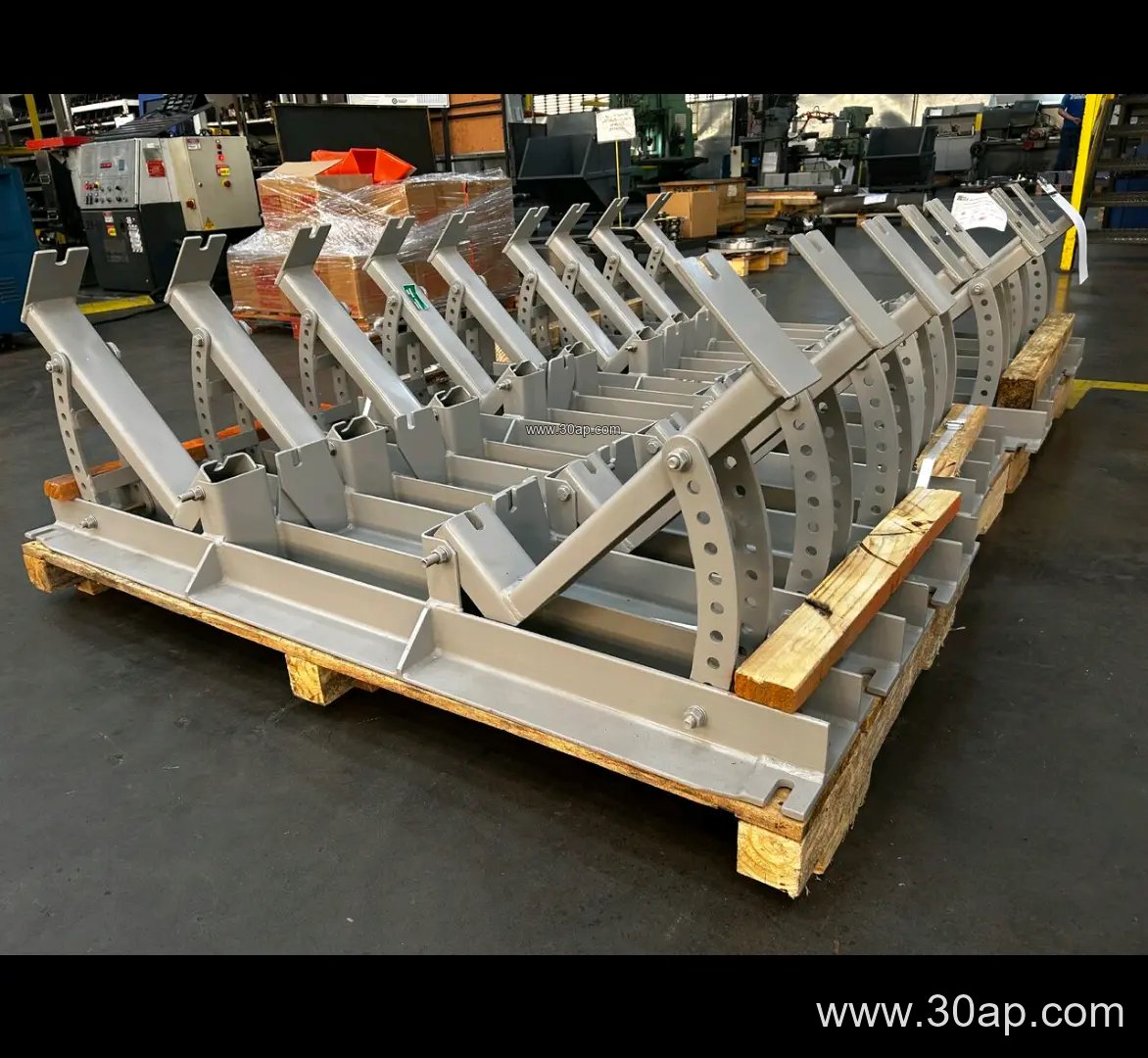
Troughing brackets support the carrying side and set the belt into a trough shape. Transition brackets are placed near pulleys to guide the belt gradually from flat to troughed. Return brackets hold the belt on the lower run, and V-return brackets help center the belt on the return side. Impact brackets are reinforced for loading zones where material falls directly onto the belt.
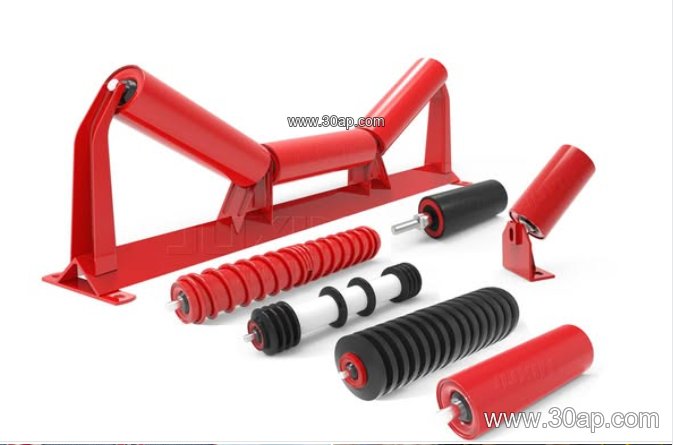
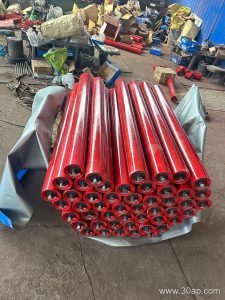
Self-aligning and forward-leaning brackets are used where tracking needs extra correction. Suspended brackets hang from the frame in spaces where floor-mounted supports are difficult. Adjustable brackets allow the trough angle to be changed on site, which helps when a conveyor handles more than one material type.
Materials and Build Details
Most assemblies are fabricated from angle steel, channel steel, or folded steel plate. The choice affects stiffness and corrosion allowance. In a cement plant or a power plant coal yard, dust and moisture often push buyers toward heavier sections and galvanized or painted finishes. Welded assemblies are common for fixed positions, while bolted designs simplify replacement during maintenance shutdowns.
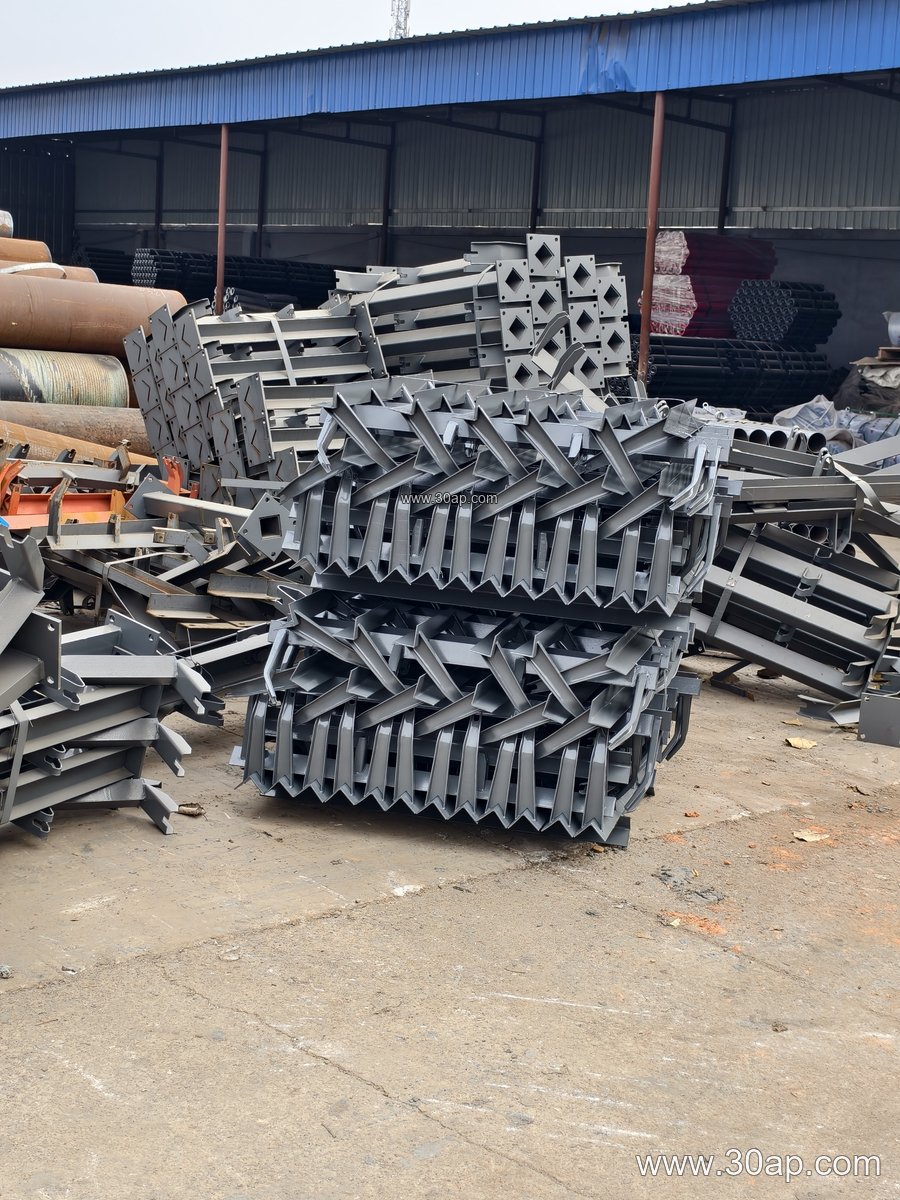
Mounting hole spacing and crossbeam length are not universal. They vary with belt width, trough angle, and the roller diameter specified for the conveyor. A bracket that fits a B800 frame will not fit a B1400 frame without different dimensions.
Typical Size References
The following values are common reference points, not fixed matching rules. Final dimensions are determined by conveyor design.
| Reference Item | Common Range |
|---|---|
| Belt width | B500, B650, B800, B1000, B1200, B1400, B1600, B1800, B2000 |
| Trough angle | 20°, 30°, 35°, 45° (adjustable types cover several angles) |
| Idler diameter | Ø89, Ø108, Ø133, Ø159, Ø194 |
| Forward lean | about 1.5° to 2° |
For example, a B800 frame with a 35° trough and Ø108 rollers is a common combination in aggregate plants, but a B1200 frame with a 45° trough and Ø133 rollers may be used where a deeper material profile is needed. A B650 frame with 30° trough and Ø89 rollers is often seen on lighter-duty lines. None of these pairings is mandatory.
Selection Points for Buyers
Start with the belt width and the required trough angle, then confirm the roller diameter and shaft end type. Check whether the bracket is for the carrying side or the return side, and whether it needs impact reinforcement. For a crusher conveyor or a belt feeding a screen, impact brackets and self-aligning brackets may both be relevant at different points along the line.
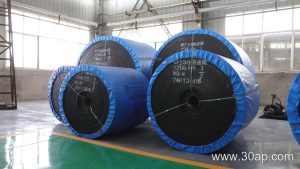
The conveyor belt itself also matters. A heavy-duty mining conveyor belt with a thick cover may need more support stiffness than a lighter fabric core belt. In coal mining applications, flame retardant conveyor belt and anti-static conveyor belt properties are often specified, and the bracket assembly should be compatible with the roller spacing used for that belt.
Ask for the mounting hole pattern, crossbeam length, and material thickness before ordering. These details prevent site modification and keep the assembly compatible with the existing idler roller set. For a new project, share the belt width, trough angle, roller diameter, and loading conditions so the bracket assembly can be matched to the conveyor frame.