What an EP1250 Conveyor Belt Is
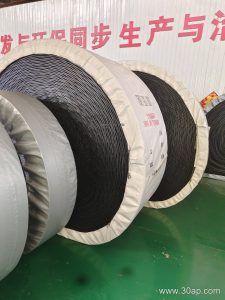
An EP1250 Conveyor Belt is a fabric-core rubber belt built on polyester-cotton (EP) canvas plies, and the 1250 figure refers to its nominal tensile strength in newtons per millimetre of belt width. In practice this is a high-strength grade of EP fabric core belt, sitting near the upper end of the common EP range and well above everyday EP200 or EP400 constructions. Buyers often meet it as an EP Rubber Conveyor Belt for main haulage lines where moderate tonnage and long centre distances must be balanced against cost.
Because the carcass is a multi-ply fabric rather than steel cord, the belt remains relatively flexible, tolerates small pulley diameters better than a rigid carcass, and can be spliced on site with hot or cold vulcanising. That flexibility is the main reason an EP1250 Conveyor Belt appears in crushing circuits, transfer houses and inclined haulage in mines, quarries and cement works.
How the Belt Is Constructed
The carcass normally consists of several EP fabric plies bonded with rubber skim compound, sandwiched between top and bottom cover rubber. Ply count and cover thickness are selected by the conveyor designer, not fixed by the strength rating alone. A typical build for this grade might look like the following, but actual values depend on the manufacturer and the duty.
- Carcass: multiple EP plies, usually 3 to 5 for this strength class
- Cover rubber: abrasion resistant, flame retardant or heat resistant compounds as required
- Edges: cut or moulded, sometimes with extra edge protection
- Splice: stepped hot splice or mechanical fastener, depending on the system
Cover grade matters as much as strength. A quarry or iron ore line may specify an Abrasion Resistant Conveyor Belt cover, a coal handling plant may need a Flame Retardant Conveyor Belt or Fire Resistant Conveyor Belt compound, and a cement kiln area may call for a Heat Resistant Conveyor Belt cover. Each of these is a cover property applied to the same fabric carcass concept.
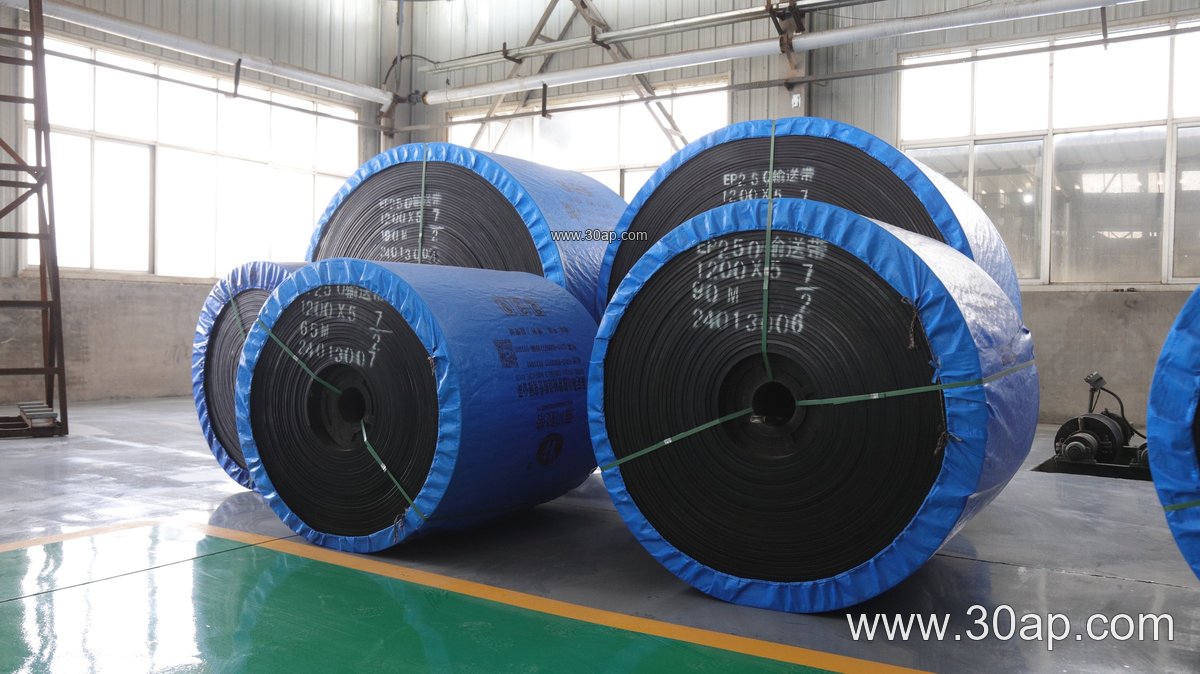
Reference Dimensions and Related Specifications
The table below gives commonly quoted reference data for EP fabric belts in this strength class. Treat the figures as typical planning values, not as guaranteed supply sizes from any single mill.
| Parameter | Common reference values |
|---|---|
| Strength grade | EP1250 (also written as 1250 N/mm) |
| Belt width | B800, B1000, B1200, B1400, B1600, B1800 |
| Cover thickness (top + bottom) | 4+2, 5+2, 6+2, 8+3 mm |
| Carcass plies | Usually 3 to 5, confirmed by design |
| Cover grades | Abrasion resistant, heat resistant, oil resistant, flame retardant, anti-static, cold resistant |
Neighbouring grades in the same family include EP1000 Conveyor Belt and EP1500 Conveyor Belt, and below them the smaller EP630 and EP800 belts. For very long, high-tension overland lines, a Steel Cord Conveyor Belt such as ST1250 or ST1600 may be compared, but that is a different carcass type and not a substitute for this fabric product. Likewise an NN Conveyor Belt uses nylon plies and behaves differently in elongation and troughability.
Width selection should follow the conveyor design and material lump size, not the strength number. A 1200mm or 1400mm width is common on main plant belts, while wider 1800mm and 2000mm belts appear on high-capacity trunk conveyors. The belt width and the pulley diameter are separate design decisions; a given width does not lock the plant into one pulley size.
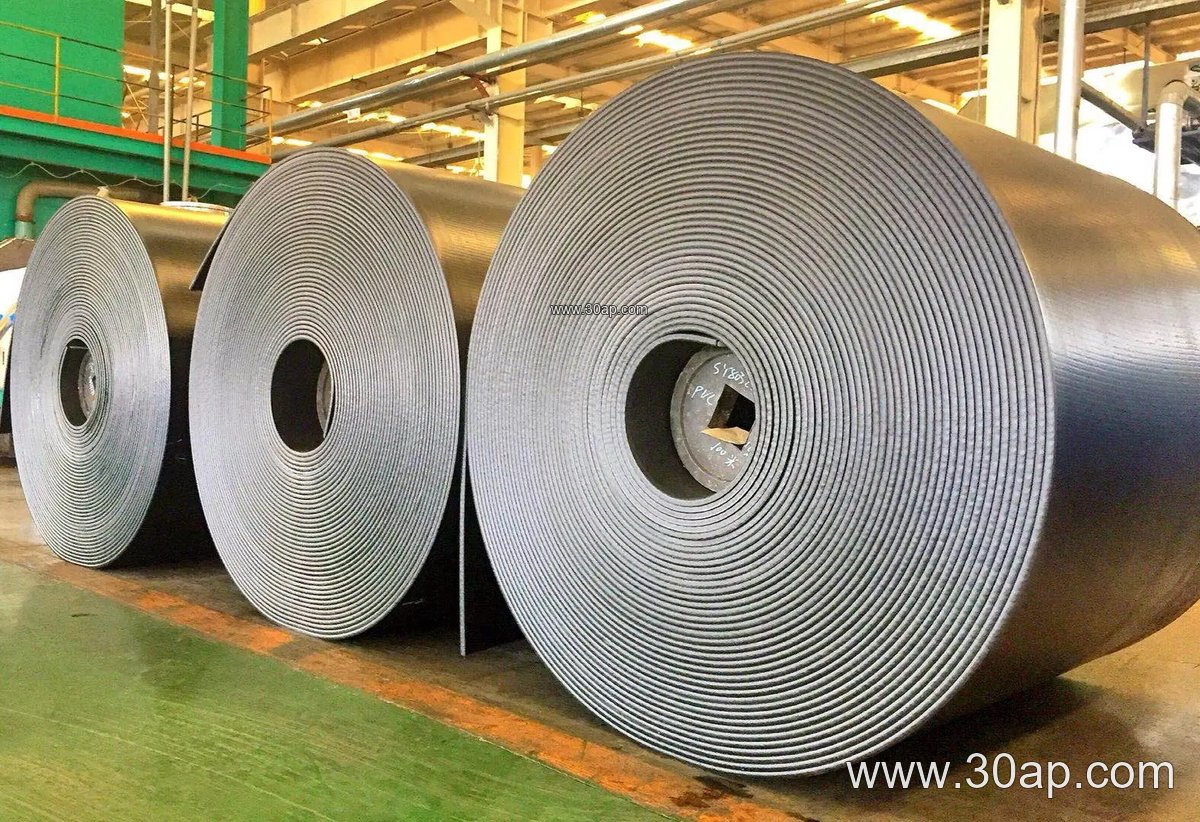
Where It Fits in the Plant
Typical duties include primary and secondary crushing discharge, screening plant feed, stockpile conveyors and inclined transfer belts in sand and aggregate plants, cement plants, power station coal yards and metalliferous mines. In underground coal mining, flame retardant and anti-static cover grades are usually mandatory, so the same strength class may be supplied as a Mining Flame Retardant Conveyor Belt variant. In a copper or gold concentrator, an Abrasion Resistant Conveyor Belt cover is often the priority because sharp ore shortens cover life quickly.
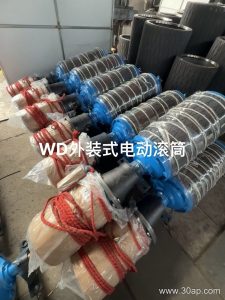
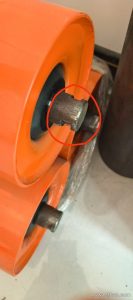
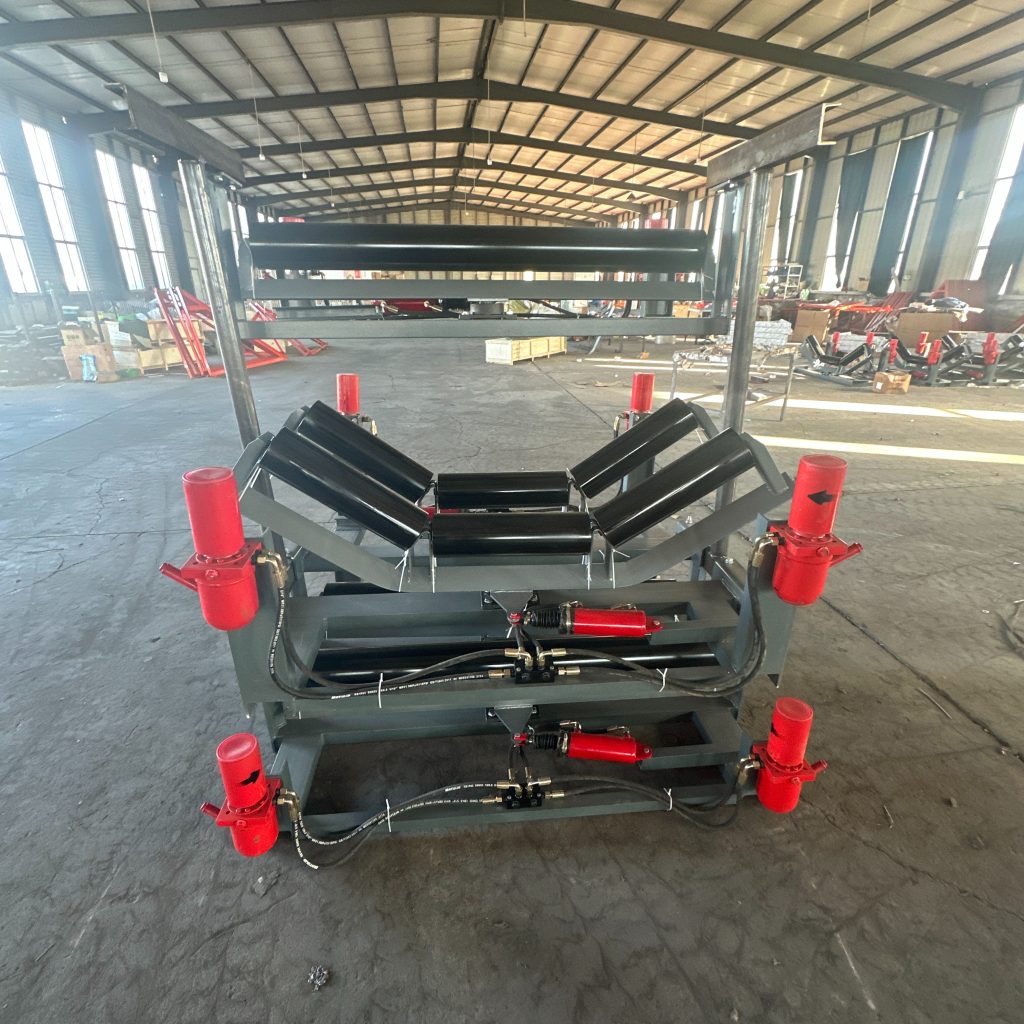
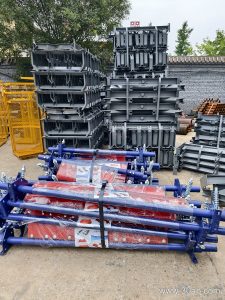
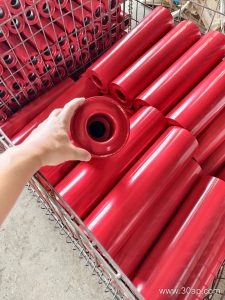
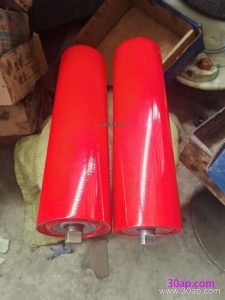
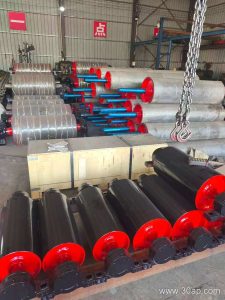
The belt does not work alone. It runs over conveyor pulleys at the head and tail, is supported by idler roller sets along the carry and return strands, and is held in line by conveyor bracket frames and training idlers. A well-aligned structure protects the belt edges and extends splice life far more than a heavier cover alone.
Selection and Maintenance Notes for Buyers
Start from the actual duty: tonnage per hour, lump size, incline, centre distance, start-stop frequency and ambient conditions. Then confirm the required strength, cover grade, cover thickness and ply count with the belt supplier, and check that the pulley diameters and trough angles suit a fabric carcass of this class. For wet or dusty service, consider a Corrugated Sidewall Conveyor Belt or Chevron Conveyor Belt only where the incline genuinely needs cleats or walls; those are separate constructions, not upgrades of a flat belt.
During operation, watch for edge damage, cover wear over the idler roller positions, splice separation and material build-up on return rollers. Keep the belt tracking straight, maintain adequate take-up tension, and store spare rolls flat and dry. A correctly specified EP1250 belt, matched to its pulleys, idlers and frame, gives long service in demanding bulk material duty.