A Composite Idler Roller Cuts Rotating Mass Better Than A Steel Roller But Demands Careful Load Rating
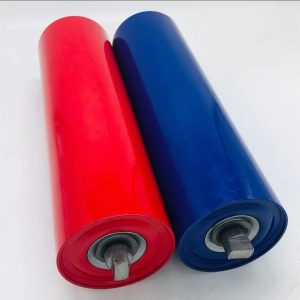
A composite idler roller, built with a fiber-reinforced polymer shell and often polymer end caps or bearing housings, reduces the rotating mass carried by the belt compared with an all-steel idler roller of the same nominal dimensions. That lower mass translates into less energy needed to keep the roll turning, less inertia during starts and stops, and less belt wear at the contact surface. The trade-off is that composite shells generally have a lower allowable radial load and a lower maximum operating temperature than a steel shell of equivalent size. The decision therefore hinges on whether the conveyor’s actual load per idler station and the ambient or material temperature stay within the composite roller’s published limits. When they do, the composite idler roller is the lighter, more efficient choice. When they do not, a steel roller remains the safer specification.
Why Lower Rotating Mass Matters On A Continuously Running Conveyor
Every idler roller on a loaded conveyor must accelerate from rest each time the belt starts and must overcome its own bearing friction and rotational inertia while running. A steel roller with a thick wall and heavy end discs stores more kinetic energy in its rotation. That energy must come from the drive system through the belt, and it is dissipated as heat and wear whenever the roller speed changes. A composite idler roller with a thinner, lower-density shell reduces that stored energy.
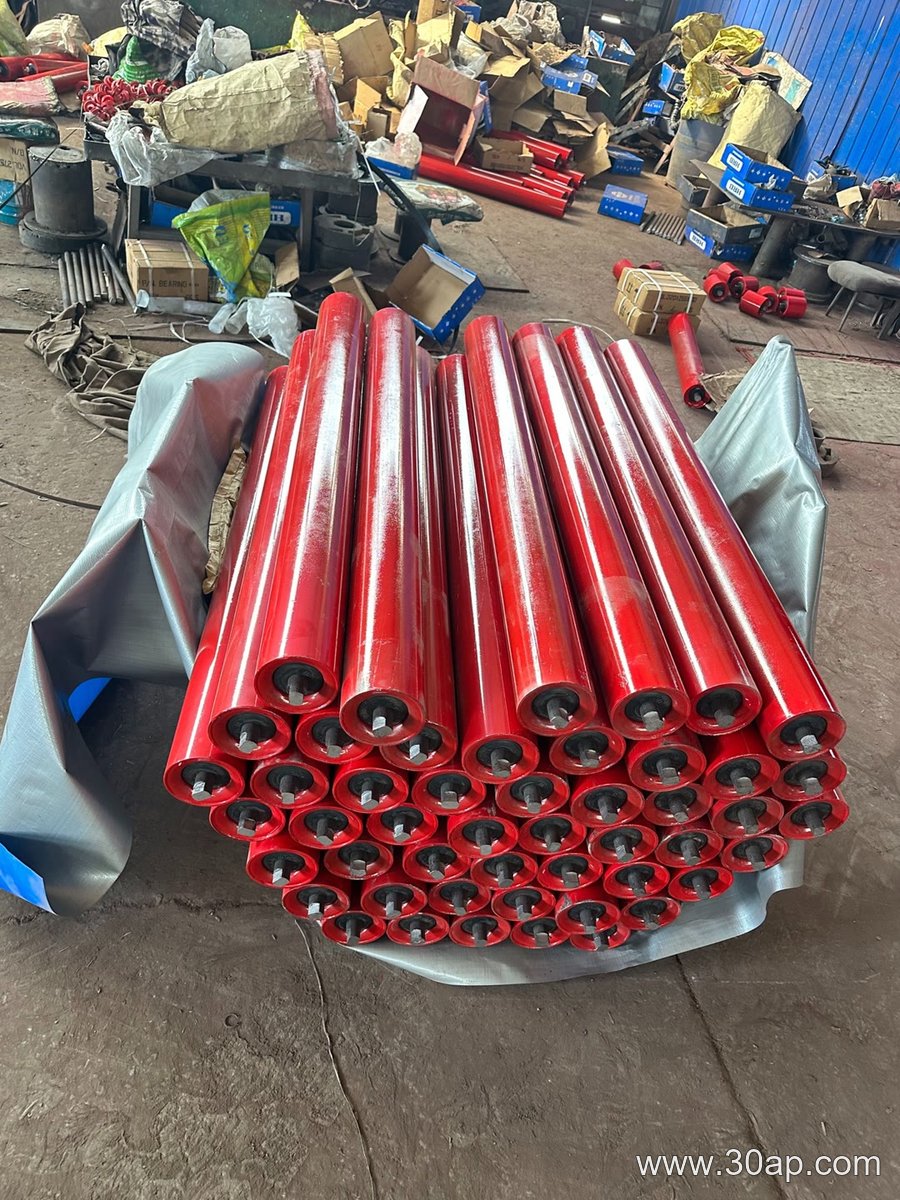
The specification fields that describe this effect are straightforward. Outside diameter and shell thickness appear in millimeters or inches and define the basic geometry. Roller mass or unit weight is given in kilograms or pounds per roller. Rotational inertia, when published, appears in kilogram-square-meters or pound-square-feet and directly indicates how much torque is needed to spin the roller up to belt speed. Bearing friction torque is often stated in newton-meters or ounce-inches at a reference speed. A lower value in any of these fields points toward lower running resistance. However, the composite roller’s advantage is not automatic: a poorly sealed composite bearing can have higher friction than a well-sealed steel bearing, so the bearing specification must be read alongside the shell material.
Where The Composite Advantage Holds
The lower rotating mass of a composite idler roller is most valuable on long overland conveyors, on conveyors that start and stop frequently, and on installations where belt tension is limited by the belt’s own strength or by the take-up arrangement. In these conditions, the reduced inertia and lower friction can allow a smaller drive motor or a lighter belt construction to do the same work. The composite shell also resists corrosion from wash-down water and mildly acidic or alkaline slurries better than an unpainted steel shell, which preserves the smooth running surface over time.
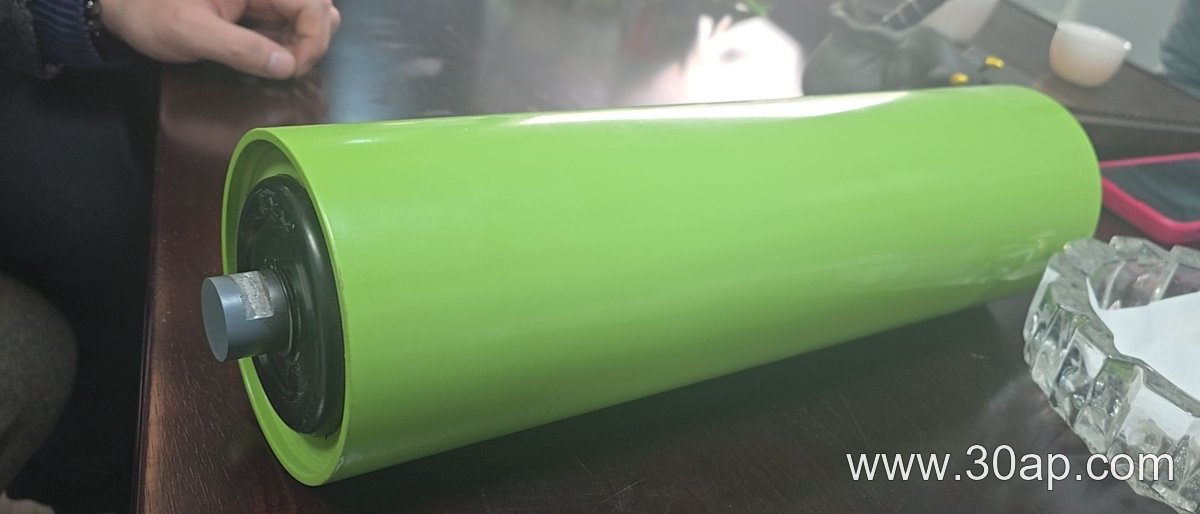
The advantage also holds when the conveyed material is light and non-abrasive, such as packaged goods, wood chips, or certain agricultural products. Here the belt load per idler is low, so the composite roller’s lower load rating is not a constraint. The lighter roller is easier to handle during installation and maintenance, which reduces the risk of injury and the time required to change a roller in a confined space.
As a hypothetical illustration, a cement plant might use composite idler rollers on a short, low-capacity additive conveyor that handles fine limestone powder and runs intermittently. The low load and moderate temperature keep the composite roller within its ratings, and the reduced weight makes manual replacement practical. The same plant would not use the same composite roller on a primary clinker conveyor where high loads and hot material would exceed the composite’s limits.
Where The Composite Advantage Does Not Hold
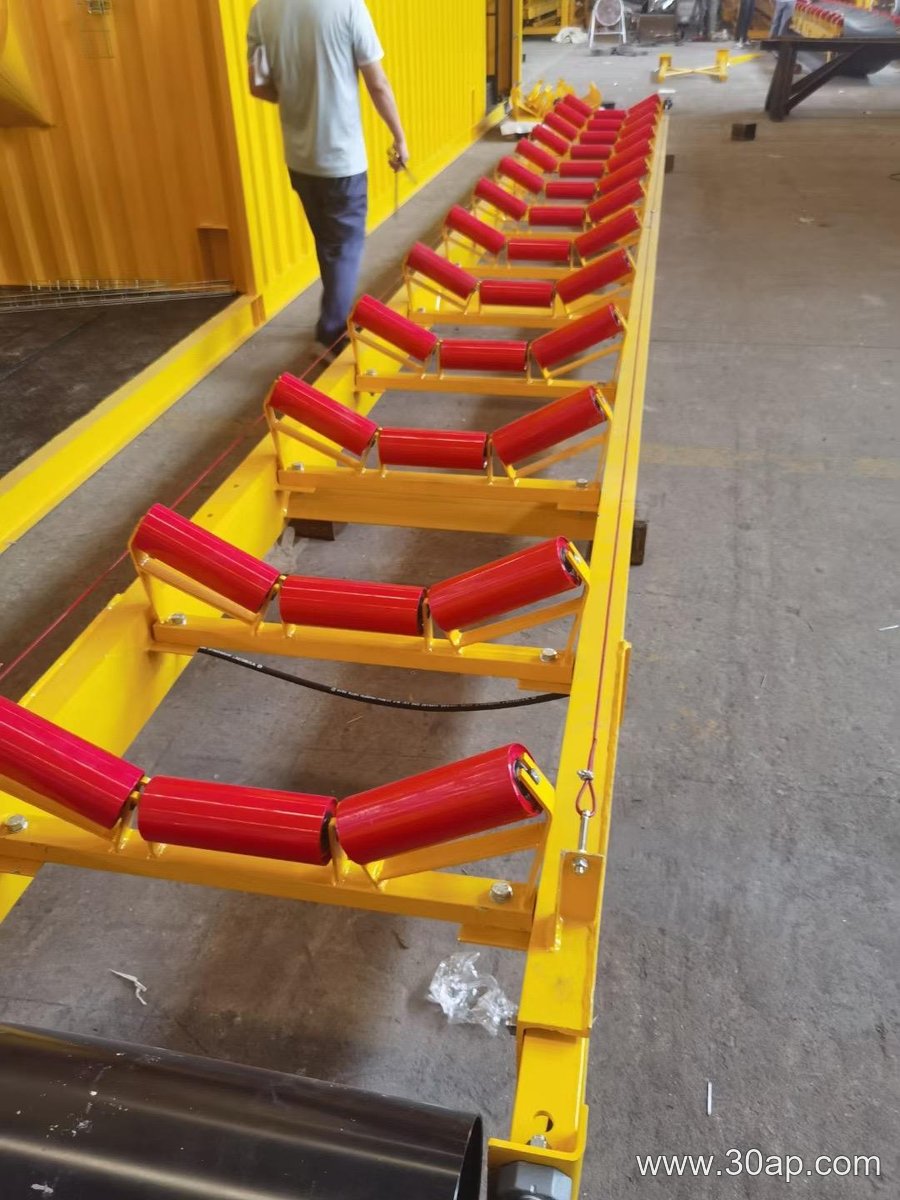
The composite idler roller’s lower allowable radial load becomes the controlling factor on high-capacity conveyors. The relevant specification is the maximum radial load or working load limit, usually expressed in newtons or pounds-force per bearing or per roller. This value is determined by the shell stiffness, the bearing seat strength, and the end cap design. If the calculated load per idler station exceeds that figure, the composite shell may deflect, crack, or allow the bearing to move in its housing, leading to premature failure. The load per station is calculated from the belt weight, material weight per unit length, idler spacing, and any impact or transition factors. A steel roller with a higher published load limit is the correct choice in that situation.
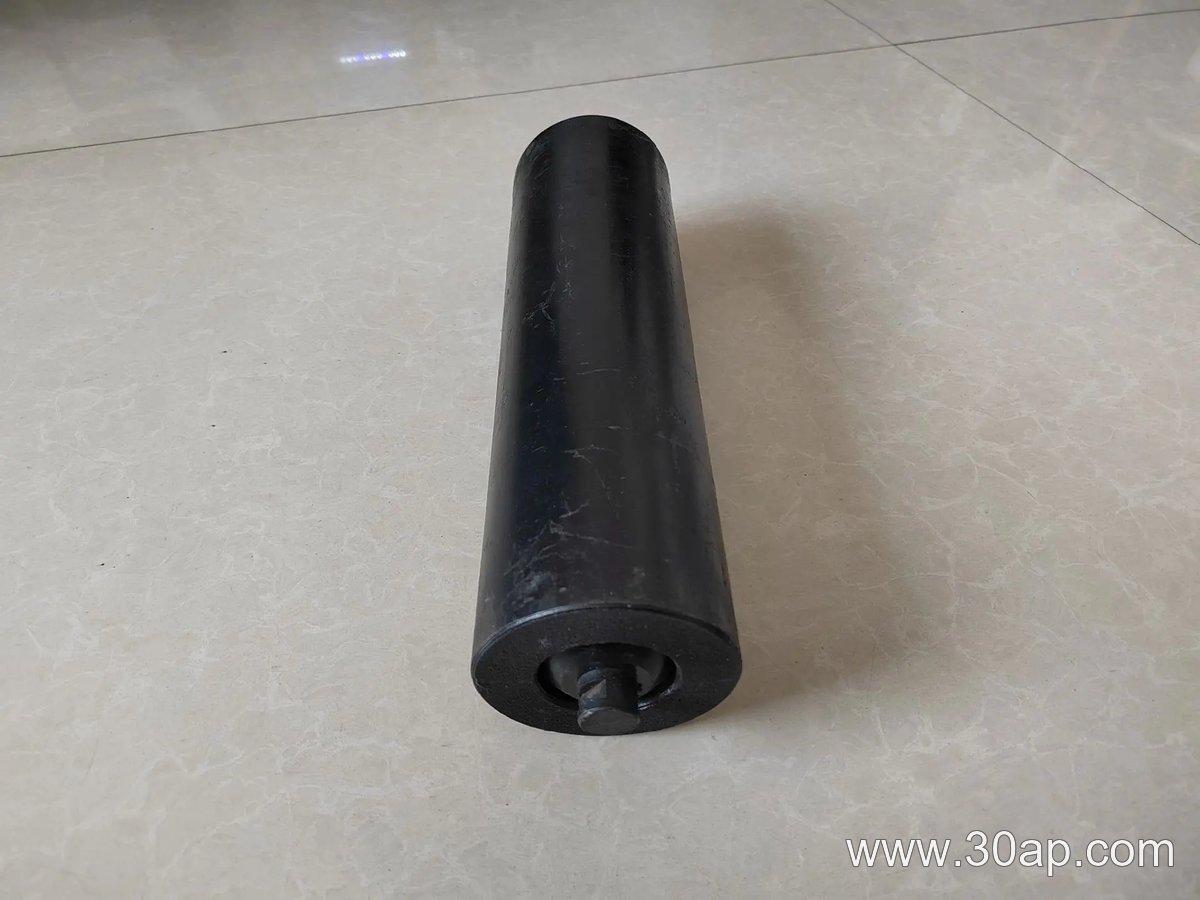
Temperature is the second limiting condition. Composite materials have a maximum continuous operating temperature, often stated in degrees Celsius or Fahrenheit. Above that temperature, the polymer matrix may soften, creep, or lose stiffness. Hot clinker, sinter, or asphalt millings can easily exceed the limit of common composite formulations. In such service, a steel roller with high-temperature bearings and seals is required. Even if the ambient temperature is moderate, radiant heat from the material or from a nearby process can raise the roller surface temperature above the composite’s rating.
Finally, the composite idler roller is not automatically more abrasion-resistant than steel. The relevant specification is the shell hardness or abrasion resistance rating, sometimes given as a Shore D value or a taber abrasion index. A hard, abrasive material such as sharp gravel or crushed slag can wear through a composite shell faster than through a thick steel shell, especially if the belt is misaligned and the material is forced against the roller surface. In that case, the lower rotating mass does not compensate for the shorter wear life.
Reading The Specification Fields Without Inventing Ratings
To apply the judgment correctly, read the composite idler roller’s published data sheet as a set of limits, not as general claims. The outside diameter and face width must match the belt width and the idler frame. The shaft diameter and bearing type determine the mounting method and the load path. The maximum radial load and maximum temperature are the two fields that most directly decide whether the composite roller can replace a steel roller. The mass and inertia fields show the benefit you gain when the limits are satisfied. Do not assume that a composite roller with the same outside diameter as a steel roller has the same load capacity; the wall thickness and material stiffness are different. Also do not assume that a higher price or a thicker shell automatically means a higher load rating, because the rating depends on the entire assembly, including the bearing housing and the bond between the shell and the end cap.
Inspection for this decision focuses on the roller’s condition after service. Check for cracks or crazing in the composite shell, especially near the end caps and along the weld line if the shell is a welded polymer. Check for elongation of the bearing housing or looseness of the bearing in the composite seat. Check for discoloration or softening that would indicate overheating. If any of these signs appear, the roller has likely been operated outside its load or temperature limit, and the correct action is to replace it with a steel roller rather than to install another composite unit. If the roller shows only normal wear and the belt load and temperature remain within the published limits, the composite idler roller continues to deliver its intended benefit of lower rotating mass and easier handling.