What a Port Conveyor Belt Does
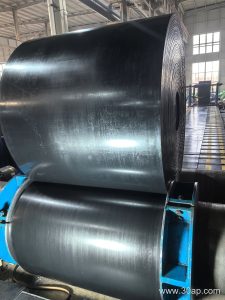
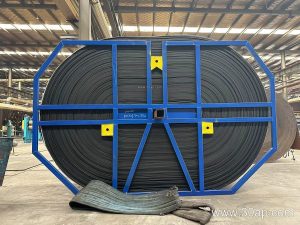
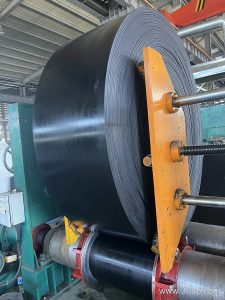
A Port Conveyor Belt is the heavy-duty belt used in bulk terminals to move coal, iron ore, copper ore, fertilizer, grain, cement clinker and similar loose materials between ship loaders, unloaders, stockyard stackers and reclaimers. It is not one single rubber strip but a complete engineered loop that combines the carcass, the covers and the splice. Because port systems often run continuously at high capacity, the belt is usually specified as a Heavy-Duty Conveyor Belt rather than a light general-purpose product.
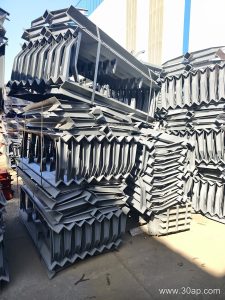
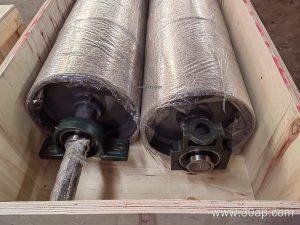
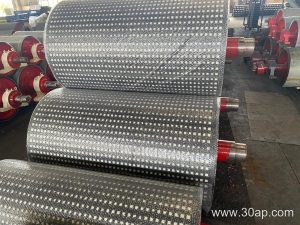
In a typical quay, the belt sits on idler roller sets, wraps around the head and tail pulleys, and is tensioned by a take-up arrangement. The conveyor pulley, the conveyor bracket and the steel frame all interact with the belt, so belt selection should never be separated from the mechanical layout of the conveyor.
Construction and Common Belt Types
Port belts are built around a fabric or steel cord carcass. Fabric types include EP Conveyor Belt with polyester warp and nylon weft, and NN Conveyor Belt with nylon in both directions. Multi-Ply Fabric Core Conveyor Belt constructions are common where flexibility and impact resistance matter, while Steel Cord Conveyor Belt is chosen for long, high-tension routes. Rubber Conveyor Belt compounds protect the carcass from abrasion, moisture and heat.
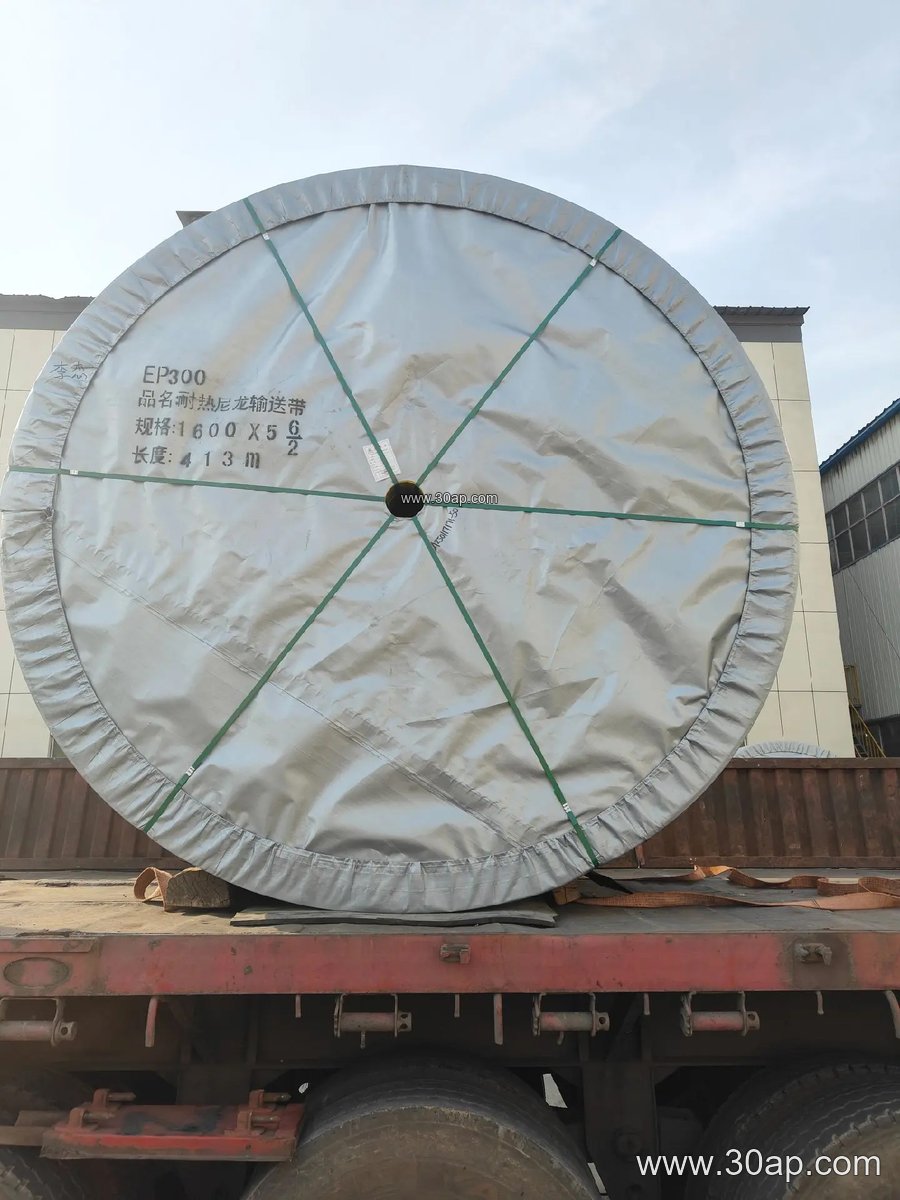
Cover grades are selected for the cargo. An Abrasion Resistant Conveyor Belt suits ore and clinker; a Heat Resistant Conveyor Belt handles sinter or cement-related hot loads; a Flame Retardant Conveyor Belt and Anti-Static Conveyor Belt are relevant in coal handling where fire risk is controlled. An Oil Resistant Conveyor Belt is used when the cargo or the machinery leaves oil traces.
Reference strength and construction ranges
| Item | Common reference range |
|---|---|
| EP carcass grades | EP200, EP400, EP630, EP800, EP1000, EP1250 |
| NN carcass grades | NN100, NN200, NN300, NN400 |
| Steel cord grades | ST1000, ST1600, ST2000, ST2500 |
| Belt width | B800, B1000, B1200, B1400, B1600, B1800 |
| Cover thickness | 4+2 mm, 5+2 mm, 6+2 mm, 8+3 mm |
| Carcass plies | Usually 2 to 6 layers in fabric designs |
These values are references, not fixed combinations. A wide belt is not tied to one pulley diameter, and shaft size is always determined by the conveyor design, not by belt width alone.
Where Port Belts Are Used
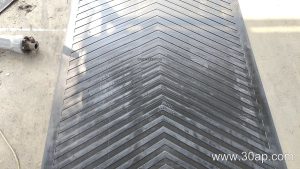
Bulk terminals, coal ports, iron ore berths, cement export facilities and power plant coal yards all rely on this equipment. A Coal Mining Conveyor Belt and an Iron Ore Conveyor Belt share the same handling logic but differ in cover hardness and impact resistance. In stockyards, a Chevron Conveyor Belt may be used on inclined transfer points, and a Corrugated Sidewall Conveyor Belt or Skirted Conveyor Belt helps contain material on steep or confined routes. A Pipe Conveyor Belt is an option where dust control and route flexibility are priorities.
The same terminal may use a Ship Loading Conveyor Belt on the boom and an Aggregate Conveyor Belt on the yard side. Environmental conditions matter too: a Cold Resistant Conveyor Belt is useful in northern ports, and a Chemical Resistant Conveyor Belt suits fertilizer or acid-bearing cargo.
Selection Points for Buyers
- Match the carcass to the duty: EP or NN fabric for moderate tension, steel cord for long high-tension lines.
- Choose the cover grade for the cargo, not just the tonnage. Abrasion, heat, oil and flame ratings are separate requirements.
- Confirm width and cover thickness against the actual conveyor layout and material lump size.
- Decide whether an Endless Conveyor Belt splice is needed for a critical loop, or whether mechanical splicing is acceptable.
- Check compatibility with the idler roller spacing, pulley diameters and take-up travel.
For terminal operators, the practical answer is to specify the belt as a system: carcass grade, cover compound, width, cover thickness and splice method together. That approach keeps a Port Conveyor Belt predictable in service and easier to replace when a shutdown window is short.