What pulley lagging actually does on a conveyor
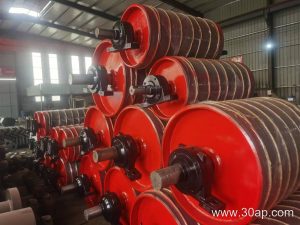
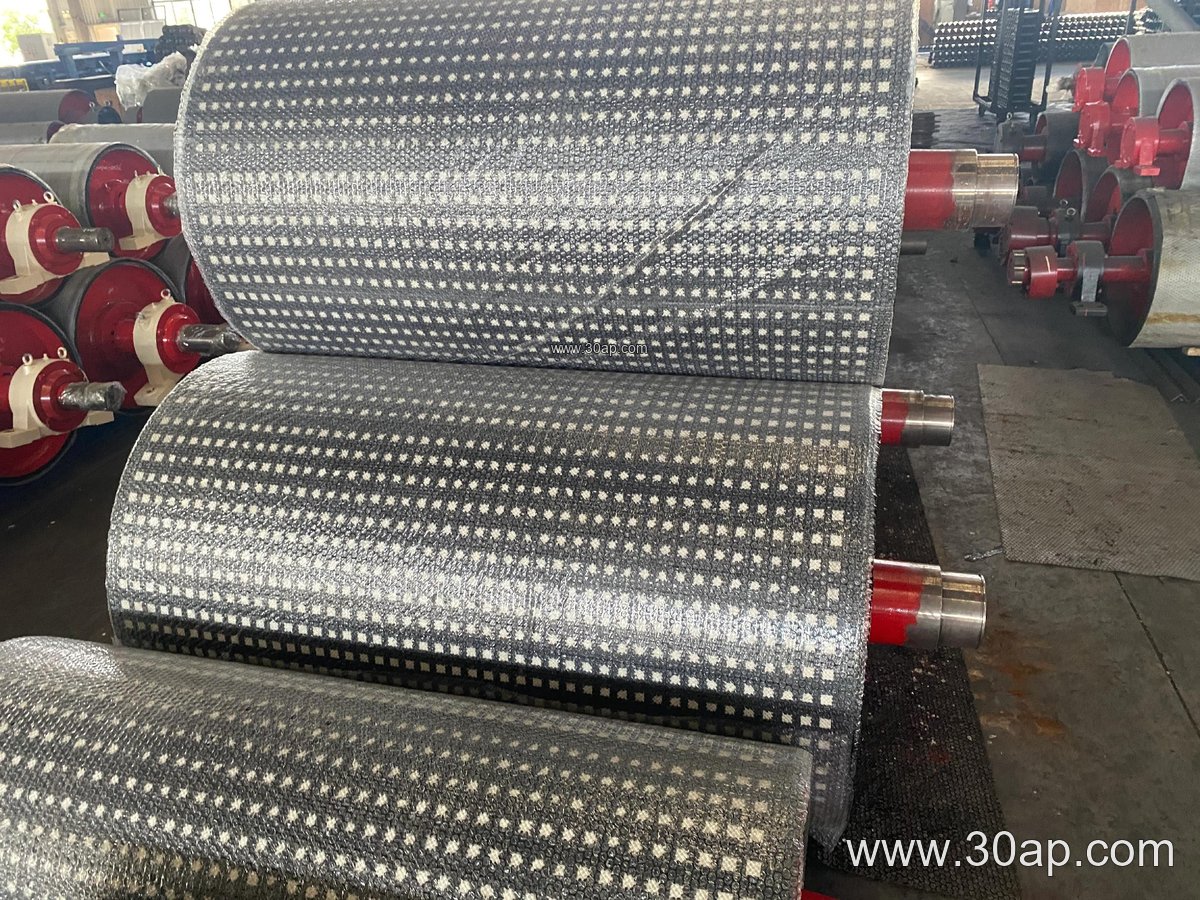
Belt conveyor pulley lagging is the rubber or ceramic layer bonded to the shell of a conveyor pulley. It sits between the steel drum and the conveyor belt, and it changes how the two behave together. On a drive pulley, the lagging raises the friction coefficient so the drum can transmit torque without slipping. On a tail or bend pulley, it protects the shell from abrasion and build-up and helps the belt run straight. In a quarry, a coal handling plant or a cement clinker line, a bare steel shell polished by fine dust can lose grip quickly; a properly specified lagging restores that grip and absorbs some of the shock from lumpy material.
Because the lagging is a wear part, it is also the cheapest thing to replace when traction drops. Re-coating a drum is far less costly than changing a pulley assembly or replacing a damaged conveyor belt.
How the lagging is built and fitted
Most lagging starts as a rubber sheet with a textured or smooth working face. The two common installation routes are hot vulcanized bonding, where the rubber is cured onto the shell under heat and pressure, and cold bonded rubber, which uses an adhesive system at ambient temperature. Hot vulcanized lagging generally gives the strongest bond and is preferred on high-tension drives; cold bonded sheets are easier to install on site and suit many tail and bend positions.
Surface forms matter as much as the compound:
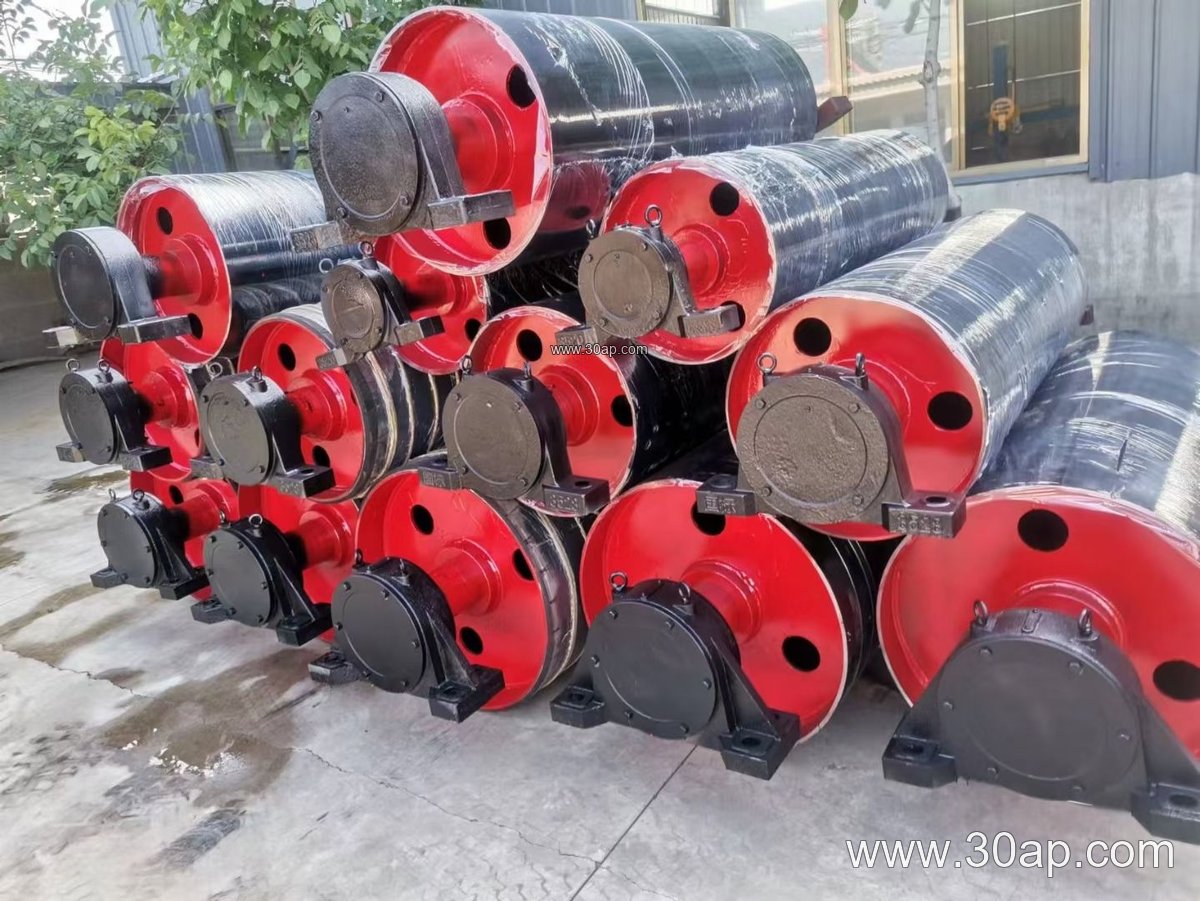
- Plain (smooth) lagging for non-drive pulleys where protection, not grip, is the goal.
- Diamond pattern lagging, which channels water and fines away from the contact patch and is a common choice on drive pulleys in wet or dusty service.
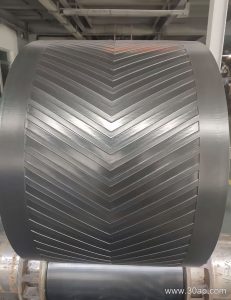
- Herringbone (chevron) lagging, which sheds material toward the edges and helps centering.
- Ceramic lagging, with embedded tiles for very high torque or abrasive duty.
Thickness is usually chosen from a range such as 8, 10, 12, 15 or 20 mm. Thicker is not automatically better: too much rubber can reduce the effective drum diameter and add cost where grip is already sufficient.
Matching lagging to the pulley position
The same sheet is not right for every drum. A drive pulley carries the highest torque and benefits from a grooved or ceramic face with good wet traction. A tail pulley mainly needs abrasion resistance and a clean surface so fines do not pack under the belt. A bend pulley or snub pulley usually runs at lower tension and can use a thinner plain or lightly textured cover. Tension pulleys in a take-up system see constant movement and benefit from a cover that resists edge wear.
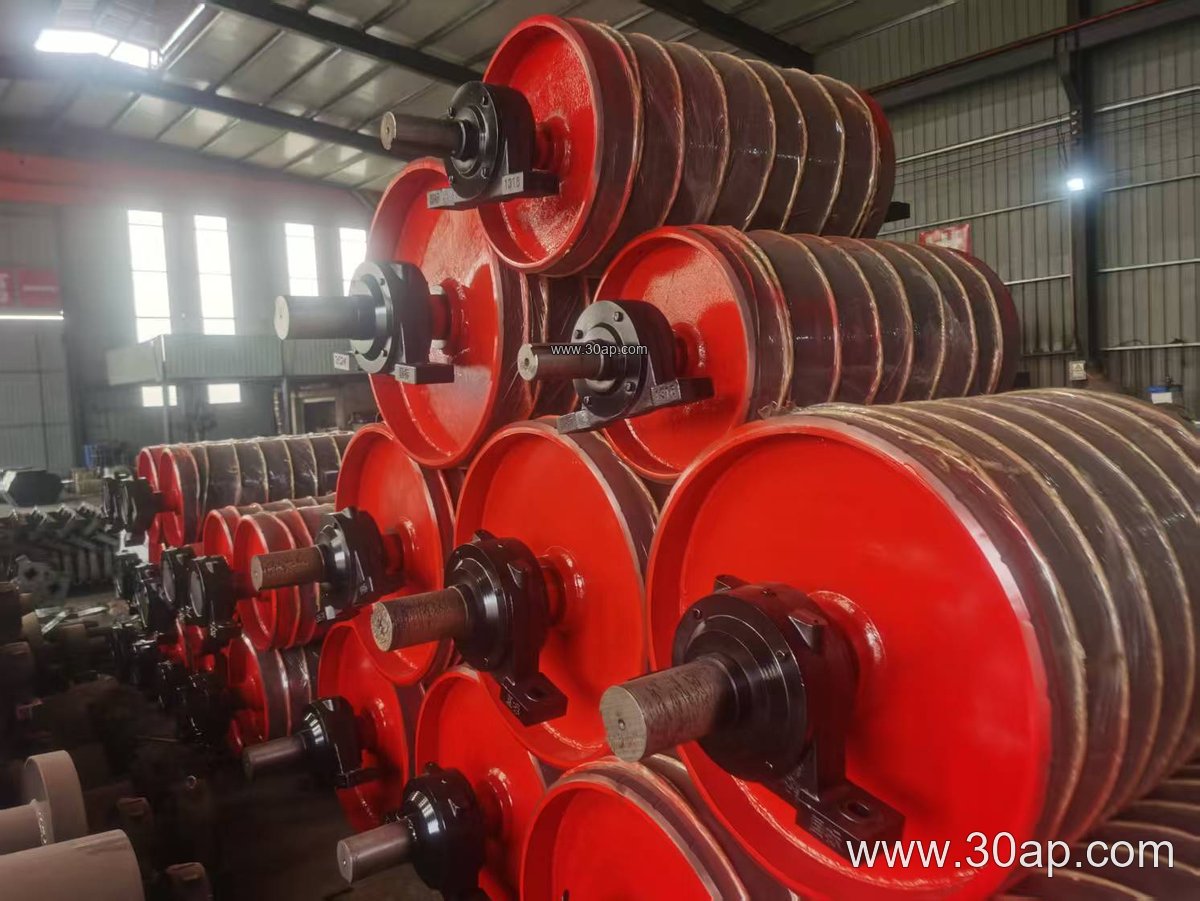
Diameter and face width follow the conveyor design. Typical combinations include B800 × Ø500, B1200 × Ø1000 and B1400 × Ø800, and face width is normally a little wider than the belt, for example about 500 mm for B400 and about 1400 mm for B1200. Shaft diameter is set by torque and load, not by belt width alone. Where the pulley is one of several on a long overland or underground mining conveyor, it is worth checking that the lagging specification matches the duty of that individual position rather than applying one sheet everywhere.
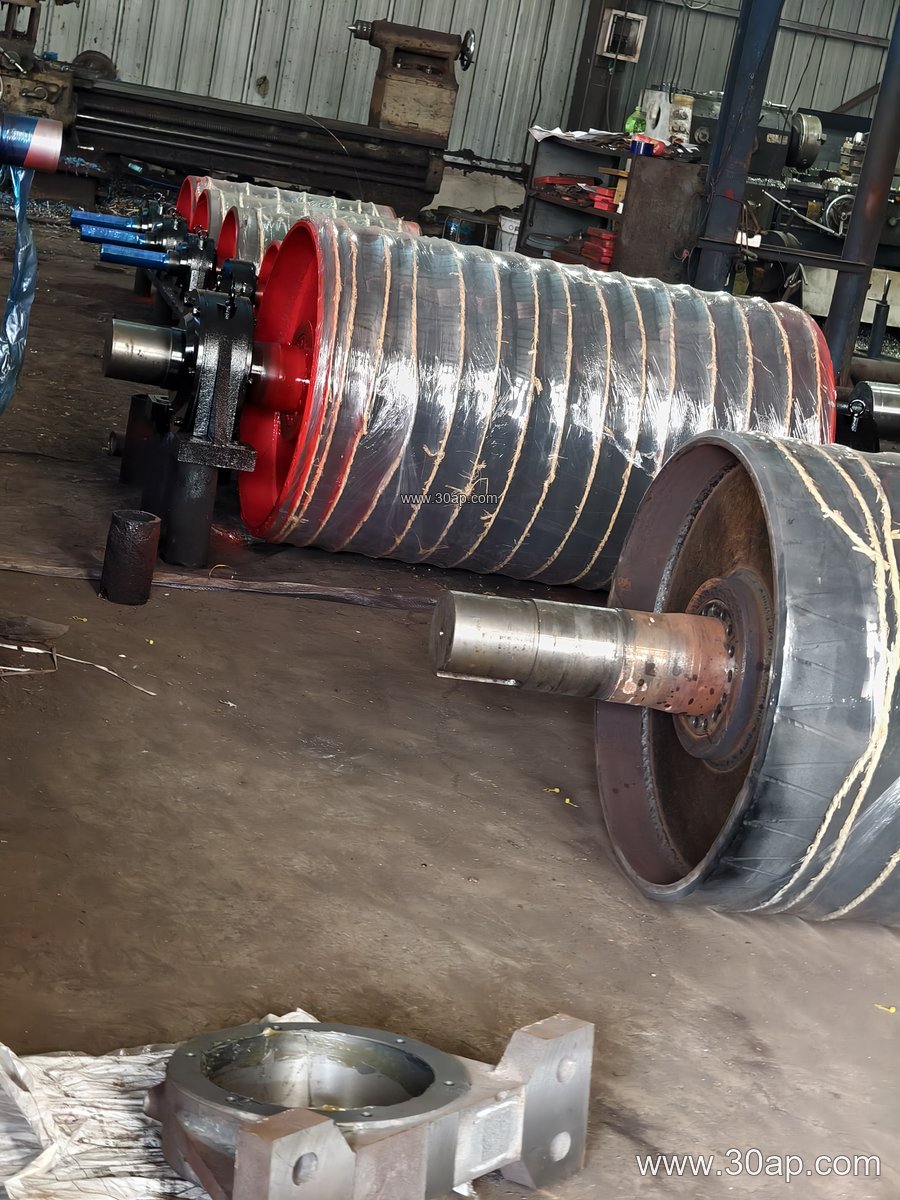
Specification points a buyer should confirm
Before ordering, collect the pulley role, shell diameter, face width, belt width and the material being carried. Then agree on the compound, surface pattern, thickness and bonding method. A short table keeps the enquiry clear:
- Pulley type: drive, tail, bend, take-up or snub
- Shell diameter: Ø200 to Ø1800 typical range
- Face width: matched to belt width, e.g. B650 about 750 mm
- Lagging thickness: 8, 10, 12, 15 or 20 mm
- Surface: plain, diamond, herringbone, ceramic
- Bonding: hot vulcanized or cold bonded
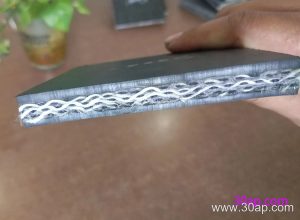
Ask how the edges will be sealed and whether the supplier can supply pre-cut sheets or a full wrap. For a food or clean-duty line, confirm the compound is suitable for the environment; for a steel cord conveyor belt drive on a long haul, confirm the lagging can handle the starting torque without polishing. On a coal mining conveyor, flame retardant and anti-static properties of the belt are usually specified separately, so check that the lagging compound is compatible with that service.
Installation and maintenance notes
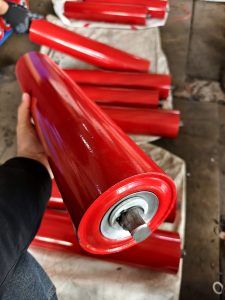
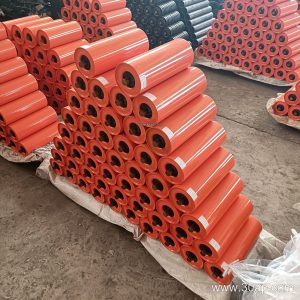
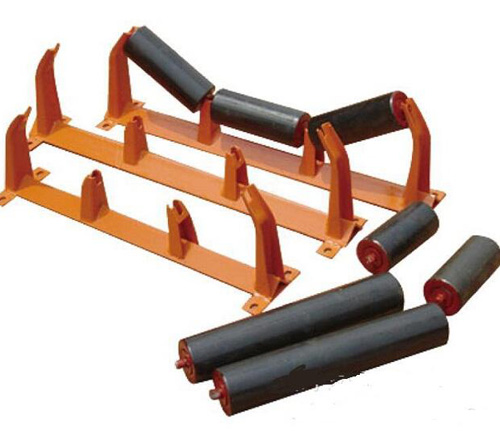
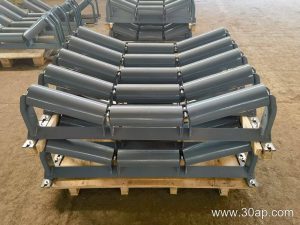
Cleanliness decides how long lagging lasts. Rubber bonded over rust, oil or dust will lift at the edges. After fitting, check belt tracking and re-tension if the new cover changes the drum diameter. Inspect periodically for glazing, cuts, missing ceramic tiles and lifted seams. A glazed drive pulley can often be restored by re-texturing rather than full replacement. Keep the idler roller and pulley surfaces free of build-up, and check that the conveyor bracket and frame are aligned so the belt does not run off-center and chew the lagging edge.
Used well, belt conveyor pulley lagging is a low-cost way to protect the drum, hold the belt and keep a bulk handling line running through dusty, wet or abrasive conditions.