What the Tail Pulley Does
A tail pulley sits at the return end of a belt conveyor, opposite the drive. Its main job is to turn the belt back into the carrying run while keeping tension stable and tracking straight. On a quarry conveyor or a cement plant clinker line, this return-end position means the pulley often works in a dusty, gritty environment, so the seal arrangement and shell surface matter as much as the basic dimensions.
The tail pulley is not the same as a drive pulley, and it should not be swapped with a bend pulley or a take-up pulley. Each position has its own load profile. A drive pulley transmits torque through the belt, while the tail pulley mainly guides and supports the return strand. A bend pulley changes belt direction without being the terminal end, and a take-up pulley works with the tensioning system. Keeping these roles separate avoids planning errors.
Construction and Surface Options
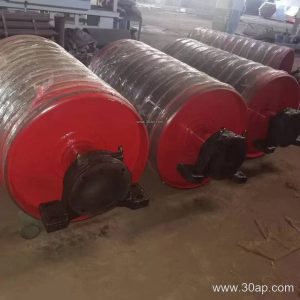
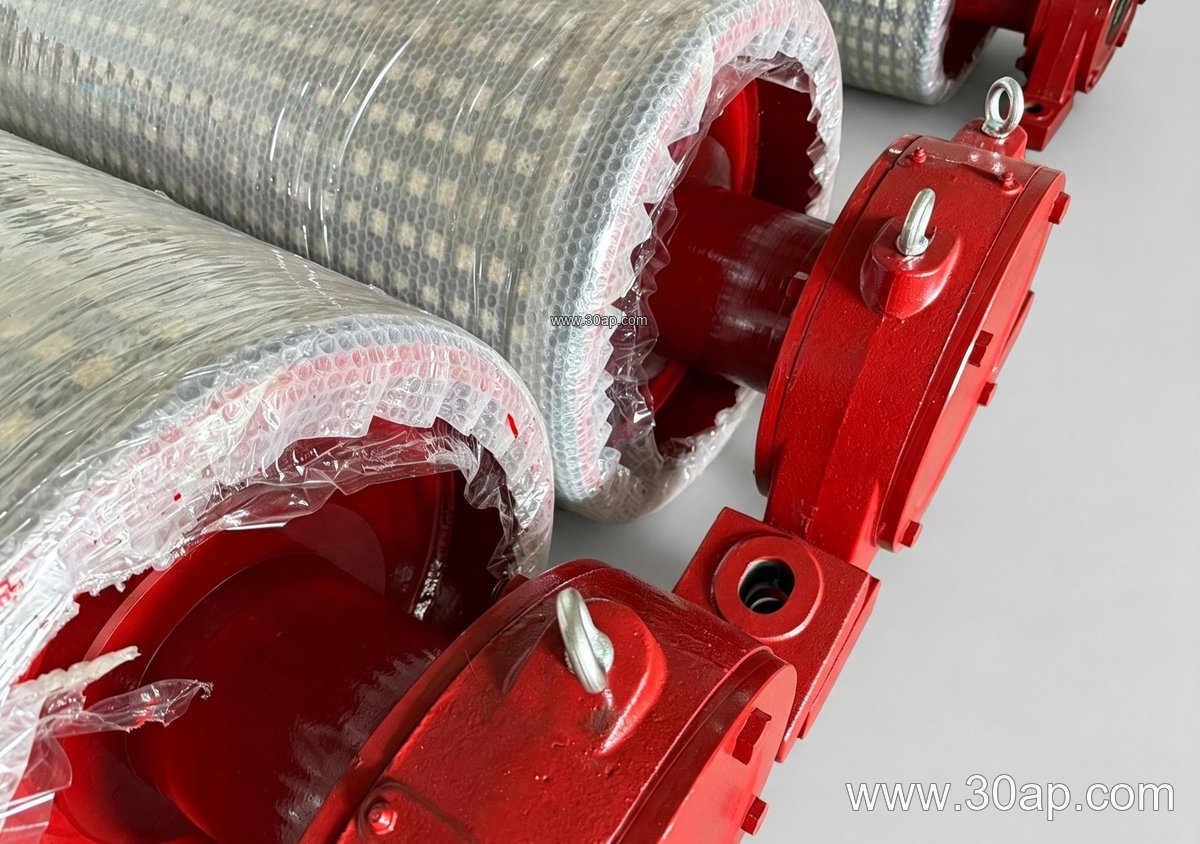
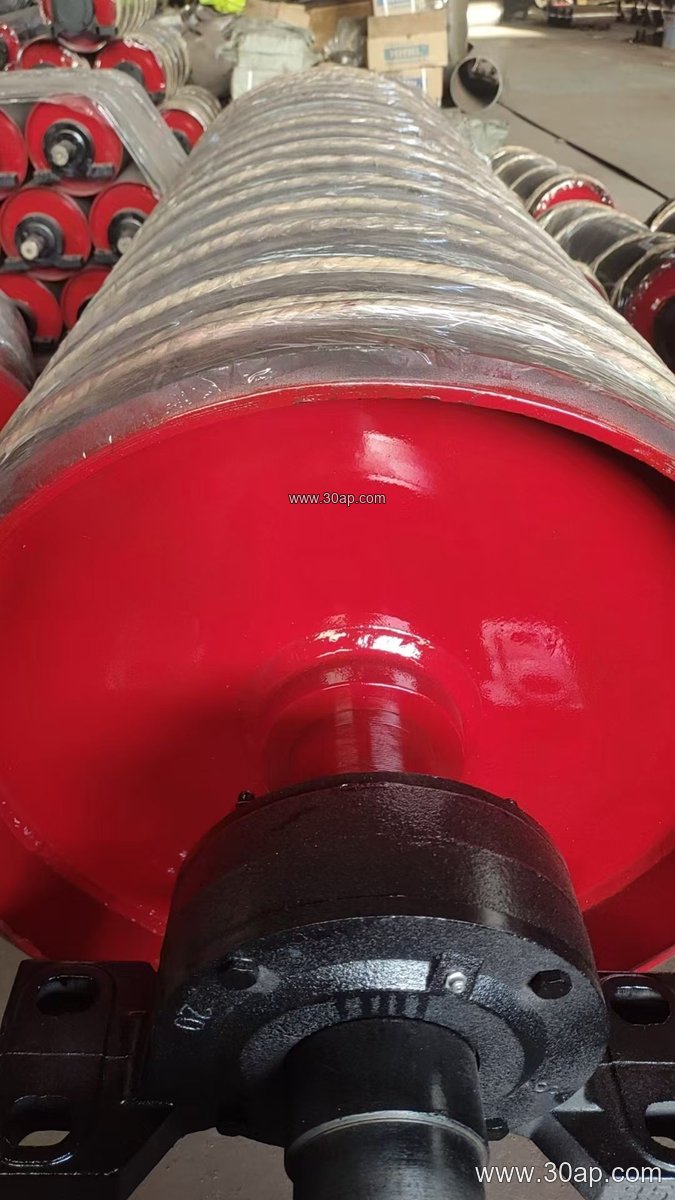
A typical tail pulley is built from a steel shell, a shaft, end discs, and bearing housings that fit into the conveyor bracket. The shell may be plain, or it may carry lagging to improve grip and protect the surface. Common lagging choices include cold-bonded rubber, hot-vulcanized rubber, diamond grooved rubber, and ceramic lagging. Plain shells are common where material build-up is not a major concern.
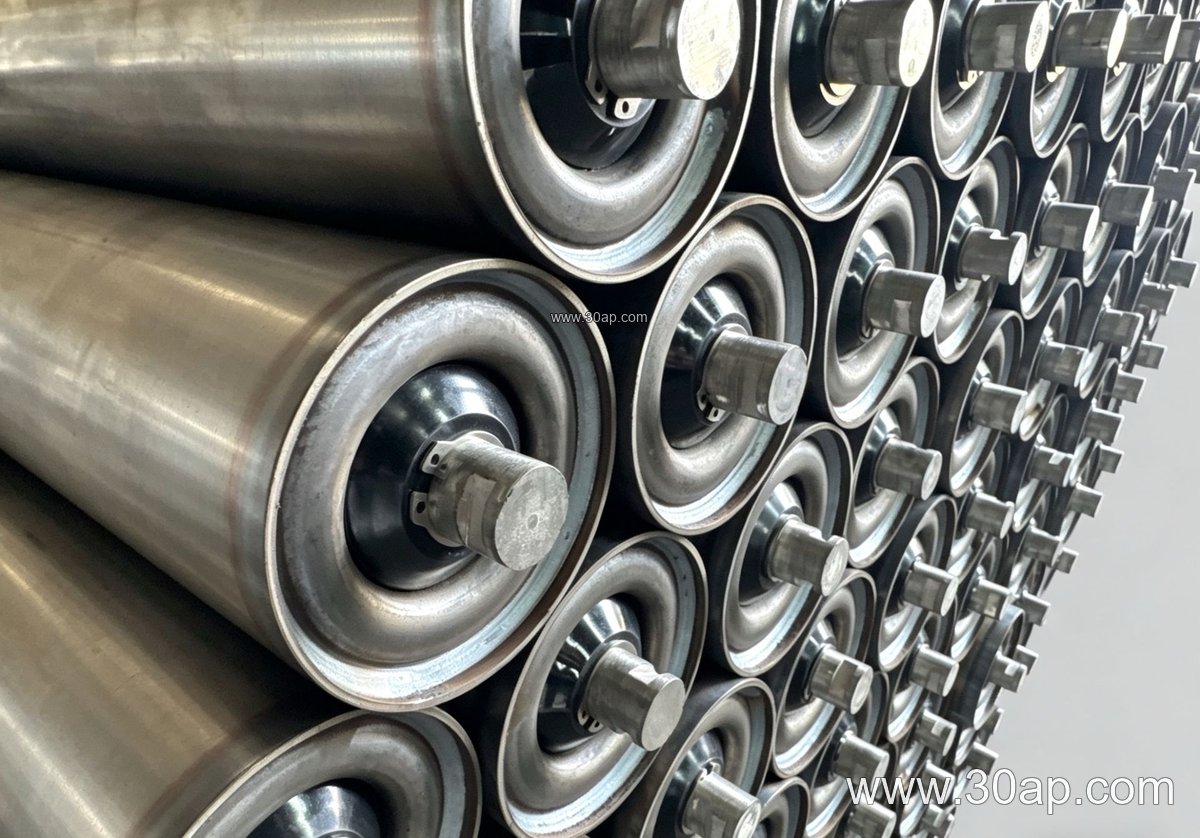
Lagging thickness is usually selected from a range such as 8, 10, 12, 15, or 20 mm, depending on belt tension and the abrasiveness of the material. In a sand and gravel line, a rubber-lagged tail pulley helps shed fines and reduces belt slip at the return end. In a coal handling system, flame retardant belt grades may be used together with suitable lagging, although the pulley itself should be specified to match the site’s safety requirements.
Sizing the Shell and Shaft
Shell width is normally wider than the belt. Reference values often used in planning include B400 with about 500 mm face width, B650 with about 750 mm, B800 with about 950 mm, and B1200 with about 1400 mm. These are common planning references, not fixed universal rules. A B1200 x Ø1000 tail pulley and a B800 x Ø500 unit may both be reasonable in different conveyor designs.
Diameter choices commonly include Ø200, Ø250, Ø315, Ø400, Ø500, Ø630, Ø800, Ø1000, and larger sizes where the layout requires them. There is no rule that one belt width can only match one pulley diameter. The diameter should be checked against belt thickness, minimum bend radius, and the space available at the return end.
Shaft diameter is determined by torque and load, not by belt width alone. Common shaft sizes range from Ø50 up to Ø200, but the final value must come from the conveyor design calculation. A heavy-duty mining conveyor with a wide belt and high tension will need a different shaft from a light aggregate conveyor of the same width.
Working With the Belt and Supporting Parts
The tail pulley interacts closely with the conveyor belt, the idler roller set, and the conveyor bracket that holds the bearing housings. On a long overland or underground mining conveyor, misalignment at the tail end can cause edge damage and belt wander. A properly centered pulley, square frame, and clean return path help avoid this.
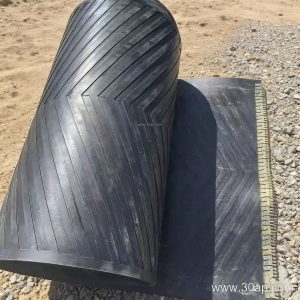
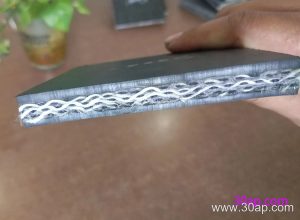
Belt selection also affects pulley choice. An EP conveyor belt or a multi-ply fabric core belt may tolerate a smaller return-end diameter than a thick steel cord belt. Abrasion resistant conveyor belts used in iron ore or copper ore handling may call for a more protective lagging surface, while a heat resistant conveyor belt in a sintering plant needs a pulley specification that accounts for temperature at the return end.
Buyer Checklist
- Confirm the tail pulley position and whether a take-up or bend pulley is also present.
- State belt width, belt type, and belt thickness so the shell width and diameter can be checked.
- Provide the calculated shaft load and torque rather than relying on belt width alone.
- Choose lagging according to material abrasiveness, moisture, and build-up risk.
- Check bearing housing dimensions against the existing conveyor bracket.
- Ask for the pulley drawing with shell, shaft, lagging, and bearing details before ordering.
For a coal mining conveyor, a cement plant conveyor, or a port bulk material conveyor, the tail pulley should be treated as part of the whole return-end assembly. A clear specification, correct diameter, and suitable surface form will keep the belt running smoothly and reduce unexpected downtime.