What a Conveyor Leg Does on a Belt System
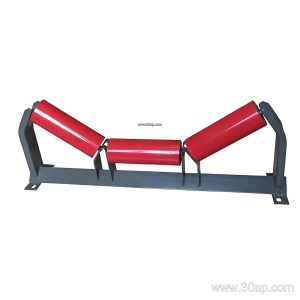
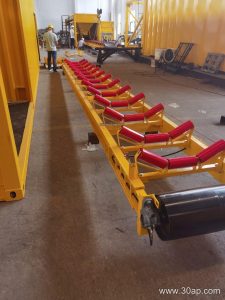
A conveyor leg is the vertical support that carries the idler frames, pulleys and belt load down to the floor or foundation. In a typical troughing section, the leg works together with a conveyor bracket, a crossbeam and a set of conveyor pulleys or idler rollers to hold the belt at the required angle. The leg is easy to overlook, yet it controls alignment, height and the rigidity of the whole line. On a quarry conveyor belt or an aggregate conveyor belt, a weak or poorly anchored leg shows up quickly as belt wander, frame vibration and spillage.
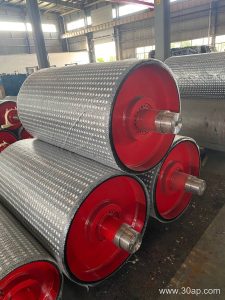
The same component is often called a conveyor support leg or stringer leg. These are accurate equivalent names for the same product, not different hardware. Do not confuse it with a drive pulley, tail pulley or bend pulley: those are belt-wrapping components, while the leg is a structural support.
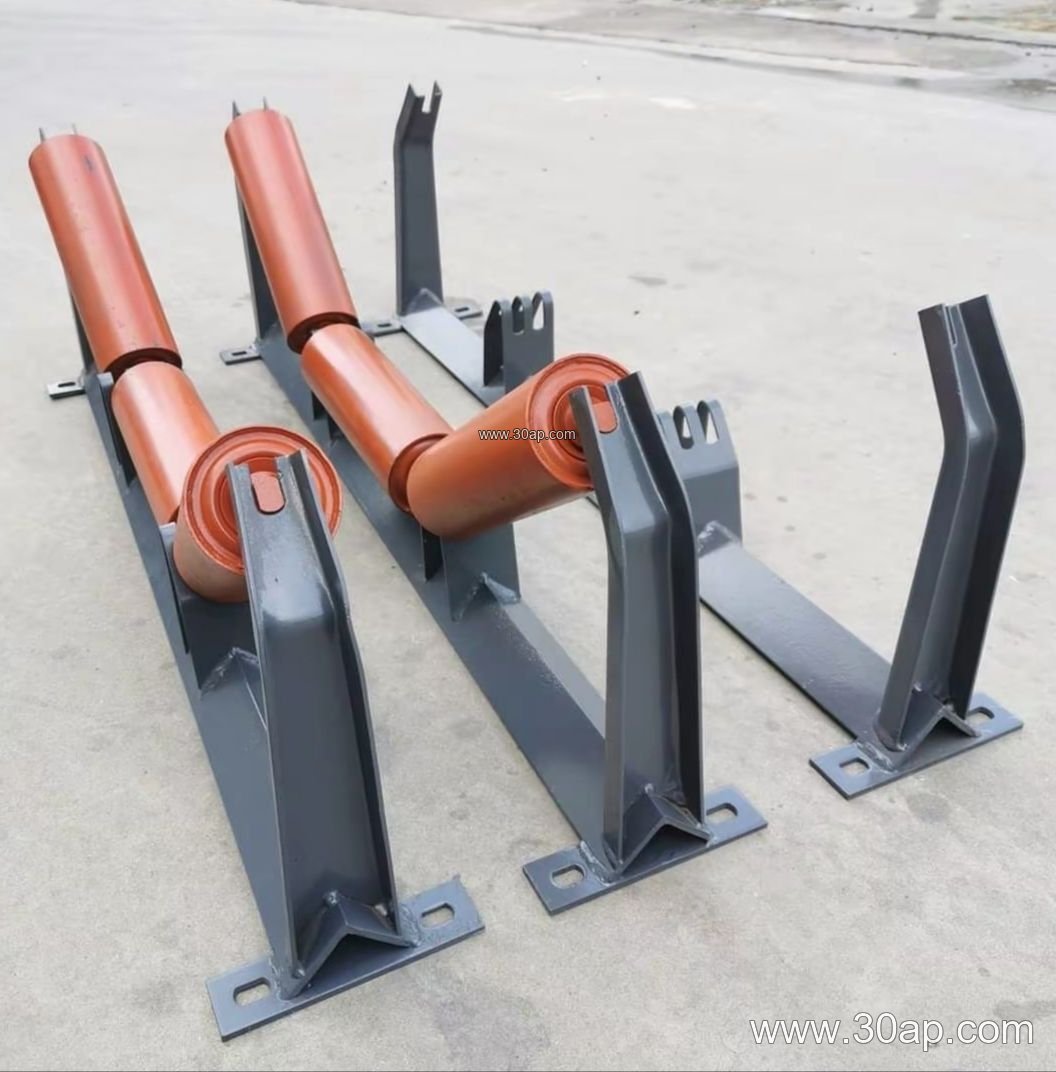
How the Leg Is Built
Most legs are fabricated from angle steel, channel steel or folded steel plate. A fixed leg is cut and drilled to a set height. An adjustable leg uses slotted holes or a telescopic section so the frame height can be trimmed on site. The top of the leg usually bolts to a conveyor bracket, and the base sits on a base plate with anchor holes. Hot-dip galvanizing or a paint system is common in outdoor installations such as a port conveyor belt line or a power plant coal yard.
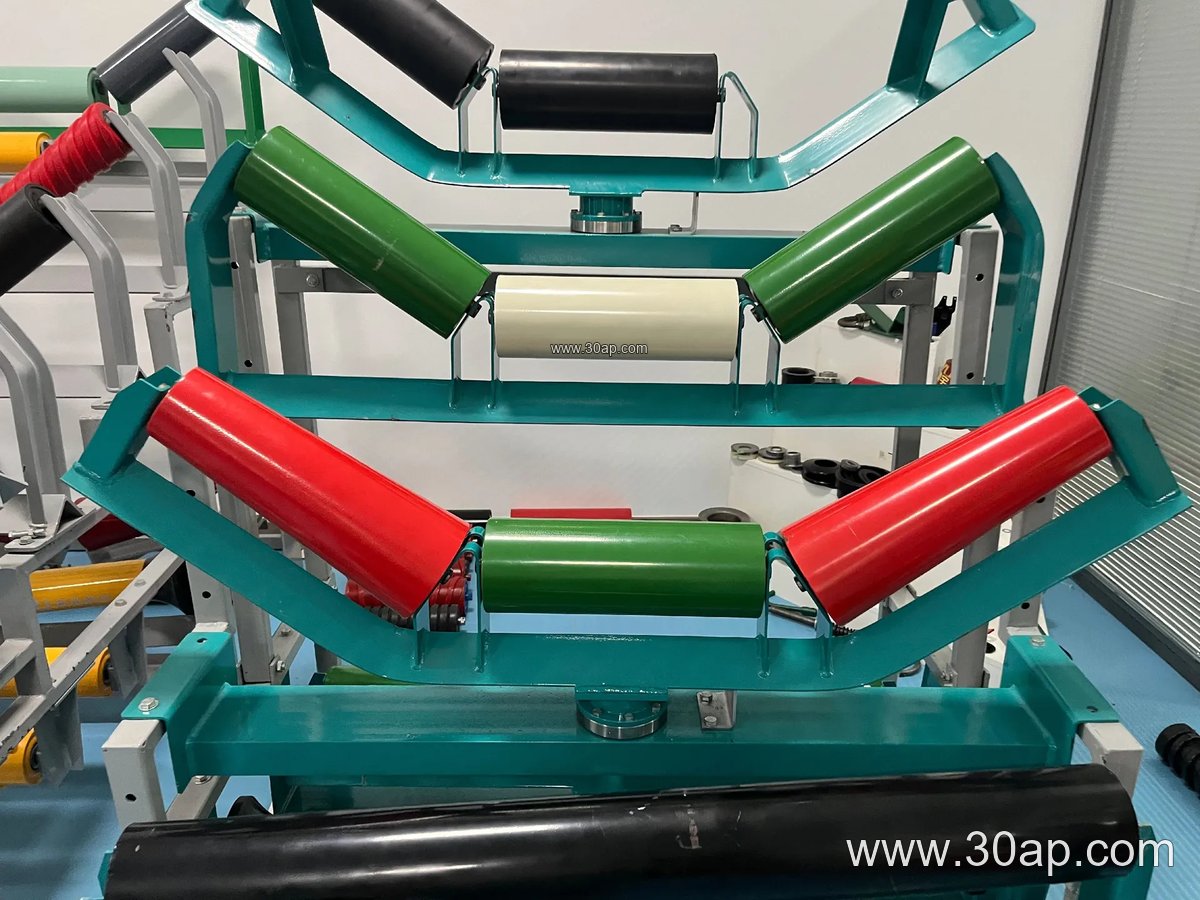
- Fixed leg: welded or bolted frame, single design height
- Adjustable leg: slotted or telescopic, allows height correction
- Hinged or suspended leg: used where the frame must follow a curve or take up movement
The leg must match the stringer spacing and the belt width. A narrow frame on a 500mm conveyor belt is not built like the frame under a 1800mm wide conveyor belt. Installation hole spacing and crossbeam length are set by belt width, trough angle and idler diameter, so they should be confirmed from the layout drawing rather than assumed.
Trough Angle, Belt Width and Idler Diameter
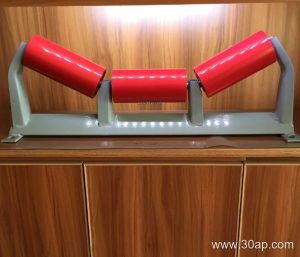
The leg height and bracket position are tied to the trough angle used in the carrying section. Common trough angles are 20, 30, 35 and 45 degrees. An adjustable bracket can be reset between these angles, which helps when a plant changes material or reuses a frame. The idler roller diameter also affects the frame envelope; typical sizes include Ø89, Ø108, Ø133, Ø159 and Ø194.
Some reference combinations that appear in project drawings are shown below. These are examples, not fixed rules. A given belt width can be used with more than one trough angle or roller diameter.
| Belt width | Trough angle | Idler diameter | Typical use |
|---|---|---|---|
| B650 | 30 degrees | Ø89 | Small aggregate line |
| B800 | 35 degrees | Ø108 | Stone crushing plant |
| B1000 | 35 degrees | Ø133 | Cement plant raw material |
| B1200 | 45 degrees | Ø133 | Coal handling, high capacity |
| B1400 | 35 degrees | Ø159 | Iron ore and heavy bulk |
| B1800 | 45 degrees | Ø194 | Large port or mine conveyor |
When the belt carries abrasive ore, a heavy-duty mining conveyor belt or a high abrasion resistant conveyor belt adds load, so the leg and its anchor bolts should be sized for the extra weight. In a coal mine, a flame retardant conveyor belt or PVG conveyor belt is common, and the leg layout must leave clearance for the belt edge and for maintenance access.
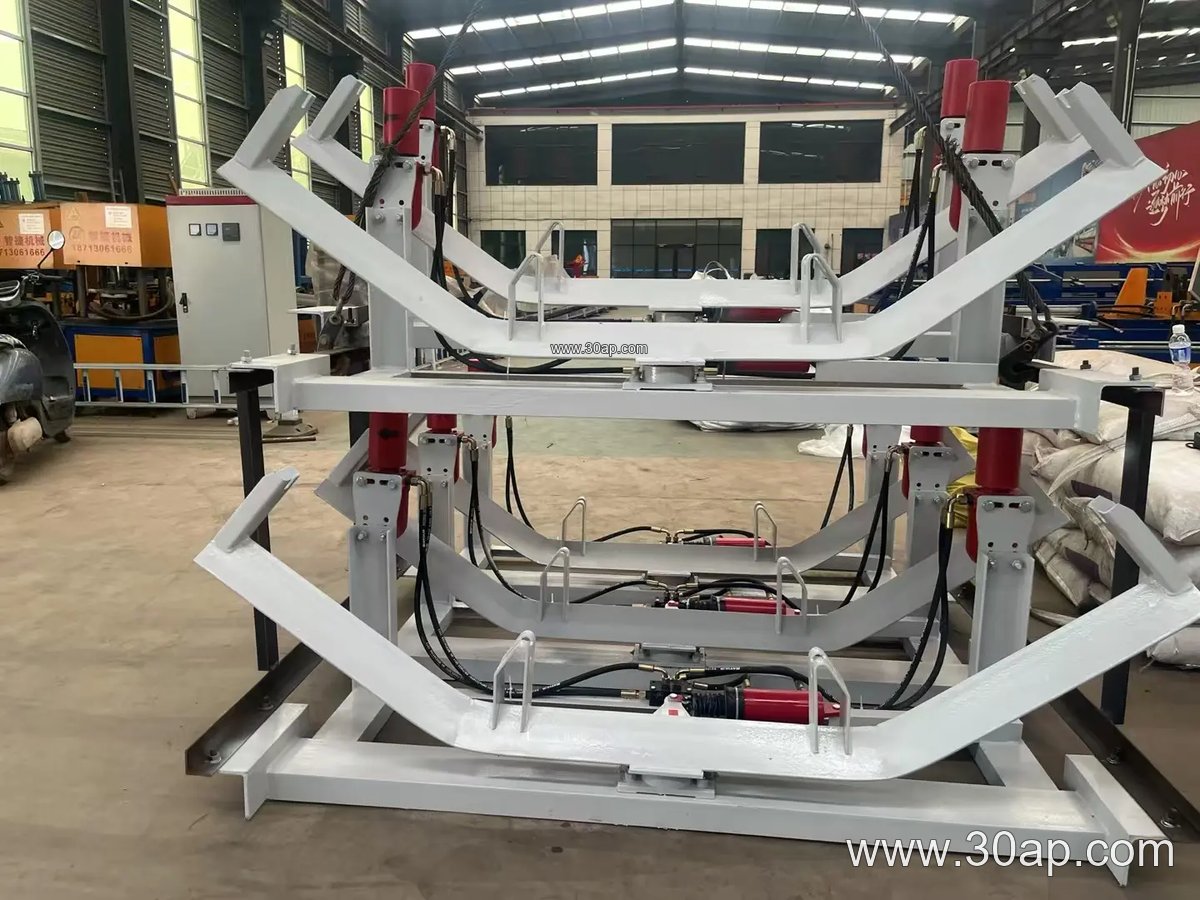
Where Conveyor Legs Are Used
Legs appear anywhere a belt line is elevated: a limestone quarry transfer tower, a sand and gravel washing line, a cement plant clinker section, a steel plant sintering line, a biomass yard, a fertilizer granulation plant, or a grain silo gallery. In a tunnel muck line, short adjustable legs are handy because the floor is rarely level. In a ship loading system, taller legs with cross bracing carry the long span between trestles.
The choice between a fixed and an adjustable leg often comes down to installation tolerance. Fixed legs are stiffer and cheaper to fabricate; adjustable legs absorb foundation error and allow small changes in belt height without cutting steel. Neither is a substitute for a drive pulley or a bend pulley, which perform a different job in the same conveyor.
Buyer Checklist
- Confirm belt width, trough angle and idler diameter before ordering.
- Ask for the base plate hole pattern and anchor bolt size.
- Check whether the leg is fixed or adjustable, and the adjustment range.
- Match the surface finish to the site: indoor, outdoor, wet or dusty.
- Verify that the leg pairs with the specified conveyor bracket and stringer.
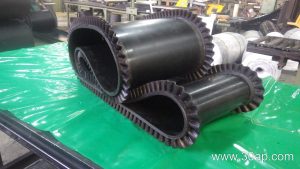
- Allow clearance for a skirted conveyor belt or corrugated sidewall conveyor belt where fitted.
For a complete frame package, buyers often combine legs with conveyor pulleys, idler rollers and brackets from the same drawing set so that heights and hole positions line up. Reviewing the leg together with the belt specification, such as an EP conveyor belt or a steel cord conveyor belt rating, keeps the support structure consistent with the duty of the line.