What a Heavy-Duty Belt Conveyor Idler Does on the Line
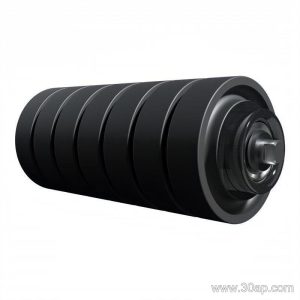
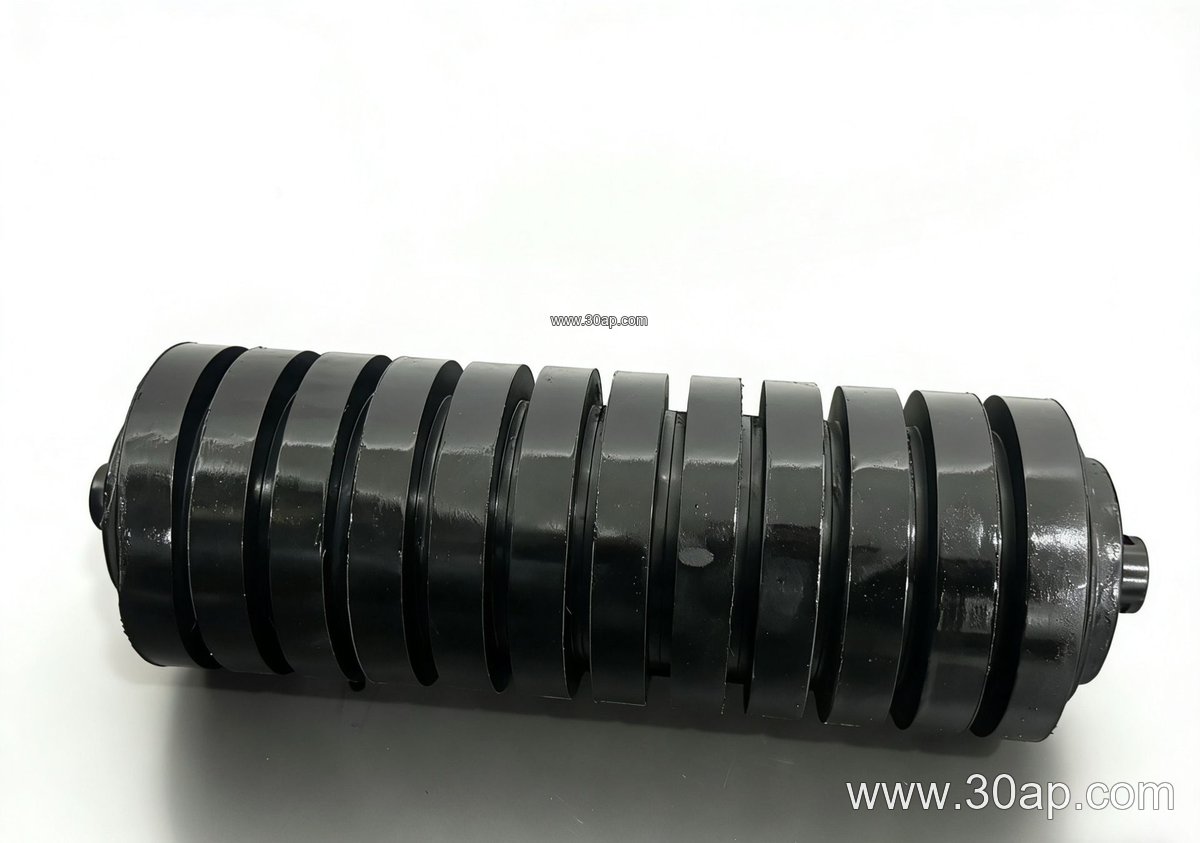
A heavy-duty belt conveyor idler is the rotating support that carries the conveyor belt and its load along the length of a bulk handling system. In a quarry, a cement plant, or a power plant coal yard, the idler roller set takes continuous impact, abrasive dust, and heavy tonnage, so the difference between an ordinary roller and a reinforced design shows up quickly in belt tracking and bearing life. The idler does not pull the belt; it supports it, reduces friction, and helps maintain the trough profile that keeps material centered.
On the same conveyor, the conveyor pulley at the drive and tail ends performs a different job, and the two should never be confused when specifying parts. A drive pulley transmits torque, a tail pulley redirects the belt, and a bend pulley changes its path. The heavy-duty belt conveyor idler belongs to the carrying and return side, and it is selected by load, speed, environment, and belt width rather than by pulley diameter.
Construction and Common Configurations
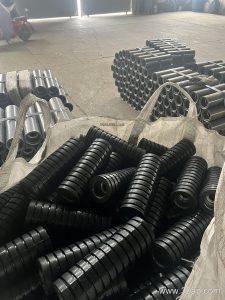
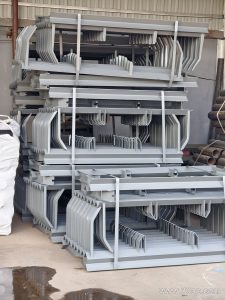
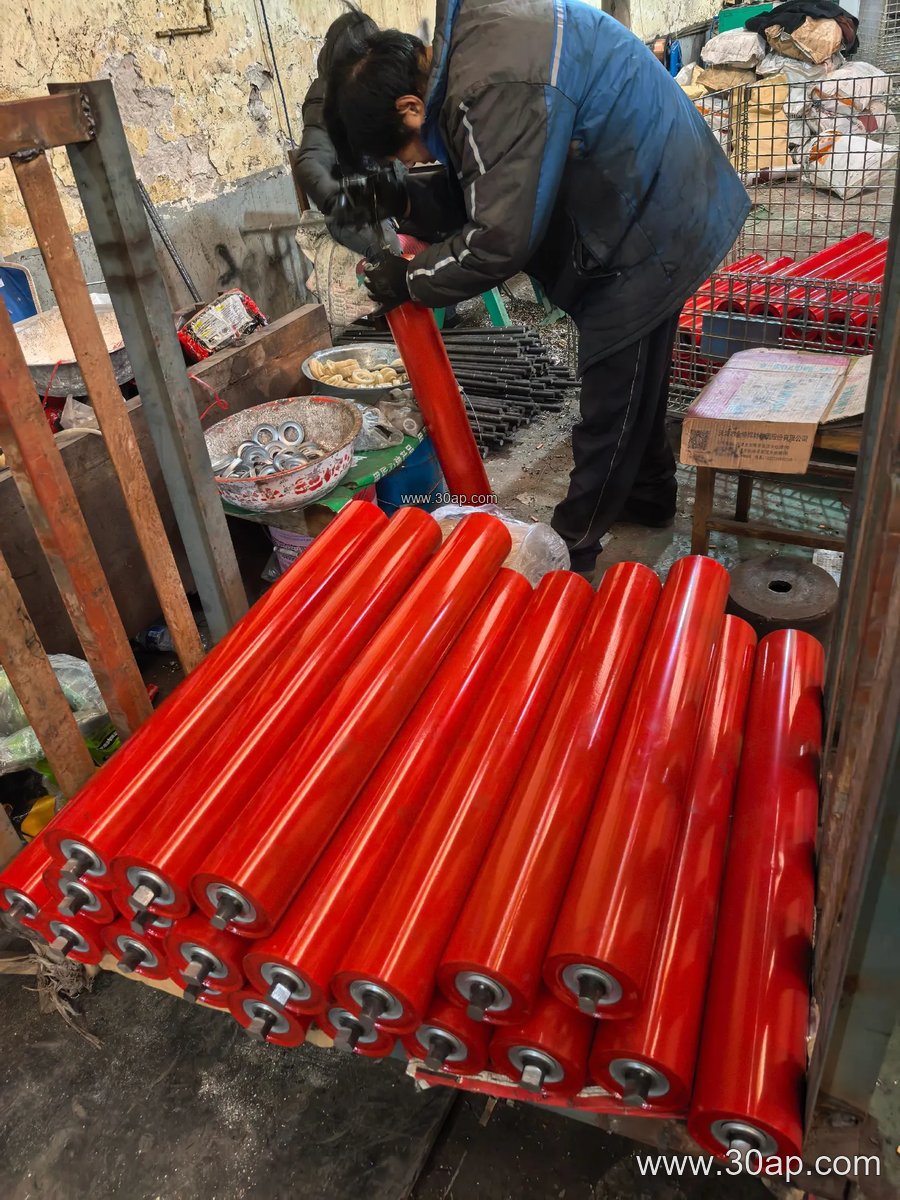
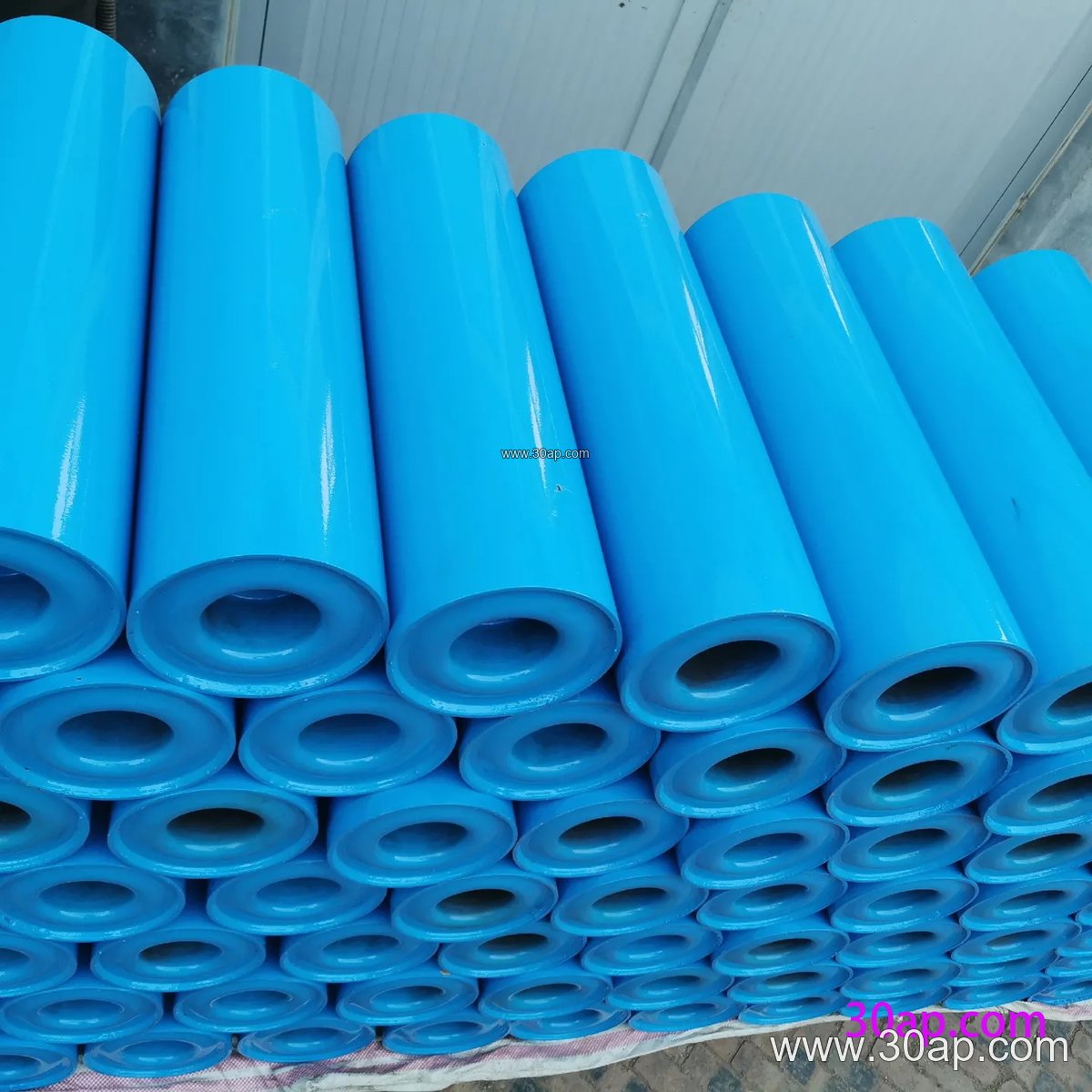
Most heavy-duty belt conveyor idlers use a steel tube shell, welded end caps, a sealed bearing housing, and a shaft that fits into a conveyor bracket or frame. Roller surfaces may be plain steel, nylon, ceramic, or rubber-ringed, and the choice depends on whether the concern is abrasion, material buildup, or impact. Bearing sizes such as 6205, 6305, 6308, or 6310 appear across the range, and the correct match follows the load calculation, not a single fixed rule.
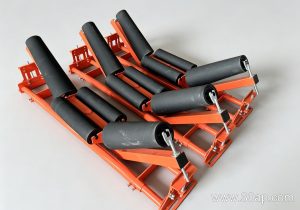
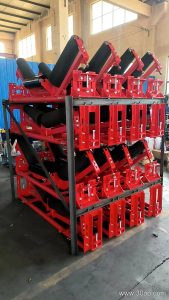
Troughing sets commonly use two or three rolls, with trough angles of 20, 30, 35, or 45 degrees. Return sides may use a flat roll, a V-return, or a spiral roller for sticky material. Impact idlers with rubber rings are often placed under a transfer point where a crusher conveyor belt receives falling rock. Self-aligning idlers, including friction and tapered types, are used where belt wander needs correction. These are related choices, not replacements for the main heavy-duty carrying idler.
Reference Dimensions That Often Appear in Specifications
The table below shows typical roller diameters, belt width ranges, and common roll lengths for three-roll troughing sets. Values are for reference and should be confirmed against the actual conveyor design.
| Belt Width | Common Roller Diameter | Typical Roll Length (three-roll set) | Common Trough Angle |
|---|---|---|---|
| B500 | Ø63 to Ø89 mm | about 200 mm | 20 to 35 degrees |
| B650 | Ø76 to Ø108 mm | about 250 mm | 20 to 35 degrees |
| B800 | Ø89 to Ø127 mm | about 315 mm | 30 to 35 degrees |
| B1000 | Ø102 to Ø133 mm | about 380 mm | 30 to 35 degrees |
| B1200 | Ø108 to Ø159 mm | about 465 mm | 30 to 35 degrees |
| B1400 | Ø127 to Ø178 mm | about 530 mm | 30 to 45 degrees |
| B1600 | Ø133 to Ø194 mm | about 600 mm | 30 to 45 degrees |
| B1800 | Ø159 to Ø219 mm | about 670 mm | 35 to 45 degrees |
| B2000 | Ø178 to Ø219 mm | about 750 mm | 35 to 45 degrees |
Side rolls and center rolls can differ in length, and a wider belt does not automatically dictate one shaft diameter. The frame, load, and belt speed decide that. A heavy-duty conveyor idler on an iron ore line may use a larger roller and thicker shell than a comparable width on a light aggregate duty, even when the belt width looks similar.
Where Heavy-Duty Idlers Are Used
Two demanding settings illustrate the range. In a limestone quarry or stone crushing line, dust and sharp rock edges attack the roller shell and seal, so abrasion-resistant rollers and well-protected bearings matter. At a power plant coal handling system, the idler must tolerate continuous operation and often a flame retardant conveyor belt environment where spillage and fine coal dust are present. Similar duty appears in copper and gold mining, sinter plants, and port ship loading conveyors.
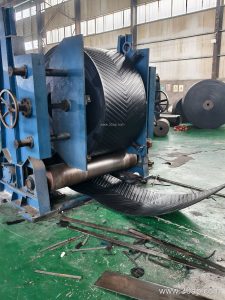
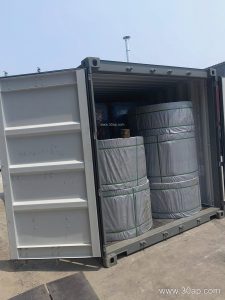
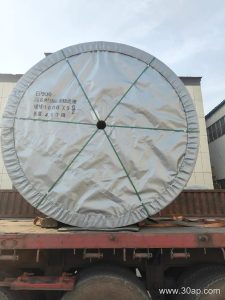
The belt itself influences idler choice. A steel cord conveyor belt is stiff and heavy, while a multi-ply fabric core or EP conveyor belt flexes differently over the trough. Transition idlers are often placed where the belt changes from flat to troughed, reducing stress at the edge. Impact beds and rubber-ringed idlers protect the belt at transfer points, and a skirted conveyor belt or corrugated sidewall belt may need a modified frame layout.
What Buyers Should Check Before Ordering
- Confirm the belt width, trough angle, and roll length rather than assuming a standard set.
- Match roller diameter and bearing to the actual load and speed, and ask for the calculation basis.
- Review seal design and shell thickness for dusty, wet, or abrasive service.
- Check that the shaft ends and mounting dimensions fit the existing conveyor bracket.
- Consider the environment, including heat, oil, or cold, when choosing the roller surface and bearing protection.
For anyone sourcing components, the practical reference is the conveyor layout drawing and the duty description. A heavy-duty belt conveyor idler is a wear part, and its service life depends on correct spacing, alignment, and frame condition as much as on the roller itself. Matching the idler to the belt, the load, and the site conditions keeps a bulk handling line running with fewer stoppages.