What a Plastic Idler Is and Where It Fits
A plastic idler is a conveyor idler roller whose barrel is made from engineering plastic rather than steel. It sits under the belt on the carrying side or beneath the return strand, supporting the conveyor belt and letting it travel with low rolling resistance. In a quarry, a limestone mine or a sand and aggregate line, a plastic idler roller is often chosen where corrosion, weight or belt wear matter more than raw load capacity.
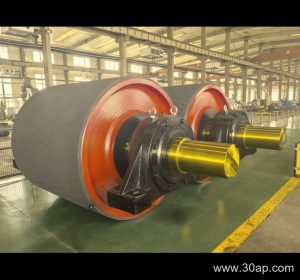
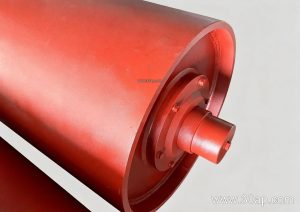
It is not a replacement for a drive pulley, tail pulley or bend pulley. Those are conveyor pulleys that transmit power or change belt direction. The plastic idler is a free-rolling support component, usually mounted in a conveyor bracket or frame.
How a Plastic Idler Roller Is Built
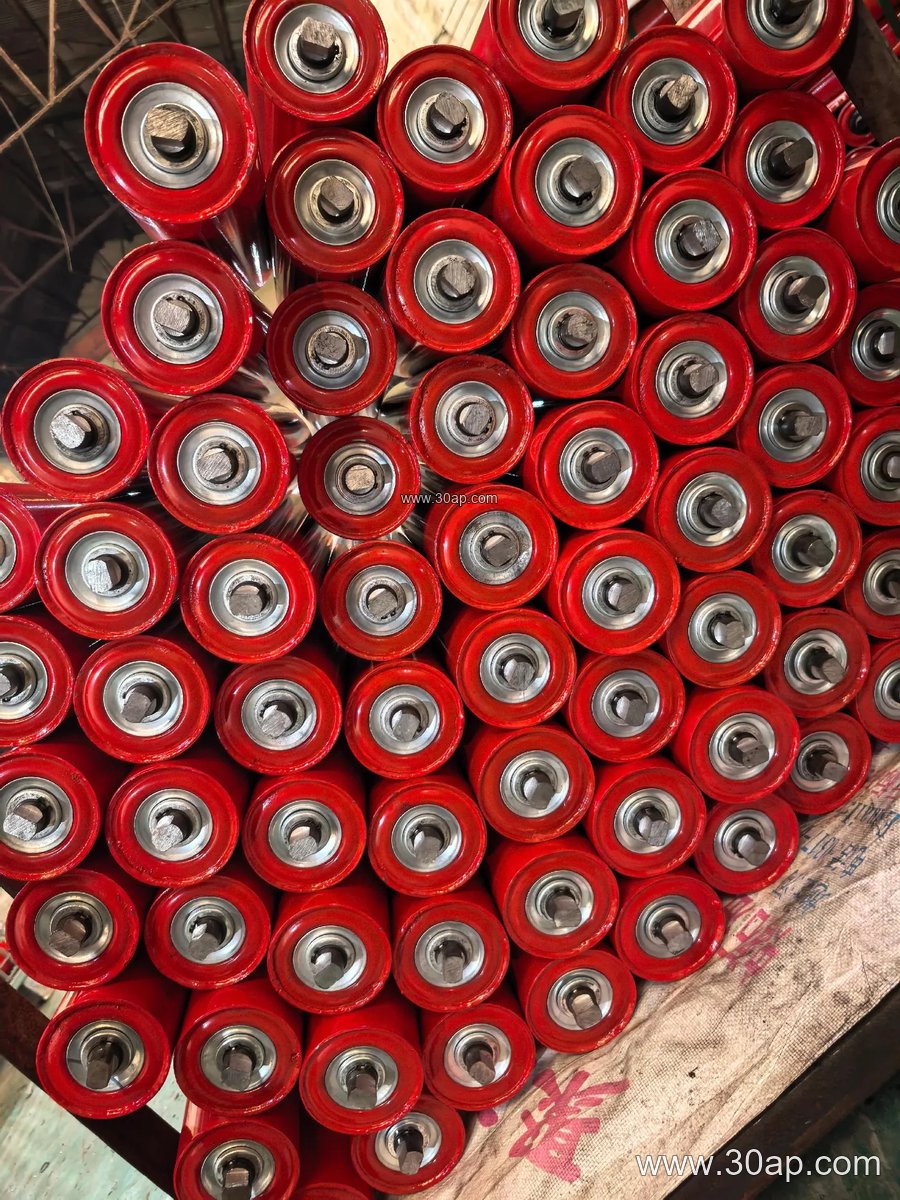
The core of the product is the plastic barrel, commonly made from high-density polyethylene, ultra-high-molecular-weight polyethylene or a reinforced polymer. It is fitted with bearing housings at each end, labyrinth seals to keep out dust and moisture, and a steel shaft. Bearings such as 6204, 6205, 6305 or 6308 are common, but the bearing choice depends on load and speed, not on barrel diameter alone.
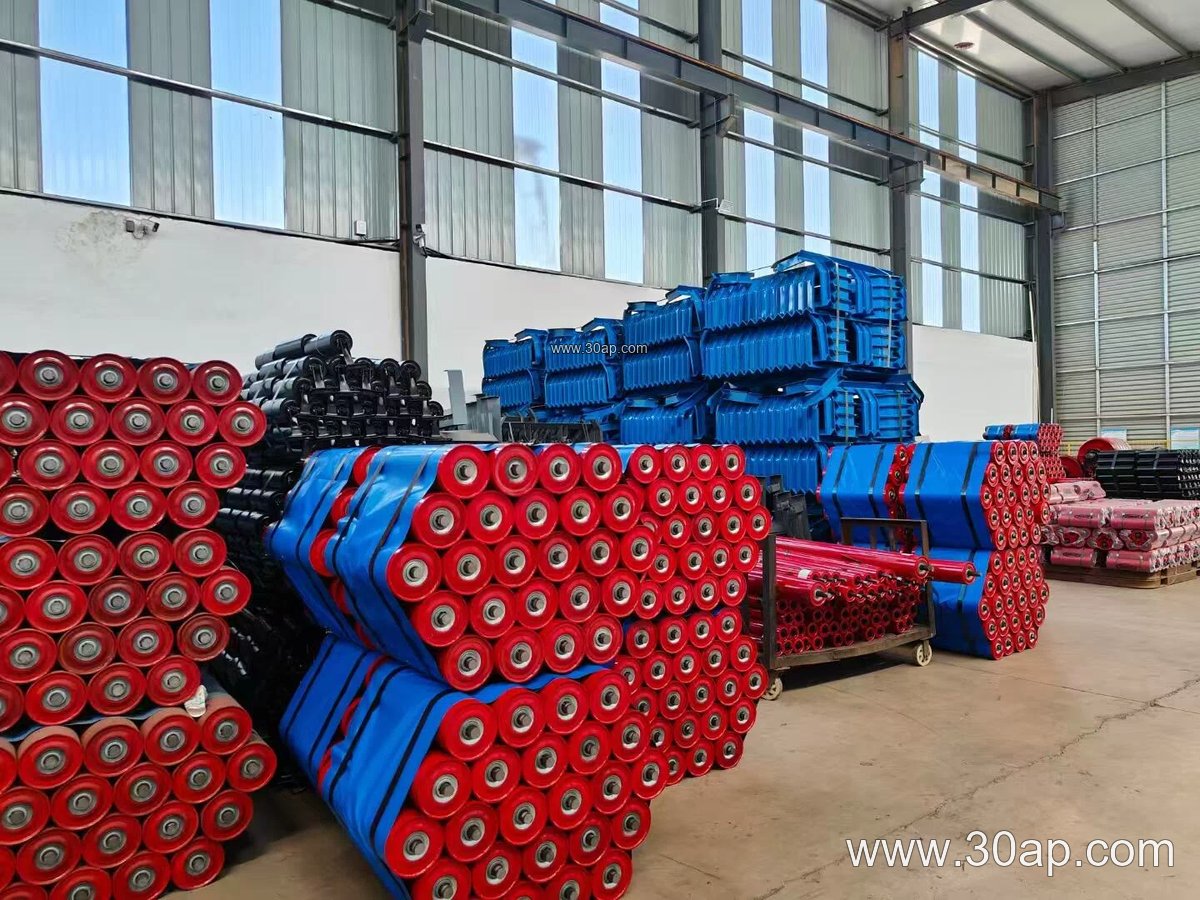
Because the barrel is non-metallic, it will not rust, it is lighter to handle during installation, and it tends to be gentler on the belt surface than a steel shell. The trade-off is that plastic idlers usually suit light to medium duty. For a heavy-duty mining conveyor belt carrying lump ore at high tonnage, steel or impact idlers are still the normal choice.
Common Forms and Sizes
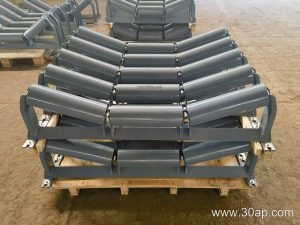
Plastic idlers appear in troughing sets, return sets and transition positions. Typical diameters and belt widths are shown below as reference values; the final combination is set by the conveyor design.
| Item | Common Range |
|---|---|
| Roller diameter | Ø63, Ø76, Ø89, Ø102, Ø108, Ø127 mm |
| Belt width | B400, B500, B650, B800, B1000, B1200 mm |
| Trough angle | 20°, 30°, 35°, 45° |
| Troughing set | Single roll, two-roll, three-roll |
| Roller surface | Smooth plastic, rubber ring option |
Roller length follows belt width, trough angle and roll arrangement. As a rough example, a three-roll troughing set often uses a roll around 200 mm long at B500, 315 mm at B800 and 465 mm at B1200. Side rolls and centre rolls can differ. Do not assume one belt width locks to one diameter or one shaft size.
Applications in Bulk Handling
Plastic idlers are seen in fertilizer plants, grain handling, light aggregate conveyors, recycling lines and some cement plant auxiliary belts. They are also used in wet or mildly corrosive conditions where a steel idler would rust quickly. In a coal preparation plant or a power plant coal yard, they may appear on smaller or secondary belts, while the main haulage lines usually run heavy steel idlers under a flame retardant conveyor belt or an abrasion resistant conveyor belt.
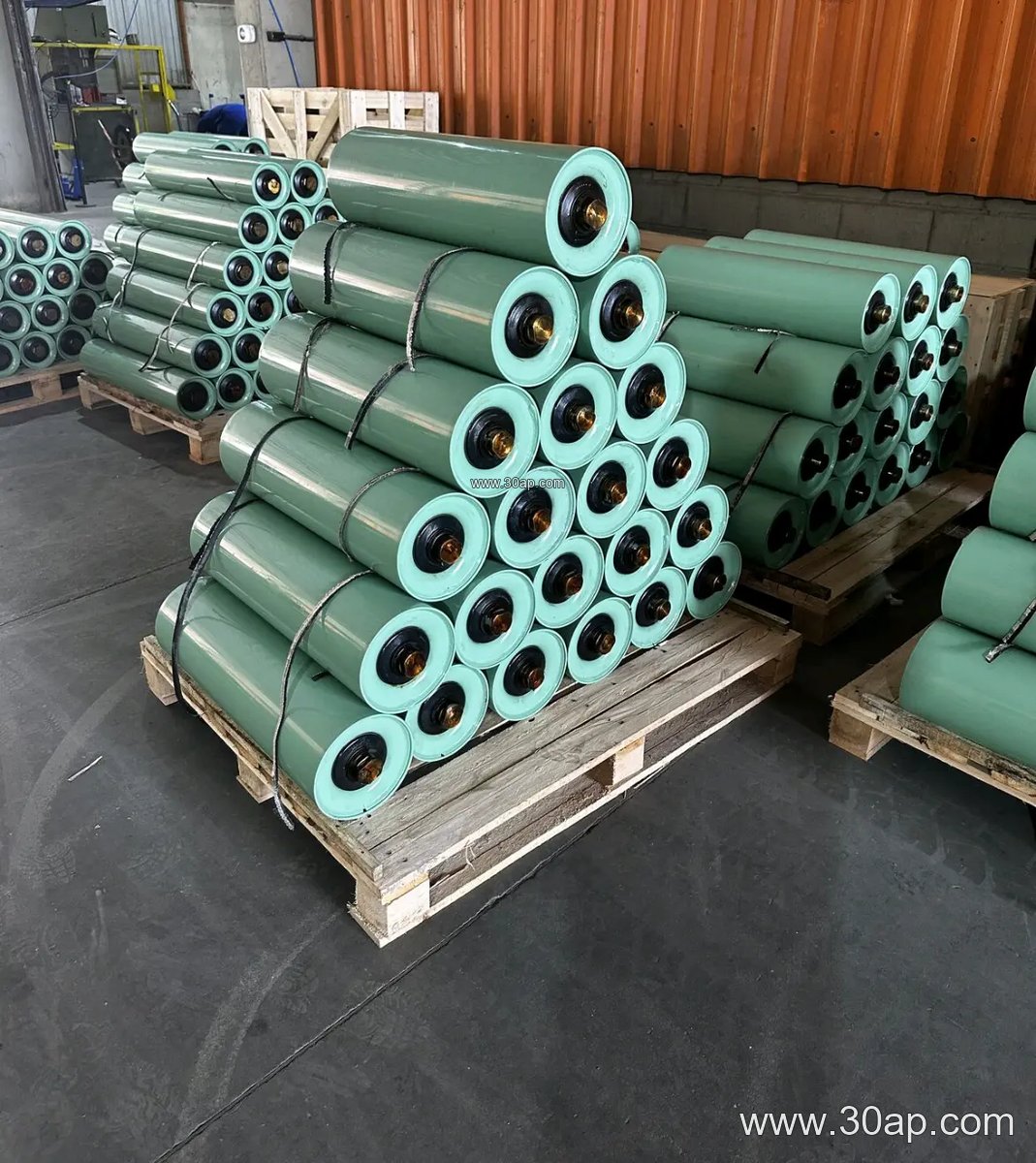
Where the belt carries fine, dry material, a plastic roller can reduce build-up on the shell. Where the material is sharp and heavy, a rubber disc impact idler at the loading point is more appropriate, and the plastic idler is better kept to the quieter sections of the run.
Buyer Checklist
- Confirm the belt width and the trough angle before ordering a set.
- Check the load per idler and the belt speed against the roller rating.
- Ask about the seal design, since dust ingress is the main cause of early failure.
- Match the shaft and bracket to the existing conveyor frame.
- Consider the environment: UV exposure outdoors, oil mist, or fine abrasive dust.
- For high-tonnage ore or hot material, compare with steel and heat resistant options first.
When specifying, remember that a plastic idler works alongside the belt, not instead of the pulleys. The drive pulley pulls, the tail pulley returns, and the idlers support. Getting that division right keeps a conveyor belt running straight and keeps maintenance predictable.
For matching belts and components, see sjbelting.com plastic idler roller options, and review conveyor belt and conveyor pulley data together with the idler selection.