What a Driving Pulley Does on a Conveyor
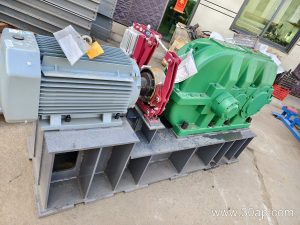
A driving pulley, often simply called a drive pulley, is the drum that transmits motion to the conveyor belt. It is the powered component in the system: the motor and gearbox turn the shaft, the shaft turns the drum shell, and friction between the shell surface and the belt moves the entire load. In many layouts this same drum also sits at the head end and is referred to as a head pulley, so the terms overlap in practice. Where the belt wraps around the drum, the available grip decides how much pull can be transferred before slip occurs.
The drive drum is not a tail pulley or a bend pulley, and the three should never be treated as interchangeable. A tail pulley guides the return side at the loading end, a bend pulley changes belt direction, and a snub pulley increases wrap angle; only the powered drum pulls the belt. Understanding this distinction matters when specifying spares for a quarry line, a coal handling plant, or a cement clinker transport route.
Construction and Surface Options
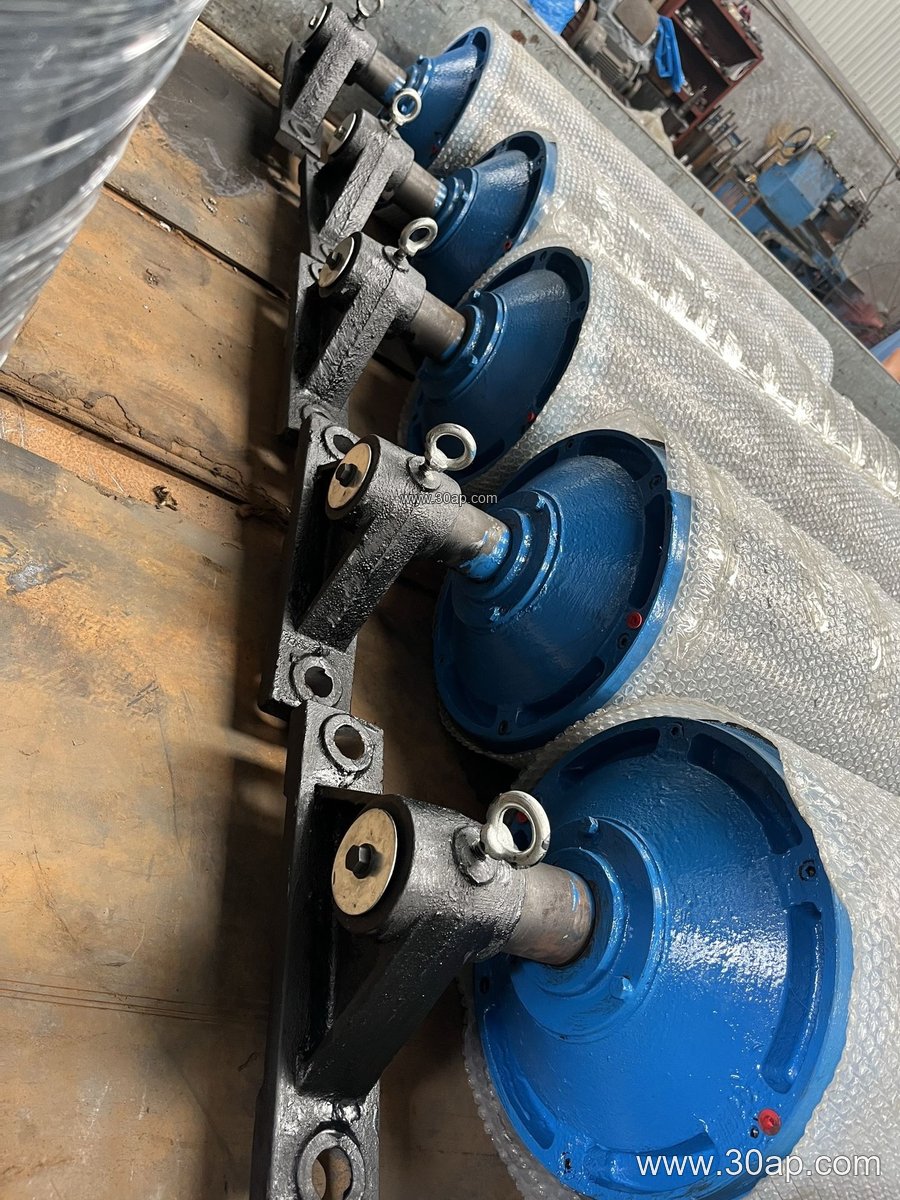
A typical unit combines a steel shell, welded end discs, a shaft, bearing housings, and a lagging layer. Shell thickness and shaft diameter are sized by torque and radial load rather than belt width alone, so a B800 drum on a short feeder and a B800 drum on a long inclined run may differ in shaft size. Common shaft diameters include Ø80, Ø100, Ø120, Ø140, and Ø160, but the final value follows the drive design calculation.
The surface form has a direct effect on grip and wear life:
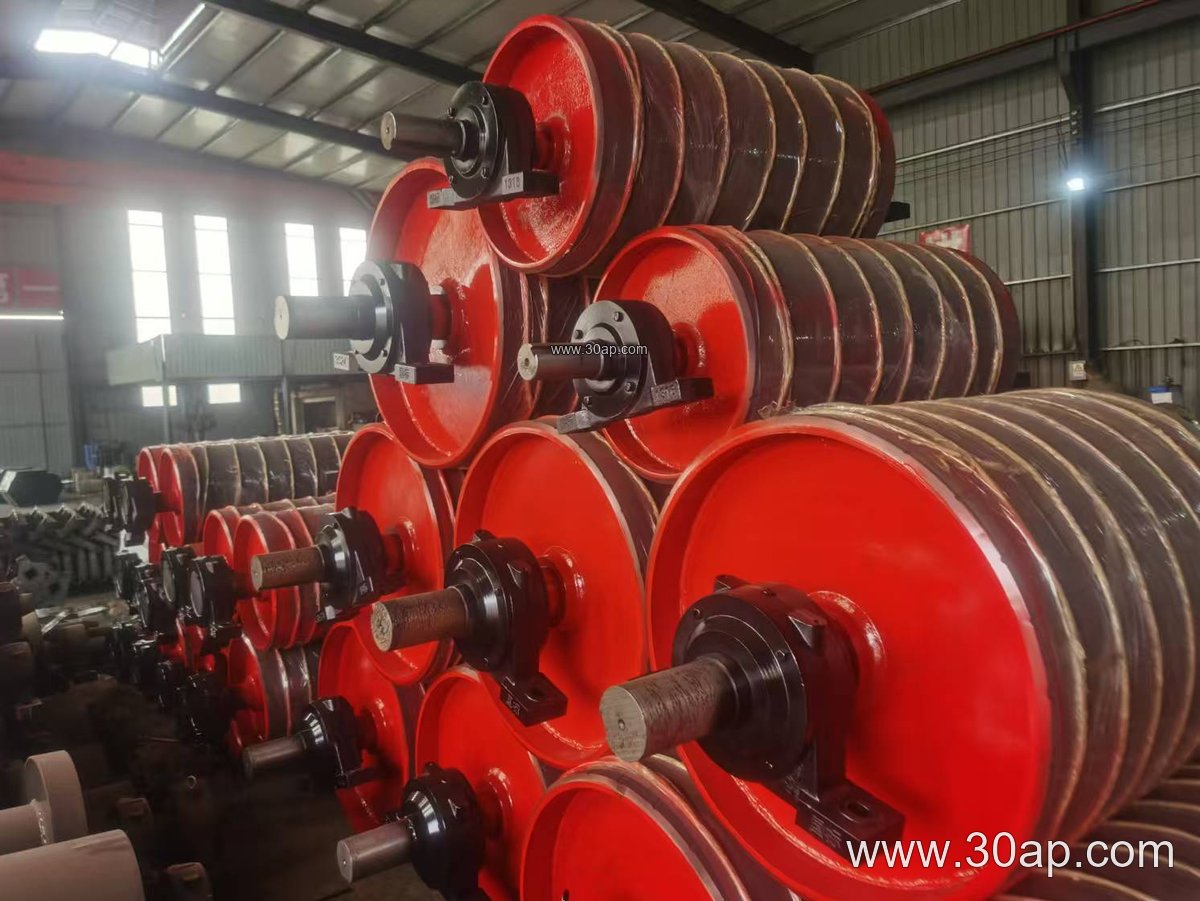
- Plain face for light duty or where a scraper keeps the shell clean.
- Rubber lagging applied cold or vulcanized hot for general grip and noise reduction.
- Diamond pattern lagging to help shed water and fines.
- Herringbone pattern for better traction in one running direction.
- Ceramic lagging where abrasive dust and wet conditions cause slip.
Lagging thickness is commonly 8, 10, 12, 15, or 20 mm, chosen with the belt tension and pulley diameter in mind. A thick layer adds grip but also increases the effective diameter, which affects belt speed and wrap geometry.
How Diameter and Face Width Are Chosen
Pulley diameter is governed by belt construction, the number of plies or cord layers, and the allowable bending stress. A steel cord belt usually needs a larger drum than a fabric core belt of similar width, while a multi-ply fabric core belt sits between the two. Face width normally exceeds belt width so the belt is fully supported; a B650 drum may have a face around 750 mm, a B1000 drum around 1150 mm, and a B1400 drum around 1600 mm. These are common proportions, not fixed rules.
| Belt width | Typical face width | Example combination |
|---|---|---|
| B500 | about 600 mm | B500 × Ø400 |
| B800 | about 950 mm | B800 × Ø500 |
| B1000 | about 1150 mm | B1000 × Ø800 |
| B1200 | about 1400 mm | B1200 × Ø1000 |
| B1400 | about 1600 mm | B1400 × Ø800 |
No single belt width locks the drum to one diameter. A B1200 line might use Ø800 for a short transfer and Ø1250 for a long overland run, depending on tension and belt type. Buyers should supply belt specification, running tension, speed, and duty cycle so the supplier can confirm both shell and shaft.
Where It Fits in Real Installations
In a limestone quarry, the drive drum at the head of a primary discharge conveyor works with an abrasion resistant conveyor belt and a series of troughing idlers. In a power plant coal yard, a flame retardant conveyor belt may run over a lagged drum sized for dusty, wet conditions. Aggregate plants often pair a heavy-duty mining conveyor belt with a ceramic-lagged drum to resist slip during cold starts. The same component appears in fertilizer granulation lines, tunnel spoil removal, and ship loading systems, each with its own belt and environmental demands.
Whatever the site, the drum must match the belt: an EP conveyor belt, an NN conveyor belt, or a steel cord conveyor belt each has its own bending requirements. Matching the drum to the belt and to the load is the core of reliable transmission.
Buyer Checklist
- Confirm the drum role: head drive, dual drive, or auxiliary drive.
- State belt type and full width, not just a nominal size.
- Provide operating tension, speed, and starting torque.
- Choose lagging by environment: wet, oily, abrasive, or hot.
- Check shaft and bearing size against the actual load, not belt width alone.
- Plan inspection of lagging wear and bolt tightness during shutdowns.
For more on conveyor drums and matching belts, visit beltpulley.com or review the conveyor pulley range at conveyoridler.com. Related components such as the conveyor belt, idler roller, and conveyor bracket should be selected together so the whole conveyor runs as one system.