What a Three-Roll Idler Bracket Does
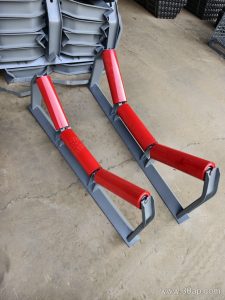
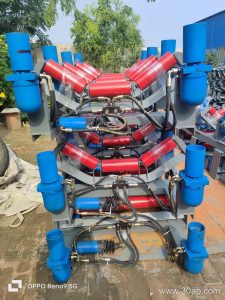
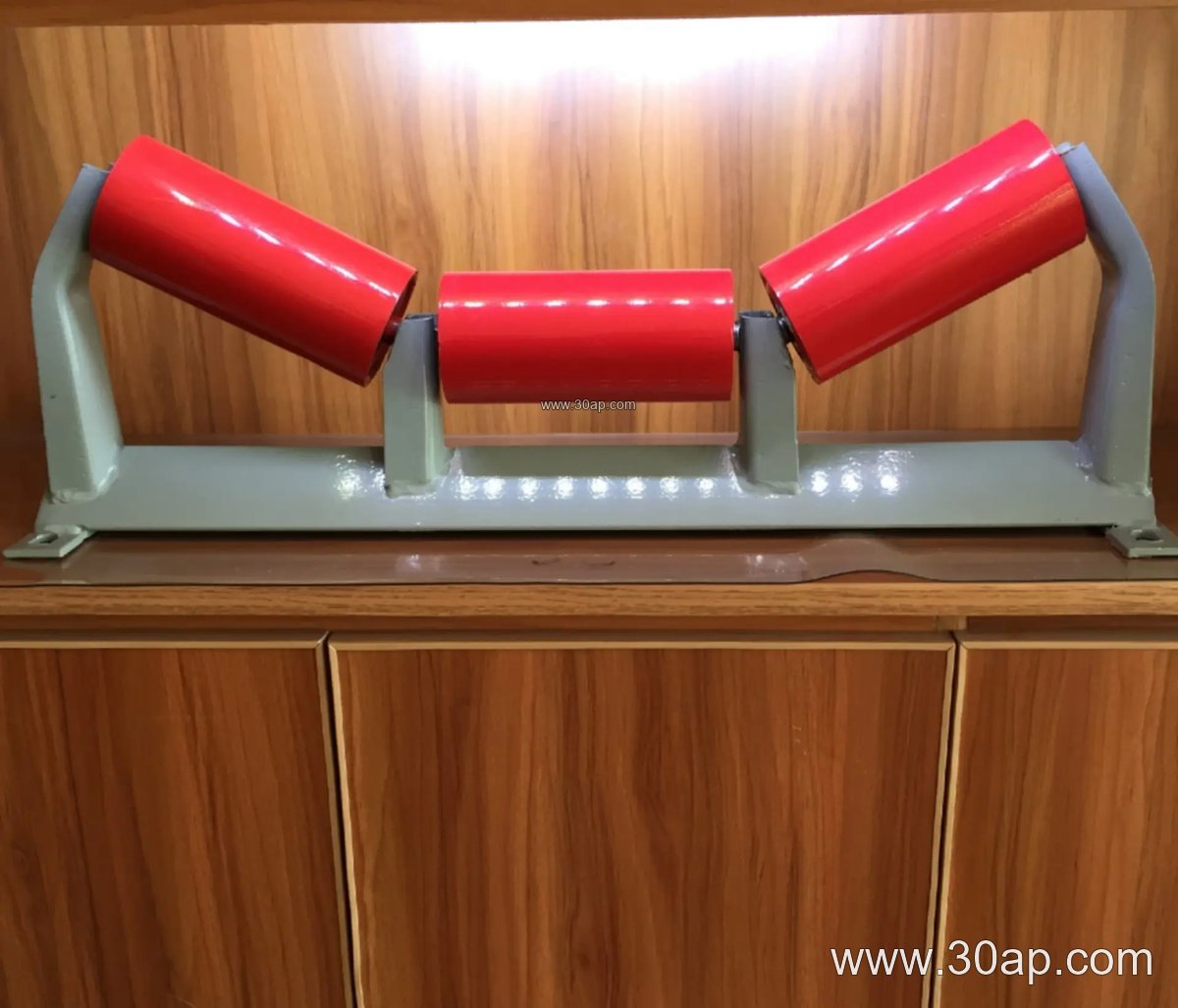
A three-roll idler bracket is the supporting frame that holds three idler rollers in a trough shape under the carrying side of a conveyor belt. It is often called a troughing idler bracket or troughing set frame, and it sits between the conveyor stringers, bolted to the conveyor frame. The two outer rolls are inclined at a trough angle while the center roll stays roughly horizontal, so the conveyor belt forms a stable channel that keeps bulk material centered during transport.
This bracket is a structural part, not a wear part. It positions and secures the idler rollers, transfers load to the conveyor frame, and keeps roll alignment consistent along the line. In a quarry, coal preparation plant, or cement plant, a misaligned or weak bracket shows up quickly as belt wander, spillage, and uneven roller wear.
How the Bracket Is Built
Most three-roll idler brackets are fabricated from angle steel, channel steel, or folded steel plate. The frame typically includes a cross beam, two angled end supports, mounting pads or slots for the roller shafts, and bolt holes for fixing to the conveyor stringers. Some designs use separate hook or slot fittings so the idler roller can be dropped in and removed without dismantling the whole frame.
Common construction details include:
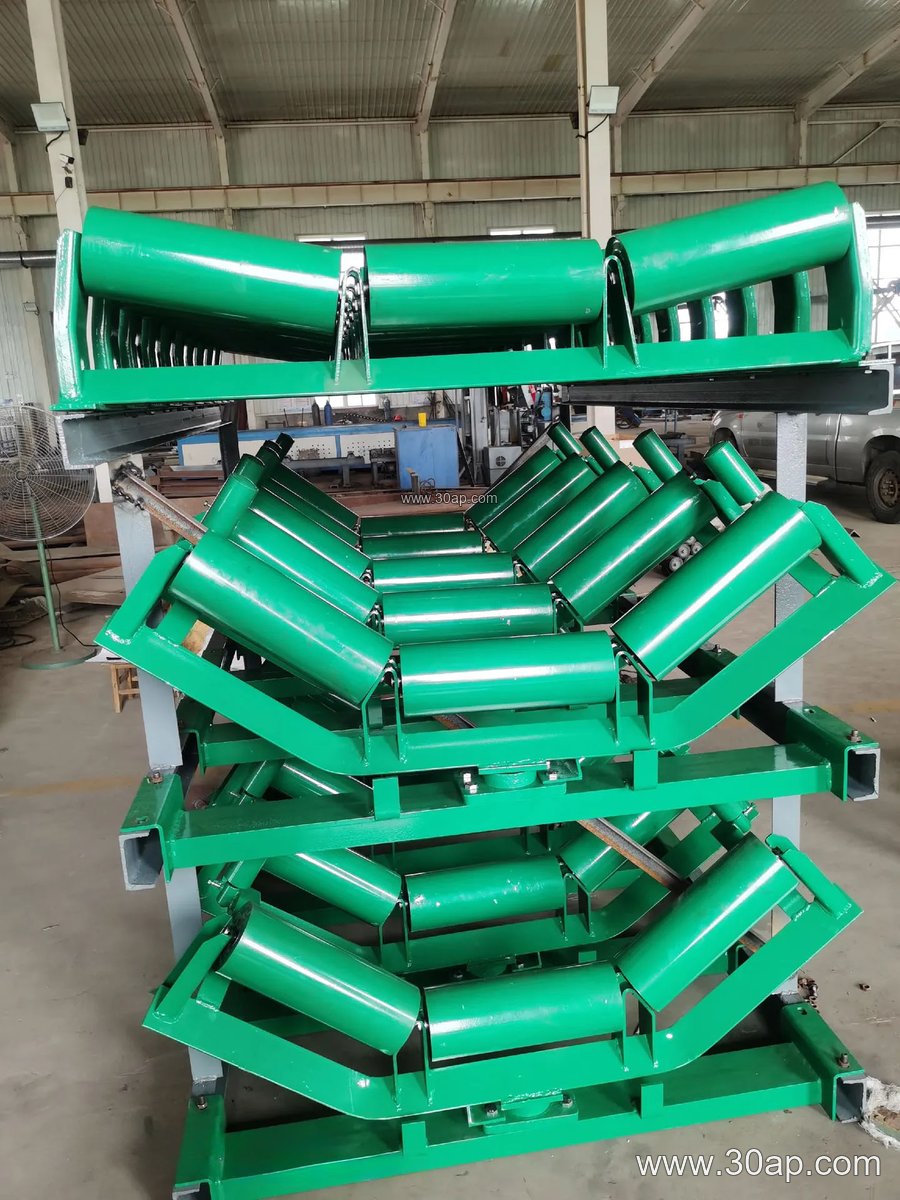
- Welded or bolted cross beam with reinforced corners
- Fixed, adjustable, or self-aligning mounting positions
- Painted or galvanized surface for damp or dusty environments
- Mounting hole spacing and beam length matched to belt width and trough angle
Because hole pitch and beam length change with belt width and trough angle, a bracket should be ordered against the actual conveyor layout rather than assumed from belt width alone.
Trough Angles, Belt Widths, and Roller Diameters
The trough angle determines how deeply the conveyor belt sits in the frame. Common trough angles are 20, 30, 35, and 45 degrees. Adjustable brackets allow the outer roll position to be set within a range so the same frame family can serve different material profiles and belt widths.
Typical reference combinations are shown below. These are common examples only, and the final match depends on conveyor design, belt width, material, and load.
| Belt Width | Common Trough Angle | Reference Roller Diameter |
|---|---|---|
| B650 | 30 degrees | Ø89 |
| B800 | 35 degrees | Ø108 |
| B1000 | 35 to 45 degrees | Ø108 or Ø133 |
| B1200 | 35 to 45 degrees | Ø133 |
| B1400 | 35 to 45 degrees | Ø133 or Ø159 |
| B1600 | 35 to 45 degrees | Ø159 |
Belt width does not lock a bracket to one trough angle or one roller diameter. A B1000 conveyor, for example, can be designed with 35 or 45 degrees and more than one roller size. The bracket, idler roller, and conveyor belt should be selected together.
Where It Fits on the Conveyor
The three-roll bracket is normally used on the carrying run, especially in the loading zone and along the main transport length. In a limestone mine or sand and gravel line, it supports the belt immediately after the feed point, where impact and material surge are highest. In a power plant coal handling system, it keeps the belt troughed through long horizontal runs.
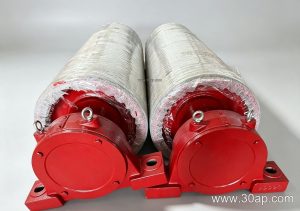
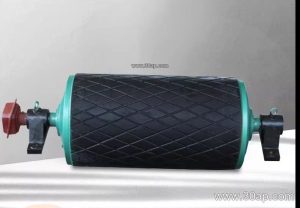
Related positions use different hardware. A transition bracket sits near the tail or head where the belt changes from flat to troughed. A return bracket or V-return bracket supports the empty side. A buffer bracket is used under impact points. An aligning bracket helps correct belt wander. Drive pulleys, tail pulleys, and bend pulleys are separate components and cannot replace a troughing bracket.
Buying Checks
- Confirm belt width, trough angle, and roller diameter as a set, not as isolated values.
- Check mounting hole spacing and cross beam length against the conveyor stringer drawing.
- Decide between fixed and adjustable brackets based on whether the trough angle may change.
- Match the bracket finish to the environment, such as dusty cement plant or wet coal preparation areas.
- Ask for the bracket drawing before ordering, since hole pitch is not a universal constant.
A well-matched three-roll idler bracket keeps the conveyor belt seated, reduces spillage, and extends idler roller life. Treat the bracket, roller, and belt as one working group, and specify them from the actual conveyor layout.