What a Conveyor Bracket Quotation Covers
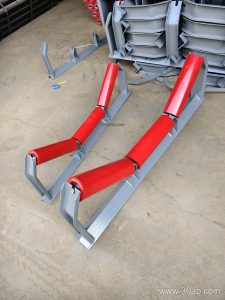
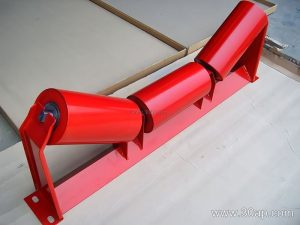
A conveyor bracket quotation is a priced breakdown of the support frames that hold idler rollers in position along a belt conveyor. Buyers often call this item a conveyor idler bracket, idler frame, or roller support bracket; all of these describe the same fabricated steel component. The quotation should make clear which bracket types are being offered, the belt width they suit, the trough angle, and the roller diameter they accept, because the bracket is only useful when it matches the rest of the conveyor line.
In a quarry, a coal preparation plant, or a cement plant, a single quotation request may cover hundreds of brackets in several positions, so clarity in the offer matters as much as the price itself.
How the Bracket Is Built
Most support frames are made from angle steel, channel steel, or folded steel plate. The fabrication method affects stiffness and weight, and both should appear in the quotation description. A typical offer line names the material, the surface treatment, the belt width, the trough angle, and the roller diameter the frame accepts.
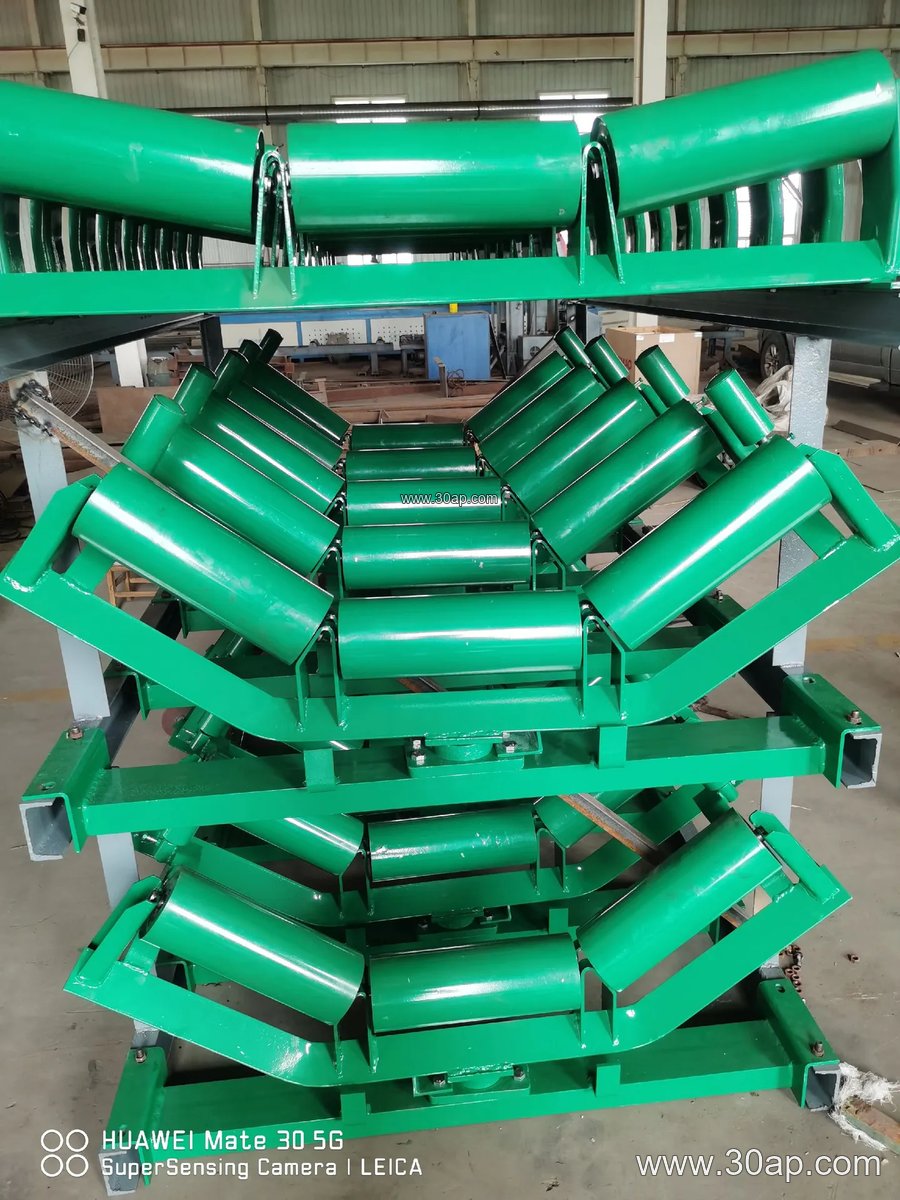
Brackets fall into several functional groups. Trough brackets support the carrying side, return brackets hold the belt on the return run, and transition or impact brackets sit near loading points where the belt needs extra support. Self-aligning and forward-leaning designs are used where belt tracking is a concern. Adjustable frames allow the trough angle to be changed on site, which is useful when the same conveyor handles different materials.
Parameters Buyers Should Confirm
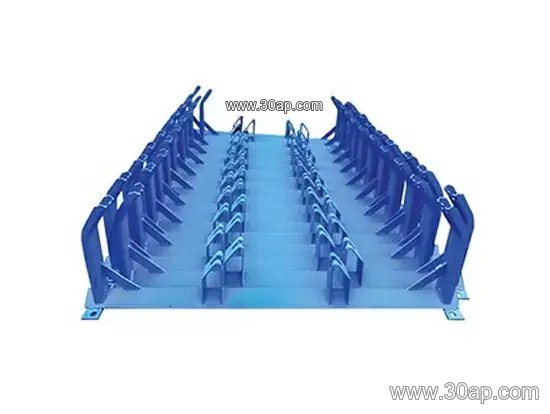
Quotation details are usually expressed as a combination of belt width, trough angle, and roller diameter. Common belt widths run from B500 to B2200, trough angles are typically 20, 30, 35, or 45 degrees, and roller diameters such as Ø89, Ø108, Ø133, Ø159, and Ø194 appear in many offers. These are reference ranges, not fixed pairings; the correct combination depends on the conveyor design.
| Item | Common Options |
|---|---|
| Bracket type | Trough, return, transition, impact, self-aligning, adjustable |
| Material | Angle steel, channel steel, folded plate |
| Belt width | B500, B650, B800, B1000, B1200, B1400, B1600, B1800 |
| Trough angle | 20°, 30°, 35°, 45° |
| Roller diameter | Ø89, Ø108, Ø133, Ø159, Ø194 |
| Forward lean | Usually about 1.5° to 2° |
Mounting hole spacing and crossbeam length change with belt width and trough angle, so they should be confirmed against the drawing rather than assumed from the belt width alone.
Where These Frames Are Used
Support frames appear anywhere a conveyor belt runs on idler rollers. In an iron ore or limestone operation, heavy-duty trough brackets carry the load at the transfer point, while return brackets keep the belt aligned on the lower run. In a power plant coal yard, flame retardant and anti-static belt grades are often specified, and the bracket quotation should reflect the same environment. A sand and gravel line may use fewer, lighter frames, but the bracket must still match the roller diameter and the belt width.
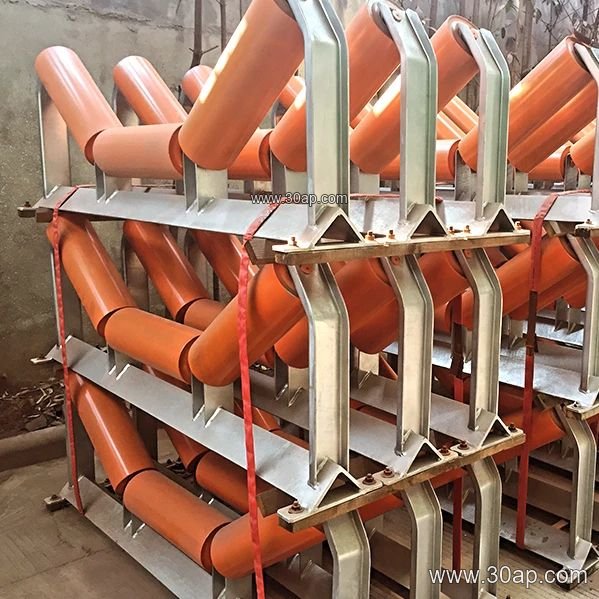
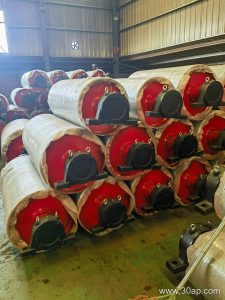
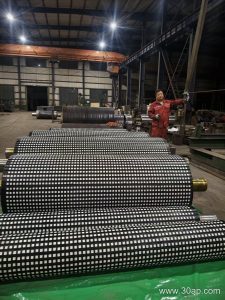
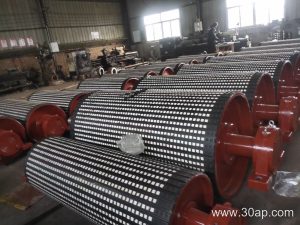
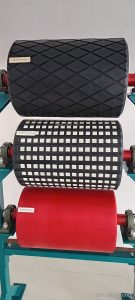
When a quotation is prepared alongside belt and pulley selections, it helps to review the whole conveyor: the conveyor pulley at the drive end, the idler roller spacing, and the belt grade all influence what the brackets must support. For example, a steel cord conveyor belt on a long overland run usually calls for stiffer frames than a lightweight fabric core belt on a short transfer.
Getting an Accurate Quotation
Buyers should send a drawing or a clear description for each bracket position: belt width, trough angle, roller diameter, material, surface finish, and quantity. If the conveyor uses an EP conveyor belt or a multi-ply fabric core belt, note the belt thickness and load so the frame stiffness can be checked. Mentioning the site — a crusher conveyor, a ship loading line, or a tunnel muck removal system — helps the supplier suggest suitable bracket types.
Ask for the quotation to list each bracket type separately, with unit and total quantities, so the offer can be compared line by line. A well-structured conveyor bracket quotation should also state the lead time basis and the drawing revision it refers to, which avoids disputes when the frames arrive on site.