What a Diamond Grooved Lagged Pulley Is
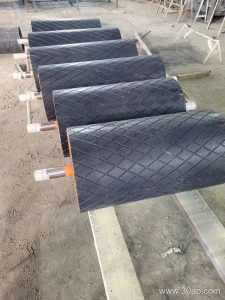
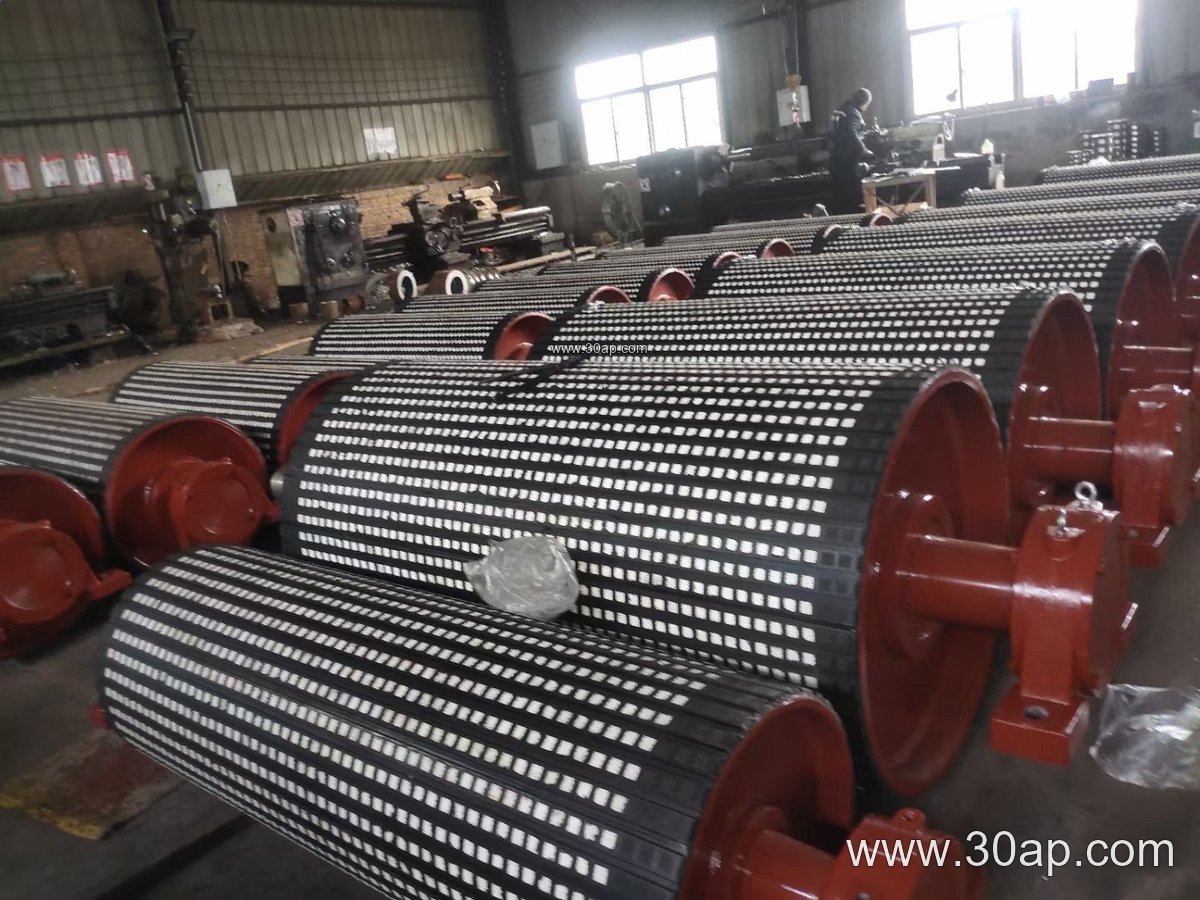
A diamond grooved lagged pulley is a conveyor drum whose shell is covered with rubber lagging cut into a raised diamond pattern. The diamond grooves channel water, dust and fine slurry away from the contact face, so the belt keeps a firmer grip on the drum in wet or dirty conditions. It belongs to the pulley family used to drive, tension and steer a conveyor belt, and the diamond form is a surface choice rather than a position in the conveyor.
The same product is often called a diamond rubber lagged drum or a diamond pattern lagged conveyor pulley. Those names describe the same item. It should not be confused with a drive pulley, tail pulley or bend pulley, which are positions rather than surface forms — a diamond lagged drum can serve in more than one of those places depending on the layout.
How the Diamond Lagging Is Built
The drum shell is usually a rolled steel cylinder with welded end discs and a shaft, machined so the lagging sits flat. Rubber is then bonded on, either by hot vulcanising in a press or by cold bonding with an adhesive system. The diamond ribs are formed into the rubber during vulcanisation or cut afterwards, and the grooves between the diamonds give the surface somewhere to push trapped moisture.
Common lagging thicknesses are 8, 10, 12, 15 and 20 mm, with thicker covers chosen for high-torque drives and harsh abrasive service. The diamond pattern is usually left plain rubber rather than ceramic, which keeps it flexible and easy to re-lag. Groove depth and diamond pitch are set by the lagging supplier and should be stated in the purchase drawing.
Where It Fits on a Conveyor
Diamond grooved lagging is most useful where grip is at risk: a drive drum on an inclined yard conveyor, a tension drum that sees damp fines, or a snub position where wrap angle is small. In a limestone quarry or a sand and gravel line, wash water and dust often reach the drum face, and the diamond grooves help the belt run without slip. In a coal washing plant the same surface can reduce carry-back build-up on the shell.
For comparison, a bend pulley in a clean, dry section may only need plain or flat rubber lagging, while a drive drum handling high power may use ceramic lagging. The diamond pattern sits between those choices: good wet grip, moderate cost, and easy replacement when the rubber wears.
Matching the Pulley to Belt and Duty
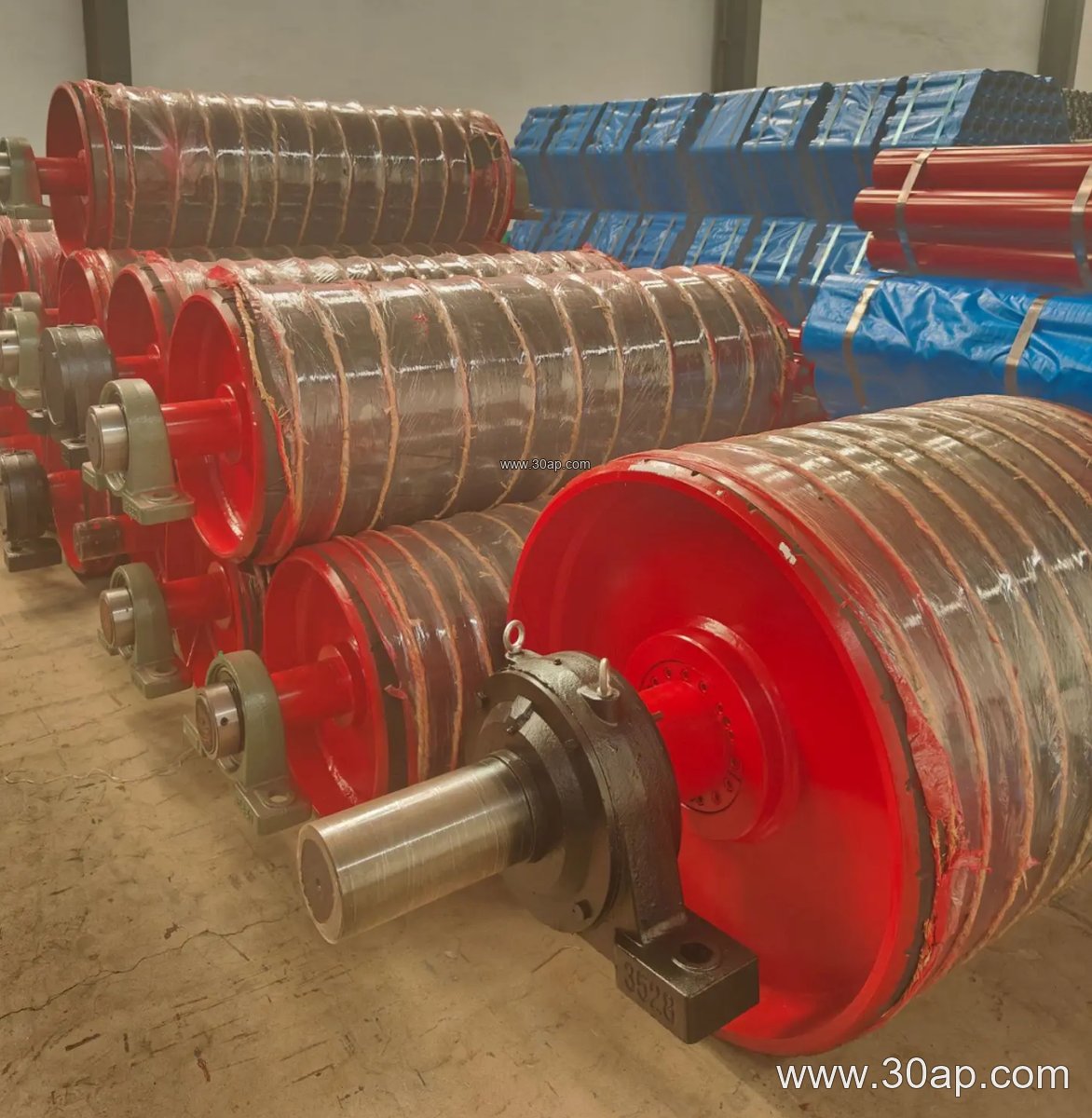
Selection starts with belt width, then drum diameter, then shaft size. The pulley face is normally wider than the belt, for example B800 with roughly a 950 mm face, or B1200 with about a 1400 mm face. Diameter is chosen from belt tension and wrap angle, not from width alone. A B800 drum might be Ø500 in a light duty and Ø630 or larger in a heavily loaded drive.
Shaft diameter is set by torque and bearing load. Typical shaft sizes run from Ø50 up to Ø200, but the correct value comes from the drive calculation, never from belt width alone.
| Item | Common Reference Range | Notes |
|---|---|---|
| Belt width | B400 to B2400 | Face width usually exceeds belt width |
| Drum diameter | Ø200 to Ø1800 | Set by tension and wrap angle |
| Lagging thickness | 8, 10, 12, 15, 20 mm | Thicker for high torque |
| Shaft diameter | Ø50 to Ø200 | By torque and bearing load |
| Surface form | Diamond grooved rubber | Also flat, ceramic, chevron options |
The belt itself matters too. A heavy-duty mining conveyor belt on a long incline loads the drive drum more than a short aggregate conveyor belt, and the lagging pattern should suit the belt cover. A rubber conveyor belt with a smooth cover grips a diamond surface well; an oil-resistant or heat-resistant belt may need a lagging compound checked for compatibility.
Buyer Checklist
- Confirm the drum position and duty: drive, tail, tension or snub.
- State belt width and required face width, plus drum diameter and shaft size from the drive design.
- Specify lagging thickness and diamond pitch, and whether hot vulcanised or cold bonded.
- Ask for the balancing grade and bearing type, since these affect vibration and life.
- Check that the conveyor bracket and bearing housing dimensions match the existing frame.
- Plan re-lagging: worn diamonds can be replaced without scrapping the drum.
Inspect the lagging regularly for groove wear, lifted edges and embedded material. A diamond grooved lagged pulley that is kept clean and correctly tensioned will hold the belt steadily through wet, dusty and abrasive service in quarries, cement plants and power station coal yards alike.