What a Diamond Grooved Lagged Pulley Does
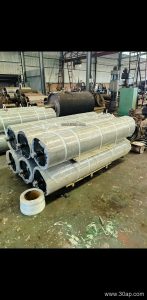
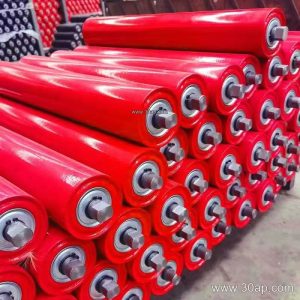
A diamond grooved lagged pulley is a conveyor pulley whose shell carries a rubber or elastomer covering molded with a diamond pattern of raised blocks and cut grooves. The lagging raises friction between the pulley face and the conveyor belt, while the diamond grooves give water, dust, and fine slurry somewhere to escape as the belt wraps the drum. In a quarry or a power plant coal handling line, that combination often decides whether a drive pulley can transmit torque without visible slip.
This component is a specific surface form of a lagged conveyor pulley, not a separate machine. It is commonly fitted as a drive pulley, head pulley, or tail pulley, and the same cover pattern may appear on a bend pulley where belt tracking benefits from extra grip. Diameter, face width, shaft size, and lagging thickness are all project-specific; the diamond pattern is only one part of the specification.
Construction and Surface Details
The base is usually a welded steel shell with end discs and a hub or shaft connection. The lagging can be applied in several ways: hot vulcanized rubber bonded under heat and pressure, cold-bonded rubber sheet, or cast rubber molded directly onto the shell. The diamond profile is formed in the rubber itself, so groove depth and block height stay consistent around the circumference.
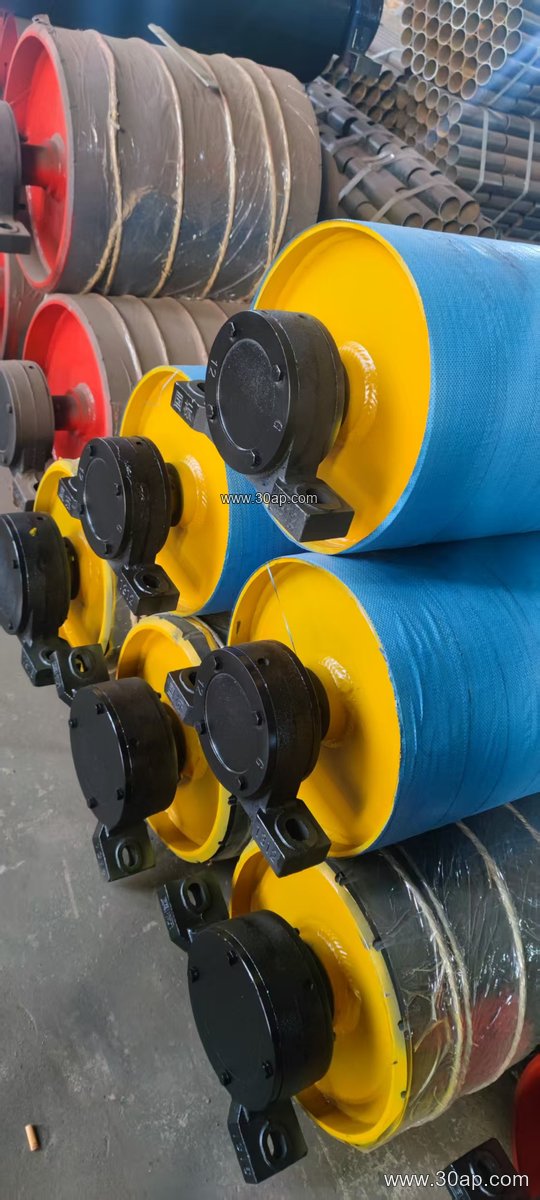
Lagging thickness commonly falls in the 8 mm to 20 mm range. Thicker covers suit high-torque drives and abrasive conditions, while thinner covers may be enough for a lightly loaded tail position. The diamond pattern is often chosen where the belt carries moisture or where fine material would otherwise polish a plain rubber surface.
- Diamond grooved rubber lagging for wet or dusty belt contact
- Plain lagging where simple friction is sufficient
- Ceramic lagging for severe abrasion and high slip risk
- Wing pulley or self-cleaning designs where sticky material builds up
These are alternative surface choices, not interchangeable names for the diamond grooved lagged pulley. A ceramic cover, for example, addresses wear differently and is not the same product.
Where It Fits on the Conveyor
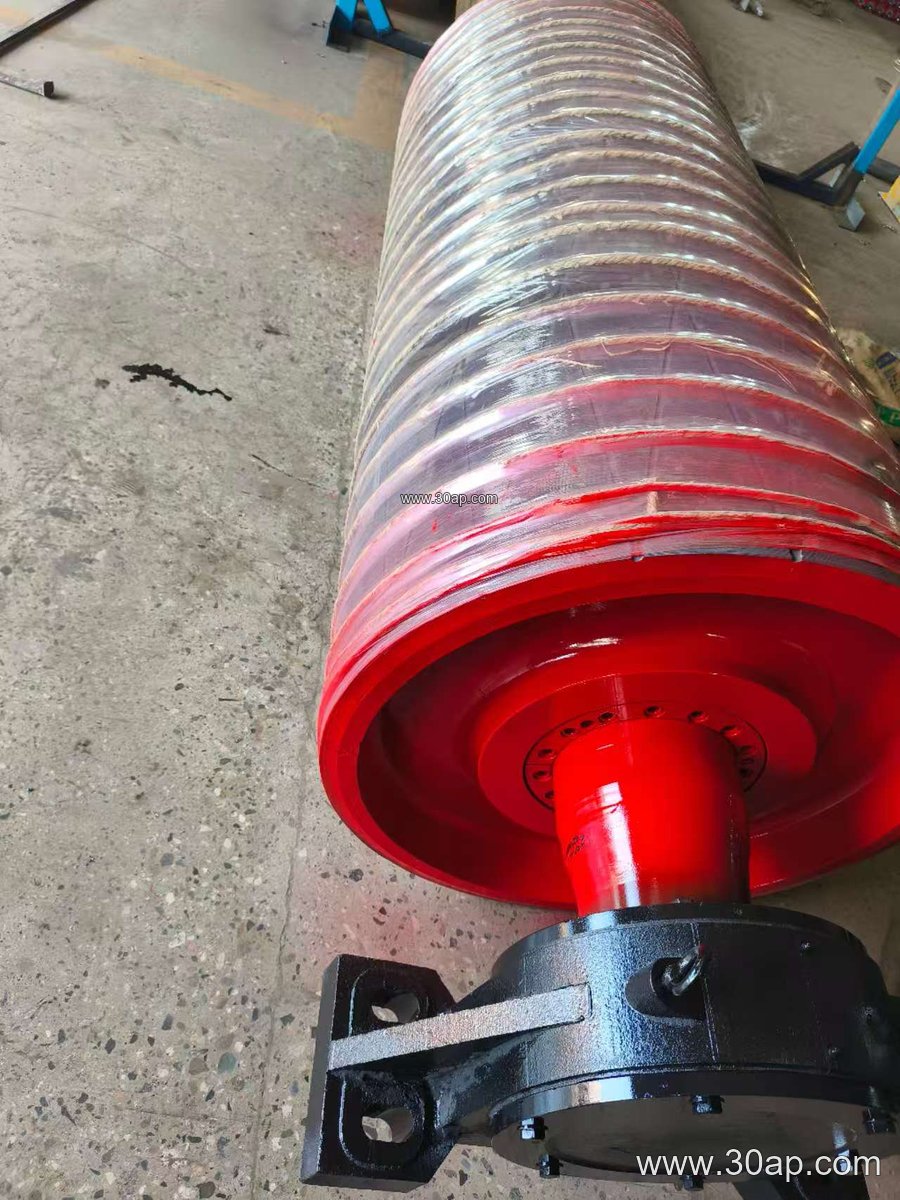
The most common duty is at the drive position, where the pulley must transfer motor torque into the conveyor belt. Diamond grooved lagging helps maintain grip on a rubber conveyor belt or an EP conveyor belt that may be slightly damp from washdown or weather. At the tail end, the same pattern can reduce slip and help keep the belt centered during start-up.
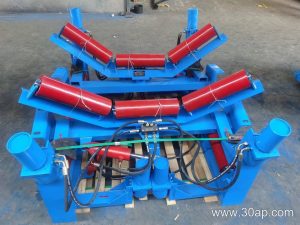
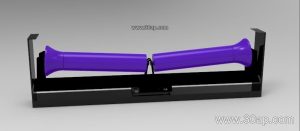
In a limestone mine or aggregate plant, dust and grit are constant companions. Grooves allow particles and water to move aside rather than sit between belt and pulley, which supports steadier tracking. In a power plant coal yard, a diamond grooved lagged pulley on the head end may be paired with a flame retardant conveyor belt and a well-aligned idler roller set to keep the belt path stable.
When the application involves a steep incline or a high-tension take-up, engineers sometimes compare the diamond pattern with a plain rubber cover or with a chevron conveyor belt profile on the carrying side. The belt profile and the pulley cover solve different problems, so they should be evaluated together rather than treated as substitutes.
Matching Diameter, Width, and Shaft
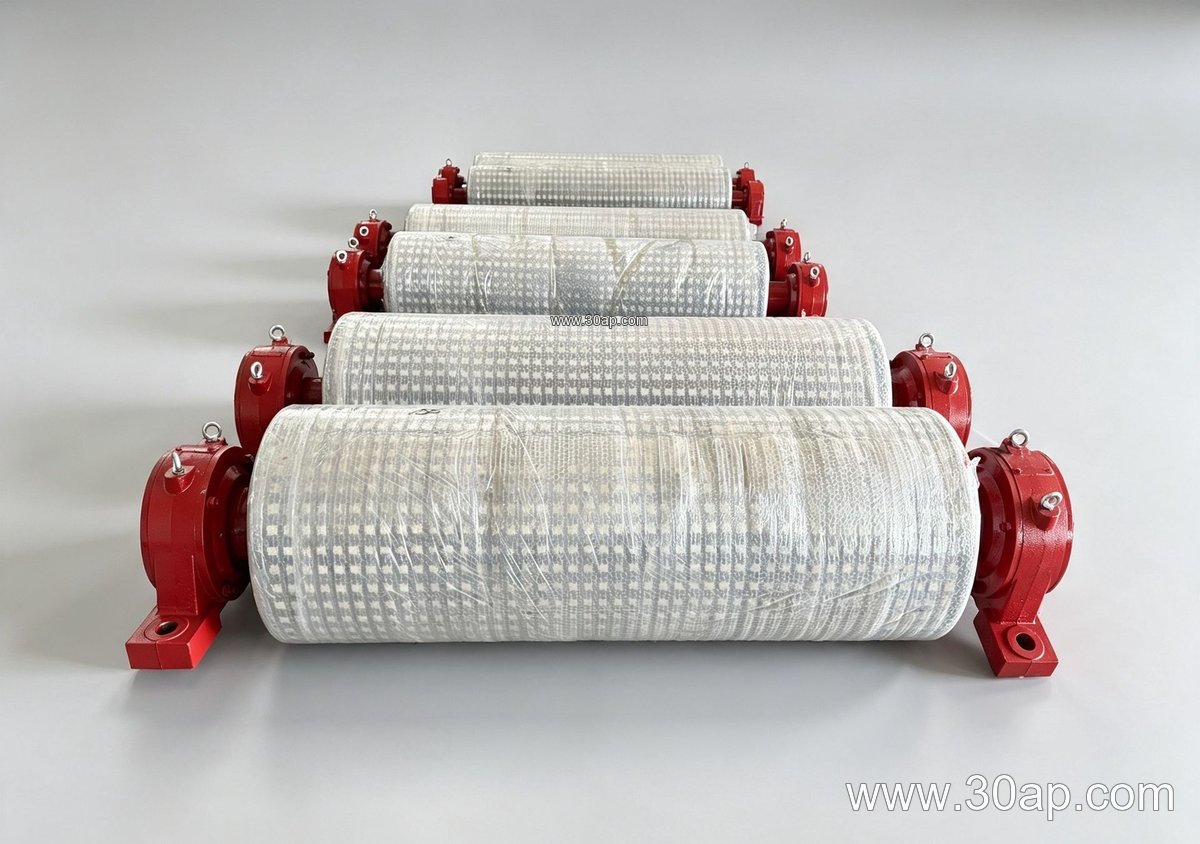
Pulley diameter is normally selected from belt tension, wrap angle, and the allowable bending stress in the belt. Face width is usually a little wider than the belt itself. Typical references include B800 with a face around 950 mm, B1000 with roughly 1150 mm, and B1200 with about 1400 mm. Diameters such as Ø500, Ø630, Ø800, and Ø1000 are common in heavy bulk handling, but no single diameter is tied to one belt width.
| Belt width reference | Typical pulley face width | Example diameter range |
|---|---|---|
| B650 | about 750 mm | Ø400 to Ø630 |
| B800 | about 950 mm | Ø500 to Ø800 |
| B1000 | about 1150 mm | Ø630 to Ø1000 |
| B1200 | about 1400 mm | Ø800 to Ø1250 |
| B1400 | about 1600 mm | Ø800 to Ø1400 |
Shaft diameter is determined by torque and load, not by belt width alone. Common shaft sizes include Ø80, Ø100, Ø120, Ø140, and Ø160, but the final value must come from the drive calculation. A diamond grooved lagged pulley ordered for a B1000 system, for instance, might use Ø800 with a 12 mm cover, yet the same belt width in a different duty could call for Ø630 or Ø1000.
Buyer Checklist
Before ordering, confirm the pulley position (drive, tail, bend, or take-up), the belt width and type, the required lagging thickness, and the shaft and bearing arrangement. Ask how the diamond lagging is bonded and whether the groove pattern is molded or cut. Check that the conveyor bracket and bearing housing dimensions match the existing frame.
Consider the environment as well. A washdown area may favor grooved lagging, while an oily transfer point may need an oil resistant conveyor belt and a cover compound suited to that exposure. For high-abrasion ore duty, a high abrasion resistant conveyor belt and a durable pulley cover work as a pair. Record the pulley diameter, face width, lagging thickness, and shaft size on the drawing so the diamond grooved lagged pulley can be replaced without guesswork.