What a Metallurgical Conveyor Idler Does
A metallurgical conveyor idler is the rotating roller that supports and guides a conveyor belt in metallurgical plants and heavy bulk handling systems. It is not a drive component. The conveyor pulley, whether drive, tail or bend, transmits power or changes belt direction, while the idler roller simply carries the belt and the material on it. In sintering plants, steel mills, coke yards and iron ore handling lines, these idlers work under heat, dust, abrasive ore and continuous load.
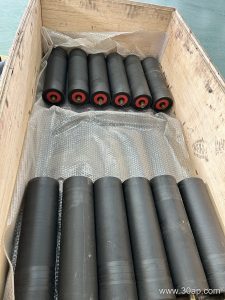
The product is often called a metallurgical conveyor roller or a carrying idler in this service. The name points to the duty, not to a special shape. Most units follow the familiar steel tube, bearing and seal construction, with surface options selected for the plant environment.
Construction Details That Matter
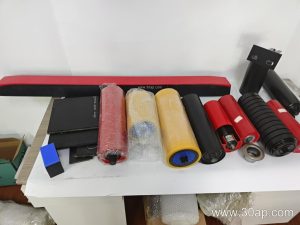
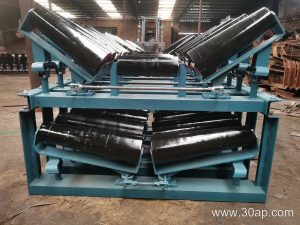
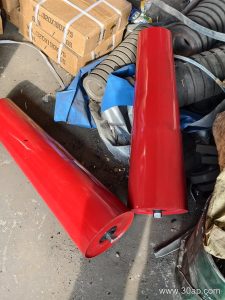
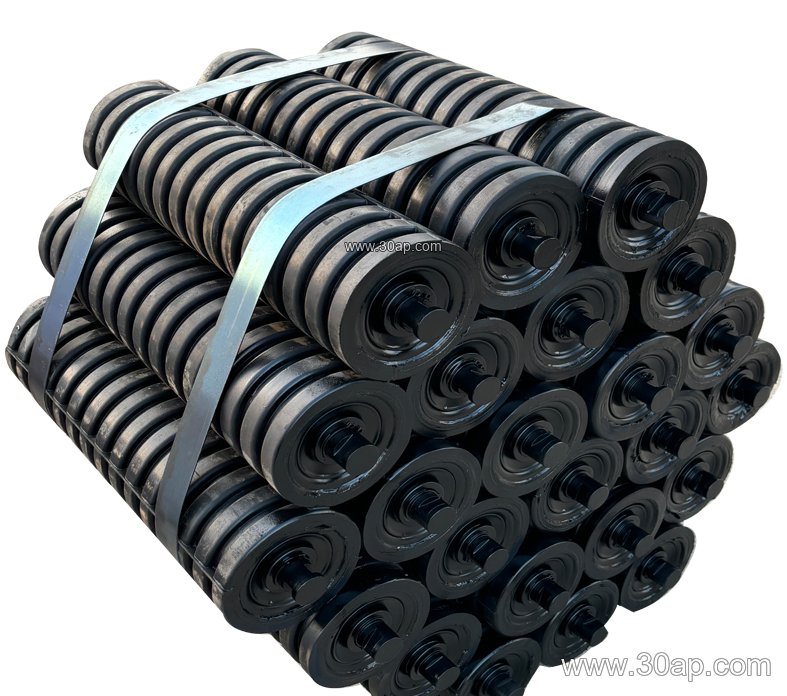
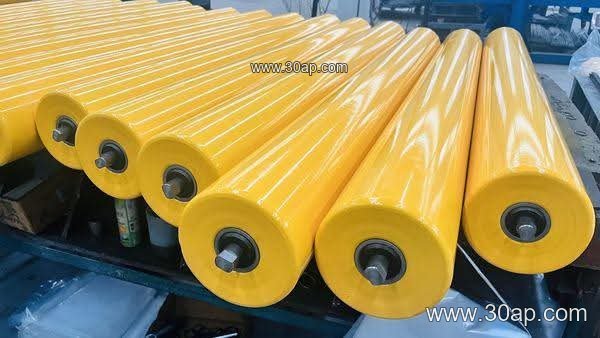
A typical unit has a steel tube shell, a shaft, bearing housings, and a sealing arrangement. The tube may be plain steel, nylon coated, ceramic covered or fitted with rubber rings, depending on whether abrasion, build-up or impact is the main concern. Bearings are commonly 6204, 6205, 6305, 6306, 6308 or 6310, but the bearing is matched to the load and shaft design rather than to belt width alone.
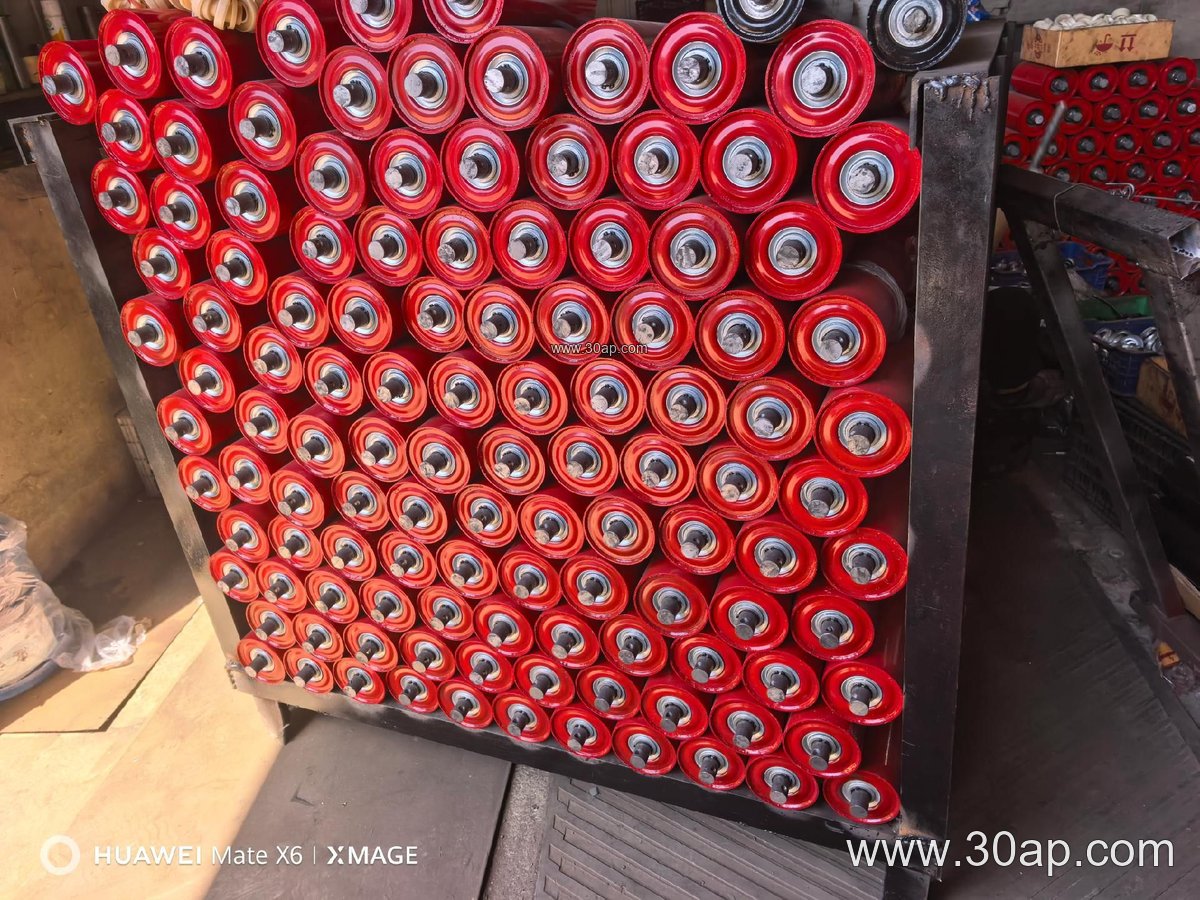
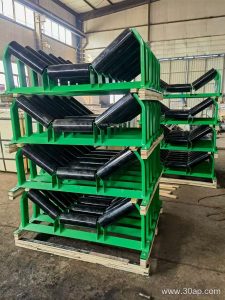
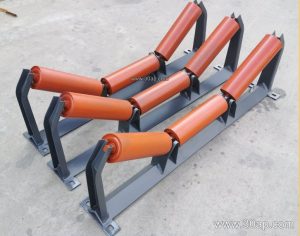
The idler group can be a single roller, a two-roll set or a three-roll troughing set. Trough angles are usually 20, 30, 35 or 45 degrees. A small forward tilt of about 1.5 to 2 degrees is used on some training idlers to help keep the belt centered. Roller length follows belt width, trough angle and group form. As a common example, a three-roll troughing set may use a center roll of about 200 mm for B500, 315 mm for B800, 465 mm for B1200 and 600 mm for B1600. These are reference examples, not fixed rules, and side rolls can differ from the center roll.
Where Metallurgical Idlers Are Used
These idlers suit steel plants, sintering lines, coke handling, iron ore and copper ore systems, and power plant coal yards. They also appear in cement plants, quarries and port bulk terminals where the same heavy dust and abrasive load exists. The belt itself may be a heavy-duty mining conveyor belt, an abrasion resistant conveyor belt, a heat resistant conveyor belt or a flame retardant conveyor belt, and the idler surface should be chosen to match that duty.
On a long sinter strand or ore transfer line, a conveyor pulley at the head and tail works with hundreds of idlers. If the belt is a steel cord conveyor belt or an EP conveyor belt, the idler spacing and load rating still depend on belt weight, material weight and sag limits, not on one universal formula. Designers often check load with P = (qb + qm) x g x L / 2 for a simplified span estimate, then adjust for actual service.
Common Surface and Bearing Reference
The table below gives typical reference values only. Final selection should follow the conveyor design and the actual material conditions.
| Item | Common reference |
|---|---|
| Roller diameter | Ø63, Ø76, Ø89, Ø102, Ø108, Ø127, Ø133, Ø159, Ø178, Ø194, Ø219 mm |
| Belt width | B400, B500, B650, B800, B1000, B1200, B1400, B1600, B1800, B2000, B2200, B2400 |
| Trough angle | 20, 30, 35, 45 degrees |
| Bearing | 6204, 6205, 6305, 6306, 6308, 6310 |
| Surface form | Steel tube, nylon, ceramic, rubber ring |
Idler Types and Where They Fit
Troughing idlers carry the loaded belt. Return idlers support the empty side, and a V-shaped return set helps with belt tracking. Impact idlers with rubber rings are placed below loading points to absorb shock from lump ore. Training idlers, including friction and tapered types, correct belt drift. Spiral idlers can reduce material build-up on the return side. Comb idlers are used where sticky material tends to cling to the roller.
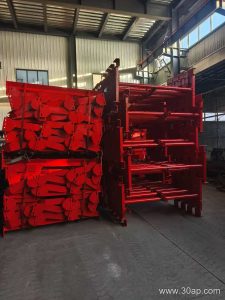
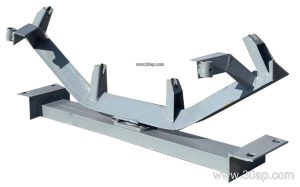
A buyer should not swap a carrying idler for a bend pulley or a tail pulley. Those are different components with different functions. The idler only supports the belt; the conveyor pulley drives or redirects it. The conveyor bracket holds the idler group and must match the frame and belt width.
Buyer Checklist
- Confirm belt width, trough angle and idler group form before ordering.
- State the material: hot sinter, wet coal, abrasive ore or sticky limestone.
- Choose the surface form for the duty, not for appearance.
- Check bearing size against load and shaft design.
- Review seal type for dust and water exposure.
- Keep spare idlers and brackets consistent with the installed frame.
For metallurgical service, the practical choice is a well-sealed, correctly rated idler roller with a surface suited to heat, abrasion or impact. Matching it to the conveyor belt, pulley and bracket layout is more important than chasing a single large size. A plant that reviews load, environment and maintenance access together usually gets longer idler life and fewer belt tracking problems.