What a Q235 Conveyor Bracket Does on a Belt Conveyor
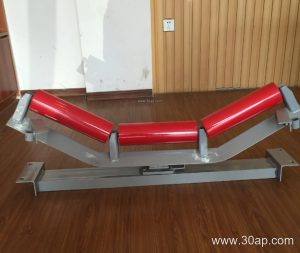
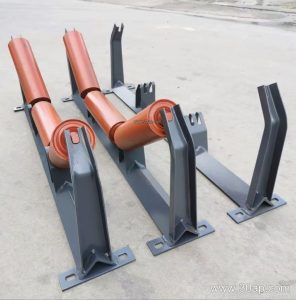
A Q235 conveyor bracket is the steel frame component that holds a conveyor idler roller in place and sets its position relative to the moving belt. In practice, this Q235 conveyor bracket, also commonly called a Q235 idler bracket or Q235 conveyor idler frame, is the interface between the roller and the conveyor structure. It carries the roller shaft, fixes the trough angle, and keeps spacing consistent along the line. Because Q235 is a general-purpose structural carbon steel, the bracket offers a practical balance of strength, weldability, and cost for bulk material handling in quarries, coal preparation plants, cement works, and power plant coal yards.
The bracket itself does not move the belt. Its job is to keep the carrying and return rollers aligned so that the conveyor belt tracks smoothly and the load is distributed evenly. A poorly matched bracket shows up quickly as belt wander, edge wear, or premature roller failure.
How the Bracket Is Built
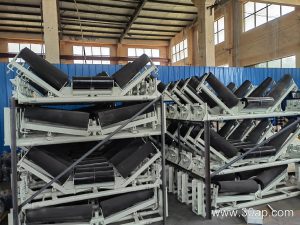
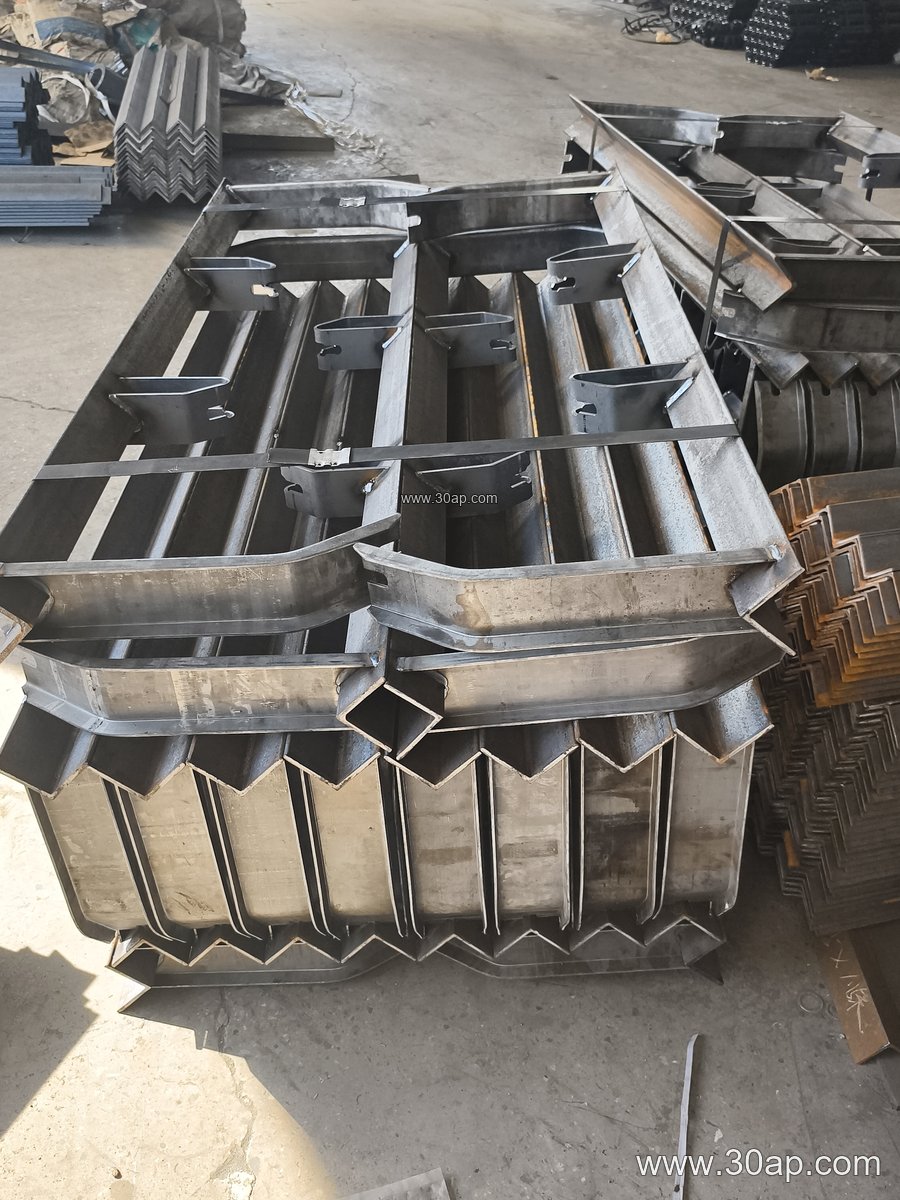
Most Q235 conveyor brackets are fabricated from angle steel, channel steel, or folded steel plate, then drilled or punched for mounting bolts and roller shaft slots. Depending on the position in the conveyor, the bracket may be a simple fixed frame or an adjustable design that allows the trough angle to be changed on site.
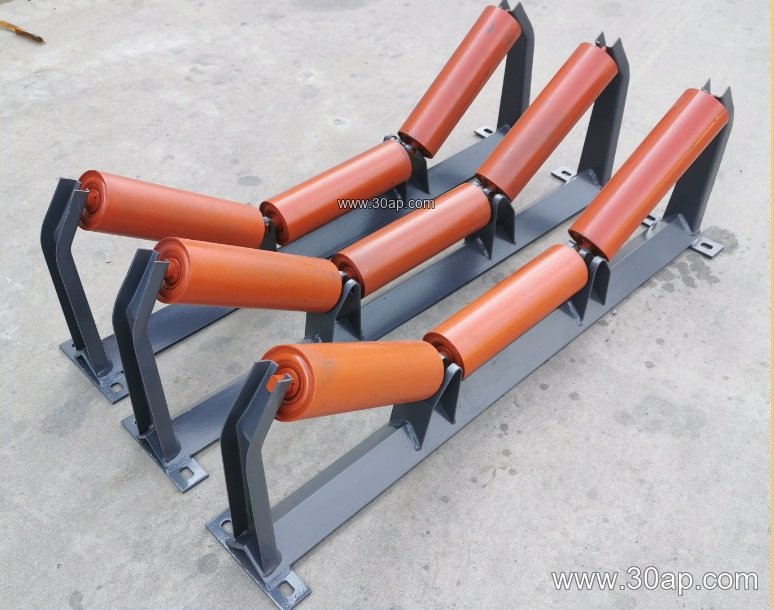
Common construction details include:
- Welded or bolted angle and channel sections in Q235 steel
- Slotted or stepped mounting holes to suit different roller shaft ends
- Adjustable arms on brackets where the trough angle needs tuning
- Reinforced cross members on wide belt lines
Installation hole spacing and crossbeam length are not fixed values. They usually follow belt width, trough angle, and the roller type selected, so the bracket should be ordered against the conveyor drawing rather than guessed from belt width alone.
Common Types and Where They Sit
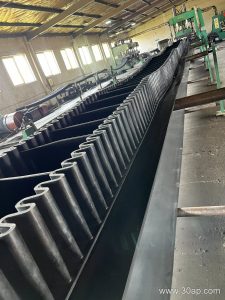
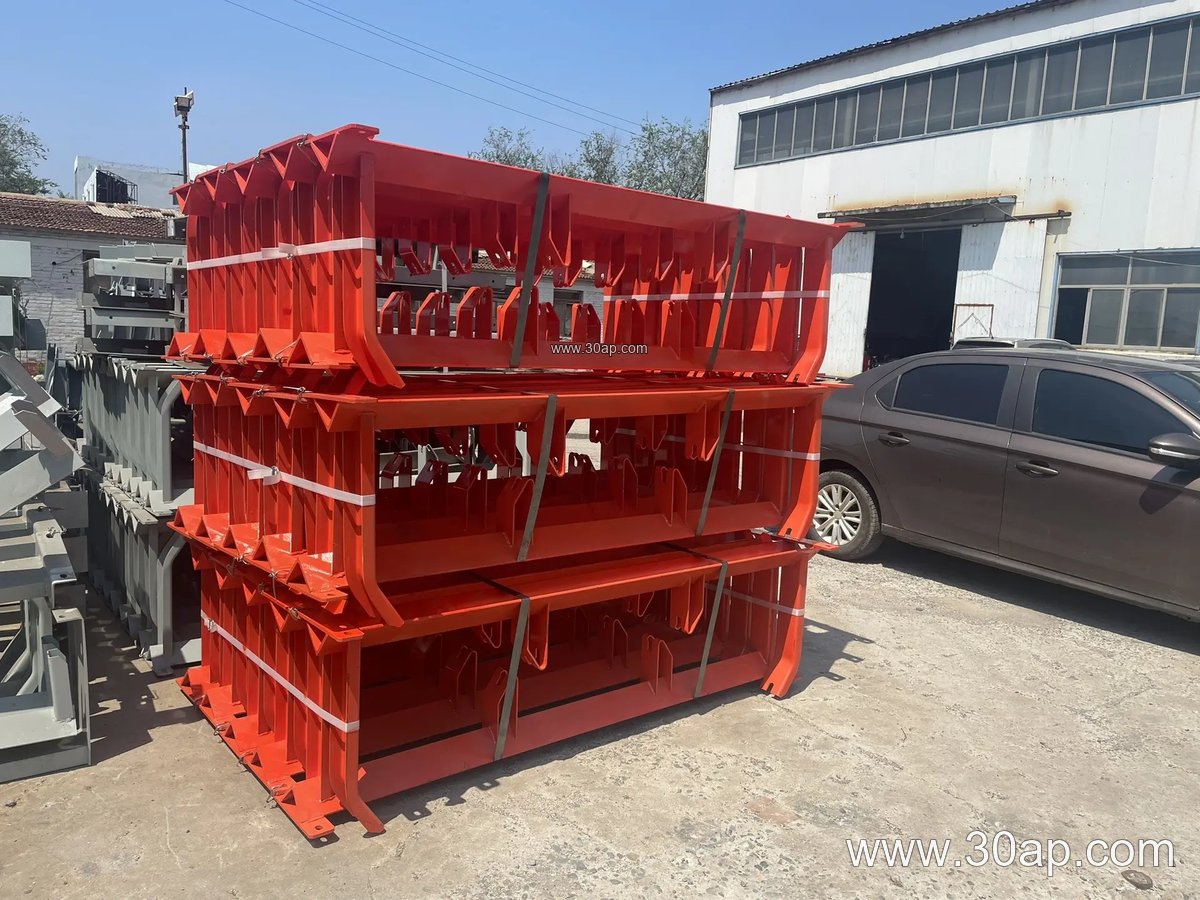
The bracket family covers several positions along the conveyor. Carrying-side brackets are typically trough-type frames, including the standard trough bracket, the transition bracket near the tail and head, and the impact bracket used under loading points. Return-side brackets include flat return brackets and V-type return brackets. Alignment brackets and forward-tilt brackets are used where belt training is a concern.
For comparison, an impact bracket under a crusher discharge point may use a heavier frame than a standard trough bracket on a clean run, because it absorbs shock from falling rock. This is a difference in duty, not a replacement of one bracket type by another.
Typical reference data for Q235 conveyor brackets is summarized below. These are common ranges, not universal specifications.
Reference Parameters
| Parameter | Common Reference Values |
|---|---|
| Belt width | B500, B650, B800, B1000, B1200, B1400, B1600, B1800, B2000, B2200 |
| Trough angle | 20°, 30°, 35°, 45° |
| Roller diameter | Ø89, Ø108, Ø133, Ø159, Ø194 |
| Forward tilt | about 1.5° to 2° where used |
| Material | Q235 angle steel, channel steel, folded plate |
Combinations such as B800, 35°, Ø108 or B1200, 45°, Ø133 are common in design practice, but a given belt width can be paired with more than one trough angle or roller diameter. The final match follows the conveyor design, belt speed, load, and material characteristics.
Where Q235 Brackets Are Used
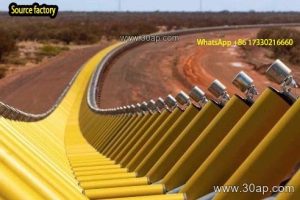
In a quarry or stone crushing line, Q235 conveyor brackets support the troughing rollers under a crusher conveyor belt and the return rollers beneath the return strand. In a coal handling plant, they hold idler rollers on lines carrying coal to the boiler or stockpile. The same bracket design appears in cement plants, iron ore handling, and port loading systems, where dust, moisture, and continuous duty place steady demands on the frame.
Bracket choice should match the belt and roller system around it. A heavy-duty mining conveyor belt running over Ø159 rollers needs a bracket rated for that shaft and load, while a lighter aggregate conveyor belt may use Ø108 rollers on a standard trough frame. The bracket, roller, and belt form one support system, so specifying them together avoids mismatches.
What Buyers Should Check
- Confirm the roller diameter and shaft end type before ordering, so the bracket slot fits.
- Match the trough angle to the material and belt width; adjustable brackets allow tuning within the common 20° to 45° range.
- Check mounting hole spacing and crossbeam length against the conveyor drawing.
- For loading points, ask for an impact bracket rather than a standard trough bracket.
- Confirm the Q235 steel grade, plate thickness, and surface treatment with the supplier.
- Keep spare brackets for high-wear positions such as transition and impact zones.
A well-matched Q235 conveyor bracket is a low-cost part that protects far more expensive components. Correct selection keeps the idler roller turning freely, reduces belt edge damage, and supports steady operation from the quarry face to the stockyard.