What a High-Friction Lagged Pulley Does
A high-friction lagged pulley is a conveyor pulley whose shell carries a rubber or ceramic lagging layer engineered to raise the coefficient of friction between the drum face and the conveyor belt. In practice, this is the same product many plants call a friction lagged drum or a rubber-lagged head pulley. The extra grip matters wherever the drive must transmit torque without slip, especially when the belt is wet, dusty, or carrying a heavy load up an incline.
The lagging is not a cosmetic coating. It changes how force moves from the pulley into the belt, and it directly affects belt life, start-up behavior, and the amount of take-up tension the system needs. On a quarry conveyor or a power plant coal line, a properly lagged drum can be the difference between a clean start under load and a belt that creeps and polishes the shell.
How the Lagging Is Built
Most units start as a steel shell with welded end discs and a shaft, machined for balance and concentricity. The friction layer is then applied in one of several ways, and the choice shapes both grip and service life.
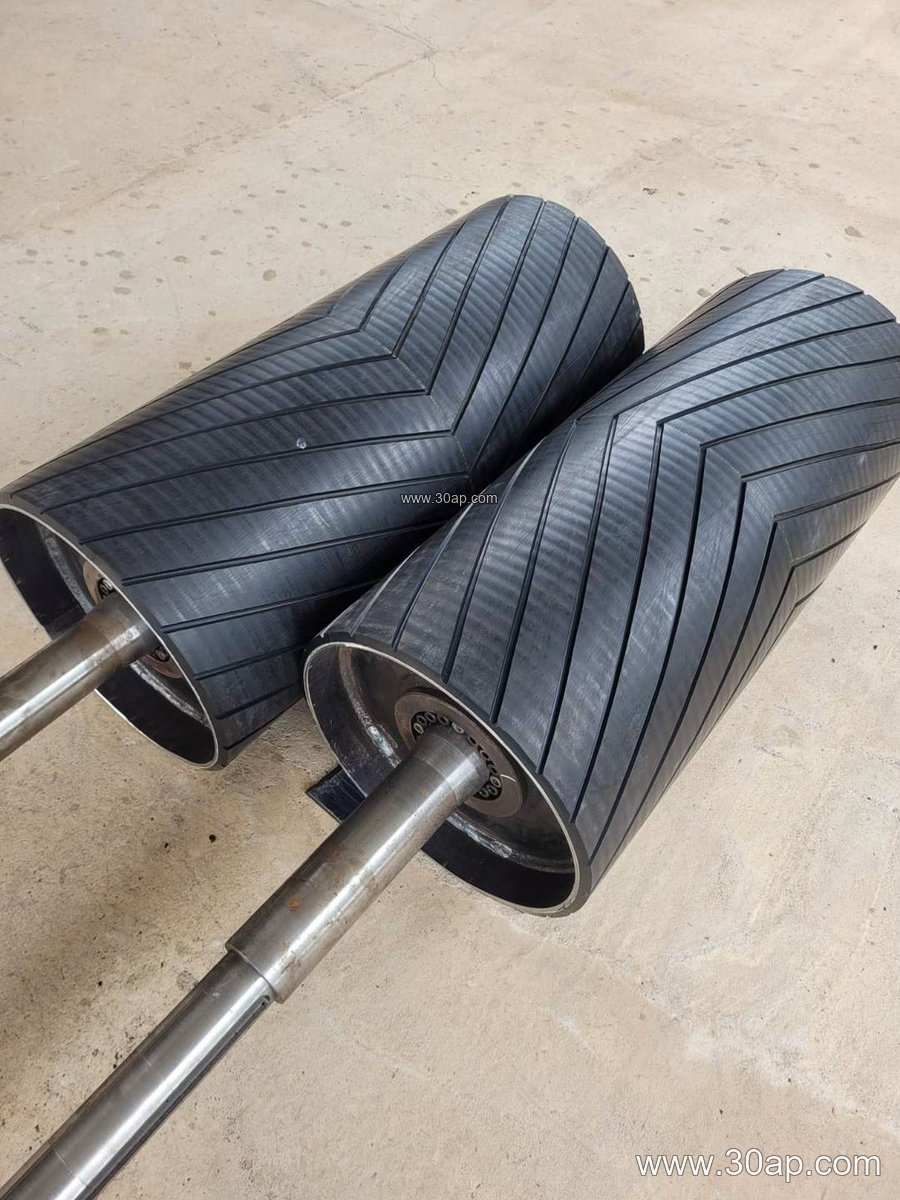
- Hot-vulcanized rubber, bonded under heat and pressure for a dense, uniform surface.
- Cold-bonded rubber, applied with adhesive and often chosen for field repair or shorter lead times.
- Diamond or herringbone grooving, which helps shed water and fines while keeping contact pressure high.
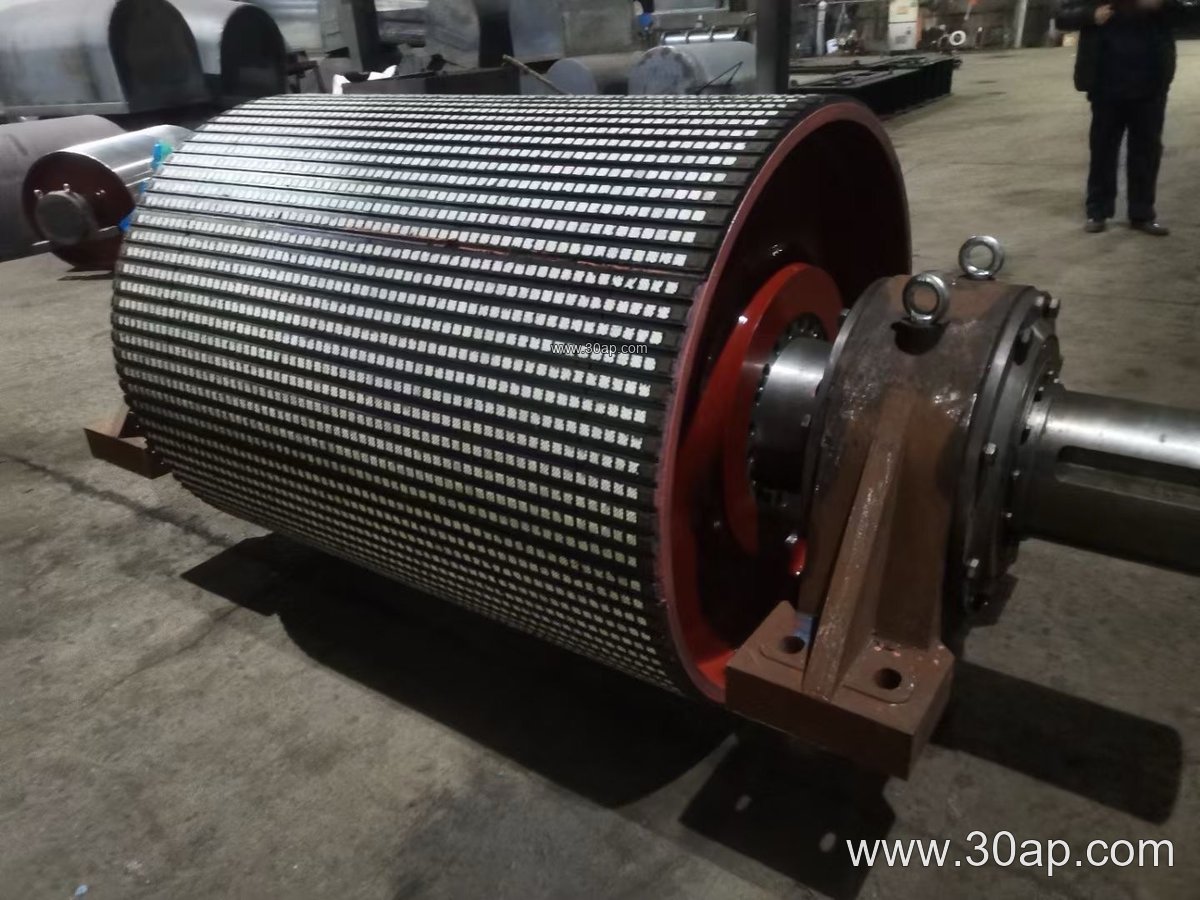
- Ceramic tiles embedded in rubber, used where abrasive carryback would quickly wear plain rubber.
Thickness commonly ranges from 8 mm to 20 mm. A thicker layer adds wear allowance and conformability, but it also changes the effective diameter, so belt speed and take-up settings should be reviewed whenever lagging is replaced. Plain, diamond, and herringbone surfaces are the usual forms; the pattern should match the material and the wetness of the duty.
Where It Fits in the Conveyor
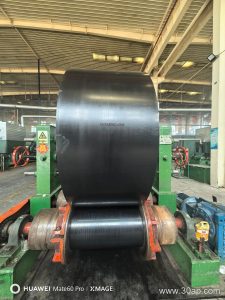
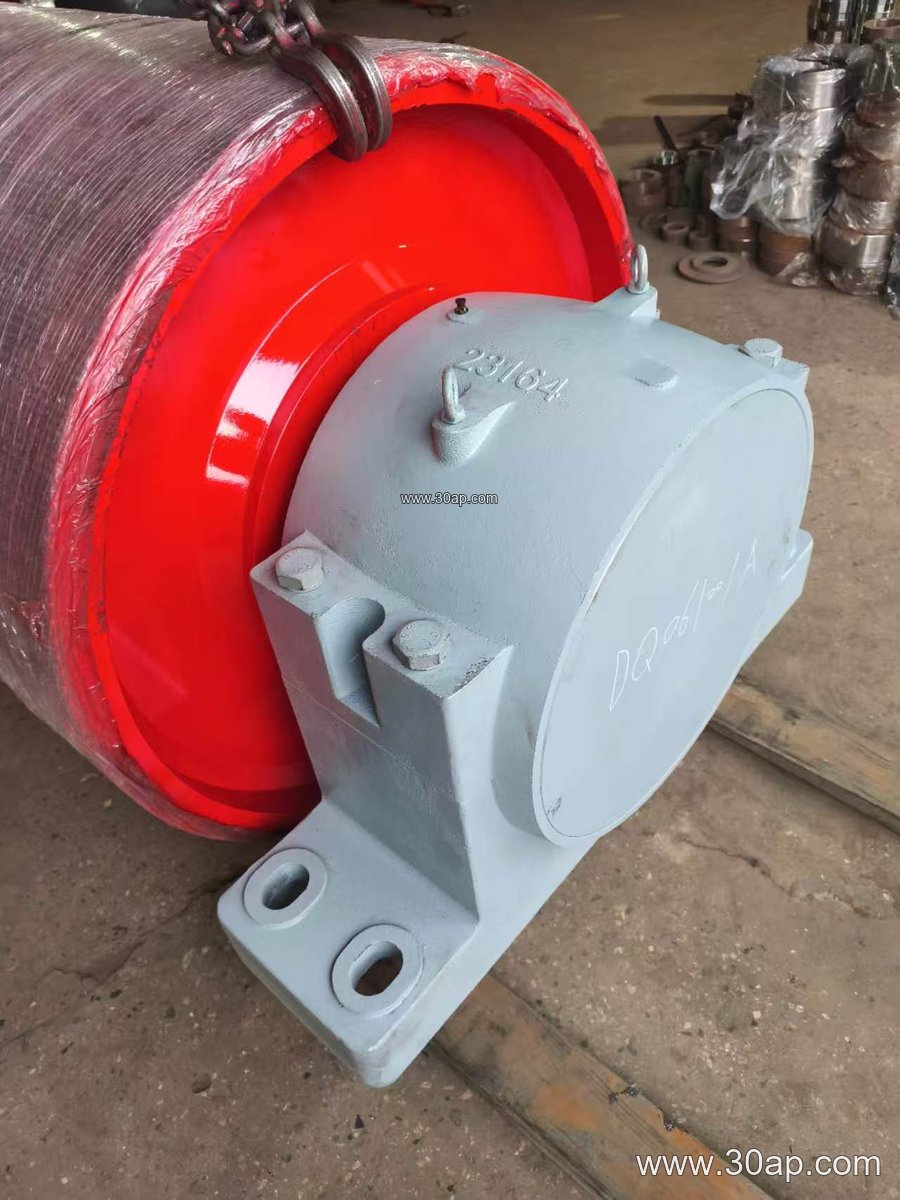
The main subject here is the drive position, so the pulley is normally the head or drive drum that pulls the belt. In a limestone mine or a cement plant clinker line, this drum works with a gearbox, coupling, and conveyor bracket to move hundreds of tonnes per hour. A high-friction lagged pulley is less common at the tail, where a plain or lightly lagged tail pulley usually guides the return side, and it is not a substitute for a bend pulley that simply changes belt direction.
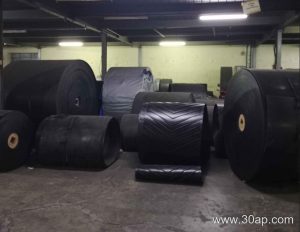
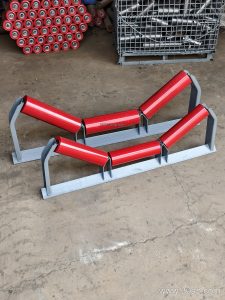
Grip also depends on the belt itself. A heavy-duty mining conveyor belt with a smooth rubber cover behaves differently from a chevron conveyor belt or a corrugated sidewall conveyor belt, and the lagging pattern should be chosen so it does not fight the cover. For abrasive ore duties, pairing the drum with an abrasion resistant conveyor belt and well-aligned idler roller sets keeps slip and edge damage low.
Common Combinations and Reference Data
Sizes are always set by the conveyor design, not by a single rule. The table below shows representative combinations that appear in general engineering practice; they are reference points, not fixed matches.
| Belt width | Typical pulley diameter | Typical face width | Lagging thickness |
|---|---|---|---|
| B650 | Ø500 | about 750 mm | 10 mm |
| B800 | Ø500 to Ø630 | about 950 mm | 10 to 12 mm |
| B1000 | Ø630 to Ø800 | about 1150 mm | 12 to 15 mm |
| B1200 | Ø800 to Ø1000 | about 1400 mm | 15 mm |
| B1400 | Ø800 to Ø1250 | about 1600 mm | 15 to 20 mm |
Shaft diameter is determined by torque and bearing load, commonly falling between Ø80 and Ø200 on medium and large drives. A B1200 belt does not automatically mean a Ø1000 drum, and shaft size should never be guessed from belt width alone.
What Buyers Should Check
Start with the duty: tonnage, incline, start frequency, and whether the belt runs wet or dusty. Confirm the lagging form and thickness, the shell and face width, and the shaft and bearing arrangement. Ask how the lagging is bonded, since hot-vulcanized and cold-bonded layers age differently. Check that the pulley mates correctly with the conveyor bracket and that the belt tracking will not be disturbed by a grooved pattern.
On site, keep the drum clean, monitor wear at the edges, and re-lag before the rubber wears through to steel. A friction lagged drum that is maintained well protects the belt, reduces slip, and keeps the whole line, from crusher discharge to ship loading, running at its design rate.