What a Carbon Steel Conveyor Bracket Does
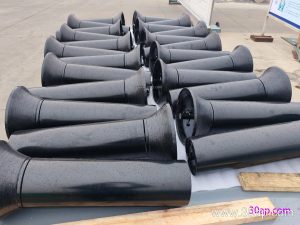
A carbon steel conveyor bracket is the structural support that holds idler rollers in place along a belt conveyor. It carries the weight of the conveyor belt and the material being moved, and it keeps each roller at the correct angle and spacing. In a quarry, a cement plant, or a coal handling system, these brackets are the quiet workhorses that determine how smoothly the belt tracks and how long the rollers last. The bracket itself is a fabricated steel assembly, usually made from angle, channel, or folded plate, and it is designed to bolt onto the conveyor frame.
Because the bracket is often the interface between the frame and the roller, its accuracy matters. A bracket that sits slightly out of position can cause the belt to misalign, which in turn wears the edges of a rubber conveyor belt or an EP conveyor belt faster than necessary. For this reason, buyers should treat the bracket as an engineered component, not a piece of miscellaneous steel.
How the Bracket Is Built
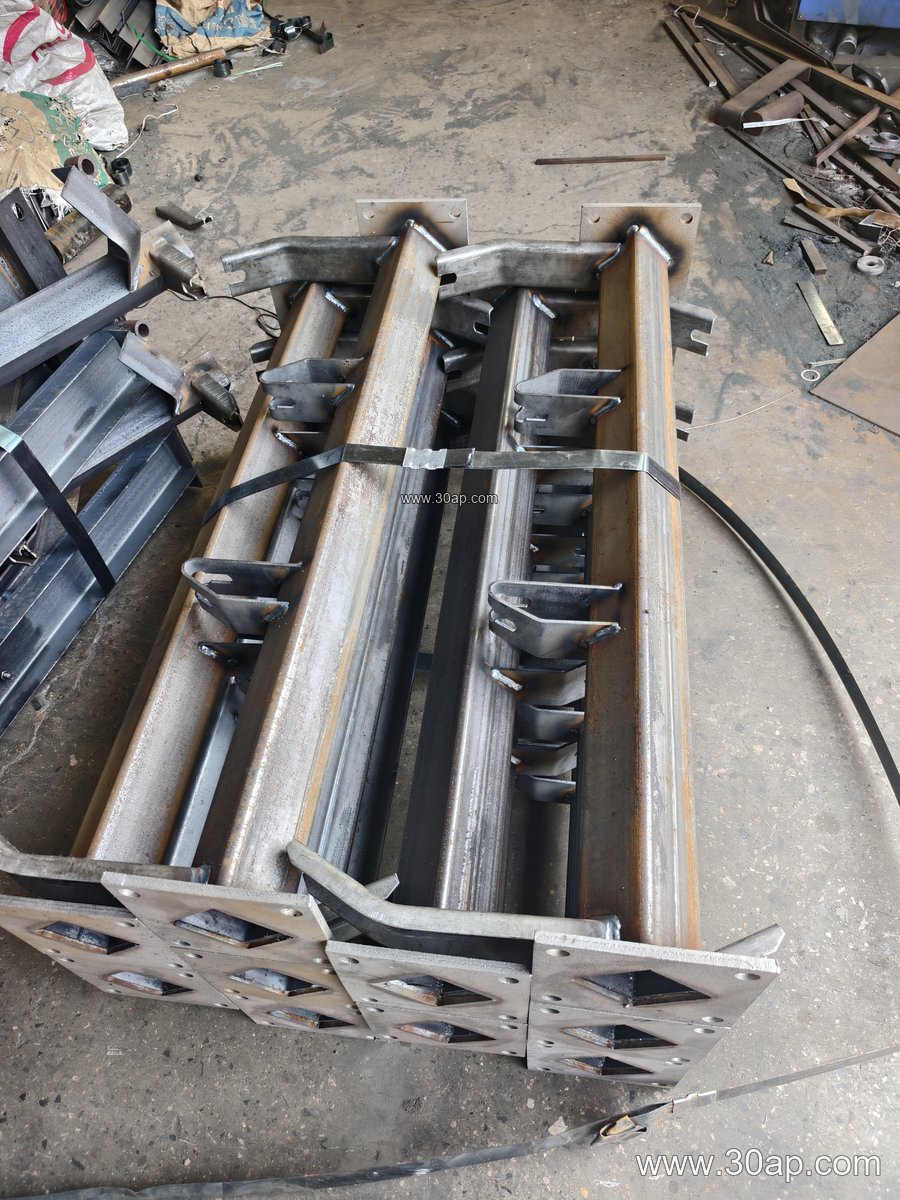
Most carbon steel conveyor brackets are welded or bolted assemblies. The main parts are a crossbeam, two or more roller seats, and mounting feet that attach to the conveyor stringer. The steel is typically cut, punched, and formed before welding, and the finished bracket may be painted or galvanized depending on the environment. In dusty or wet conditions, such as a wash plant or a port terminal, a protective finish helps prevent corrosion.
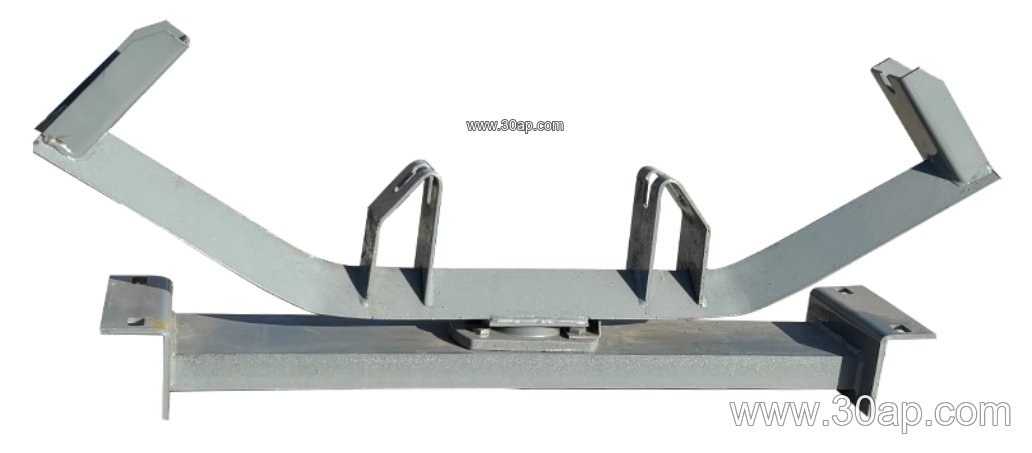
The bracket geometry is defined by the belt width and the trough angle. A three-roller trough bracket for a B800 belt at 35 degrees will look different from a B1200 bracket at 45 degrees, and the mounting hole spacing and crossbeam length usually change with the design. Common roller diameters include Ø89, Ø108, Ø133, Ø159, and Ø194, and the bracket seats must match the shaft and roller ends used in the system.
Common Types and Where They Fit
Conveyor brackets are not a single product. The trough bracket supports the carrying run and sets the trough angle. The return bracket supports the belt on the return side, and a V-return bracket helps center the belt on the lower run. Transition brackets are used where the belt changes from flat to troughed, and impact brackets are placed under loading points to absorb shock. Self-aligning brackets are used on longer conveyors where belt tracking is a concern. Adjustable brackets allow the trough angle to be changed on site, which is useful when the same conveyor handles different materials.
- Trough bracket: carrying side, 20 to 45 degree trough angles
- Return bracket: lower run support
- V-return bracket: belt centering on the return side
- Impact bracket: loading zone shock absorption
- Transition bracket: flat-to-trough transition
- Adjustable bracket: on-site angle adjustment
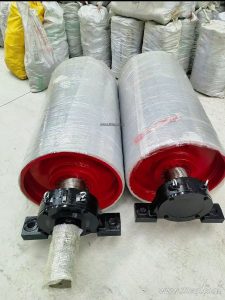
These types are not interchangeable. A return bracket cannot replace a trough bracket, and a bend pulley is a different component from a drive pulley or a tail pulley. The bracket family supports the rollers; the pulleys drive and redirect the belt.
Matching Brackets to Rollers and Belts
Selection starts with the belt width and the roller diameter. A B650 conveyor at 30 degrees with Ø89 rollers will use a lighter bracket than a B1400 conveyor at 35 degrees with Ø133 rollers. The belt type also matters. A heavy-duty mining conveyor belt or a steel cord conveyor belt carries more tension and weight, so the bracket and frame must be sized for the load. In a coal mining conveyor system, flame retardant conveyor belts are common, and the brackets should be selected with the same attention to fire safety and dust control.
For abrasive materials such as iron ore or copper ore, a high abrasion resistant conveyor belt is often used, and the brackets should be robust enough to keep the rollers stable under constant load. In food or grain handling, a food grade conveyor belt may be used, and the brackets should be easy to clean and free of pockets that trap material.
Buyer Checklist
Before ordering, confirm the belt width, the trough angle, the roller diameter, and the mounting hole pattern. Check whether the bracket is fixed or adjustable, and confirm the surface finish for the site environment. Ask for the crossbeam length and the roller seat spacing, because these are not universal. For a quarry or aggregate line, a standard trough bracket may be sufficient; for a port or a power plant coal yard, a heavier design with better corrosion protection is often preferred. The goal is a bracket that fits the frame, holds the idler roller correctly, and keeps the conveyor belt running true.