What a Tail Pulley Does
A tail pulley is the return-end roll that supports and guides the conveyor belt as it loops back to the carrying side. Often called a return pulley or rear pulley, it sits opposite the drive pulley and helps maintain belt tension and tracking. In a quarry or a coal preparation plant, the tail pulley is the first roll the belt meets after discharging its load, so it must handle fine dust, occasional spillage, and steady rotation without excessive wear.
Unlike a drive pulley, which transmits torque from the motor, the tail pulley is usually a non-driven component. It may be fixed, or it may sit on a tensioning carriage. That distinction matters because a tail pulley in a take-up frame must allow smooth axial movement while keeping the shaft square to the belt path.
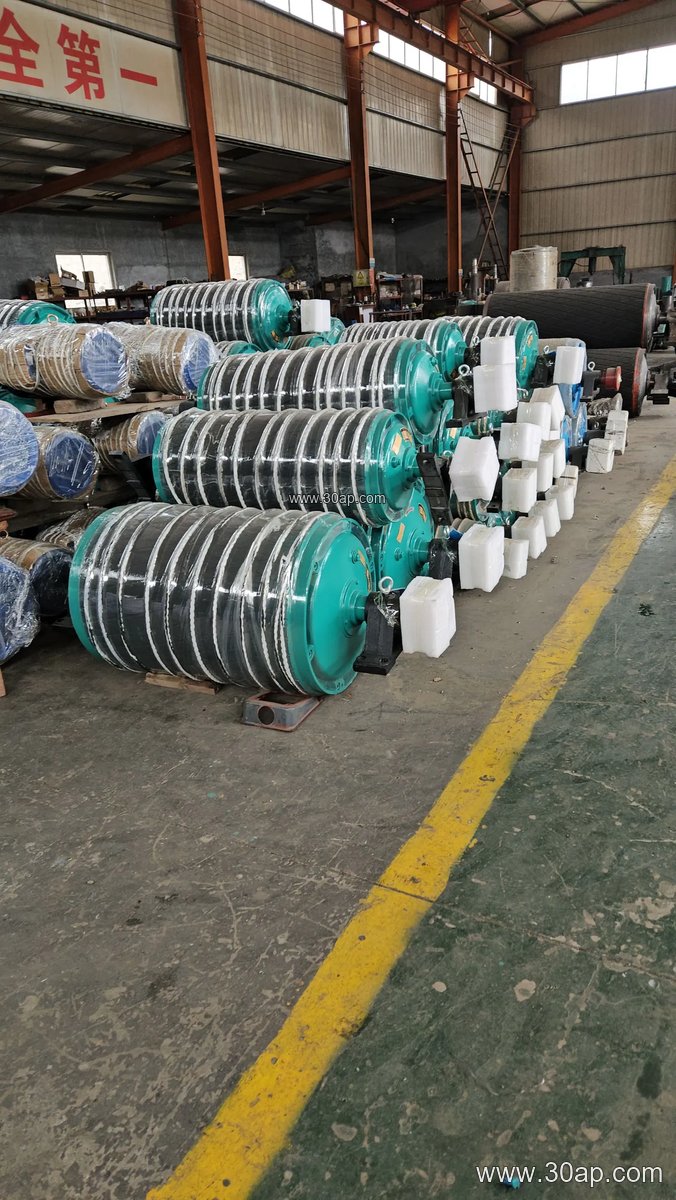
Construction and Surface Options
Most tail pulleys use a welded steel drum with a shaft, hub, and bearing housings. The shell may be plain or covered with rubber, ceramic, or a combination. Common surface forms include smooth finish, cold-bonded rubber, hot-vulcanized rubber, diamond grooving, and ceramic lagging. Lagging thickness often falls in the 8 mm to 20 mm range, depending on the duty and belt speed. A rubber lagged tail pulley can improve grip on the return side and reduce material build-up, while a plain face may suit lighter, cleaner duties.
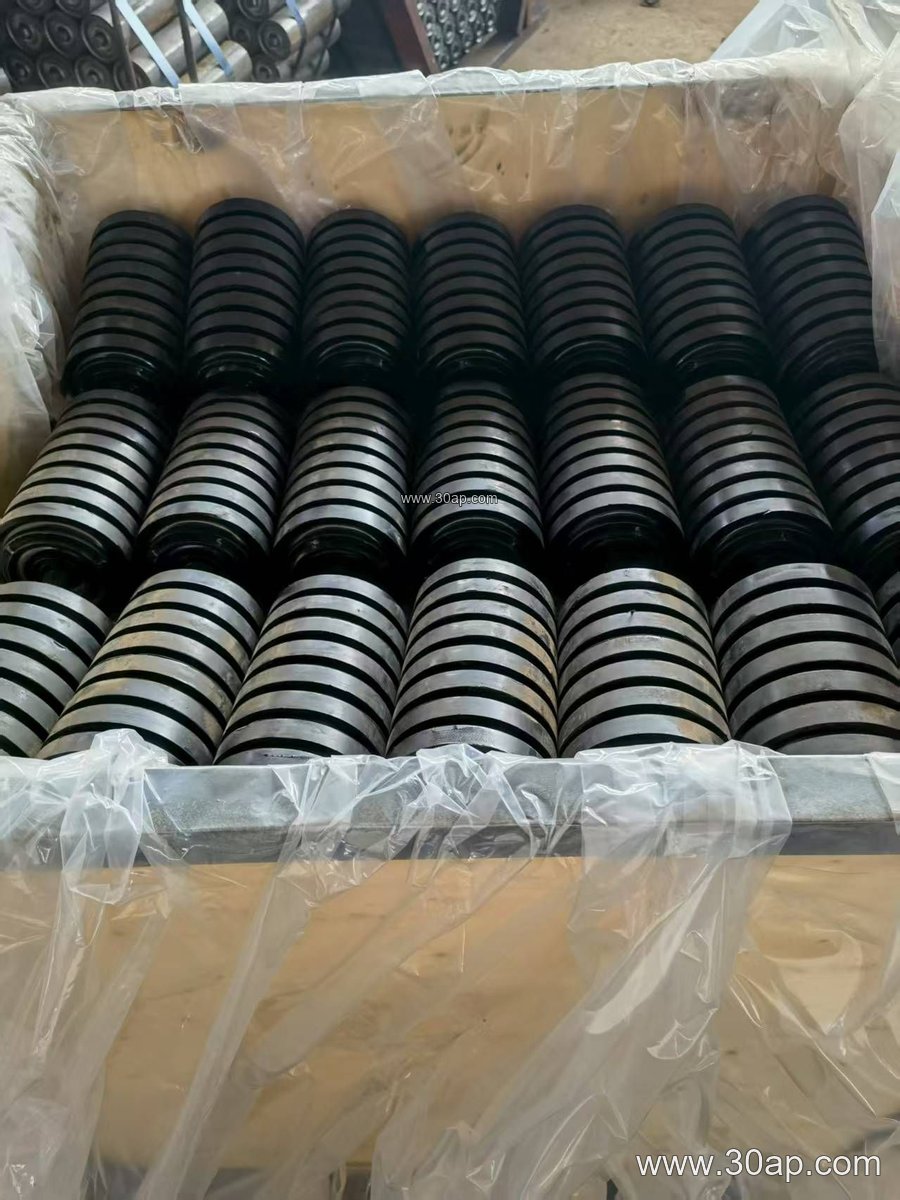
The pulley face width is normally wider than the conveyor belt. For example, a B800 belt often runs on a pulley with roughly 950 mm face width, and a B1200 belt may use a pulley around 1400 mm wide. These are reference relationships, not fixed rules; the final face width depends on belt wander, frame clearance, and the designer’s allowance.
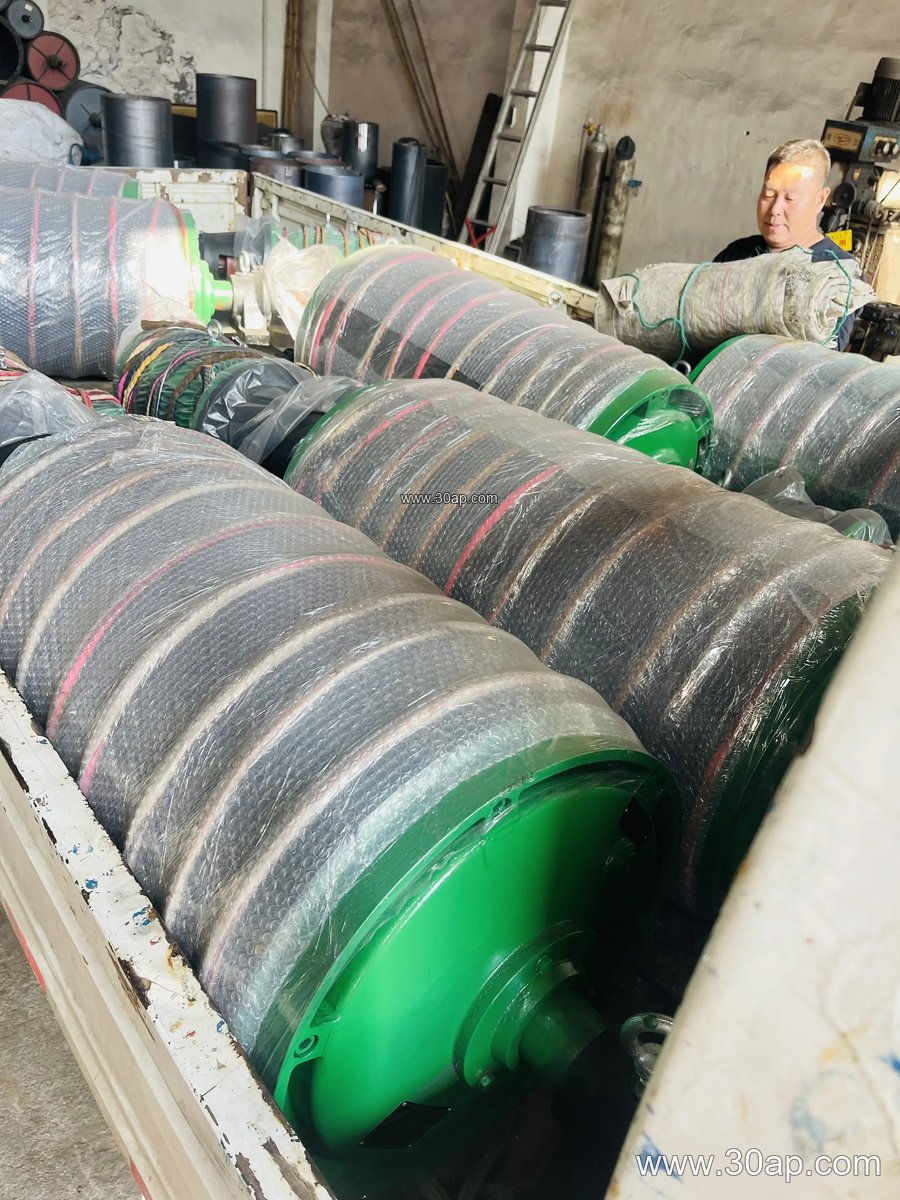
Sizing and Selection Notes
Diameter and shaft size should be selected from belt tension, torque, and bearing load, not from belt width alone. A B1200 tail pulley might be built with a Ø1000 shell, while a shorter B800 conveyor could use a Ø500 tail pulley. The same belt width can pair with different diameters across different conveyor lengths and inclines. Shaft diameters commonly range from Ø50 to Ø200, but the exact shaft is determined by the torque and bending load at that location.
Buyers should confirm the tail pulley’s role in the tensioning system. A fixed tail pulley and a take-up tail pulley have different bearing housing designs. Also check the bearing type, sealing arrangement, and whether the pulley needs a crowned or flat face. For dusty applications such as a lime kiln feed line or a copper ore transfer station, sealed bearings and wear-resistant lagging are often worth specifying.
Where It Fits in the Conveyor
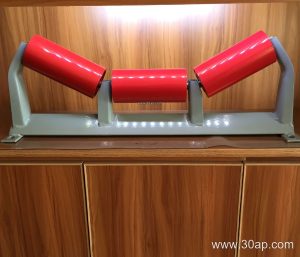
Tail pulleys appear in bulk material handling across many industries. In a sand and gravel plant, the tail pulley at the feed end of a transfer conveyor works with troughing idler rollers and a heavy-duty conveyor bracket to keep the belt centered. In a cement plant, a tail pulley on a clinker belt may need heat-resistant lagging and a robust bearing seal. In a coal mining conveyor, flame retardant conveyor belt and anti-static properties are often required, and the tail pulley must be selected to match the belt’s tension and tracking behavior.
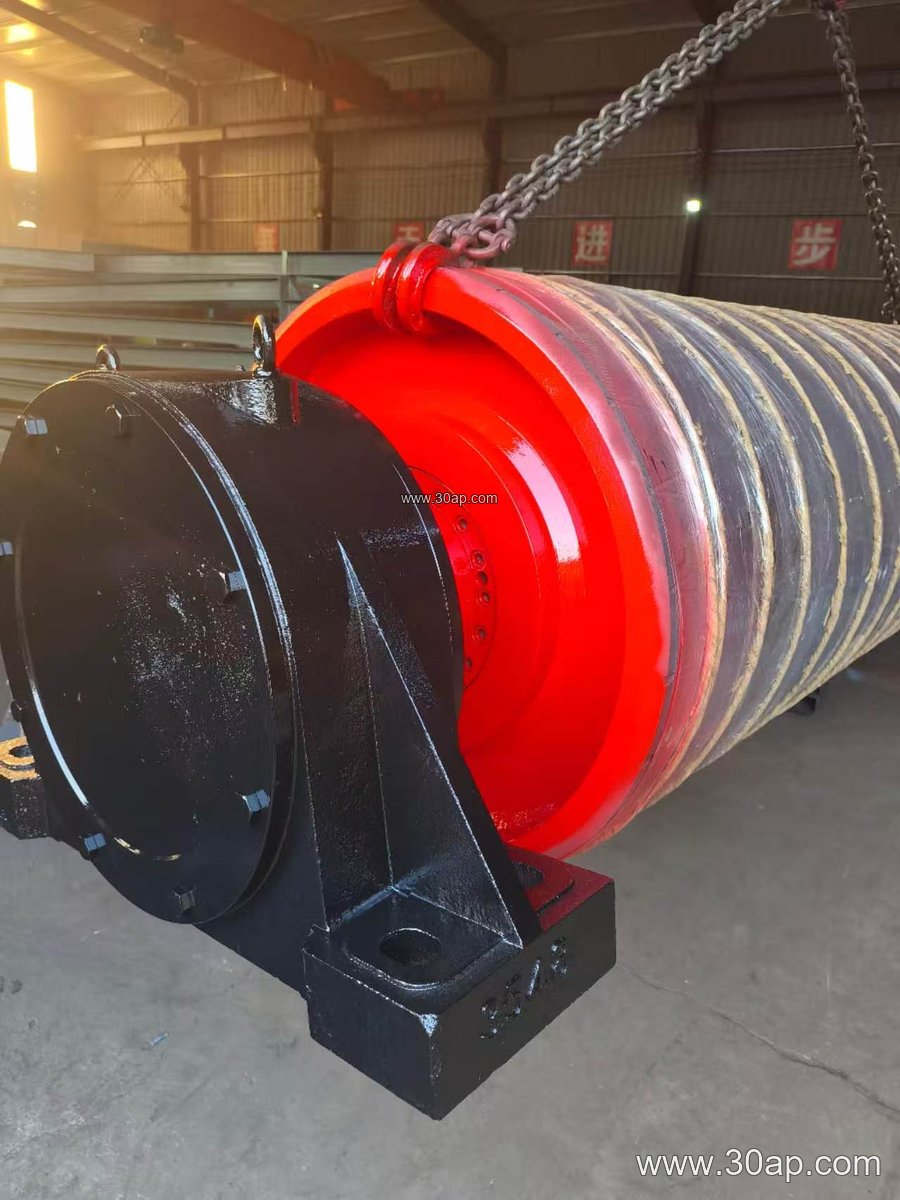
The tail pulley also interacts with the belt’s splice and edge condition. A worn or misaligned tail pulley can cause belt mistracking, edge damage, and premature wear on the conveyor belt. Regular inspection of lagging wear, bearing temperature, and shaft alignment helps avoid unplanned stops.
Buyer Checklist
- Confirm the pulley’s position and whether it is fixed or part of a take-up system.
- Specify belt width, belt type, and expected tension so the supplier can size the shell and shaft.
- Choose lagging based on material: abrasive, oily, hot, or wet.
- Check bearing sealing for dust and water exposure.
- Verify face width and crown profile against the conveyor frame and belt tracking requirements.
For more information on conveyor components, visit www.beltconveyorsystem.com and review options for conveyor pulley, idler roller, and conveyor bracket assemblies.