What a Conveyor Idler Does on the Belt Line
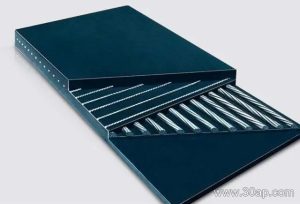
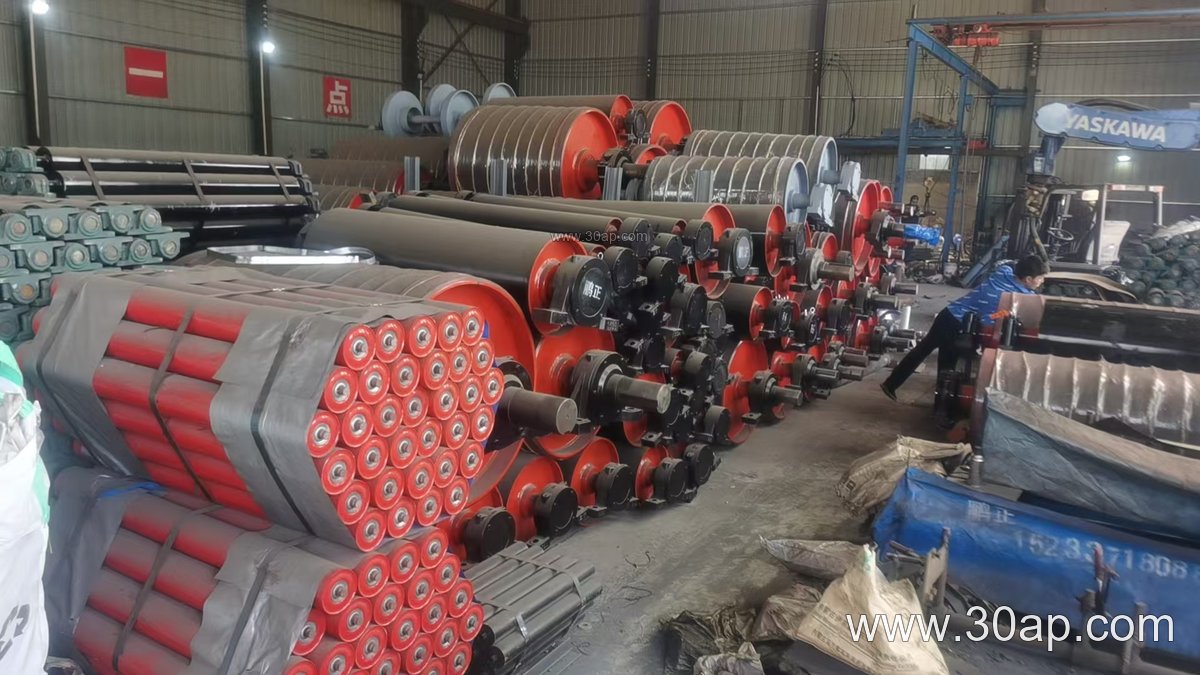
A conveyor idler is the rotating roller assembly that supports the conveyor belt and the material load along the carrying and return sides of a conveyor. In a quarry, coal preparation plant, or cement plant, dozens or even hundreds of these idler rollers work together to keep the belt tracking smoothly and reduce friction. The idler itself does not drive the belt; that job belongs to the conveyor pulley at the head or tail. Instead, the idler roller carries the weight, guides the belt, and helps maintain the desired trough shape.
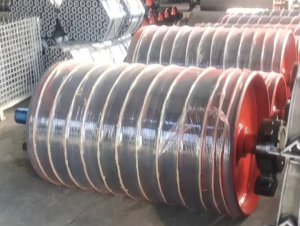
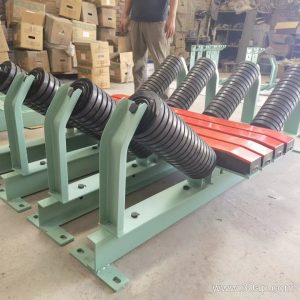
The term conveyor idler covers a family of rollers. Common types include the troughing idler, return idler, impact idler, training idler, and spiral idler. Each has a specific place on the conveyor. For example, a troughing idler supports the loaded belt on the carrying side, while a return idler supports the empty belt on its way back. An impact idler sits under the loading zone to absorb the drop energy of large lumps. These are not interchangeable with drive pulleys, tail pulleys, or bend pulleys, which serve different mechanical functions.
How a Conveyor Idler Is Built
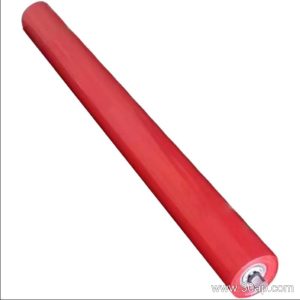
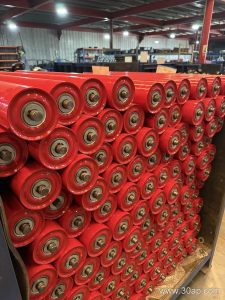
A typical idler roller consists of a steel tube shell, bearing housings, bearings, a shaft, and a sealing system. The shell is often made from steel pipe, but nylon, ceramic, or rubber-covered surfaces may be used for special duties. Rubber rings, for instance, are common on impact idlers to cushion falling material. The bearings are usually deep-groove ball bearings such as 6204, 6205, 6305, 6306, 6308, or 6310. These bearings are fitted with seals to keep out dust and moisture, which is critical in dusty environments like a limestone mine or a power plant coal yard.
The shaft runs through the center and extends to the bracket. A conveyor bracket holds the idler in place and allows for proper alignment. The length of the roller depends on the belt width, trough angle, and the number of rolls in the idler set. A three-roll troughing idler, for example, uses a center roll and two side rolls. Common belt widths include B400, B500, B650, B800, B1000, B1200, B1400, B1600, B1800, B2000, B2200, and B2400. For a three-roll troughing set, typical center roll lengths might range from about 200 mm for B500 up to around 750 mm for B2000, but side rolls can differ. These values are examples only and should be confirmed with the actual conveyor design.
Common Idler Types and Their Roles
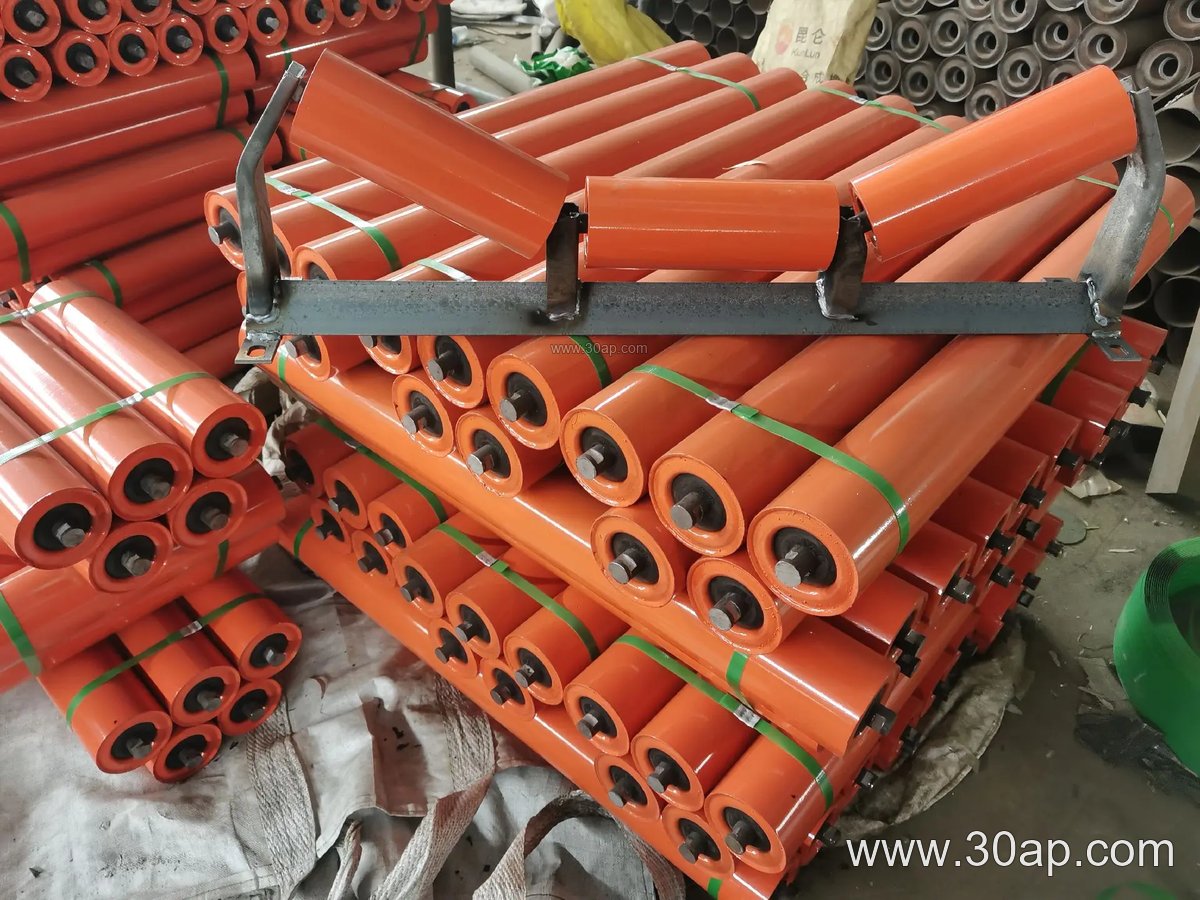
- Troughing idler: Usually a two-roll or three-roll set that forms the belt into a trough. Trough angles of 20, 30, 35, or 45 degrees are common. A forward tilt of about 1.5 to 2 degrees may be used on training idlers to help center the belt.
- Return idler: Supports the empty belt. A flat return idler or V-shaped return idler helps remove material stuck to the belt.
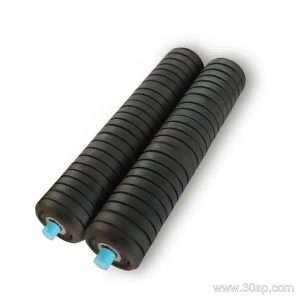
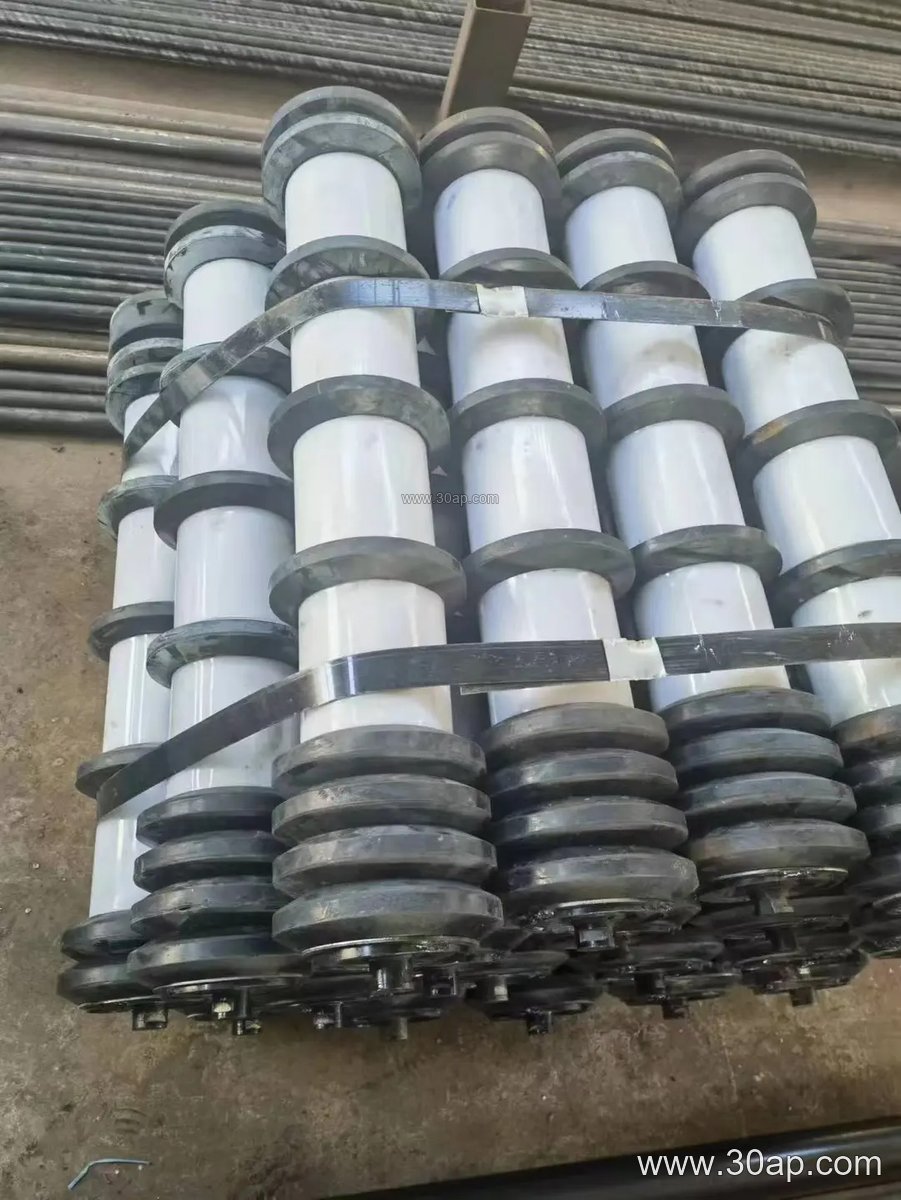
- Impact idler: Fitted with rubber rings or a rubber-covered surface to absorb shock at transfer points.
- Training idler: Also called a self-aligning idler. It uses a pivoting frame or tapered rolls to correct belt misalignment.
- Spiral idler: Has a helical surface that helps clean the belt and prevents material buildup.
Roller diameters commonly range from Ø63, Ø76, Ø89, Ø102, Ø108, Ø127, Ø133, Ø159, Ø178, Ø194, to Ø219. The choice depends on belt speed, load, and available space. A larger diameter roller turns slower and may last longer under heavy load, but it also requires more clearance.
Where Conveyor Idlers Are Used
You will find conveyor idlers in almost any bulk material handling operation. In a sand and gravel plant, they support belts moving crushed stone. In a coal mine or coal preparation plant, they handle coal and refuse. In a cement plant, they carry clinker, limestone, and additives. In a steel mill or sintering plant, they move ore and sinter. Port terminals use them for loading and unloading ships. Even a concrete batching plant or a fertilizer plant relies on idlers for short conveyor runs. The working conditions vary widely, so the idler seal and bearing selection must match the environment.
What Buyers Should Know
When specifying a conveyor idler, consider the belt width, trough angle, roller diameter, shaft size, and bearing type. The idler must fit the conveyor bracket and match the belt speed. Do not assume that one belt width can only use one pulley diameter or one shaft size. The roller length and shaft diameter are determined by the overall conveyor design, not by belt width alone. Ask for the idler’s load rating, sealing method, and recommended operating temperature. For abrasive or corrosive materials, a rubber-covered or ceramic roller may be a better choice than a standard steel roller. Finally, remember that drive, tail, and bend pulleys are separate components; they are not substitutes for idlers. A well-chosen set of idlers will reduce belt wear, lower energy consumption, and keep your conveyor running smoothly.