What a Coal Mine Belt Conveyor Pulley Does Underground
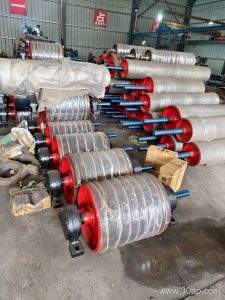
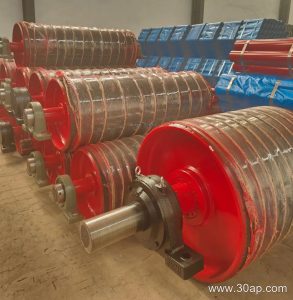
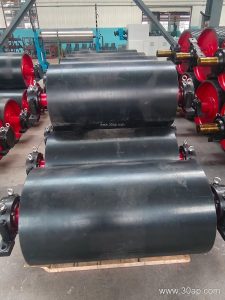
A coal mine belt conveyor pulley is the rotating drum that turns, supports, and guides the conveyor belt along the entire haulage route. In an underground coal mining conveyor belt system, the pulley transfers drive torque to the belt, maintains tension at the tail end, and redirects the belt around bends where space is tight. Because coal dust, moisture, and variable loads are constant companions underground, the pulley must be built for harsh duty rather than general material handling.
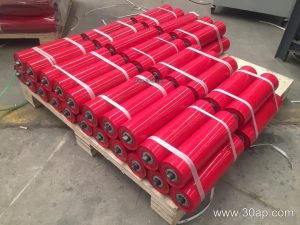
Unlike an idler roller, which supports the belt along the carry and return strands, the pulley is a larger, load-bearing component mounted on a shaft and held by a conveyor bracket at the head, tail, or intermediate frame. The two work together: the conveyor belt rides on the idlers for most of its length, then wraps the pulley at the terminal points where power and direction change.
Construction and Surface Options
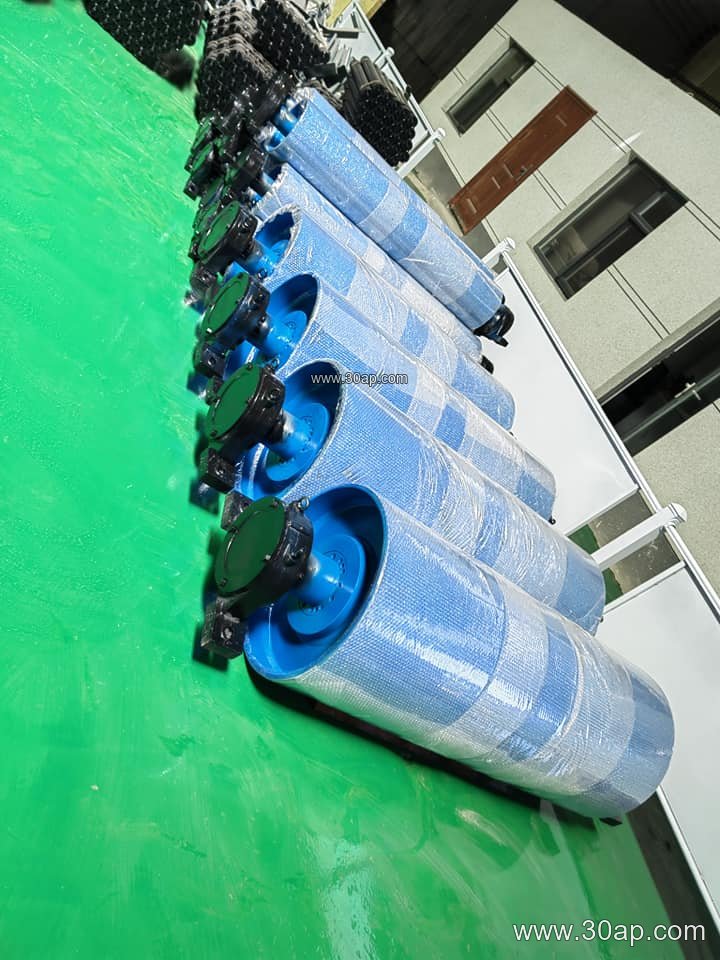
Most coal mine pulleys use a welded steel shell with a machined face, end discs, and a shaft sized by torque and radial load rather than belt width alone. Common diameters include Ø500, Ø630, Ø800, Ø1000, and Ø1250, with larger sizes such as Ø1400 and Ø1600 used on high-capacity trunk conveyors. Shell width normally exceeds belt width so the belt is fully supported, for example a B1200 belt often runs on a pulley face of about 1400 mm, while a B800 belt may use roughly 950 mm.
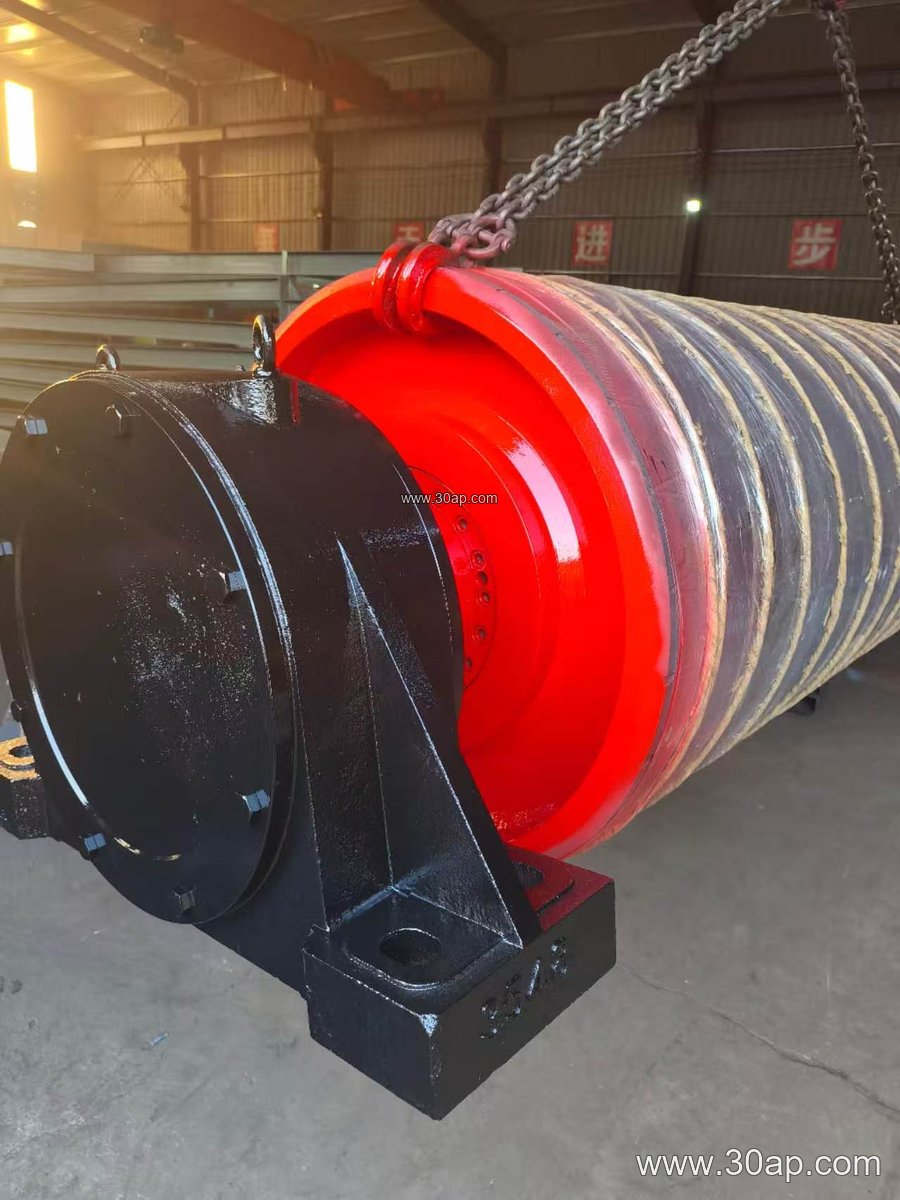
Surface treatment is where specification choices matter most:
- Plain face for low-tension tail or bend positions where slip is not a concern.
- Rubber lagging applied by cold bonding or hot vulcanizing to raise friction and protect the shell.
- Diamond or herringbone grooving to shed water and fines in wet underground sections.
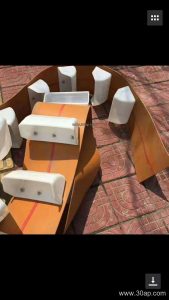
- Ceramic lagging for high-torque drive positions where abrasion is severe.
Lagging thickness commonly ranges from 8 mm to 20 mm depending on duty. A flame retardant conveyor belt and an anti-static conveyor belt are typical companions underground, and the pulley lagging should be selected with the same fire-safety intent.
Position Matters More Than the Name
The same drum design behaves differently depending on where it sits. A drive pulley at the head receives the gearbox torque and needs the highest friction and the strongest shaft. A tail pulley at the loading end sets belt tension and often carries impact from coal dropping onto the belt. A bend pulley changes belt direction without driving, so it usually runs a lighter build. Tension pulleys in a take-up frame move to absorb stretch, and snub pulleys increase wrap angle around the drive.
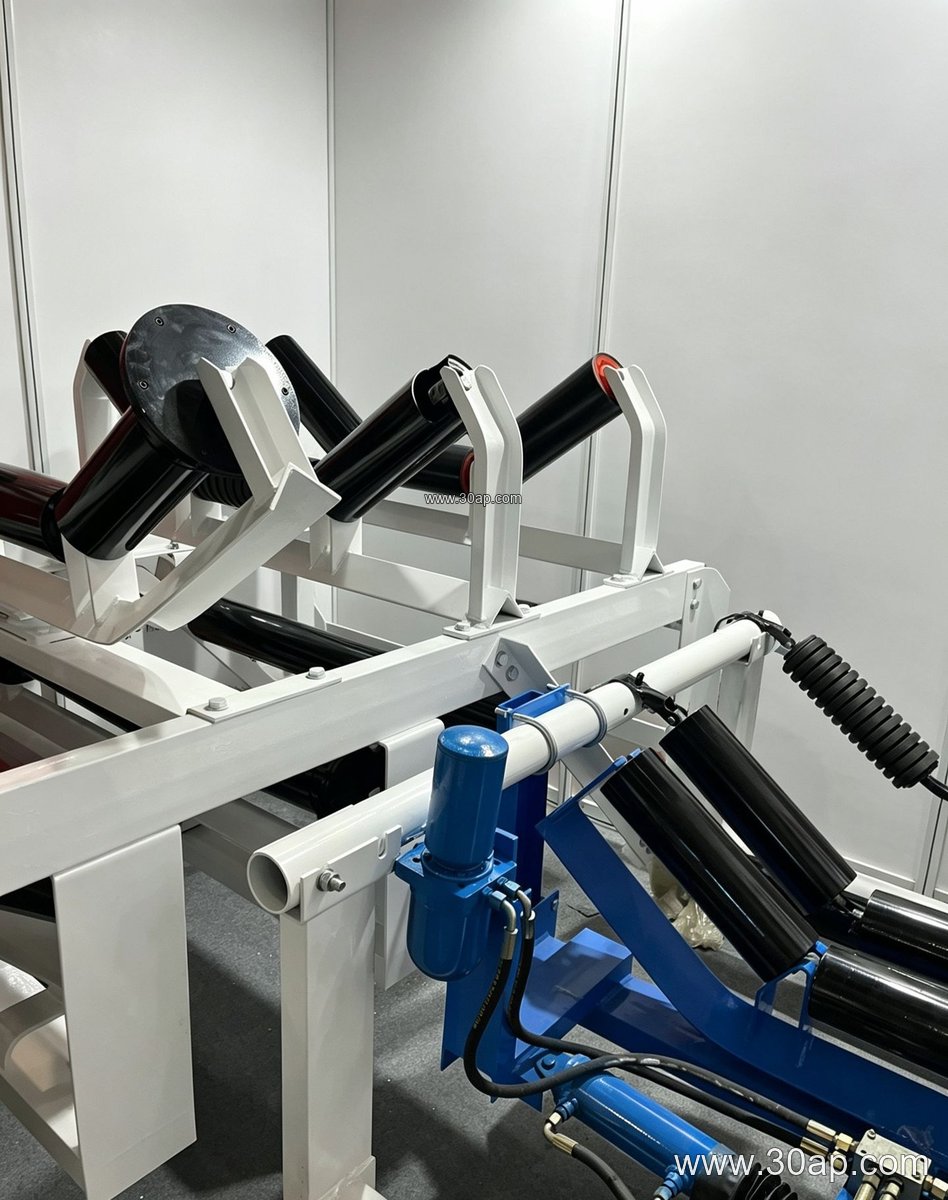
These roles are not interchangeable. A tail pulley cannot substitute for a drive pulley, and a bend pulley should not be specified with drive-level lagging unless the design calls for it. Buyers should confirm the position, wrap angle, and expected belt tension before comparing quotations.
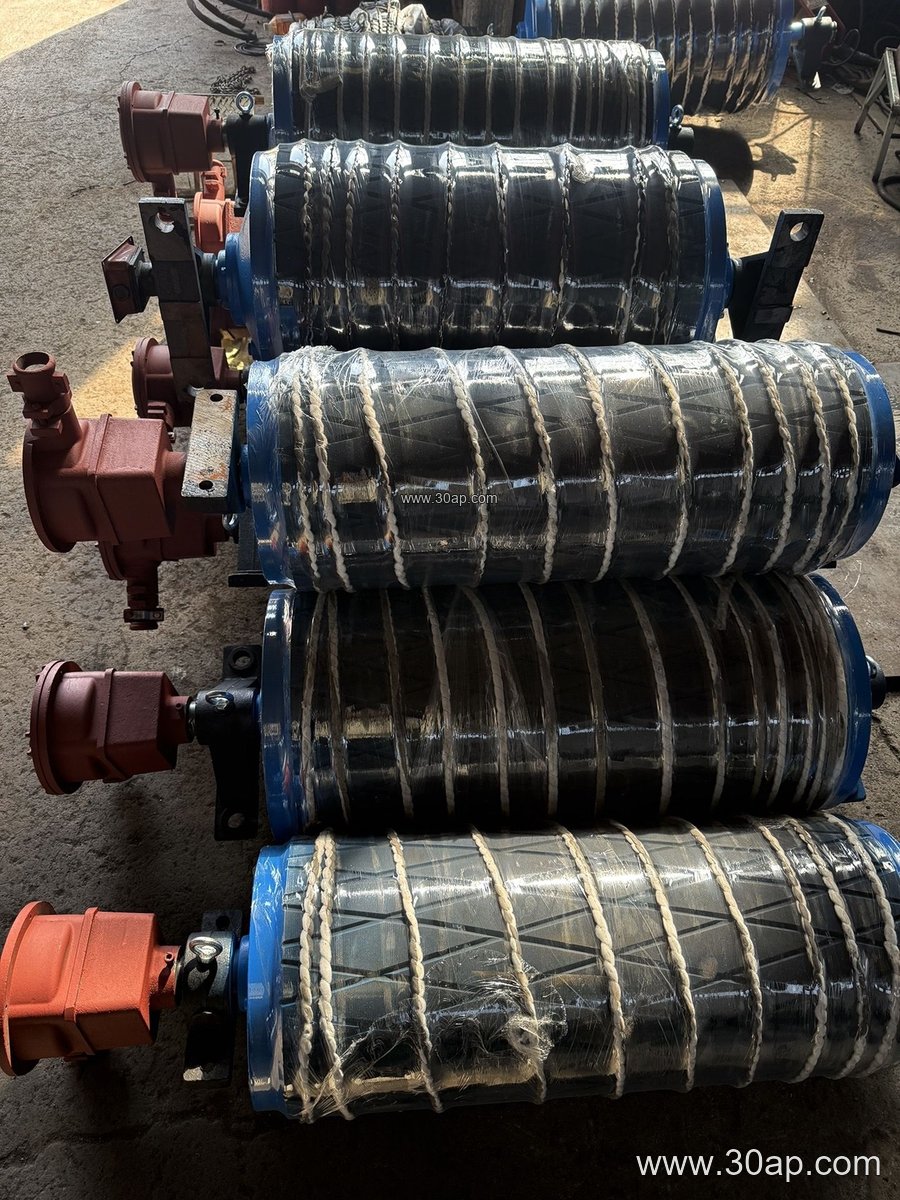
Matching the Pulley to the Conveyor Belt
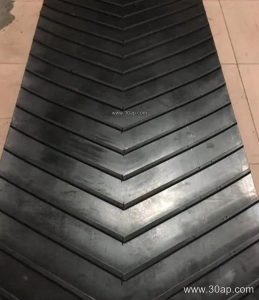
Belt type and pulley specification travel together. A steel cord conveyor belt, such as ST1600 or ST2000, tolerates high tension and pairs with large-diameter drive pulleys that limit bending stress. An EP conveyor belt or NN conveyor belt in multi-ply fabric core construction is common on panel and gathering conveyors, where EP1000 or NN300 belts may run on Ø630 to Ø800 pulleys. PVC and PVG conveyor belts, including PVG800S, are widely used underground and need compatible lagging and pulley diameters to avoid excessive flexing.
Width and diameter are not a fixed pair. A B1000 belt may run on Ø500 in a short transfer or Ø1000 on a long trunk line, because the diameter follows belt tension, wrap angle, and space. Shaft diameter is likewise determined by torque and bearing load; common shaft sizes run from Ø80 to Ø200, but no belt width dictates a single shaft size.
Buyer Checklist for Coal Mine Duty
- Confirm the pulley position, belt width, and belt type before sizing.
- State the required lagging: plain, rubber, diamond, herringbone, or ceramic, with thickness.
- Provide the belt tension and wrap angle so the shaft and bearings can be verified.
- Specify balance grade and runout for high-speed drives to reduce vibration.
- Ask for bearing type, sealing arrangement, and lubrication method suitable for dusty conditions.
- Check that the conveyor bracket interface matches the existing frame.
For related components, buyers often review the conveyor pulley together with idler roller sets and belt specifications such as abrasion resistant conveyor belt or flame retardant conveyor belt grades. A well-matched assembly reduces belt edge damage and extends service life in coal handling, power plant coal yards, and wash plants.