What a 1250mm Diameter Conveyor Pulley Is
A 1250mm diameter conveyor pulley is a large-diameter drum used at the head, tail, or tensioning point of a heavy-duty belt conveyor. With a nominal diameter of Ø1250 mm, it is typically chosen where belt tensions are high, where the belt is wide, or where a generous wrap angle is needed to transmit drive force without excessive slip. In many layouts it works as a head or drive pulley, but the same diameter can also appear as a tail or tension pulley depending on the duty.
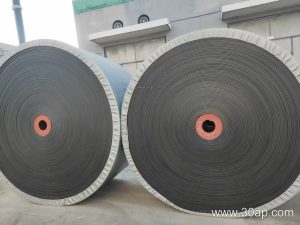
The size is not a free-standing specification. It is matched to belt width, shaft load, torque, and the space available in the conveyor frame. A Ø1250 mm drum may serve a 1400 mm or 1600 mm belt in a quarry or a power plant coal handling line, while a wider 1800 mm or 2000 mm belt in an iron ore or port bulk terminal may call for a larger shell. The pulley diameter and the conveyor belt should be selected together, not in isolation.
Construction and Surface Options
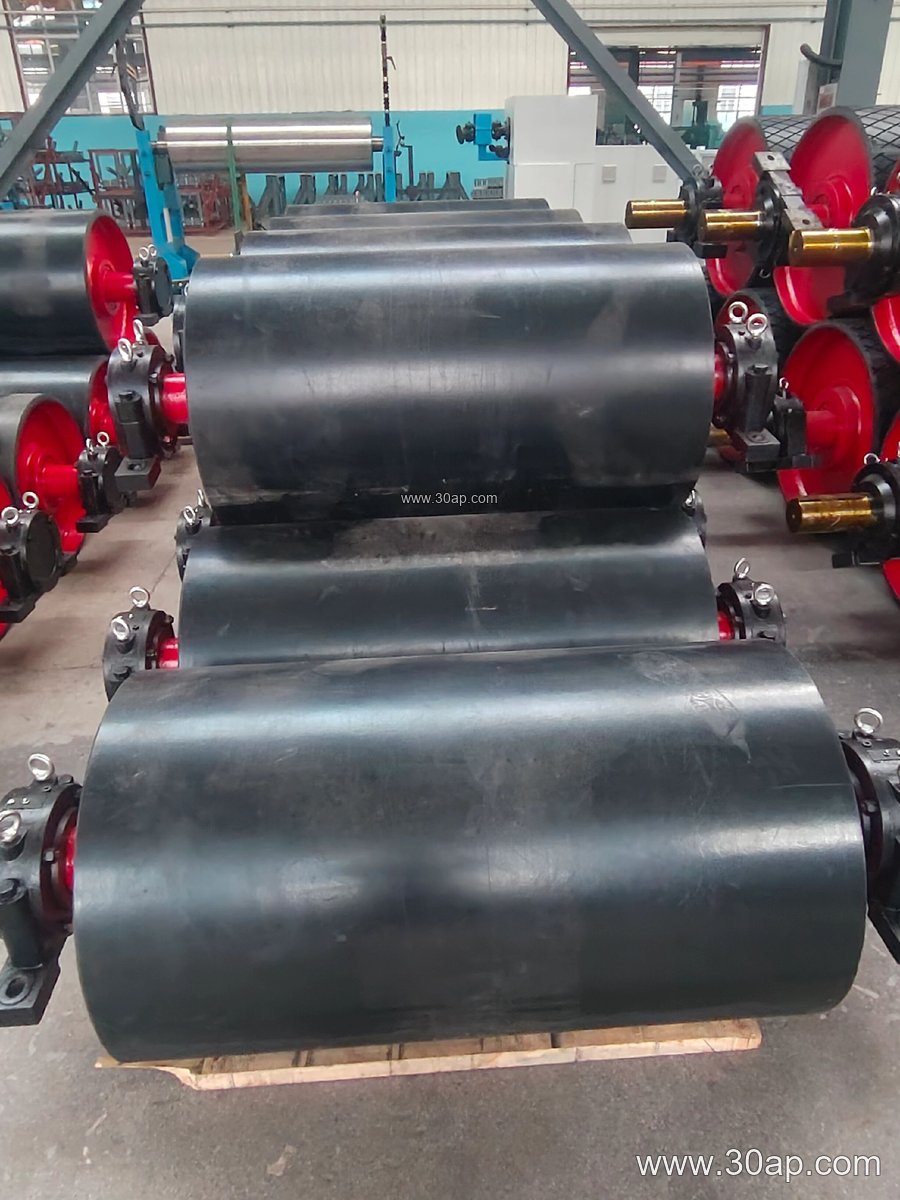
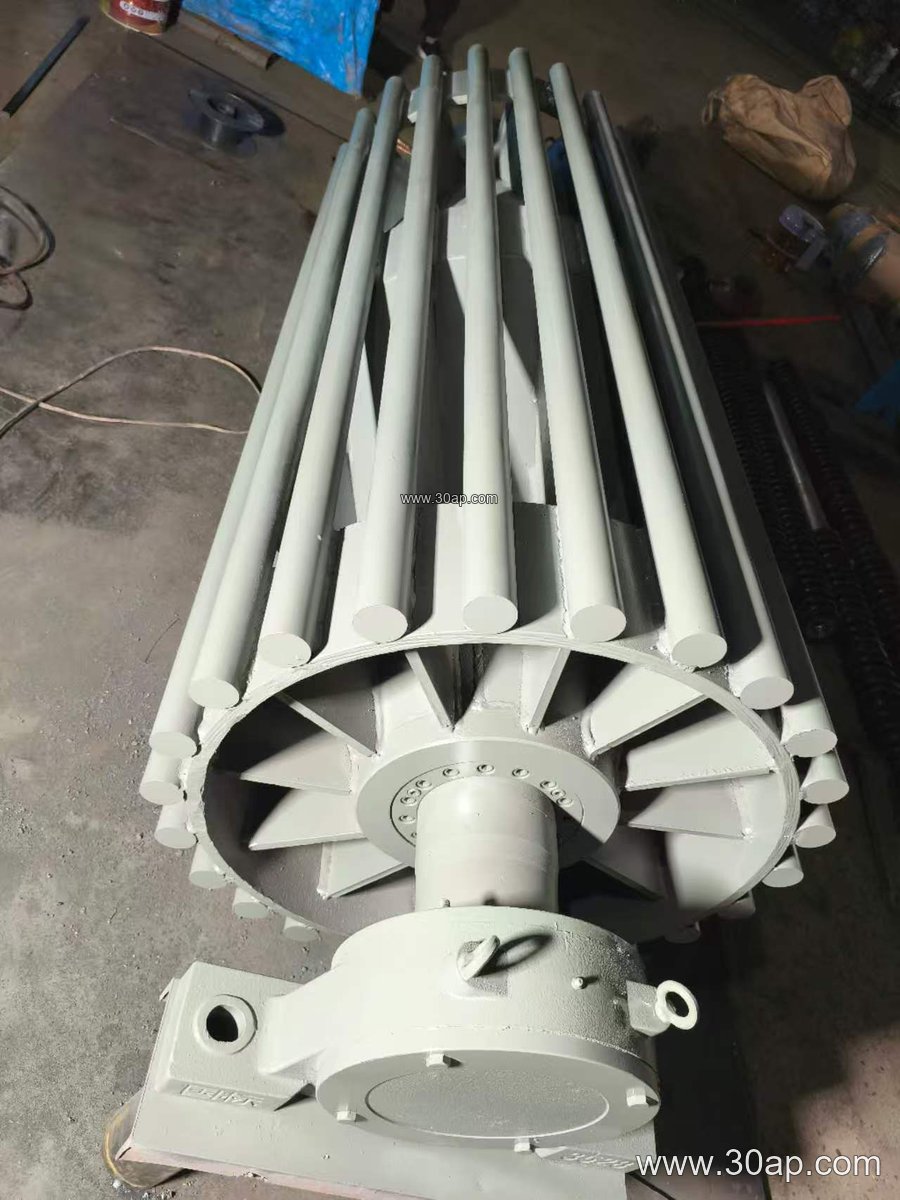
The drum is usually built from a rolled steel shell, welded to end discs and a hub, then machined and balanced. Shafts are sized by torque and bending load rather than by belt width alone, so common shaft diameters from Ø120 mm to Ø200 mm may appear on a Ø1250 mm unit depending on the drive arrangement.
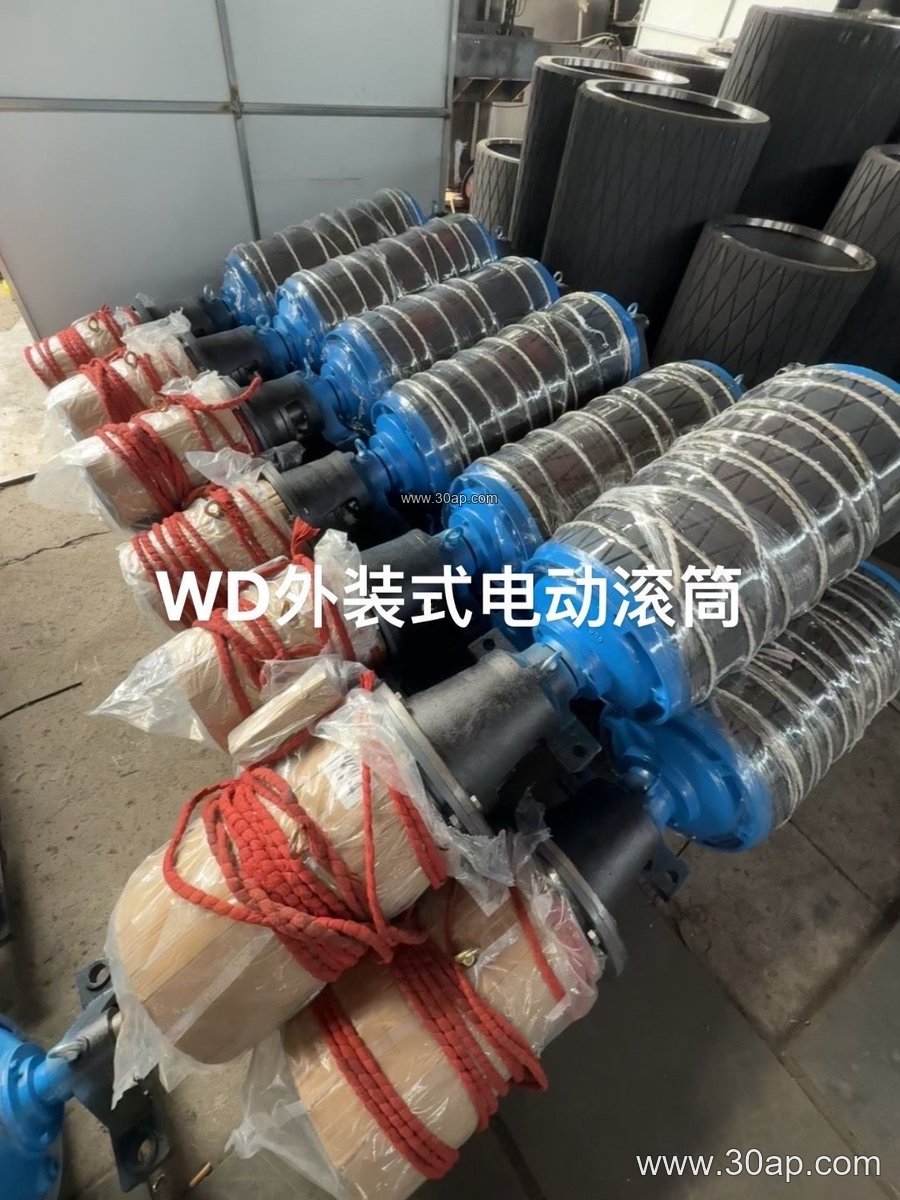
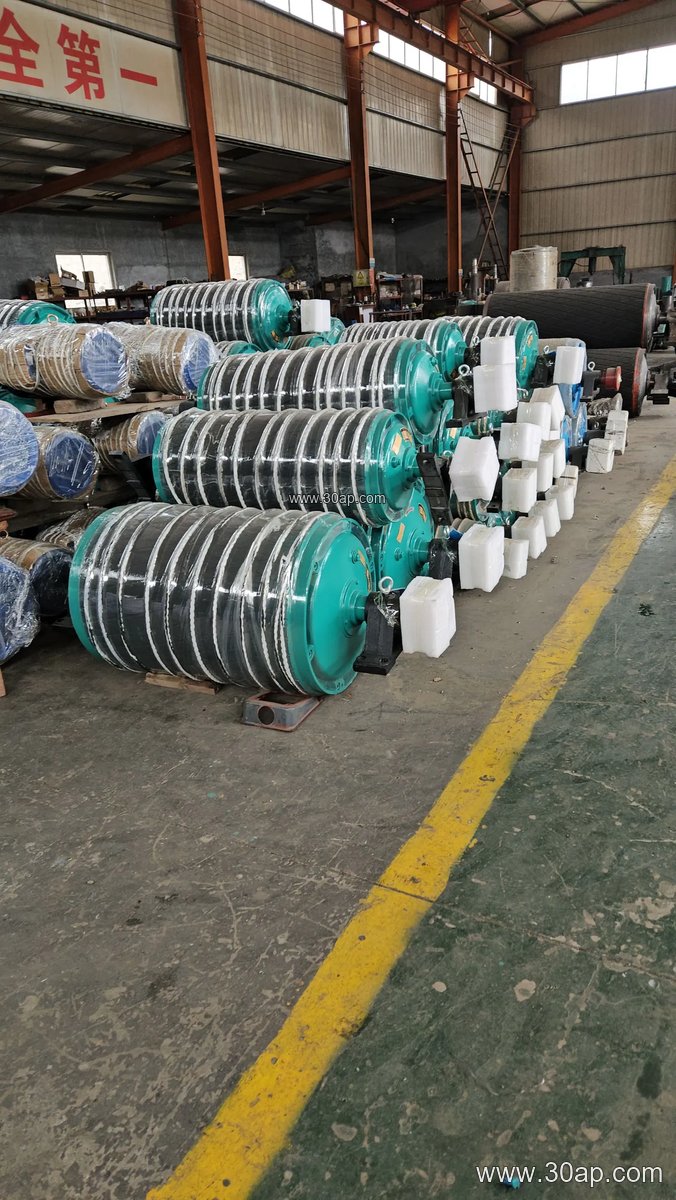
Surface treatment matters as much as the shell. Plain (smooth) faces suit some non-drive positions, while rubber lagging improves grip at the drive pulley. Common lagging styles include cold-bonded rubber, hot-vulcanized rubber, diamond groove, herringbone groove, and ceramic lagging. Lagging thickness is often 8, 10, 12, 15, or 20 mm. In a coal preparation plant or underground coal mining conveyor, a flame retardant and anti-static lagging compound is often requested; in a limestone quarry, abrasion resistant rubber is more typical.
Where It Fits in a Conveyor
Large pulleys of this diameter are common in high-capacity circuits. In a copper or gold ore crushing and conveying system, a Ø1250 mm drive pulley may be paired with a heavy-duty steel cord belt. In a cement plant clinker line or a power plant coal yard, the same size can act as a head pulley with a rubber lagged face. At a port ship loading facility, a 1250mm diameter conveyor pulley may be used at the transfer point to keep belt stress within limits.
The position changes the design emphasis. A drive or head pulley needs good traction and a robust hub; a tail pulley may use a plain or lightly lagged face; a bend pulley is a different subtype and is chosen for redirection rather than for its own diameter alone. Drive, tail, and bend pulleys are not interchangeable, and a 1250 mm drum should be specified by its actual duty.
Matching Belt and Pulley Dimensions
Face width is normally a little wider than the belt. The following combinations are common references, not fixed rules:
- B1200 belt with about 1400 mm face width
- B1400 belt with about 1600 mm face width
- B1600 belt with about 1800 mm face width
- B1800 belt with about 2000 mm face width
- B2000 belt with about 2200 mm face width
A 1250mm diameter conveyor pulley can be supplied with a face width to suit any of these belt sizes. The shaft diameter is then determined by the drive torque, the belt tension, and the bearing span, so buyers should not assume a fixed shaft size from belt width alone. A typical enquiry might read B1400 x Ø1250 with a Ø160 mm shaft, but that is a design result rather than a universal pairing.
Buyer Checklist
Before ordering, confirm the pulley position, the belt width and type, the required face width, the lagging style and thickness, and the shaft and bearing arrangement. For abrasive or wet duties, specify an abrasion resistant conveyor belt and a matching lagging. For hot material such as clinker or sinter, a heat resistant belt and heat-tolerant lagging may be needed. Where fire safety is critical, a flame retardant conveyor belt and fire resistant lagging should be discussed with the supplier.
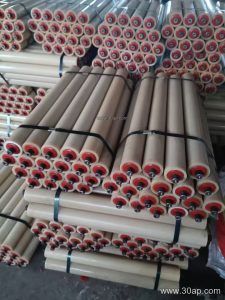
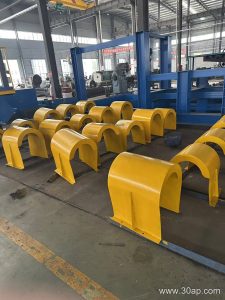
Also check the conveyor pulley balance grade, the bearing housing type, and whether a conveyor bracket or take-up frame is included. The idler roller set on the same line should be reviewed for alignment, since a large drum amplifies any misalignment. Finally, ask for the actual drawing rather than relying on a nominal Ø1250 mm figure, because shell thickness, hub design, and lagging grooves all affect the final unit.