What an Industrial Conveyor Idler Does on the Line
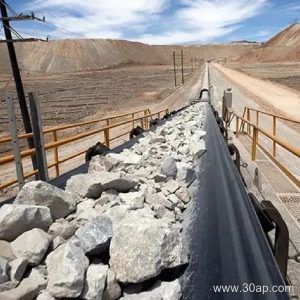
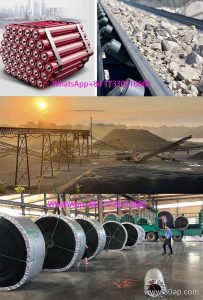
An industrial conveyor idler is the rotating roller assembly that supports the conveyor belt between the head and tail ends of a conveyor. It carries the weight of the belt and the material, keeps the belt in a stable trough shape, and reduces friction so the drive can move the load efficiently. In a quarry, a cement plant, or a power plant coal yard, these rollers are the most numerous wear parts on the whole conveyor, which is why their condition directly affects uptime and power draw.
An idler roller is not a passive spacer. It has to rotate freely under dust, moisture, and impact, and it has to hold its alignment so the belt does not drift. For a full picture of how the belt, the idler roller, and the conveyor pulley work together, see the component notes at www.zhaoshengconveyor.com.
How an Idler Roller Is Built
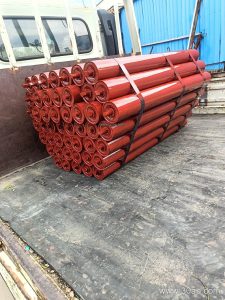
A typical idler roller consists of a steel tube shell, two bearing housings, a shaft, and a sealing arrangement. The shell may be plain steel, nylon-coated, ceramic-lined, or fitted with rubber rings for impact absorption. Bearings are usually deep-groove ball bearings such as 6204, 6205, 6305, 6306, 6308, or 6310, matched to the load and speed of the application rather than to a single tube diameter.
Sealing is the quiet hero. A labyrinth seal with grease retention keeps fine dust out in a stone crushing line or an ore conveyor, and it is often the difference between a roller that lasts years and one that seizes in months. The shaft ends locate in a conveyor bracket, so bracket accuracy matters as much as roller quality.
Common Idler Types and Where They Sit
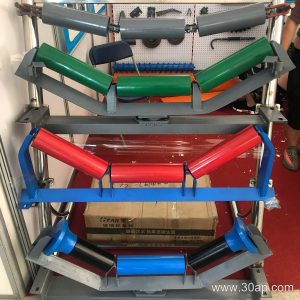
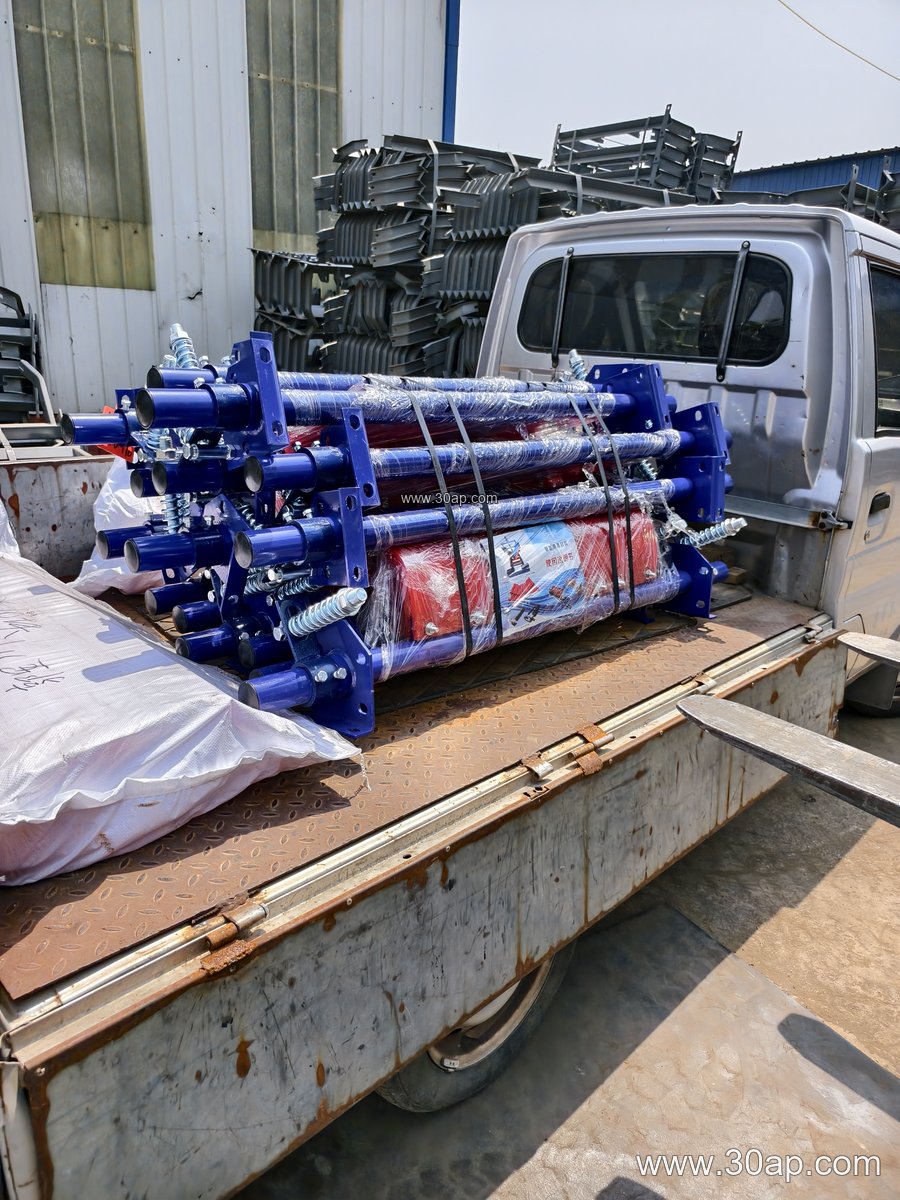
The carry side normally uses troughing idlers arranged as a single roller, two-roller, or three-roller set, with trough angles commonly 20, 30, 35, or 45 degrees. The return side uses flat return idlers or V-return idlers. Impact idlers with rubber rings are placed under loading points, while self-aligning idlers help correct belt wander on long runs.
- Troughing idlers: main carry side, three-roller sets are common on wider belts
- Impact idlers: under chutes and transfer points in mines and crushers
- Return idlers: flat or V-shaped, supporting the empty belt
- Self-aligning idlers: friction or tapered designs for belt tracking
- Spiral idlers: used where sticky material tends to build up on the return side
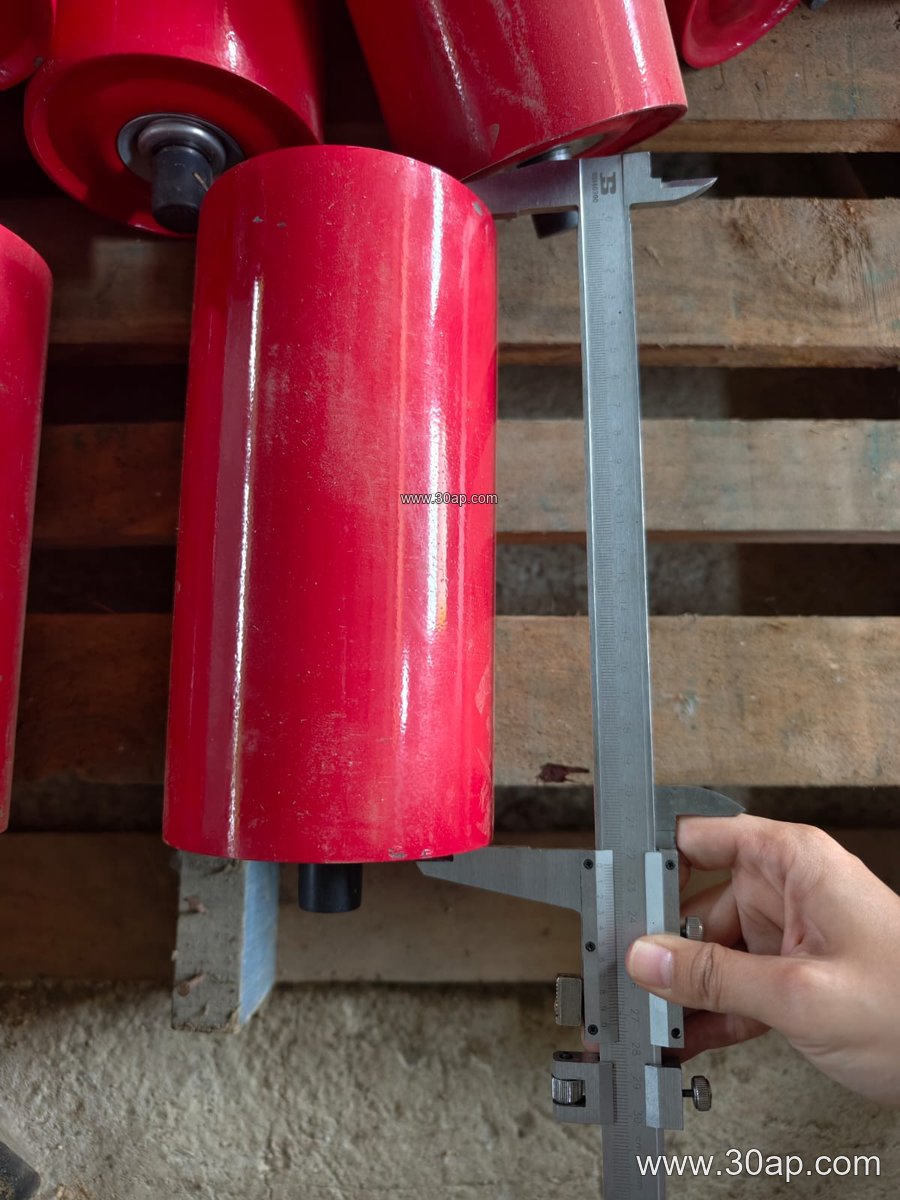
Roller diameters commonly range from Ø63 and Ø76 up to Ø219, and belt widths from B400 to B2400. Roller length changes with belt width, trough angle, and idler set form; for example, a three-roller troughing set on B1000 might use roughly 380 mm rollers, but side and center rollers can differ. These are reference examples, not fixed pairings.
Matching the Idler to the Conveying Duty
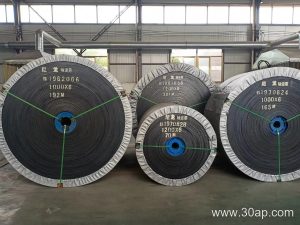
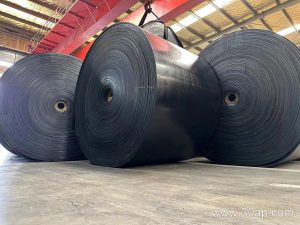
The belt itself tells you a lot about the idler duty. A heavy-duty mining conveyor belt carrying iron ore or copper ore needs robust rollers and tight seals, while a food grade conveyor belt in a processing hall needs clean, corrosion-conscious components. In a coal mining conveyor belt installation, flame retardant conveyor belt and anti-static conveyor belt properties are usually specified together with the rollers, and the same discipline applies to an abrasion resistant conveyor belt in a limestone quarry.
Where the belt is a steel cord conveyor belt or a high strength conveyor belt under high tension, idler spacing and roller load rating deserve extra attention. A pipe conveyor belt or a corrugated sidewall conveyor belt changes the support geometry, so the idler layout should follow the conveyor designer’s drawing rather than a generic pattern.
Buyer Checklist Before Ordering
Ask for the roller diameter, shell thickness, bearing model, seal type, and shaft end configuration, and confirm they suit the actual belt width and trough angle. Check that the supplier can supply brackets that fit your existing frames. For abrasive or wet conditions, consider ceramic or nylon surfaces; for impact zones, specify rubber-ring impact idlers. Request inspection reports for rotation and seal fit, and keep a small spare set on site.
Finally, remember that idlers are only one part of the system. The conveyor pulley, the belt splice, and the alignment of the whole frame all influence roller life. A balanced approach to the belt, the idler roller, and the conveyor bracket keeps a quarry, cement plant, or coal handling line running smoothly.