What a Conveyor Belt Self-Aligning Idler Does
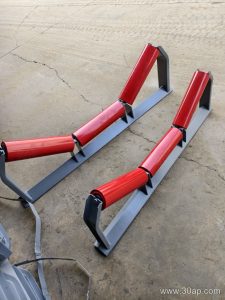
A conveyor belt self-aligning idler is a tracking roller assembly designed to correct belt drift as the belt runs. Instead of sitting square to the frame like a standard carrying idler, this self-aligning idler is mounted on a pivoting base or a steering bracket. When the belt edge contacts a vertical guide roller, the assembly swings slightly and steers the belt back toward the center line. In a quarry, a coal washing plant or a power plant coal yard, that small correction prevents edge damage, spillage and uneven wear along the whole conveyor.
The same product is also known as a self-tracking idler or self-aligning roller. These names describe the same tracking function, not a different roller family.
How the Assembly Is Built
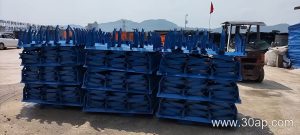
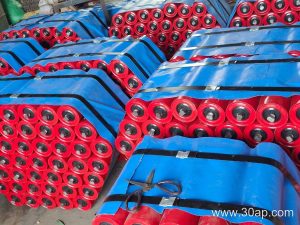
A typical unit combines a carrying roll set, a pivot frame, a base plate and one or two vertical guide rollers. The carrying rolls may be a two-roll or three-roll trough set, and the trough angle is usually 20, 30 or 35 degrees depending on the belt profile and material. Some designs use a slight forward tilt of about 1.5 to 2 degrees on the rolls to help center the belt.
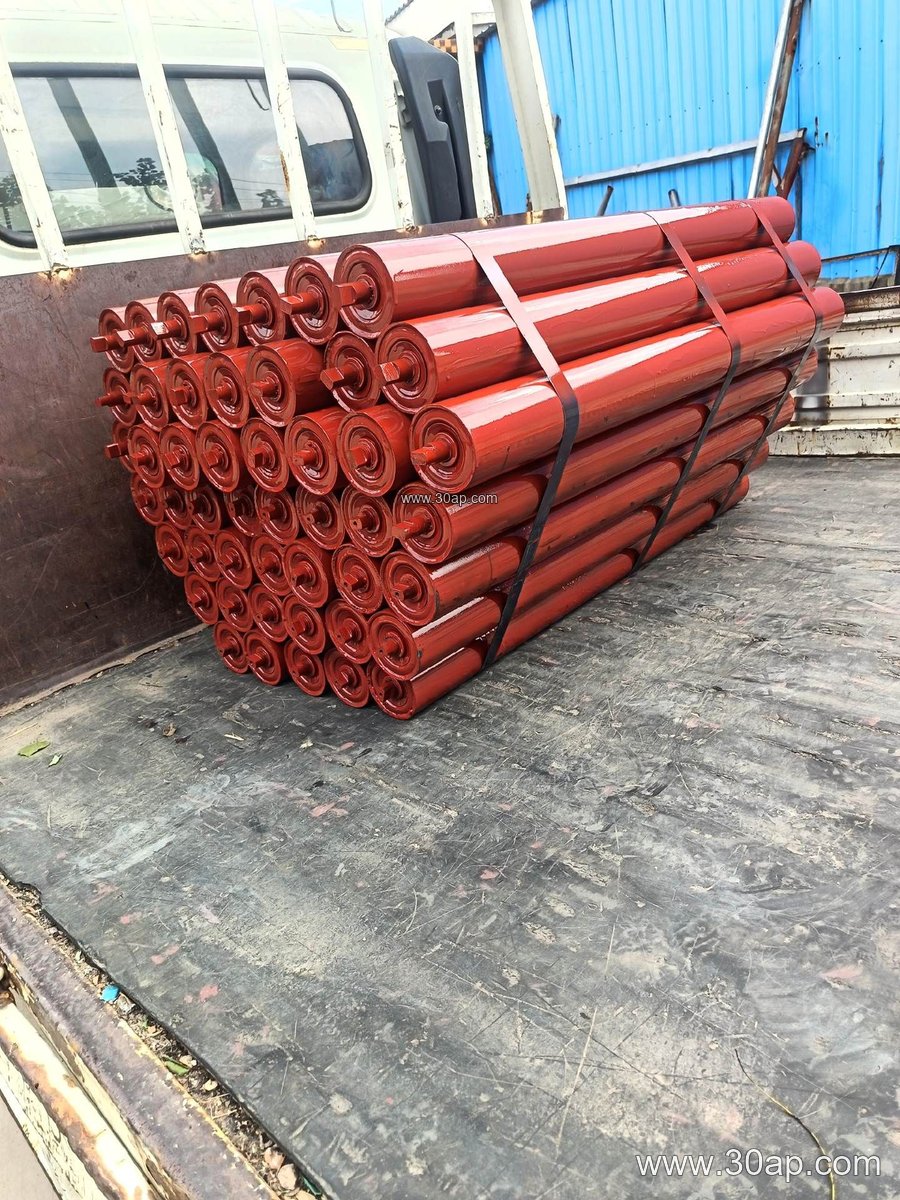
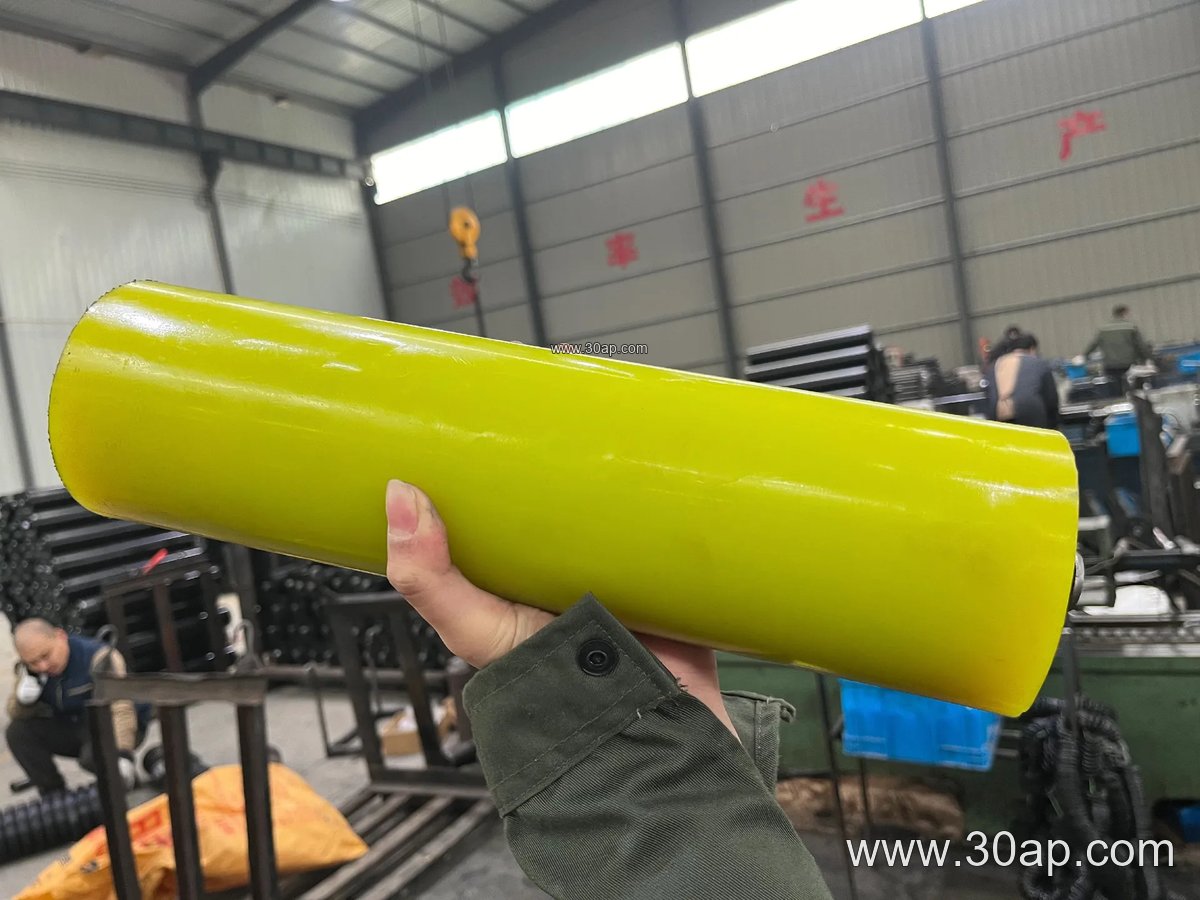
Roll diameters commonly range from Ø89 to Ø159 for this duty, with Ø108, Ø127 and Ø133 being frequent choices on medium and wide belts. Shaft and bearing selection follows the load and belt speed, not the belt width alone; common bearing sizes include 6205, 6305, 6306 and 6308. Roll surfaces can be steel tube, nylon, ceramic or rubber rings, and the guide rollers are often rubber covered to grip the belt edge without scuffing it.
Common reference dimensions
The figures below are typical examples for three-roll trough sets. Side rolls and center rolls can differ, and final roll length is confirmed by the conveyor design.
| Belt width | Typical roll length (three-roll trough) | Common roll diameter range |
|---|---|---|
| B500 | about 200 mm | Ø76 to Ø108 |
| B650 | about 250 mm | Ø89 to Ø108 |
| B800 | about 315 mm | Ø89 to Ø133 |
| B1000 | about 380 mm | Ø108 to Ø133 |
| B1200 | about 465 mm | Ø108 to Ø159 |
| B1400 | about 530 mm | Ø127 to Ø159 |
| B1600 | about 600 mm | Ø133 to Ø159 |
| B1800 | about 670 mm | Ø133 to Ø178 |
| B2000 | about 750 mm | Ø159 to Ø194 |
These are reference values only. A wide belt does not automatically fix one pulley diameter or one shaft size, and the self-aligning idler should be matched to the actual frame, belt and load conditions.
Where It Fits on the Conveyor
Self-aligning idlers are usually placed on the carrying side at intervals along the run, especially after loading points, on curves and on long straight sections where drift tends to build up. They are also used on the return side in a V-return or flat-return form. In a crushing and screening line, a self-aligning idler after the crusher discharge helps keep an EP conveyor belt centered when the load is uneven. In a cement plant or a steel plant sinter line, the same tracking roller protects a heat resistant conveyor belt from edge rubbing.
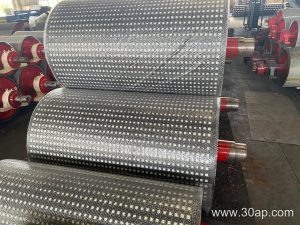
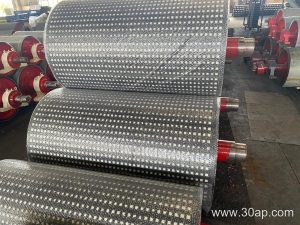
They are not a replacement for a bend pulley or a tail pulley. Pulleys drive and redirect the belt; the self-aligning idler only steers it. A conveyor pulley and a conveyor bracket still do their own jobs, and the idler works with them rather than instead of them.
Buyer Checklist
- Confirm belt width, trough angle and the roll length needed for the frame, not just the nominal belt size.
- Check the roll diameter, shaft end type and bearing size against the existing idler roller stations so the assembly fits.
- Decide on the guide roller arrangement and the surface form, such as plain steel, nylon or rubber covered.
- Match the roller and seal quality to the environment: dust in a stone crushing plant, moisture in a wash plant, or fine abrasive material in an iron ore yard.
- Ask how the pivot and base are protected against material build-up, since a sticking pivot reduces tracking response.
On a coal mining conveyor belt or an underground mining conveyor belt, flame retardant and anti-static properties of the belt matter, but the idler itself should be selected for dust, moisture and load. Keeping the pivot free and the guide rollers turning is the main maintenance task. A worn or seized guide roller, a bent frame or a build-up of sticky material will all reduce correction, so regular inspection at loading zones and curves pays off.
For heavy-duty mining conveyor belt lines, a robust self-aligning roller with a sealed bearing and a strong base is generally worth the extra cost. For a short aggregate conveyor belt run, a lighter two-roll unit may be enough. The right choice comes from the belt, the load and the frame, not from a single fixed rule.