What a Mining Conveyor Bracket Does on a Belt Line
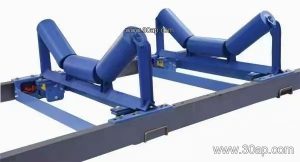
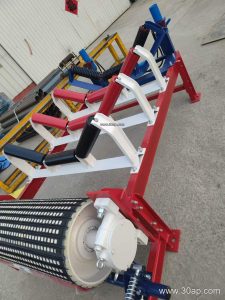
A mining conveyor bracket is the support structure that holds the idlers in the correct position under the belt. It carries the weight of the conveyor belt, the material load, and the idler rollers themselves, and it keeps the trough shape stable along the whole run. In a quarry, a cement plant, or a coal handling system, these brackets are the quiet workhorses that determine whether the belt tracks smoothly or wanders off line. Engineers often call the same item an idler support bracket or a conveyor idler frame, and those names describe the same component.
The bracket does not move material by itself. Its job is geometry and rigidity: holding the idler roller at the right angle, at the right spacing, and at the right height so the belt can carry bulk material without spilling or rubbing.
How a Mining Conveyor Bracket Is Built
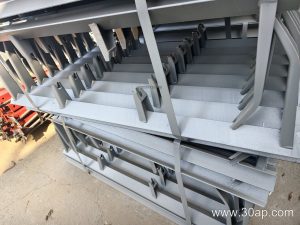
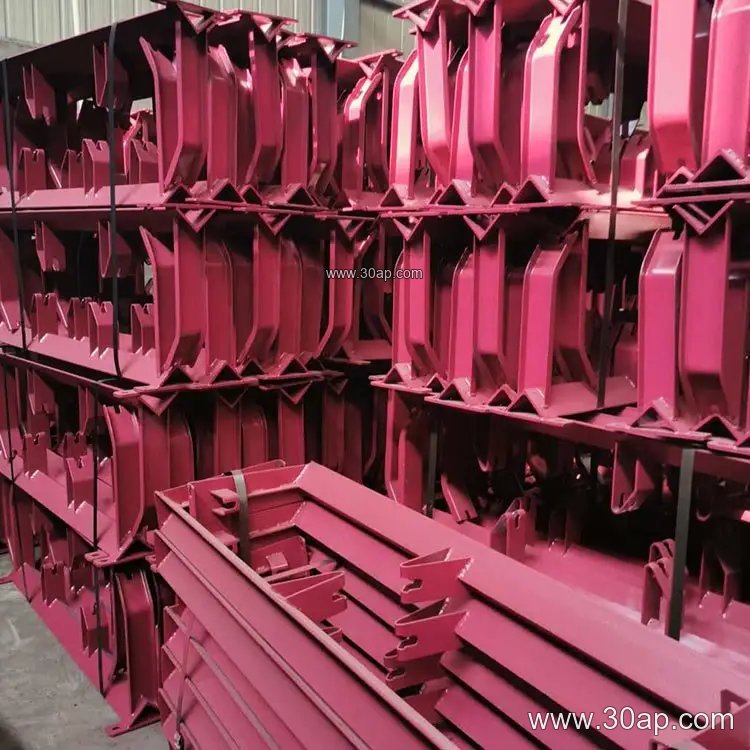
Most frames are fabricated from angle steel, channel steel, or folded steel plate. The choice depends on load and environment. A light aggregate line may use folded plate brackets, while a heavy-duty mining conveyor bracket in an iron ore plant typically uses channel steel with reinforced gussets.
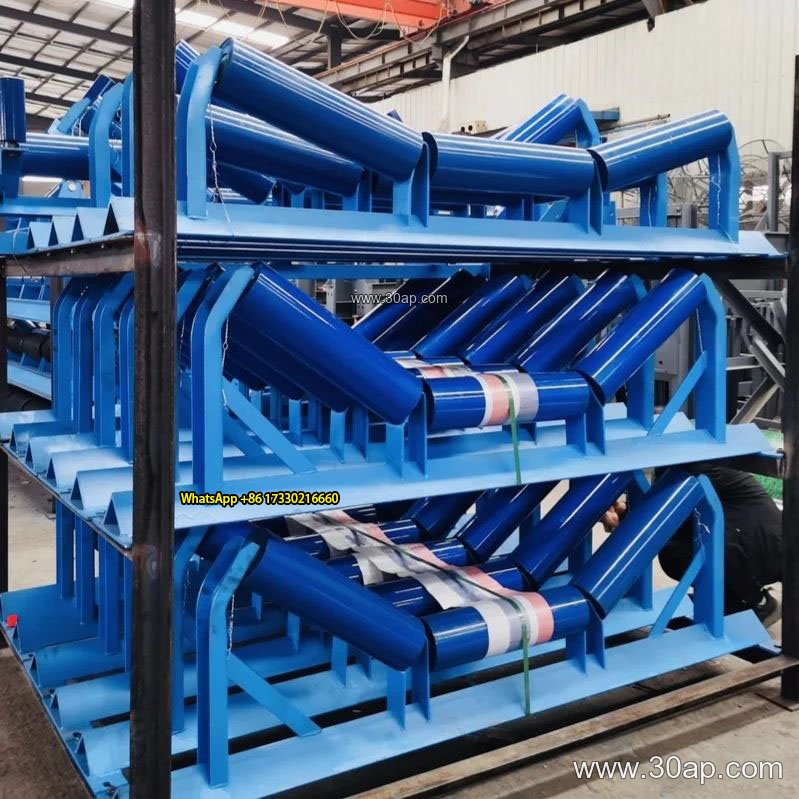
Key construction details a buyer should check:
- Welding quality at the joints between cross member and side brackets
- Mounting hole spacing matched to the idler shaft ends
- Corrosion protection such as hot-dip galvanizing or painting
- Slot length on adjustable frames, which allows the trough angle to change
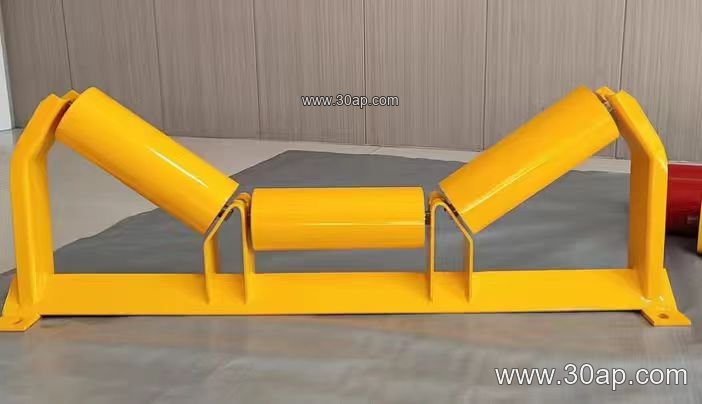
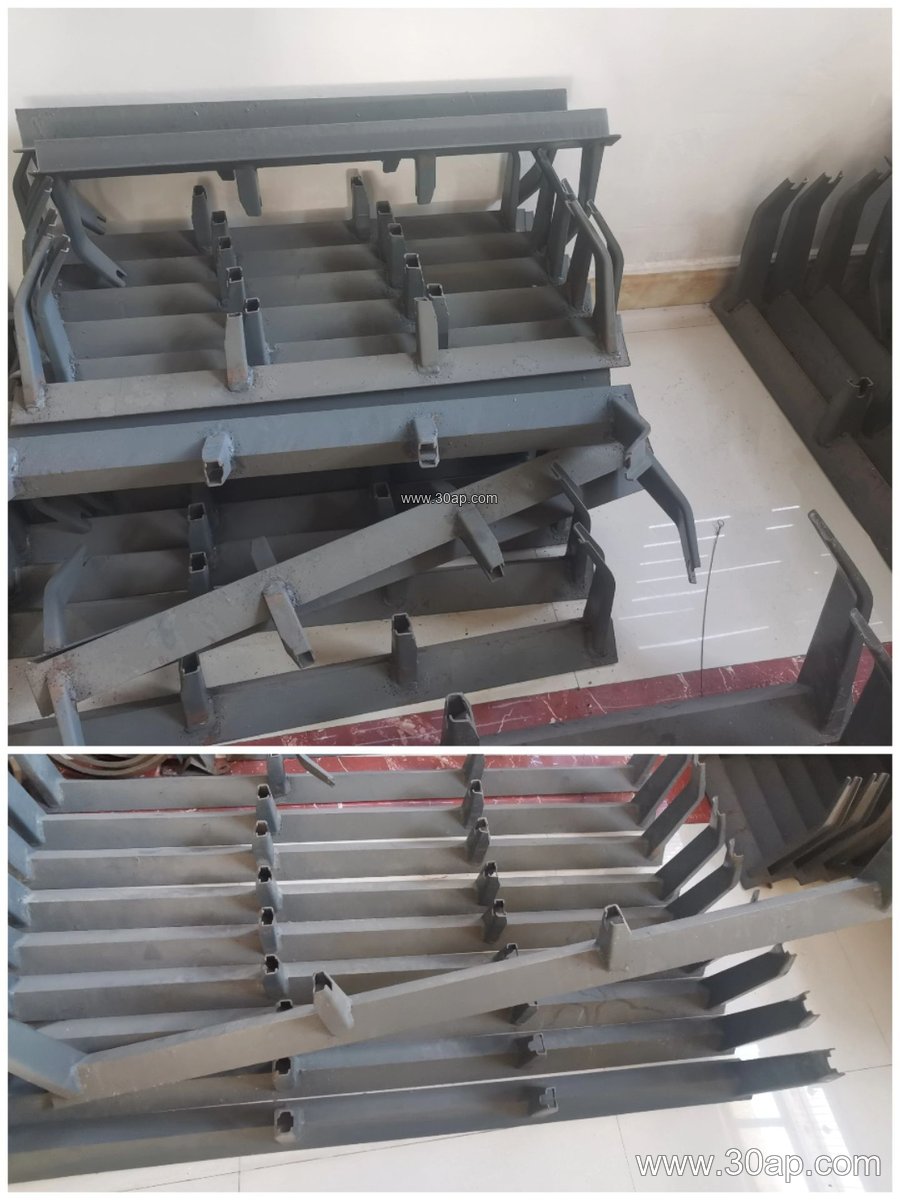
Frames are usually supplied as complete assemblies: a cross beam, two end brackets, and the bolt holes for the idlers. Some designs add a center roller seat for three-roller trough sets.
Trough Angle and Roller Diameter Selection
The trough angle affects how much material the belt can hold and how much stress the belt edge sees. A 20 degree frame suits gentle material and thin belts. A 35 degree or 45 degree frame is common in high-capacity bulk material conveyor belt systems where the belt is wide and the load is deep.
Roller diameter should follow belt speed and load, not belt width alone. A B800 frame may run Ø89 idlers in a light duty line or Ø108 idlers in a heavier one. A B1200 or B1400 frame often uses Ø133 or Ø159 rollers. The bracket must be drilled for the shaft size that matches the chosen idler.
Typical Reference Combinations
These are common reference points, not fixed rules. Final values depend on the conveyor design.
- B650, 30 degree, Ø89
- B800, 35 degree, Ø108
- B1000, 35 degree, Ø133
- B1200, 45 degree, Ø133
- B1400, 45 degree, Ø159
- B1600, 45 degree, Ø194
Mounting hole distance and cross beam length change with belt width and trough angle, so they should be confirmed against the drawing rather than assumed.
Fixed and Adjustable Frames
A fixed bracket is welded at one trough angle. It is simple, stiff, and low maintenance, which suits long straight runs in a power plant coal yard. An adjustable bracket lets maintenance crews change the trough angle between roughly 20 and 45 degrees by moving the idler shaft in slotted holes. This is useful during commissioning or when material characteristics change.
Forward-leaning frames, usually about 1.5 to 2 degrees, help the belt center itself. These are a separate design choice from the trough angle and should not be confused with self-aligning idler sets.
Where These Brackets Are Used
The most demanding applications are in crushing and screening circuits at a limestone mine, where impact loads and dust are constant. A crusher conveyor bracket must resist vibration and keep the impact idlers aligned under the receiving point.
In a coal preparation plant, flame retardant conveyor belt and anti-static belt requirements make the frame layout important for grounding and clearance. In a cement plant, heat resistant conveyor belt near the kiln area needs frames that do not distort when the ambient temperature rises.
Buyer Checklist Before Ordering
Ask for the belt width, the trough angle, the idler diameter and shaft end type, the mounting hole spacing, and the surface treatment. Confirm whether the frame is for the carrying side or the return side. Return brackets, V-return frames, and impact frames are different products and should be specified separately.
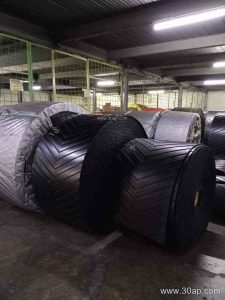
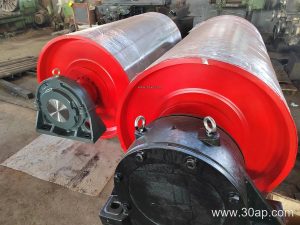
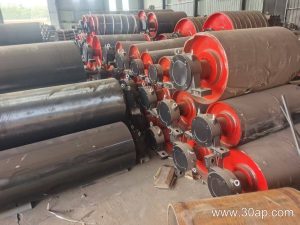
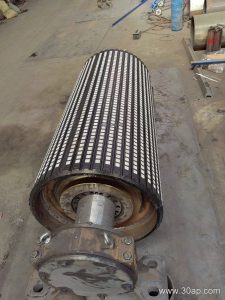
Also confirm the matching components: the conveyor belt grade, the idler roller series, and the conveyor pulley at the drive and tail ends. A frame that fits the idlers but not the belt load will still cause tracking problems.
For buyers sourcing complete systems, it helps to compare the bracket drawing with the belt specification, such as EP conveyor belt or steel cord conveyor belt, and with the pulley arrangement. A well-matched frame keeps the whole line running quietly in demanding sites like a copper ore plant, a sand making line, or a port ship loading facility.