What a Single Drive Pulley Does
A single drive pulley is the one drum on a conveyor that receives torque from the gearbox or motor and turns it into belt motion. Instead of splitting the drive across two drums, the layout uses one driven drum, usually placed at the head of the conveyor where the belt unloads. The returning belt passes over a tail pulley, and any change in belt direction is handled by bend pulleys. These roles are distinct: a drive pulley transmits power, a tail pulley supports the return side, and a bend pulley only redirects the belt. They are not interchangeable, even when they look similar in size.
Because the whole drive force passes through a single driven drum, traction matters more than on a two-pulley arrangement. That is why the shell surface, lagging type, and wrap angle are chosen together rather than separately.
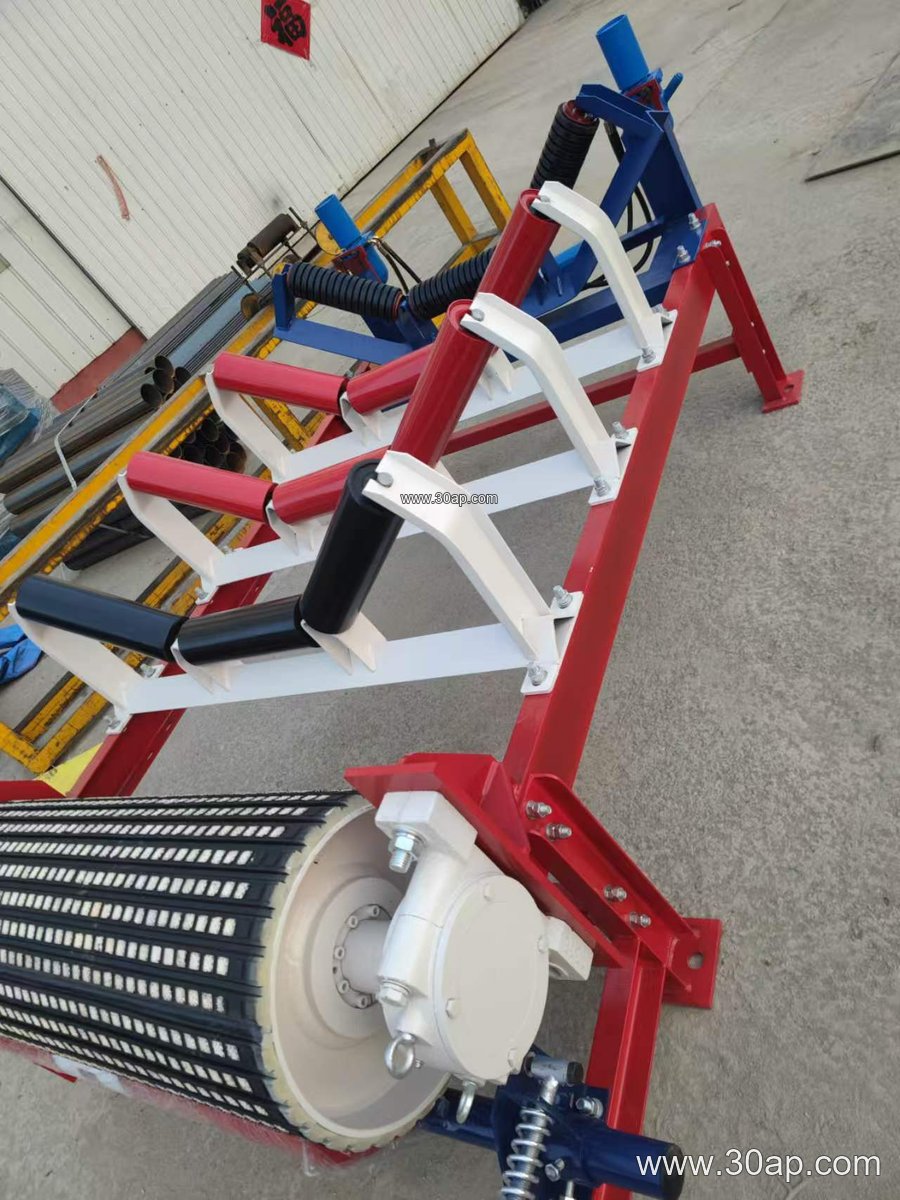
Construction of the Drum
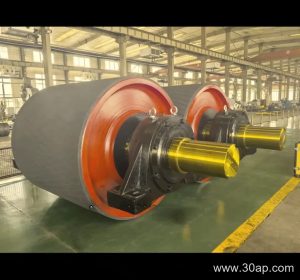
The core is a steel shell welded to end discs, with a shaft running through the centre and keyed or shrink-fitted hubs. Common diameters for this duty range from Ø200 up to Ø1250 or more, depending on belt tension and the space available at the head station. The face width normally exceeds the belt width so the belt is fully supported; a B800 belt, for example, typically runs on a drum with a face around 950 mm, and a B1200 belt on a face near 1400 mm.
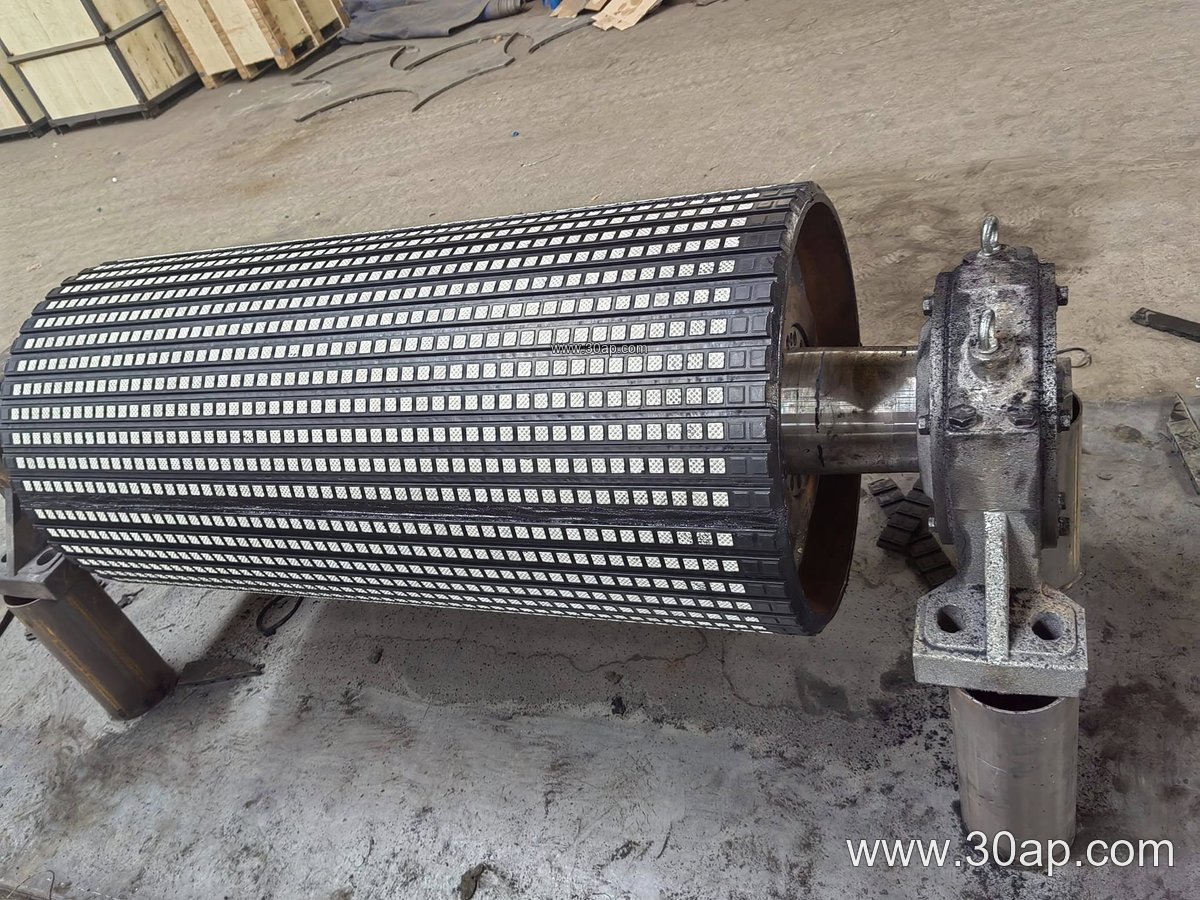
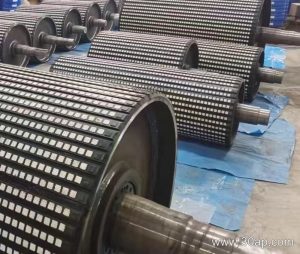
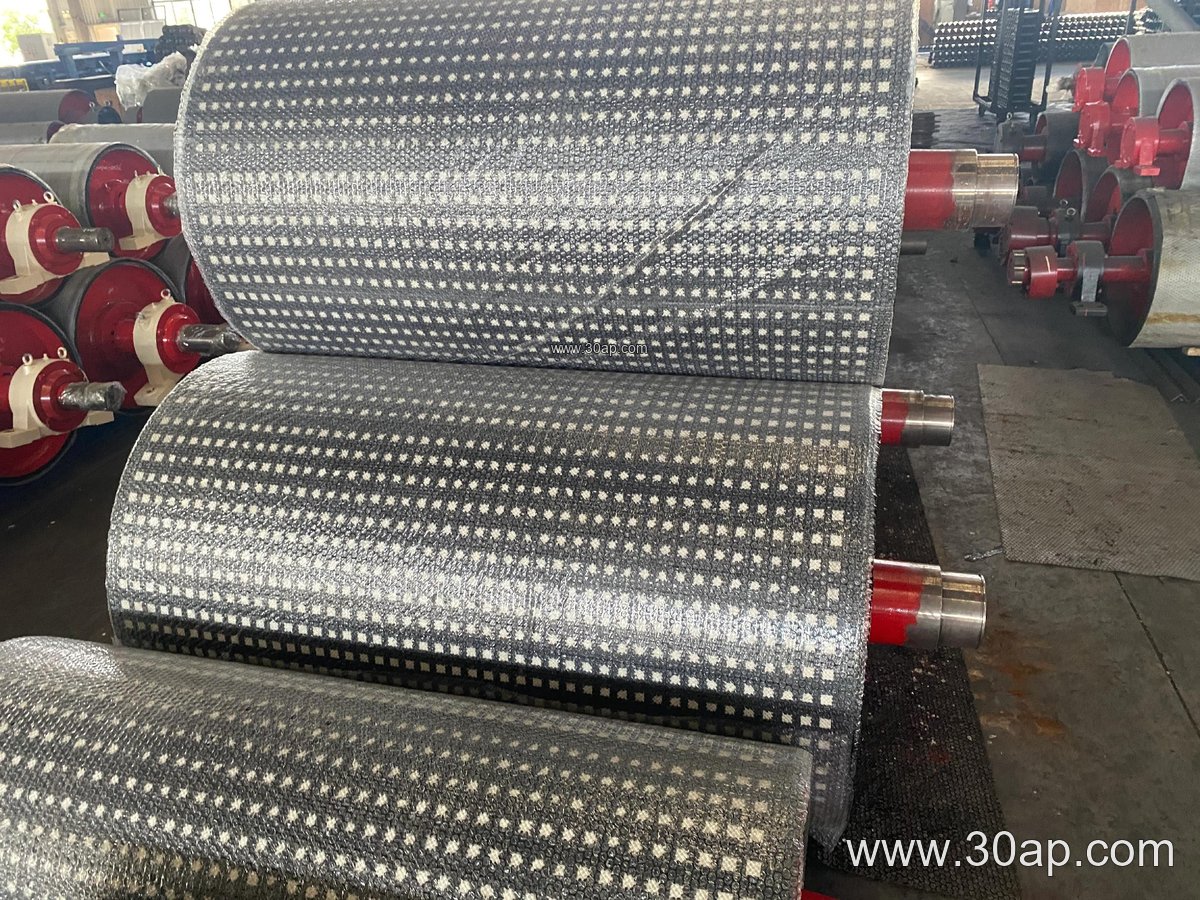
Shaft diameter is set by torque and bearing load, not by belt width alone. Typical shaft sizes fall between Ø50 and Ø200, but the final value should come from the conveyor designer. Surface options include plain finish, cold-bonded rubber, hot-vulcanised rubber, diamond grooving, chevron grooving, ceramic tiles, and flat lagging, with lagging thickness commonly 8, 10, 12, 15, or 20 mm.
| Parameter | Common range |
|---|---|
| Belt width | B400 to B2400 |
| Drum diameter | Ø200 to Ø1800 |
| Lagging thickness | 8 to 20 mm |
| Shaft diameter | Ø50 to Ø200 |
| Surface form | Plain, rubber lagged, diamond, chevron, ceramic |
Where It Fits in the Plant
You will see this drum in a range of bulk handling lines. In a coal preparation plant or a power station coal yard, it drives the main feed belt that carries coal from the stockpile to the boiler bunkers. In a cement plant it sits at the discharge end of clinker and limestone belts, where dust and heat are both present. In a quarry or sand and gravel line it often works with an abrasion resistant conveyor belt on the primary crusher discharge.
The matching belt choice affects drum design too. A heavy-duty mining conveyor belt or a steel cord conveyor belt carries higher tension and needs a larger diameter and a stronger shaft than a light fabric belt. In underground coal mining, a flame retardant conveyor belt and a PVG800S conveyor belt are common, and the drive drum is usually lagged to keep grip in wet conditions.
How to Choose the Right One
- Match the load, not just the width. A B650 belt and a B1400 belt need different torque capacity; do not assume one diameter fits a given width.
- Pick the surface for the duty. Plain or light lagging suits clean, dry material; diamond or ceramic lagging helps where the belt is wet or oily.
- Check the wrap angle. A small wrap needs more friction, so lagging and tension must compensate.
- Confirm the shaft and bearing. Shaft size follows calculated load; bearings and take-up must match the chosen shaft.
- Consider the belt. A chevron conveyor belt or corrugated sidewall conveyor belt may need a different drum face and clearance than a flat belt.
Maintenance Notes
Check lagging wear at each shutdown, because worn rubber reduces grip and lets the belt slip. Look for build-up of sticky material on the shell in cement and fertilizer plants, and confirm that the conveyor bracket and bearing housings stay aligned. Keep the idler roller and return rollers turning freely, since a seized roller adds drag that the single drive pulley must overcome. A well-chosen drum, paired with the right belt and a clean head station, keeps the whole line running steadily. For more on matching drums with belts and rollers, see our pages on conveyor pulley and belt selection.