What a Trough Idler Bracket Does on a Conveyor
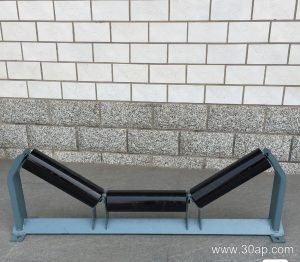
A trough idler bracket is the structural element that holds the troughing idlers in place on the carrying side of a belt conveyor. It sets the trough angle, keeps the idler roller spacing consistent, and transfers the load from the belt and material into the conveyor frame. In a quarry conveyor belt line or a cement plant transfer point, this bracket is the quiet interface between the moving belt and the stationary structure. Without a stable bracket, even a well-made idler roller will not maintain proper belt contact.
The bracket is often called a troughing idler bracket or simply a conveyor bracket. It is not a drive pulley, a tail pulley, or a bend pulley; those components transmit power or change belt direction, while the trough idler bracket supports the belt path. This distinction matters when ordering spare parts, because a conveyor pulley and a bracket serve completely different functions.
Construction and Common Materials
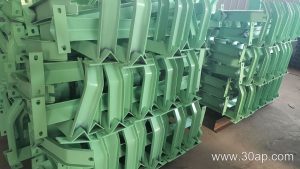
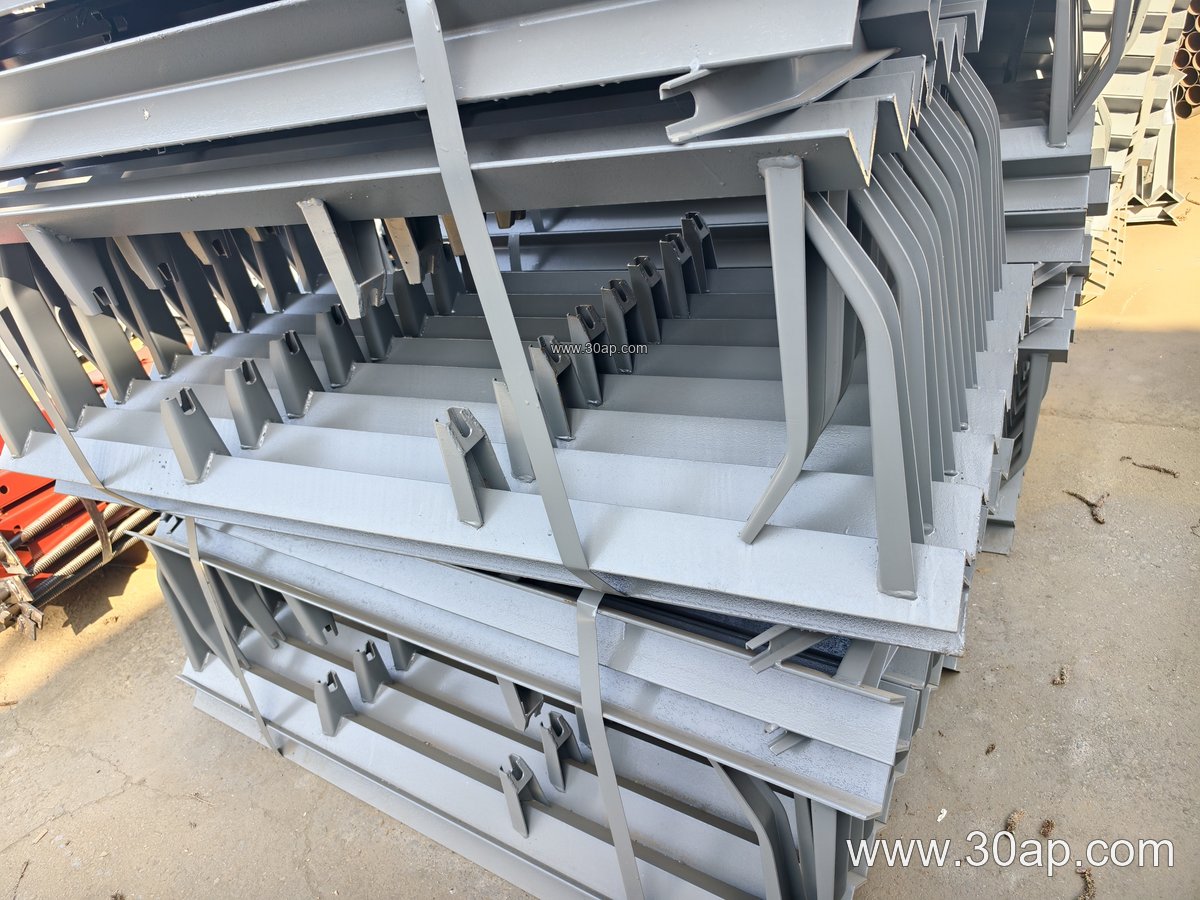
Most brackets are fabricated from angle steel, channel steel, or folded steel plate. The design usually includes mounting slots or holes that allow the idler shaft to sit at the correct height and angle. A typical assembly may consist of a base beam, two or three support arms, and a locking arrangement for the idler shaft.
- Angle steel brackets are common for lighter duty and standard belt widths.
- Channel steel brackets offer higher stiffness for wider belts and heavy loads.
- Folded plate brackets can save weight while maintaining rigidity.
Surface treatment varies by environment. In a coal mining conveyor belt system, brackets may be painted or galvanized to resist moisture and dust. In a power plant coal yard or a port bulk terminal, the same bracket type may need extra corrosion protection.
Where Trough Idler Brackets Are Used
These brackets appear wherever a conveyor belt carries bulk material. Two common settings are a limestone quarry and a cement plant raw material line. In the quarry, a quarry conveyor belt moves crushed rock over long distances, and the trough idler bracket keeps the belt in a stable trough shape. In the cement plant, the same component supports clinker and raw meal conveyors, often alongside a heat resistant conveyor belt or an abrasion resistant conveyor belt.
Other industries include iron ore handling, coal preparation plants, and aggregate crushing circuits. A heavy-duty mining conveyor belt places higher demands on the bracket, so the frame and mounting points should match the belt width and idler diameter. The bracket is also used with a fabric core conveyor belt or a steel cord conveyor belt, depending on the load and tension.
Matching Belt Width, Trough Angle, and Idler Diameter
Selection starts with the belt width and the required trough angle. Common belt widths include B500, B650, B800, B1000, B1200, B1400, B1600, and B1800. The bracket must fit the selected belt width, and its mounting hole spacing and beam length are determined by design rather than a fixed number.
Trough angles of 20, 30, 35, and 45 degrees are common. A 35-degree trough is widely used for general bulk materials, while a 45-degree trough may suit materials that need a deeper trough. The idler diameter should be chosen with the belt speed and load in mind; Ø89, Ø108, Ø133, Ø159, and Ø194 are common sizes.
Reference Combinations
| Belt Width | Trough Angle | Idler Diameter |
|---|---|---|
| B650 | 30 degrees | Ø89 |
| B800 | 35 degrees | Ø108 |
| B1200 | 45 degrees | Ø133 |
| B1400 | 35 degrees | Ø159 |
These are reference examples, not mandatory combinations. A bracket for a 1200mm wide conveyor belt may use different idler diameters depending on the conveyor design. Do not assume that one belt width can only match one pulley diameter or one trough angle.
Fixed, Adjustable, and Transition Brackets
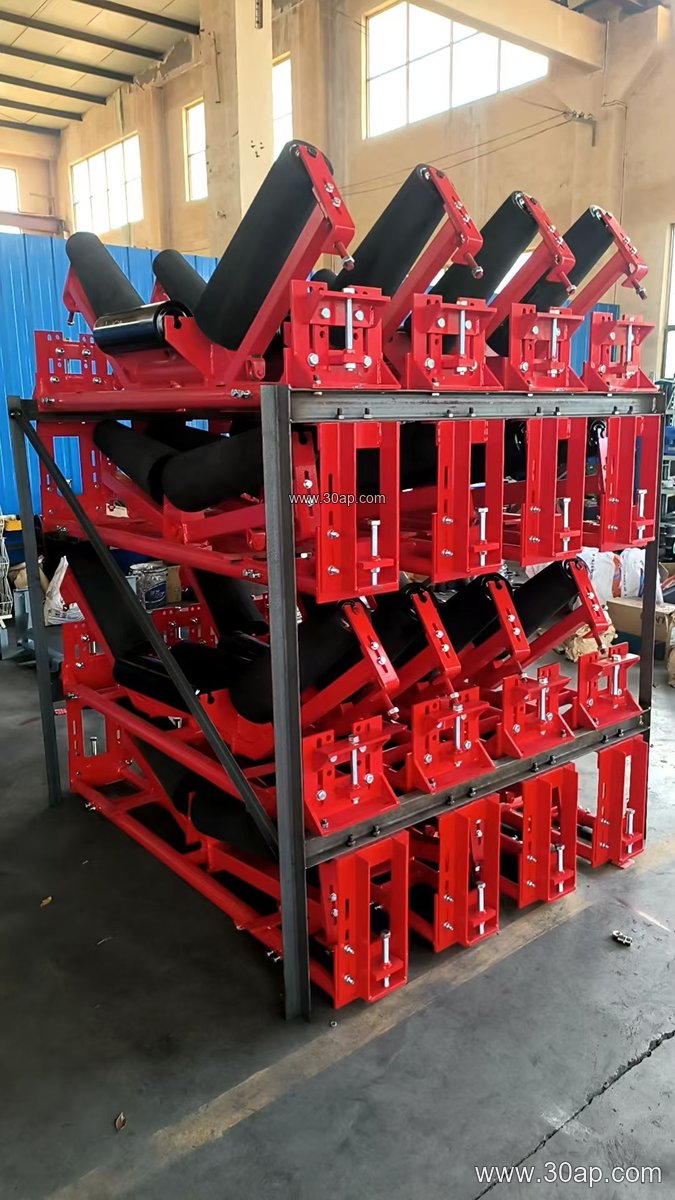
A fixed trough idler bracket holds a set trough angle. An adjustable bracket allows the angle to be changed between common values such as 20 and 45 degrees, which can help during commissioning or when material characteristics change. Transition brackets are used near the head and tail to guide the belt from a flat profile into the trough shape.
For comparison, a V-type return bracket supports the belt on the return side, while a trough idler bracket supports the carrying side. They are not interchangeable, and each has its own mounting position. Similarly, a drive pulley, tail pulley, or bend pulley should never be substituted for a bracket.
Buyer Checklist
- Confirm the belt width and trough angle required by the conveyor design.
- Check the idler diameter and shaft size so the bracket fits the idler roller.
- Ask for the mounting hole spacing and beam length, as these vary with belt width.
- Specify the material and surface treatment for the site conditions.
- Clarify whether a fixed or adjustable bracket is needed.
For a reliable match, share the conveyor layout and the intended belt type with the supplier. A bracket that fits well with the conveyor belt, idler roller, and conveyor pulley layout will reduce downtime and keep the material stream moving.