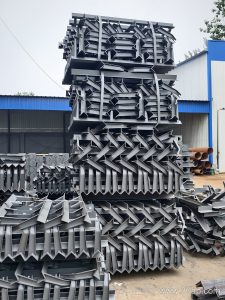
What Pulley Machining Covers
Pulley machining is the set of turning, welding, boring, keyway cutting, and surface preparation steps that turn a steel shell, shaft, and end disc into a working conveyor pulley. In a quarry, a coal washing plant, or a power plant coal yard, the pulley is the part that changes the belt’s direction and carries the tension of the whole conveyor. Machining quality decides whether that pulley runs true, holds its lagging, and keeps the belt tracking.
The work usually includes machining the shaft journal to bearing fit, boring the hub, cutting the keyway, truing the shell face, and preparing the surface for rubber or ceramic lagging. A pulley that is machined well runs with less vibration, which also protects the conveyor belt and the idler roller set along the line.
How a Machined Pulley Is Built
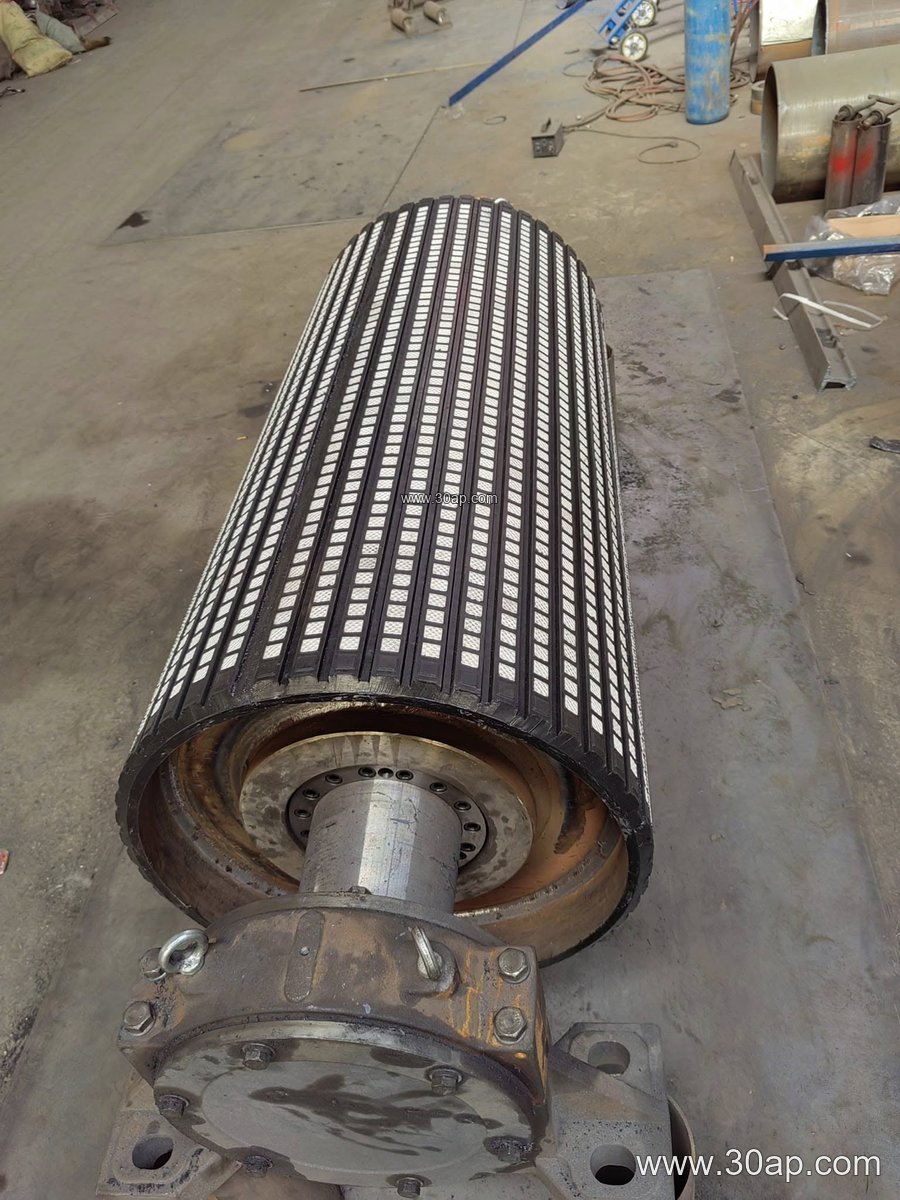
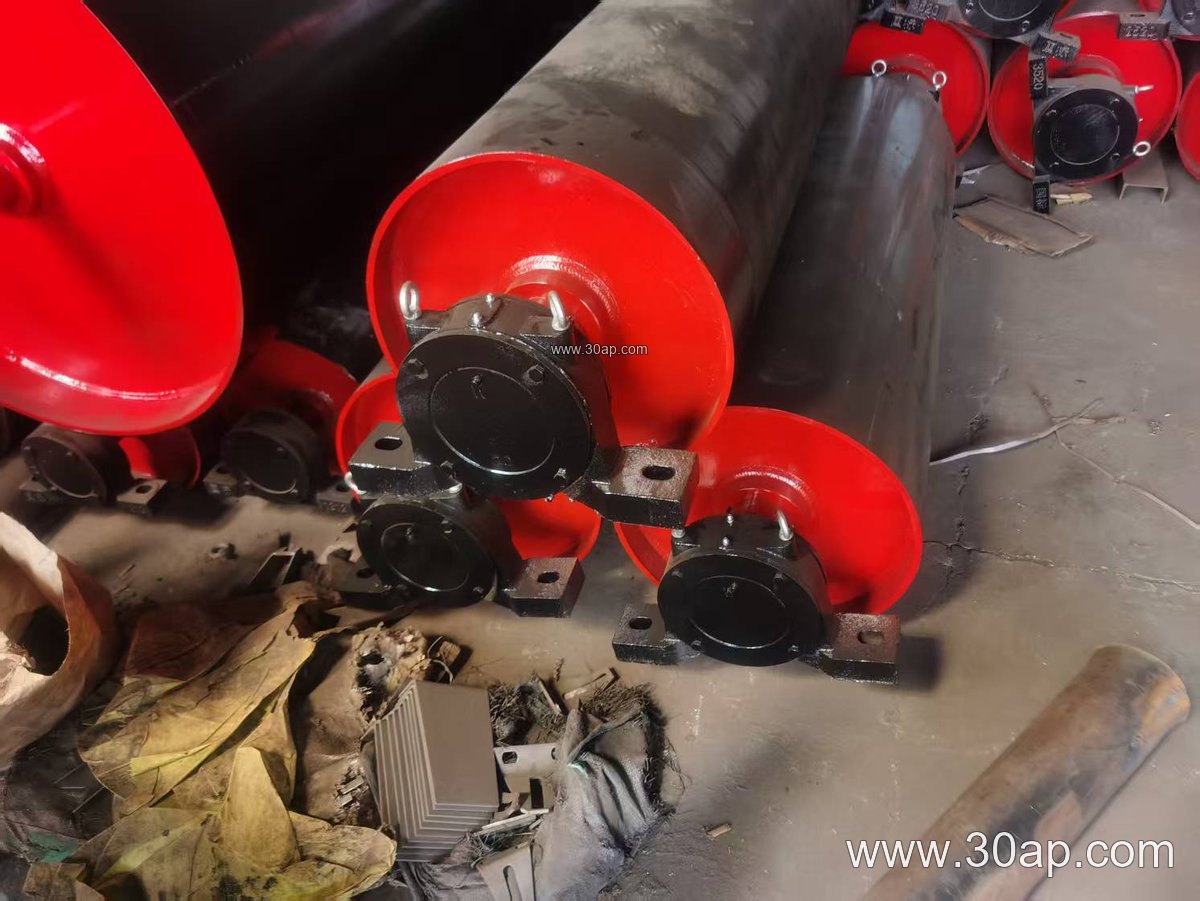
A typical drum pulley starts as a rolled steel shell welded to end discs, with a through shaft or stub shafts. After welding, the body is stress relieved and then machined. The shell OD is turned to a consistent diameter, the faces are squared, and the shaft is centered so the pulley rotates without runout.
- Shell: rolled and welded steel, machined on the outside diameter
- End discs: welded to the shell and bored for the shaft
- Shaft: turned journals, keyway, and bearing seats
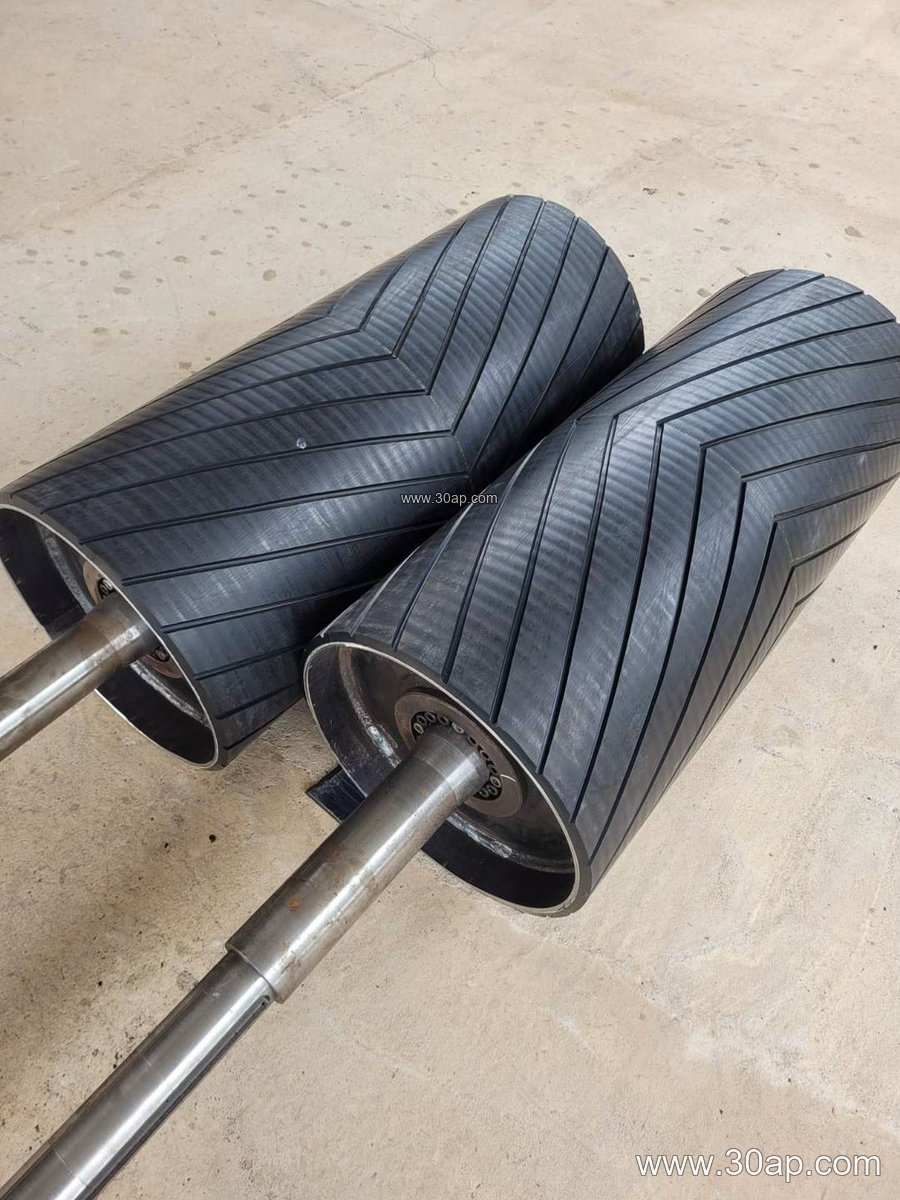
- Surface: bare, cast rubber, cold-bonded rubber, hot-vulcanized rubber, diamond or herringbone lagging, or ceramic lagging
- Lagging thickness: commonly 8, 10, 12, 15, or 20 mm depending on duty
For a heavy-duty mining conveyor, the shaft diameter is set by torque and load, not by belt width alone. Common shaft sizes run from about Ø50 to Ø200 mm, but the final value should come from the drive calculation.
Where Machined Pulleys Are Used
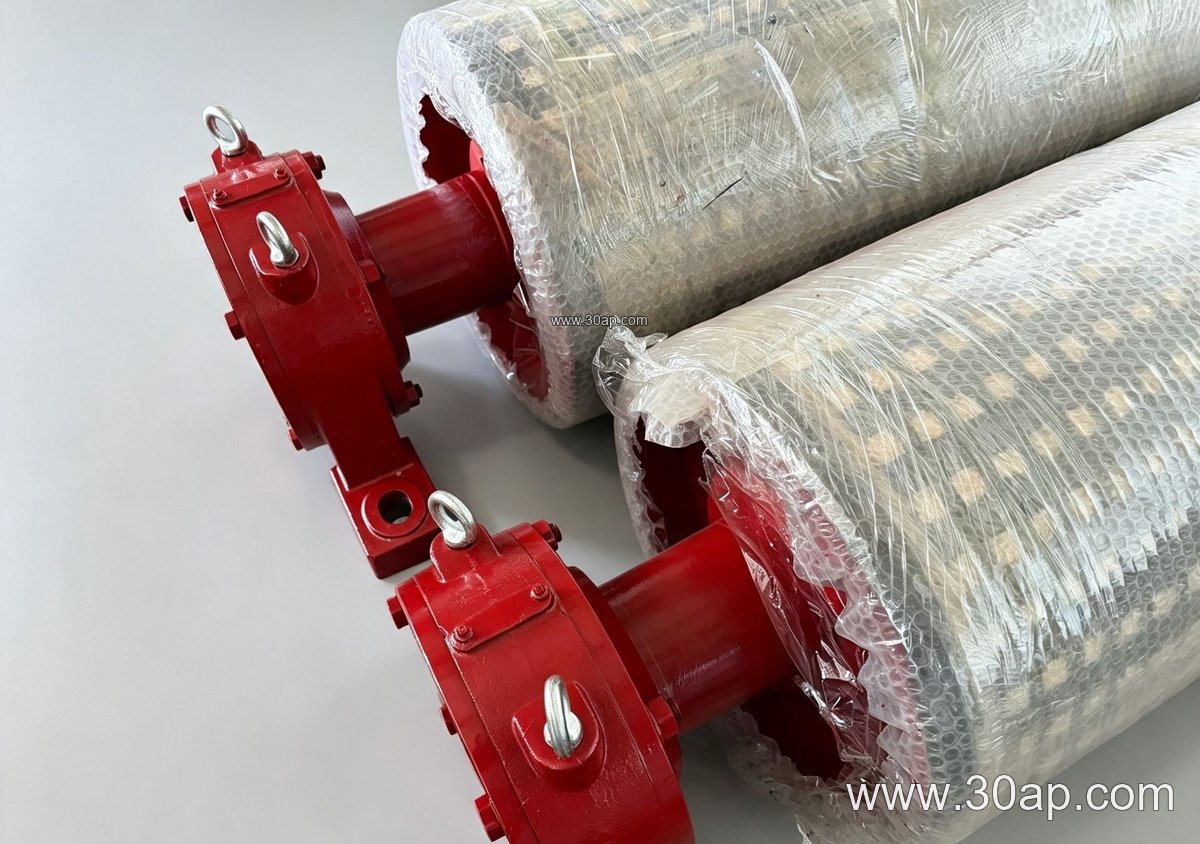
Drive pulleys at the head of a conveyor transmit power to the belt. Tail pulleys at the rear turn the belt back. Bend pulleys and take-up pulleys guide the belt through tensioning zones. Each position puts different loads on the pulley, so machining tolerances and lagging choices differ. A drive pulley in an iron ore plant may need thick diamond lagging for grip, while a bend pulley in a cement plant clinker line may run with a plain machined face.
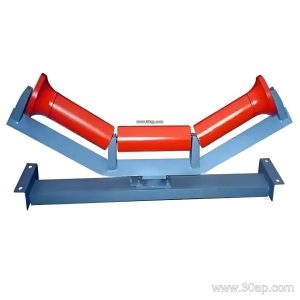
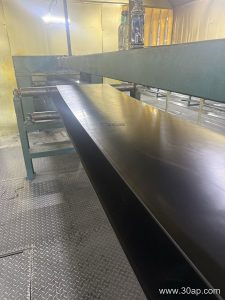
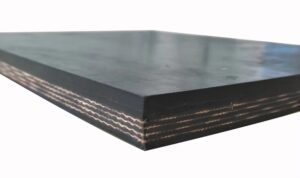
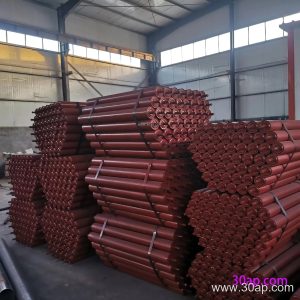
These pulleys work alongside the conveyor belt, conveyor bracket, and idler roller. On a long overland line using a steel cord conveyor belt, pulley alignment and shell roundness matter even more because belt tension is high. In a sand and gravel plant running an EP conveyor belt or a multi-ply fabric core belt, a well-machined tail pulley helps keep the belt centered.
Sizes and Common Combinations
Pulley size is usually written as face width × diameter. Face width is normally wider than the belt, and diameter is chosen from belt tension, wrap angle, and shaft load. The table below shows common reference combinations, not fixed rules.
| Belt width | Typical pulley face width | Example diameter |
|---|---|---|
| B400 | about 500 mm | Ø200 to Ø320 |
| B650 | about 750 mm | Ø250 to Ø400 |
| B800 | about 950 mm | Ø315 to Ø500 |
| B1000 | about 1150 mm | Ø400 to Ø630 |
| B1200 | about 1400 mm | Ø500 to Ø800 |
| B1400 | about 1600 mm | Ø630 to Ø1000 |
| B1600 | about 1800 mm | Ø800 to Ø1250 |
| B1800 | about 2000 mm | Ø1000 to Ø1400 |
Useful reference formats include B800 × Ø500, B1200 × Ø1000, and B1400 × Ø800. A wider belt does not force one single diameter; the drive engineer matches diameter to the required wrap angle and belt tension.
What a Buyer Should Check
Before ordering pulley machining, confirm the belt width, the pulley position, the shaft diameter, the bearing type, and the lagging surface. Ask for the shell runout, the shaft tolerance, and the keyway dimensions. For abrasive service such as a crusher conveyor belt line, specify abrasion resistant lagging. For a coal mining conveyor belt in a flame retardant application, make sure the lagging and the belt are both suitable for the environment.
Check that the pulley face width fits the conveyor bracket spacing and that the lagging thickness leaves clearance. On a port conveyor belt or ship loading line, a balanced pulley reduces vibration at high speed. Buyers should also confirm how the pulley will be balanced and how the lagging is bonded, because a loose lagging sheet can damage the belt.
Maintenance Notes
Inspect lagging wear, check shaft and bearing fit, and verify that the pulley still runs concentric. Worn lagging on a drive pulley can cause belt slip, especially on a heavy-duty mining conveyor belt or a high strength conveyor belt under full load. Re-lagging and re-machining the shell are common repair steps. Keeping the pulley, idler roller, and belt aligned extends the life of the whole conveyor.