What the Head Pulley Does on a Conveyor
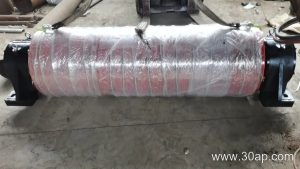
The head pulley is the drum at the discharge end of a belt conveyor. It performs two jobs at once. Its lagged shell grips the conveyor belt and transmits the drive torque, and its position sets the height at which material leaves the belt. Because discharge trajectory, belt tracking, and drive efficiency all depend on this single component, the head pulley is usually the most heavily loaded drum on the machine. In Chinese-language project documents the same part is often called the drive pulley or, when it also handles unloading, the discharge drum. These names describe one assembly, not several interchangeable products.
Construction and Surface Options
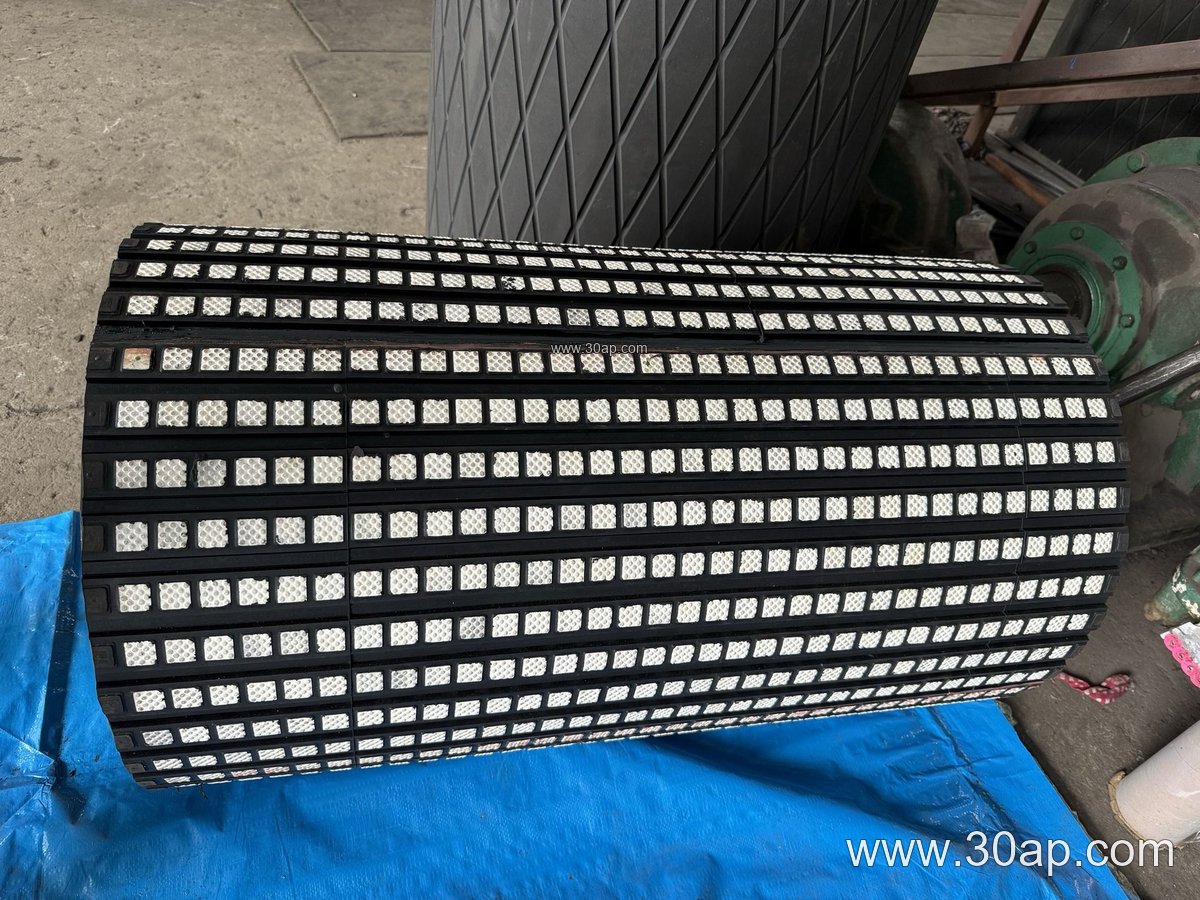
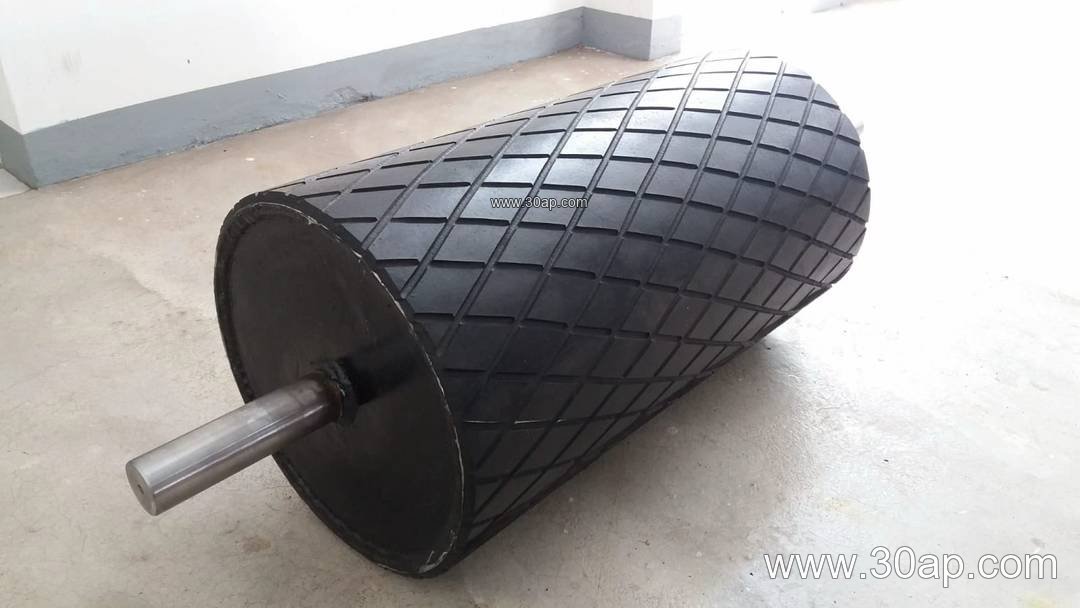
A typical unit is built from a rolled steel shell, welded end discs, a shaft, and hub connections. The shell is machined, then covered with rubber or ceramic lagging to raise friction and protect the belt. Common surface forms include plain finish, hot-vulcanized rubber, cold-bonded rubber, diamond grooving, herringbone grooving, and ceramic tiles. Lagging thickness is often 8, 10, 12, 15, or 20 mm depending on duty. Grooved and ceramic surfaces help shed water and fines, which matters in wash plants and wet tunnels. The shaft is sized by torque and radial load, and common shaft diameters run from Ø50 up to Ø200 mm or more; none of these should be matched to belt width by rule of thumb.
Where It Fits in Different Plants
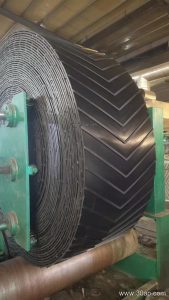
In a quarry or aggregate line, the head pulley sits above the first stockpile or transfer chute, so wear from abrasive rock is constant and abrasion resistant lagging pays for itself. In a coal preparation plant or power station coal yard, flame retardant and anti-static properties of the belt matter as much as drum grip, and the pulley is often specified together with a flame retardant conveyor belt. In a cement plant, hot clinker dust and fine powder call for sealed bearings and careful chute design to keep buildup off the shell. Port bulk terminals and iron ore yards tend to use wide, heavy drums paired with a steel cord conveyor belt or a high strength EP conveyor belt.
Matching Drum Size to Belt Width
Shell width is normally a little wider than the belt so the belt is fully supported. The table below shows typical pairings used in layout drawings; final values follow the conveyor design.
| Belt width | Typical shell face width | Example drum combinations |
|---|---|---|
| B500 | about 600 mm | B500 x Ø400 |
| B650 | about 750 mm | B650 x Ø500 |
| B800 | about 950 mm | B800 x Ø500, B800 x Ø630 |
| B1000 | about 1150 mm | B1000 x Ø800 |
| B1200 | about 1400 mm | B1200 x Ø1000 |
| B1400 | about 1600 mm | B1400 x Ø800, B1400 x Ø1000 |
| B1600 | about 1800 mm | B1600 x Ø1250 |
| B1800 | about 2000 mm | B1800 x Ø1250, B1800 x Ø1400 |
| B2000 | about 2200 mm | B2000 x Ø1600 |
Diameter is chosen from wrap angle, belt tension, and the space available for the drive. A larger drum reduces bending stress in the belt carcass but takes more room. One belt width can work with several drum diameters, so the layout, not the width alone, decides.
Drive Arrangement and Related Parts
Most installations use a motor and gearbox coupled to the drum shaft, sometimes with a fluid coupling for soft start. Self-contained motorized drums are an alternative where space is tight. The head pulley cannot work alone: the conveyor belt, idler roller sets, and the conveyor bracket that carries the bearing housings all influence how well it tracks. A bend pulley or tail pulley may look similar in a photograph, but each has a different job, and replacing one with another is not acceptable.
Buyer Checklist
- Confirm belt width, drum diameter, shaft diameter, and bearing type against the conveyor drawing.
- State the material handled and the environment, since a quarry conveyor belt, a coal mining conveyor belt, and a food grade conveyor belt each demand different rubber grades.
- Choose lagging form and thickness for grip and wear, not by habit.
- Ask about dynamic balancing and inspection of welds, since an unbalanced drum shortens bearing life.
- Plan a spare, because a failed head pulley stops the whole line.
For matching belts and drums, buyers often check a supplier’s range of conveyor pulley designs alongside the belt specification at www.beltconveyorpulley.com, where drum and belt data can be compared before ordering.