What an Intermediate Bend Pulley Does
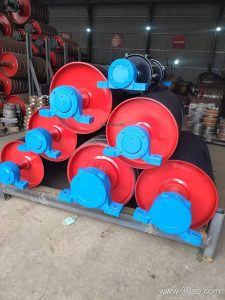
An intermediate bend pulley is a direction-changing roller mounted along the conveyor path, not at the head or tail. Its job is to guide the conveyor belt through a gentle turn, adjust its wrap around a drive or tension pulley, or route it around structures in a transfer tower. In a coal mining conveyor or a quarry conveyor line, this pulley helps keep the belt aligned and the take-up system compact. It is not a drive pulley and not a tail pulley; those handle power transmission and belt return respectively. The intermediate bend pulley works between them, often paired with a conveyor bracket that fixes its position.
Construction and Surface Options
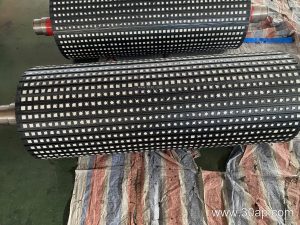
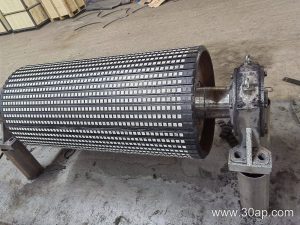
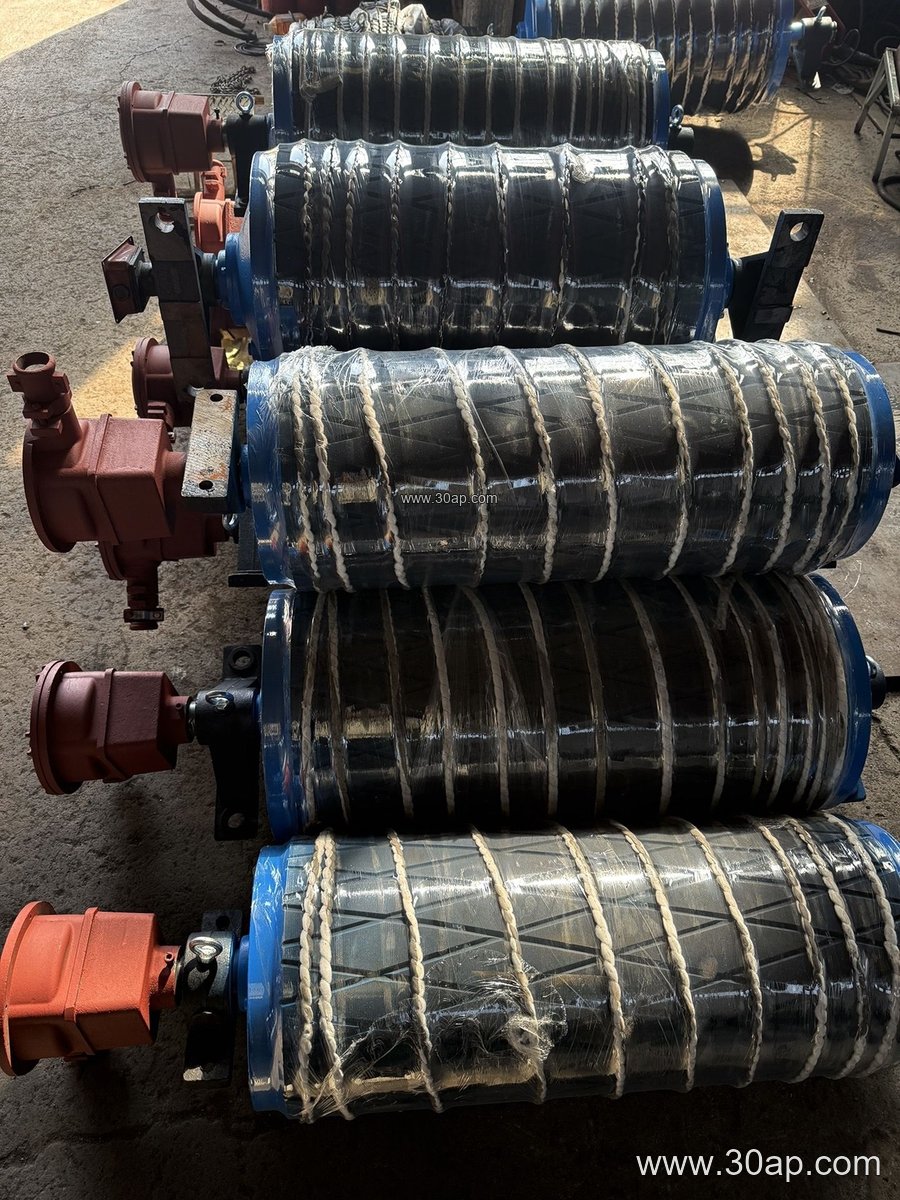
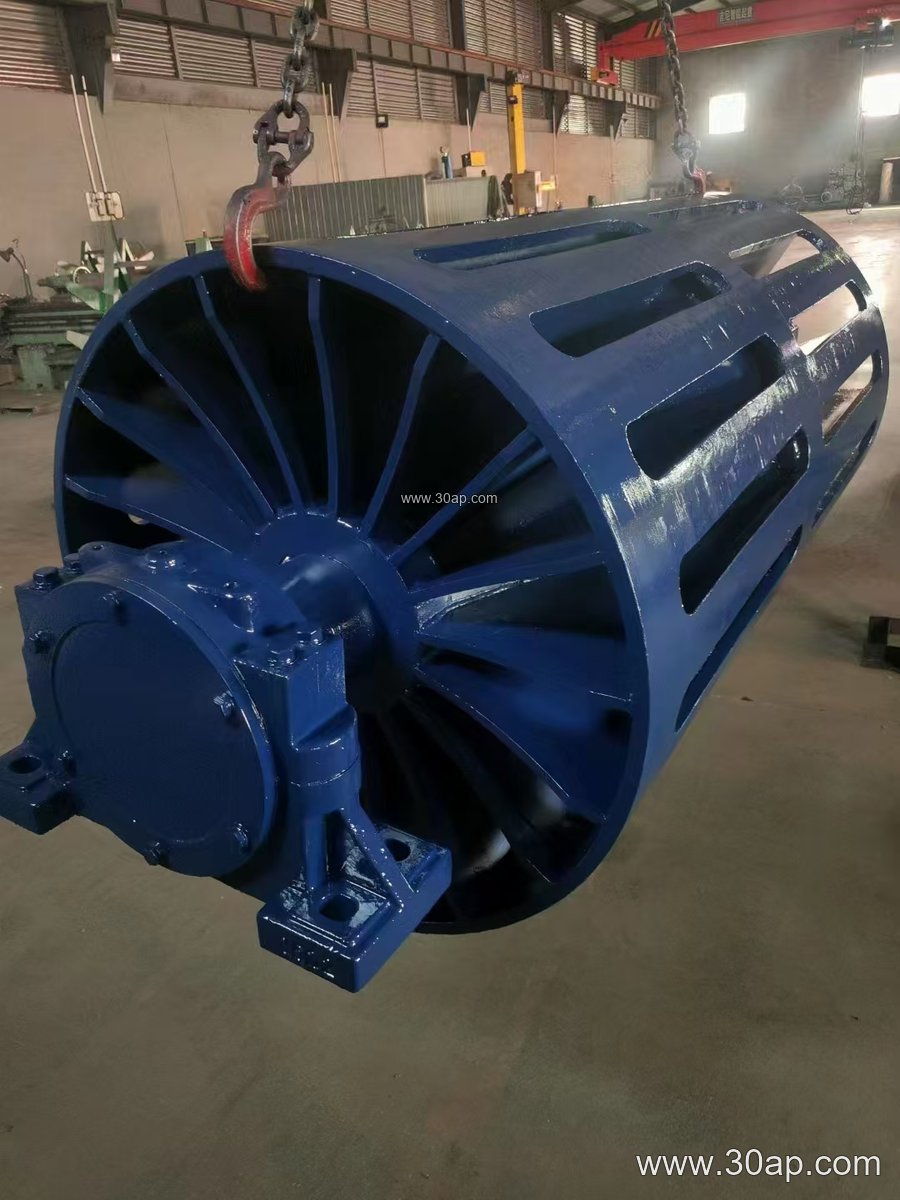
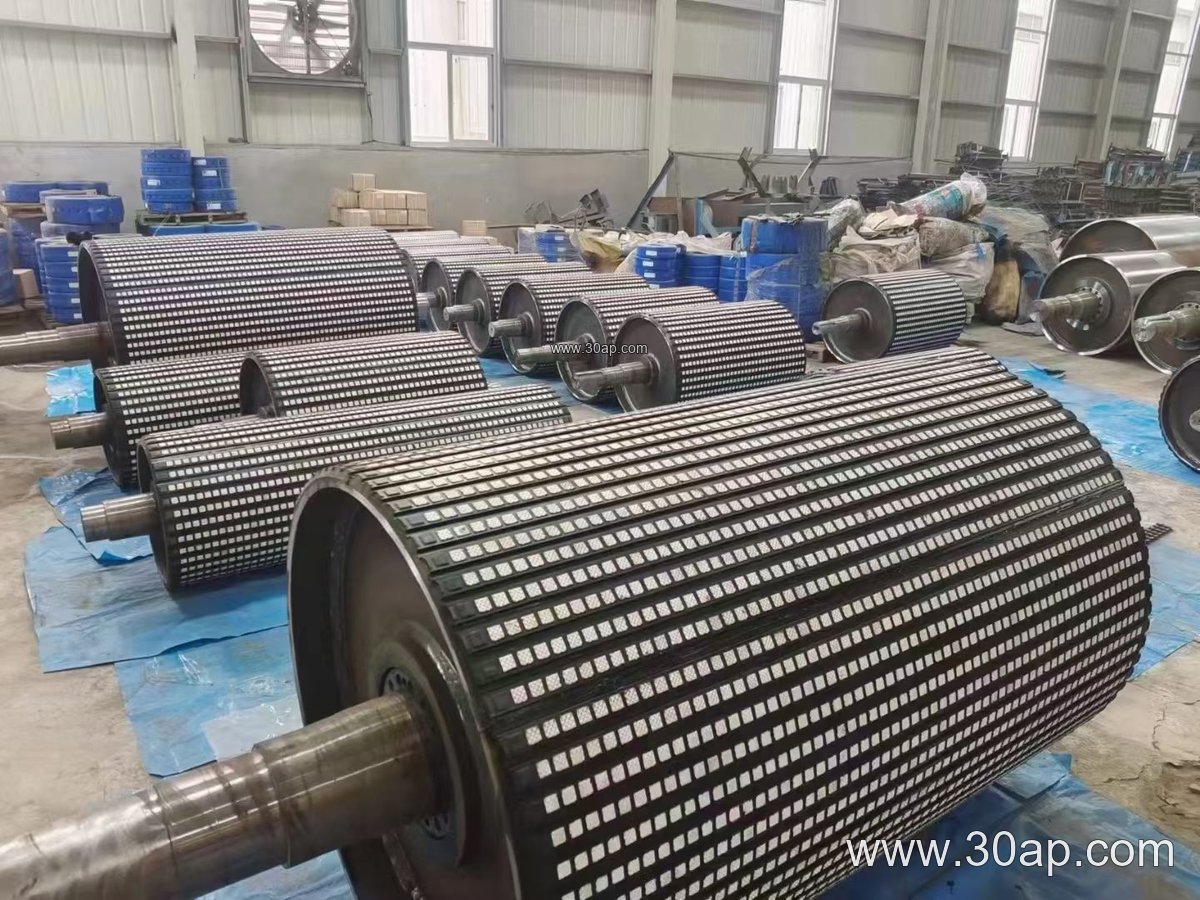
Most intermediate bend pulleys use a welded steel drum with a shaft running through the center. The shell is machined to balance and the ends are closed with plates. Surface finish depends on the belt and the environment. A plain finish works for light contact, while rubber lagging improves grip and protects the belt in dusty conditions. Common lagging types include diamond pattern and plain rubber, with thicknesses often 8, 10, 12, 15, or 20 mm. For abrasive service, ceramic lagging may be chosen. The pulley width usually exceeds the belt width to allow for mistracking; for example, a B800 belt may run on a pulley with a face width around 950 mm, and a B1200 belt may use a face around 1400 mm. Diameter and shaft size are selected by torque and load, not by belt width alone. Typical shaft diameters range from Ø50 to Ø200, and pulley diameters from Ø200 to Ø1800 depending on the duty.
Where It Fits in the System
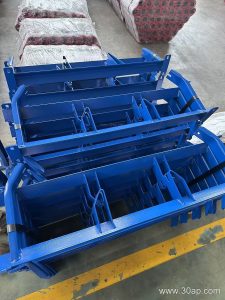
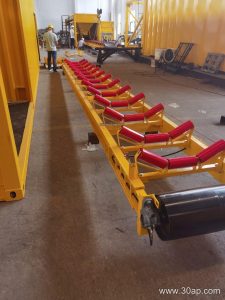
You will find intermediate bend pulleys in cement plant clinker lines, power plant coal handling, and aggregate crushing circuits. They are also used in port ship loading conveyors and in tunnel mucking systems where space is tight. In a coal mining conveyor, a bend pulley may route the belt around a transfer point or increase wrap on a tension pulley. In a quarry conveyor, it helps follow the terrain without adding a full drive station. Because it changes direction, it must be aligned carefully with the idler roller frames and the conveyor bracket. Misalignment here can cause belt edge wear and spillage.
Matching the Pulley to the Belt and Load
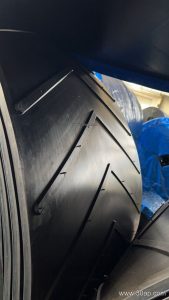
The intermediate bend pulley must suit the belt type and the material load. A heavy-duty mining conveyor belt with steel cord construction needs a robust pulley with a strong shaft and bearing assembly. A fabric core conveyor belt such as an EP conveyor belt or NN conveyor belt may run on a lighter bend pulley, but impact and abrasion still matter. For hot materials, a heat resistant conveyor belt may require a pulley that can handle temperature without lagging damage. In food or chemical applications, an oil resistant conveyor belt or acid resistant conveyor belt may call for a plain or special lagging. The table below shows common reference combinations, not fixed rules.
| Belt Width | Pulley Face Width (approx.) | Common Diameter Range | Common Shaft Diameter |
|---|---|---|---|
| B500 | 600 mm | Ø250–Ø400 | Ø50–Ø80 |
| B650 | 750 mm | Ø315–Ø500 | Ø60–Ø100 |
| B800 | 950 mm | Ø400–Ø630 | Ø70–Ø120 |
| B1000 | 1150 mm | Ø500–Ø800 | Ø80–Ø140 |
| B1200 | 1400 mm | Ø630–Ø1000 | Ø90–Ø160 |
| B1400 | 1600 mm | Ø800–Ø1250 | Ø100–Ø180 |
These values are for reference only. A B1200 belt might use a Ø1000 pulley in one plant and a Ø800 in another, depending on belt tension and space. Never assume one belt width locks you to one diameter.
Buyer Checklist
- Confirm the belt width and the required face width, allowing for mistracking.
- Specify the belt type: steel cord, EP, NN, or specialty such as flame retardant or cold resistant.
- State the lagging preference and thickness if grip or wear protection is needed.
- Provide the shaft diameter required by the bearing housing and torque load.
- Check that the conveyor bracket and idler roller alignment match the pulley position.
- For underground coal mining, confirm flame retardant and anti-static properties of the belt and compatible components.
An intermediate bend pulley is a small but critical part of the conveyor layout. Choosing it with the belt and the load in mind keeps the system running smoothly from the primary crusher to the stockpile.