What Conveyor Bracket Fabrication Covers
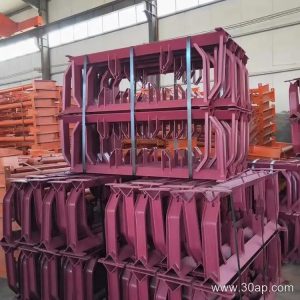
Conveyor bracket fabrication is the metalwork that turns a simple frame into a working support system for the belt line. In practice, the term covers the design, cutting, bending, drilling and welding of the brackets that hold idler rollers at the correct height, angle and spacing. A well-made conveyor bracket keeps the belt profile steady, spreads load evenly and makes roller changes faster during maintenance. Whether the line moves coal at a power plant or crushed stone at a quarry, the bracket is a small but heavily loaded part of the structure.
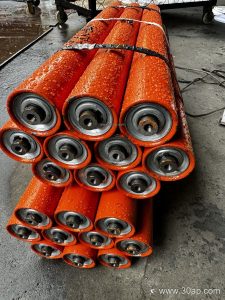
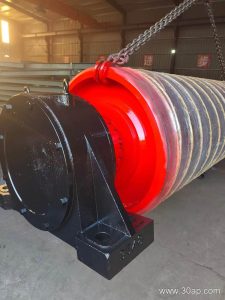
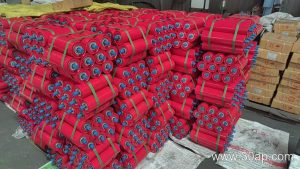
Because brackets work together with the conveyor belt, idler roller and conveyor pulley, fabrication quality directly affects tracking, belt life and downtime. A bracket that is out of square or drilled off-centre will pull the belt to one side and wear the roller edges.
How the Brackets Are Built
Most workshop fabrication starts with angle steel, channel steel or folded steel plate. The material is cut to length, punched or drilled for roller shafts and frame bolts, then welded into the required shape. Jigs are often used so that repeated pieces keep the same hole spacing and trough angle. After welding, edges are dressed and the bracket is cleaned and painted or galvanized, depending on the site conditions.
Fabrication accuracy matters more than raw thickness. The mounting hole distance and crossbeam length usually change with belt width and trough angle, so they are set by design rather than treated as one fixed number. A bracket built for B800 at 35 degrees will not suit a B1200 line at 45 degrees without new drawings.
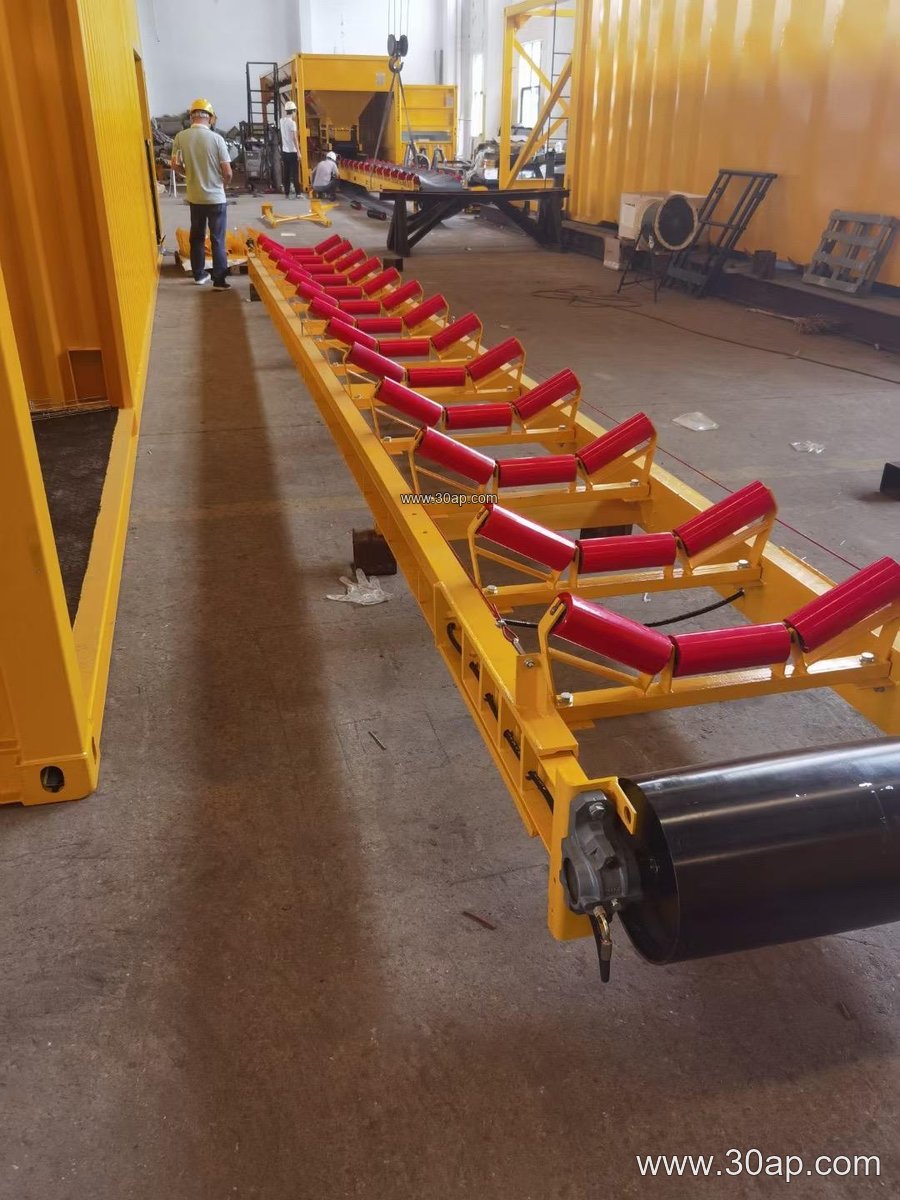
Bracket Types and Where They Sit
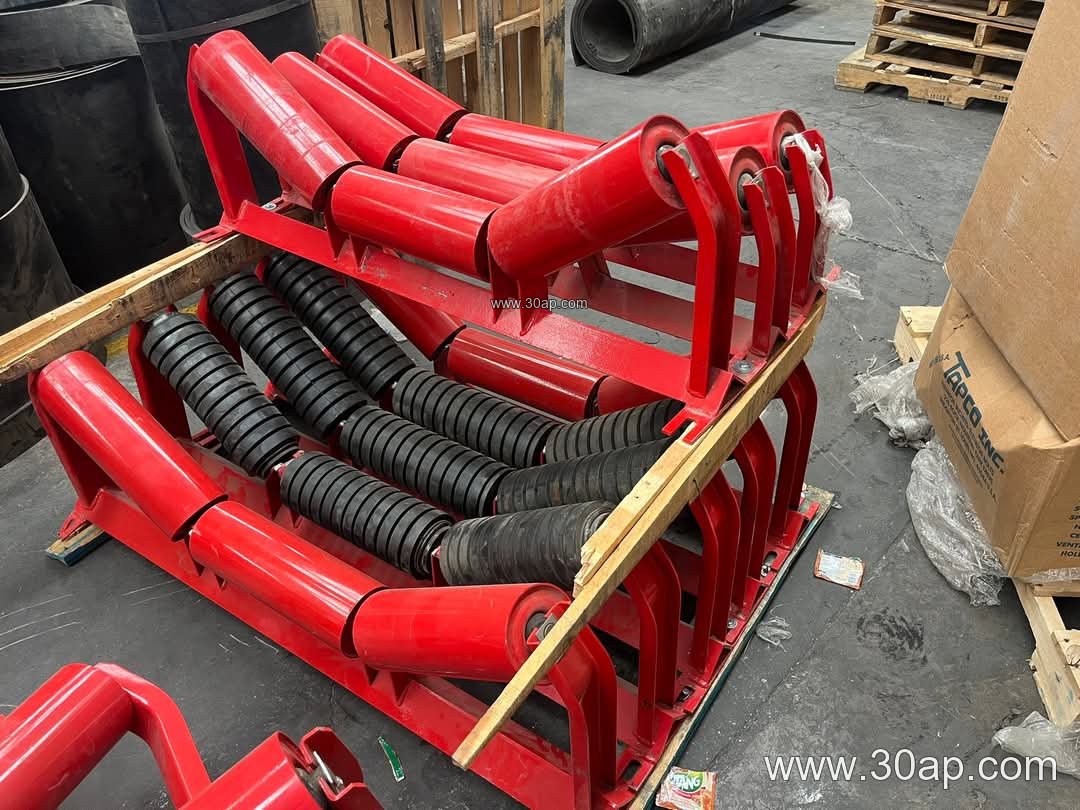
Different positions on the conveyor call for different fabricated shapes. Common types include:
- Troughing brackets on the carrying side, often at 20, 30, 35 or 45 degrees
- Transition brackets near the pulleys, where the belt changes from flat to troughed
- Return brackets and V-return brackets under the empty belt
- Impact brackets at loading points, usually paired with cushioned rollers
- Self-aligning and forward-leaning brackets for tracking control
- Adjustable brackets that allow the trough angle to be changed on site
Forward-leaning brackets typically set the roller at about 1.5 to 2 degrees to help centre the belt. Adjustable designs are useful where one line handles several materials or where fine tracking adjustment is expected after installation.
Typical Sizes and Reference Data
The table below shows common reference combinations. These are examples for discussion, not fixed rules; final dimensions follow the conveyor design.
| Belt width | Common trough angle | Typical roller diameter | Typical bracket use |
|---|---|---|---|
| B500 | 20-30 degrees | Ø89 | Light aggregate lines |
| B650 | 30 degrees | Ø89-Ø108 | Sand and gravel conveyors |
| B800 | 35 degrees | Ø108 | Cement plant and crusher feed |
| B1000 | 35-45 degrees | Ø108-Ø133 | Coal handling and power plant lines |
| B1200 | 35-45 degrees | Ø133 | Iron ore and heavy bulk duty |
| B1400 | 35-45 degrees | Ø133-Ø159 | Port and stockyard conveyors |
| B1600 | 35-45 degrees | Ø159 | Large tonnage mining lines |
| B1800-B2000 | 35-45 degrees | Ø159-Ø194 | High capacity bulk handling |
Roller diameters of Ø89, Ø108, Ø133, Ø159 and Ø194 are widely referenced, but the match between belt width, angle and roller size is decided by load, speed and belt stiffness. No single belt width locks the line to one trough angle or one roller diameter.
Where Fabricated Brackets Are Used
These parts appear wherever a belt runs continuously. In a limestone quarry or crushing and screening circuit, troughing brackets support the belt under sharp rock. In a coal washing plant or power station coal yard, flame retardant and anti-static belts are common, and brackets must resist vibration from constant loading. Cement plants use them along clinker and raw material lines, while port and ship loading conveyors rely on heavy fabricated frames for long spans. In each case, the bracket is matched to the belt type, from a multi-ply fabric core belt to a steel cord belt on long overland routes.
For more on matching rollers and belts, see conveyor bracket guidance and idler roller selection notes.
What Buyers Should Check
Before ordering, confirm the belt width, trough angle, roller diameter and mounting hole pattern with the conveyor drawing. Ask for the material grade and surface treatment, since dusty or wet sites may need galvanized or painted finishes. Check that adjustable brackets state their angle range and that fixed brackets are supplied in matched sets. Good fabrication is square, consistent and easy to bolt up, which keeps the belt running true and reduces maintenance in mines, cement works and ports alike.