What a Conveyor Take-Up Pulley Does
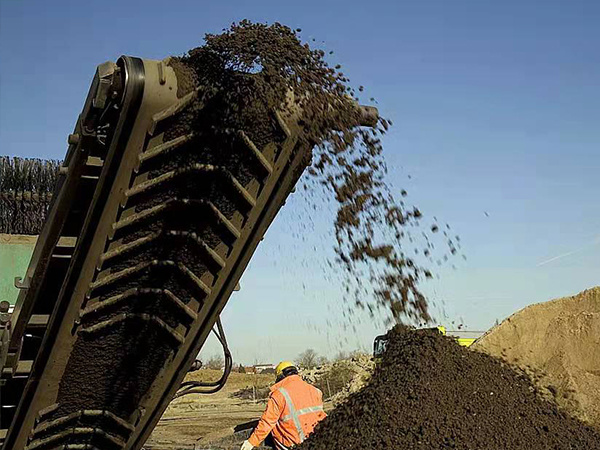
A conveyor take-up pulley is the drum that maintains working tension in a conveyor belt, compensating for stretch and load changes so the belt stays seated on the drive and tail pulleys. It is often called a tension pulley or take-up drum, and it works together with a take-up frame, counterweight or screw mechanism, and the conveyor bracket that anchors the assembly. In a coal handling line, a cement plant clinker circuit, or a quarry aggregate conveyor, poor tension shows up quickly as belt slip, spillage, or tracking drift.
The take-up pulley is a distinct duty position. It is not a drive pulley, not a tail pulley, and not a bend pulley. A drive pulley transmits torque, a tail pulley forms the return end, and a bend pulley changes belt direction; the take-up drum’s job is to hold tension while allowing controlled movement. Keeping these roles separate matters when specifying spares, because each position carries different loads and surface requirements.
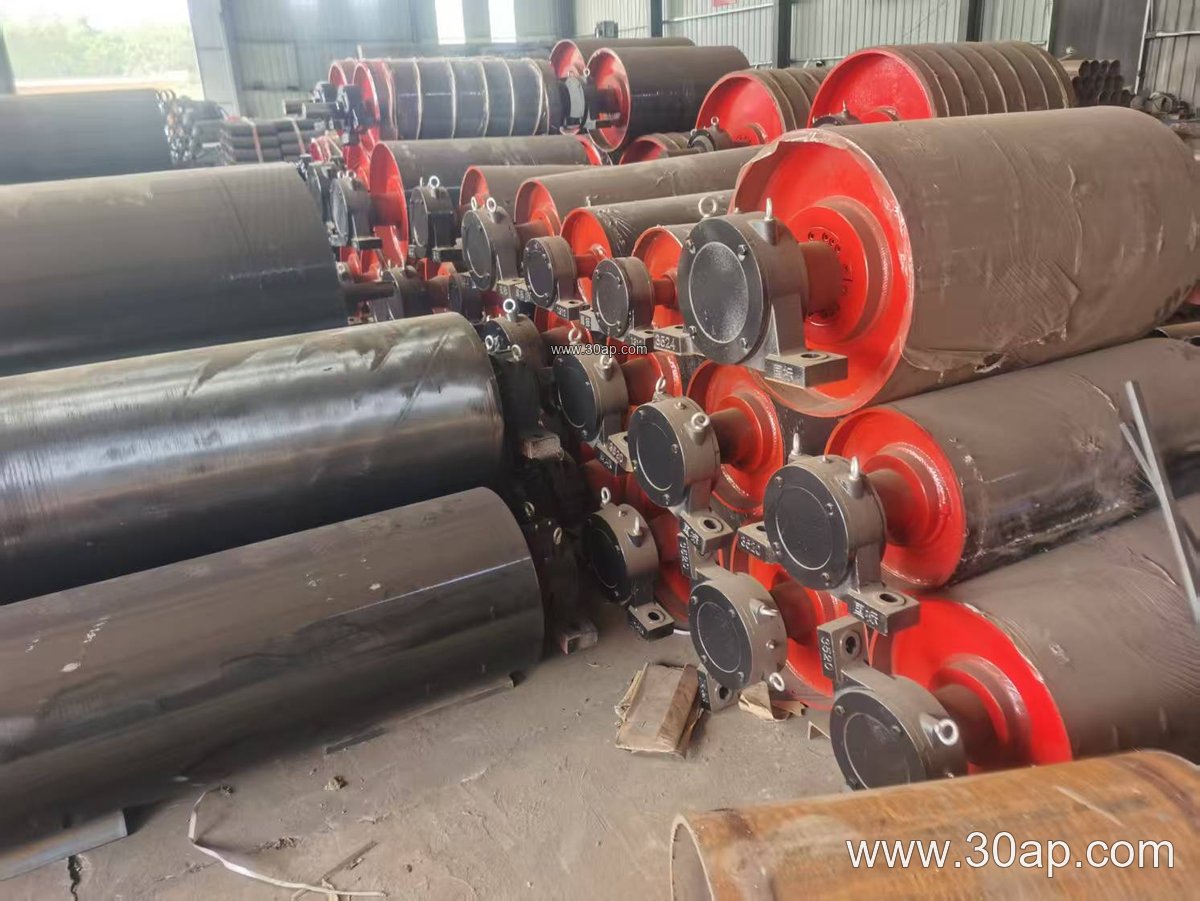
Construction and Surface Options
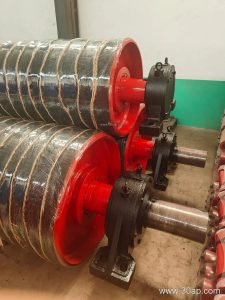
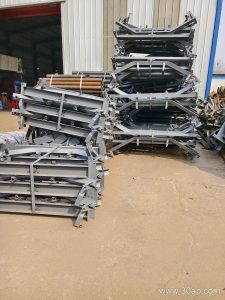
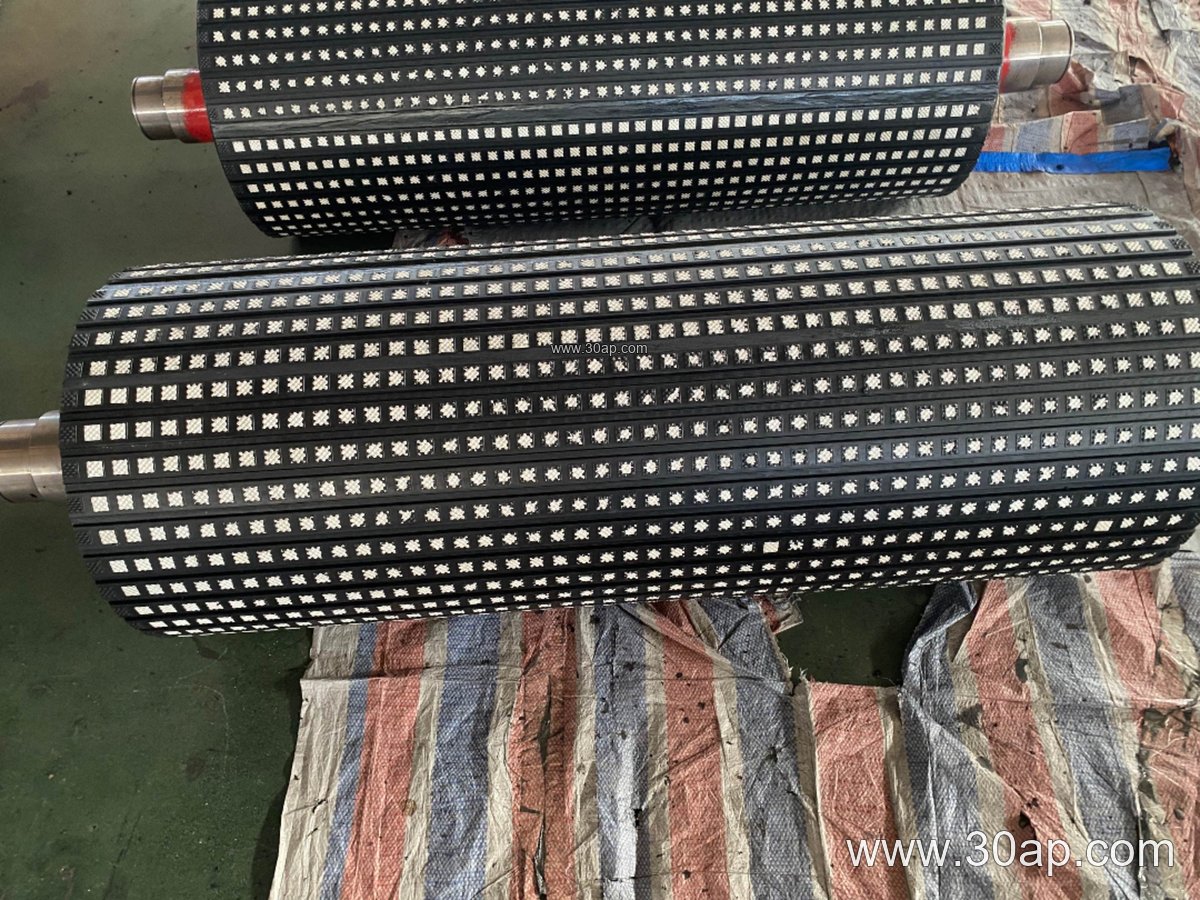
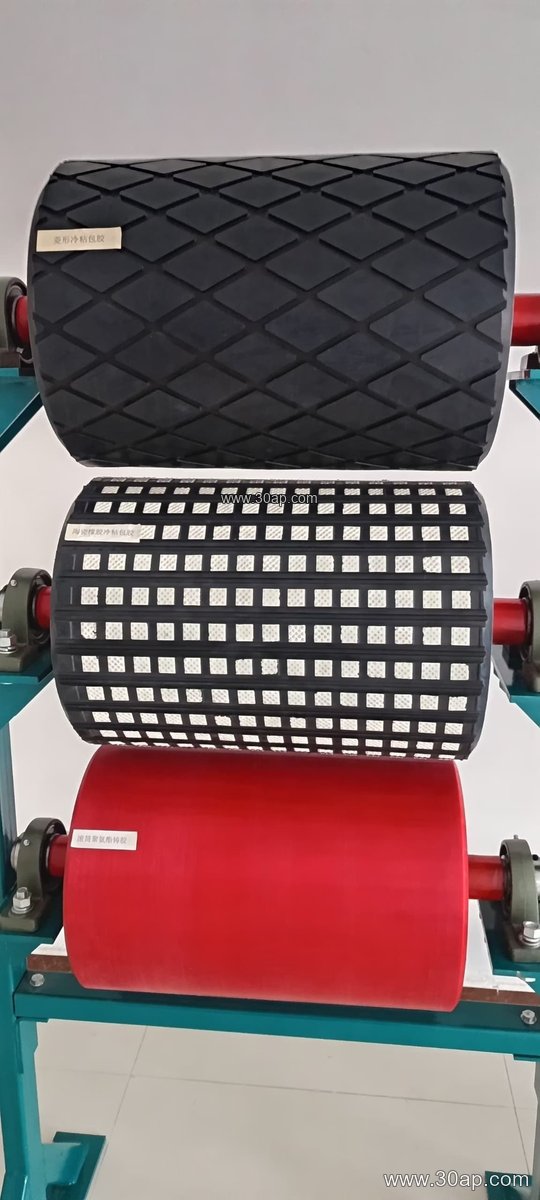
Most take-up drums are welded steel cylinders with dished or flat end plates, machined hubs, and a through shaft supported by plummer block bearings in sliding frames. The shell is often lagged to protect the belt and improve grip where needed. Common surface forms include plain finish, hot vulcanized rubber, cold bonded rubber, diamond grooving, herringbone grooving, and ceramic lagging. Lagging thickness is commonly 8, 10, 12, 15, or 20 mm, selected according to belt tension and environmental conditions.
Because the pulley moves during operation, shaft and bearing sizing deserve attention. Shaft diameters such as Ø80, Ø100, Ø120, or Ø160 are typical on medium and heavy conveyors, but the final value follows torque and radial load calculations rather than belt width alone. A B800 belt, for example, might use a Ø500 or Ø630 drum, yet the shaft size still depends on the take-up travel, counterweight force, and bearing span designed for that conveyor.
Typical Sizes and Reference Data
The table below offers reference ranges, not fixed pairings. Drum diameter, face width, and shaft size are determined by the conveyor design, belt speed, and tension requirements.
| Belt width | Typical drum face width | Common diameter range |
|---|---|---|
| B400 | about 500 mm | Ø200 to Ø315 |
| B650 | about 750 mm | Ø250 to Ø400 |
| B800 | about 950 mm | Ø315 to Ø500 |
| B1000 | about 1150 mm | Ø400 to Ø630 |
| B1200 | about 1400 mm | Ø500 to Ø800 |
| B1400 | about 1600 mm | Ø630 to Ø1000 |
| B1600 | about 1800 mm | Ø800 to Ø1250 |
Face width is usually slightly larger than the belt to allow minor tracking movement. Combinations such as B800 × Ø500 or B1200 × Ø1000 appear in real projects, but they are design choices, not universal rules. A larger drum reduces belt bending stress, while a smaller drum saves space; the take-up frame travel and available floor area often decide the balance.
Where Take-Up Pulleys Are Used
These pulleys appear wherever belt length changes with load or temperature. In a limestone quarry, a gravity take-up tower with a counterweighted drum keeps the main haulage belt stable through winter and summer. In a power plant coal conveying system, a screw take-up pulley provides manual adjustment at the tail end, often paired with a bend pulley to route the belt into the tension zone. Sand and gravel plants, fertilizer warehouses, and grain silos also rely on them to prevent slippage at startup.
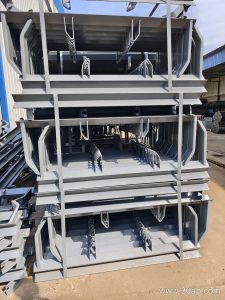
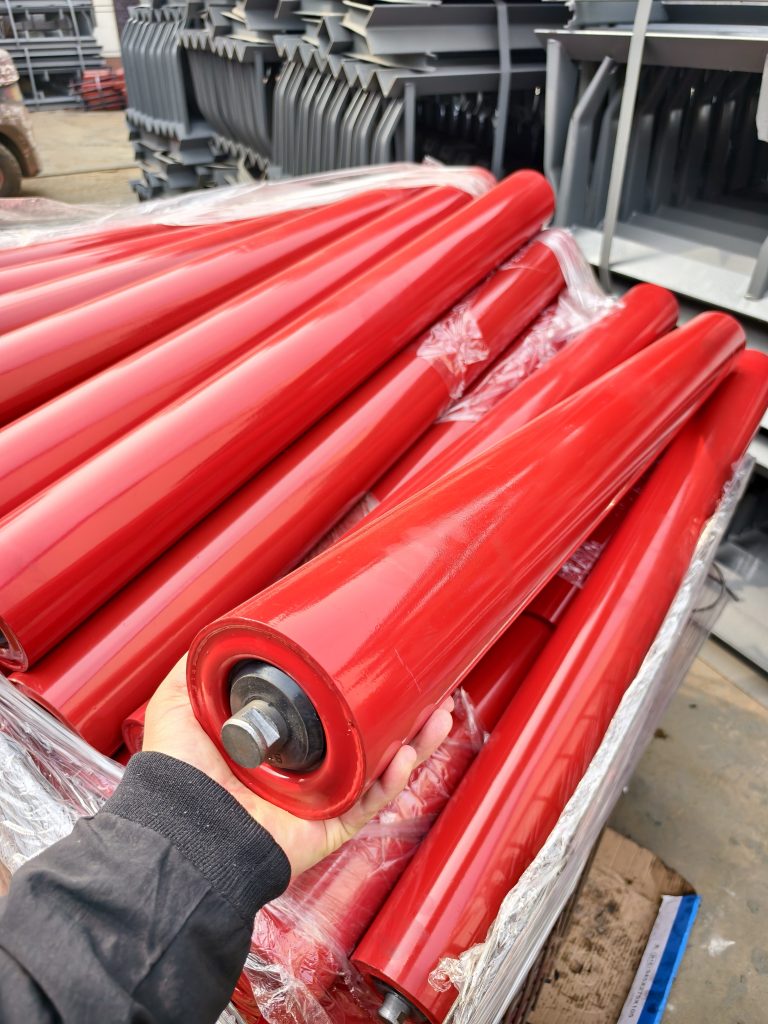
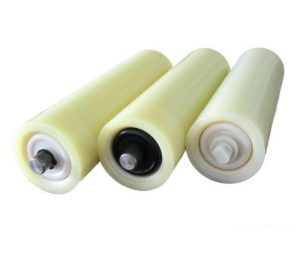
Surrounding components matter too. The conveyor belt must be compatible with the lagging profile, the idler roller sets on the carrying and return sides should be aligned, and the take-up pulley should sit square to the belt centerline. A misaligned drum causes edge wear even when tension is correct.
Buyer Checklist
- Confirm the duty position: take-up, not drive or tail, so the supplier quotes the right bearing and frame arrangement.
- State belt width, belt type, and expected maximum tension so drum diameter and shaft size can be calculated.
- Choose lagging according to grip needs and material carried; plain finish suits some clean, low-tension duties, while diamond or ceramic lagging helps in wet or dusty service.
- Check take-up travel distance and frame type, whether screw, gravity, or hydraulic.
- Ask for bearing bore, shaft diameter, and keyway details before ordering, and verify that the conveyor bracket matches the sliding frame.
Take-up pulleys are small compared with the drive drum, yet they decide how well the whole conveyor holds tension. Matching the drum to the belt, the frame, and the operating environment is what keeps a coal yard, cement line, or aggregate plant running without repeated belt adjustments.