What a Return Self-Aligning Idler Does
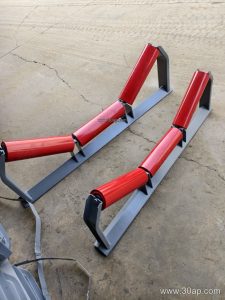
A return self-aligning idler is a training idler mounted on the carry-back side of a conveyor, where it supports the empty belt and gently steers it back to center. Because the return strand has no material load to hold it down, it is easily pushed sideways by misalignment, wind, or a slight build-up of fines on a pulley. This idler corrects that drift before it becomes a belt-edge problem. In a quarry or a cement plant, one tracking idler on the return run often saves hours of downtime that would otherwise be spent re-squaring a belt.
The same unit is also called a self-aligning return roller or a training idler for the return belt. Those names describe the identical product; they are not separate designs.
Construction and Working Principle
The assembly usually combines two or three idler rollers on a pivoting frame, carried on a central bearing that lets the whole group rotate slightly in the horizontal plane. When the belt drifts to one side, it contacts a vertical guide roller or the angled end of the frame, and the resulting force swings the group so that the rollers run at a small angle to the belt path. That angle produces a lateral push that walks the belt back toward the centerline.
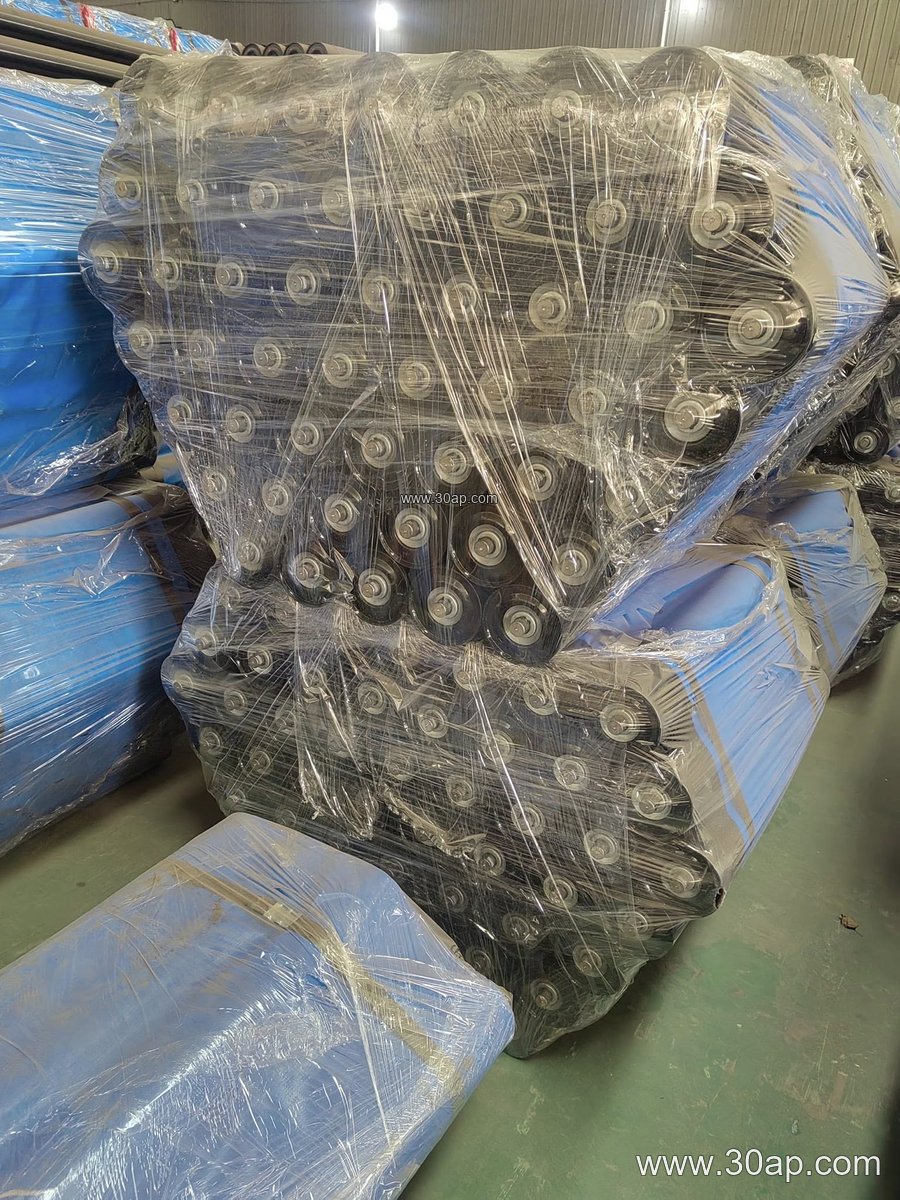
Key build details a buyer should inspect include:
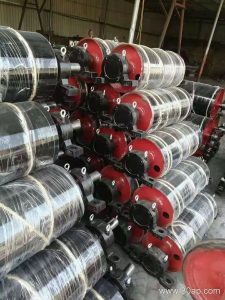
- Roller shell in steel tube, nylon, or rubber-covered form, depending on whether build-up or abrasion is the main concern.
- Sealed bearings, commonly 6205, 6305, or 6308, with labyrinth or felt seals to keep out dust and water.
- A sturdy pivot with a grease point, since this is the part that must move freely for years.
- Mounting feet or brackets that fit the existing conveyor bracket spacing on the return frame.
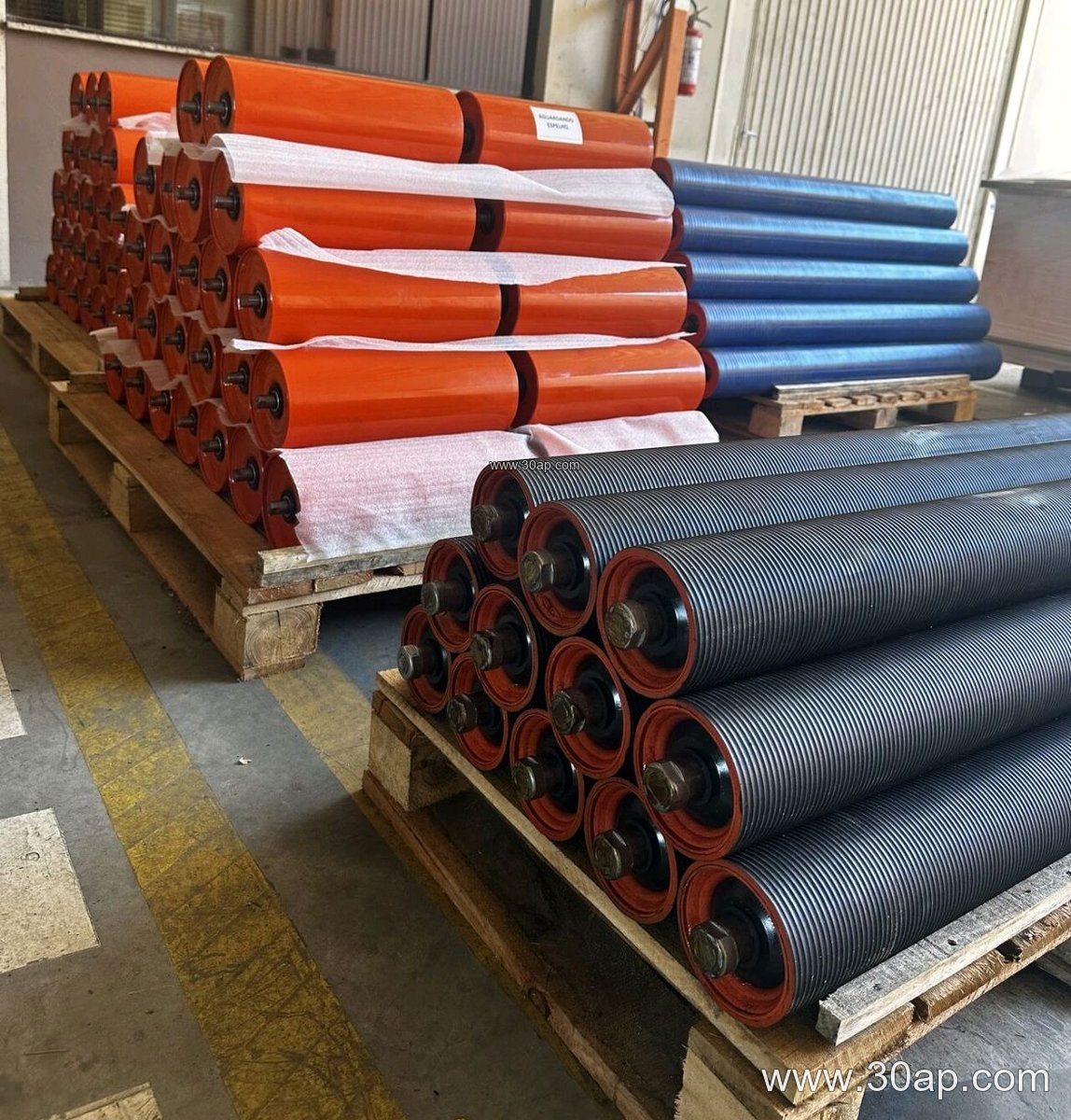
The rollers are often slightly larger in diameter than plain return idlers so that the belt is lifted clear of the frame during correction. Common diameters include Ø108, Ø127, Ø133, and Ø159 mm, while wider belts may use Ø178 or Ø194 mm. Roller length follows belt width and frame design rather than a single fixed rule.
Where It Fits on the Conveyor
This training idler belongs on the return strand, typically a few belt widths ahead of the tail pulley and again before the drive pulley on long runs. It is not a substitute for a bend pulley or a tail pulley; those are separate components with different duties. On a coal mining conveyor belt or an underground coal mining conveyor belt, a flame retardant conveyor belt may be running in a confined gallery, so the return idler must track well without chafing the belt edges against the structure.
Typical installations include:
- Aggregate and sand making plant conveyor belts, where fines cling to return rollers.
- Power plant coal conveyor belts and cement plant conveyor belts with long return spans.
- Iron ore and copper ore conveyor belts handling abrasive, heavy loads.
- Port conveyor belts and ship loading conveyor belts exposed to side winds.
On a steel cord conveyor belt or a heavy-duty mining conveyor belt, tracking errors are costly because the belt is stiff and expensive to edge-damage. A correctly placed return self-aligning idler protects the belt and the conveyor pulley alike.
Matching the Idler to Belt and Frame
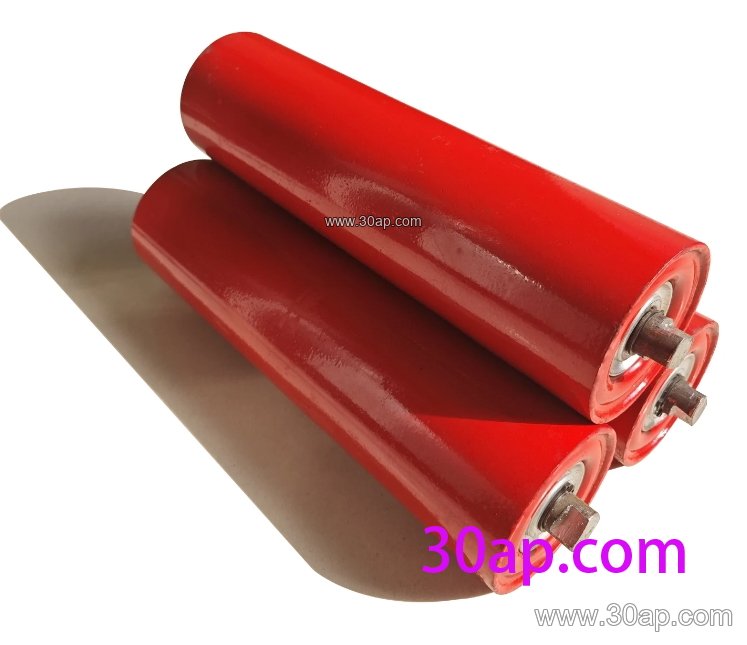
Selection starts with belt width and the return frame geometry. A B650 belt and a B1200 belt obviously need different roller lengths, and the pivot frame must clear the conveyor brackets. The table below gives common reference values; final dimensions should follow the conveyor design.
| Belt width | Typical return roller diameter | Common bearing | Roller surface options |
|---|---|---|---|
| B500 to B650 | Ø89 to Ø108 mm | 6204 / 6205 | Steel, nylon |
| B800 to B1000 | Ø108 to Ø133 mm | 6205 / 6305 | Steel, rubber ring |
| B1200 to B1400 | Ø133 to Ø159 mm | 6305 / 6308 | Steel, rubber, ceramic |
| B1600 to B2000 | Ø159 to Ø194 mm | 6308 / 6310 | Steel, rubber |
These are indicative pairings, not fixed rules. A 1200mm wide conveyor belt may run Ø133 mm rollers in one plant and Ø159 mm in another, depending on load and frame height. When in doubt, match the existing return idler envelope and confirm the shaft end fit.
Buyer Checklist
- Confirm the mounting height and bolt spacing against the conveyor bracket.
- State the belt width, for example 800mm, 1000mm, or 1400mm, and the return frame type.
- Describe the environment: wet, dusty, oily, or high temperature. This affects seal choice and whether a rubber-covered roller is worthwhile.
- Ask for the pivot bearing specification and grease nipple location.
- Check that the guide rollers are replaceable without removing the whole frame.
For a plant running an abrasion resistant conveyor belt in a stone crushing line, or a heat resistant conveyor belt near a clinker cooler, the return idler should be chosen for the same duty level as the belt. A light idler under a heavy belt will fail at the seal long before the roller shell wears out.
Maintenance Notes
Inspect the pivot monthly. A self-aligning idler that cannot swing freely acts like a fixed return roller and will not correct tracking. Clean fines from the frame, confirm the guide rollers turn, and re-grease according to the site schedule. Replace rollers when the shell wears thin or the bearing becomes noisy. Keeping the return run aligned also reduces edge wear on the conveyor belt and load on the conveyor pulley bearings, which is cheaper than replacing either.