What a Galvanized Conveyor Bracket Does
A galvanized conveyor bracket is the steel support that holds idler rollers in the correct position under and over a conveyor belt. It carries the load of the belt, the material and the rollers, then transfers that force into the conveyor frame. Because it sits close to the belt and the material, it needs both mechanical strength and corrosion protection, which is why hot-dip galvanizing is common for outdoor and wet installations.
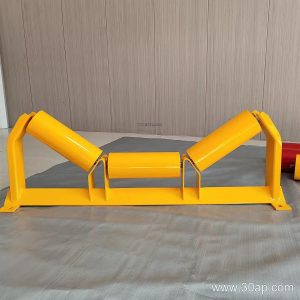
In a typical troughed conveyor, the bracket sets the trough angle of the carrying idlers. On the return side, a different bracket form supports the return rollers or a V-return arrangement. The bracket is not a pulley and does not drive the belt, so it should not be confused with a drive pulley, tail pulley or bend pulley, which serve entirely different functions in the conveyor layout.
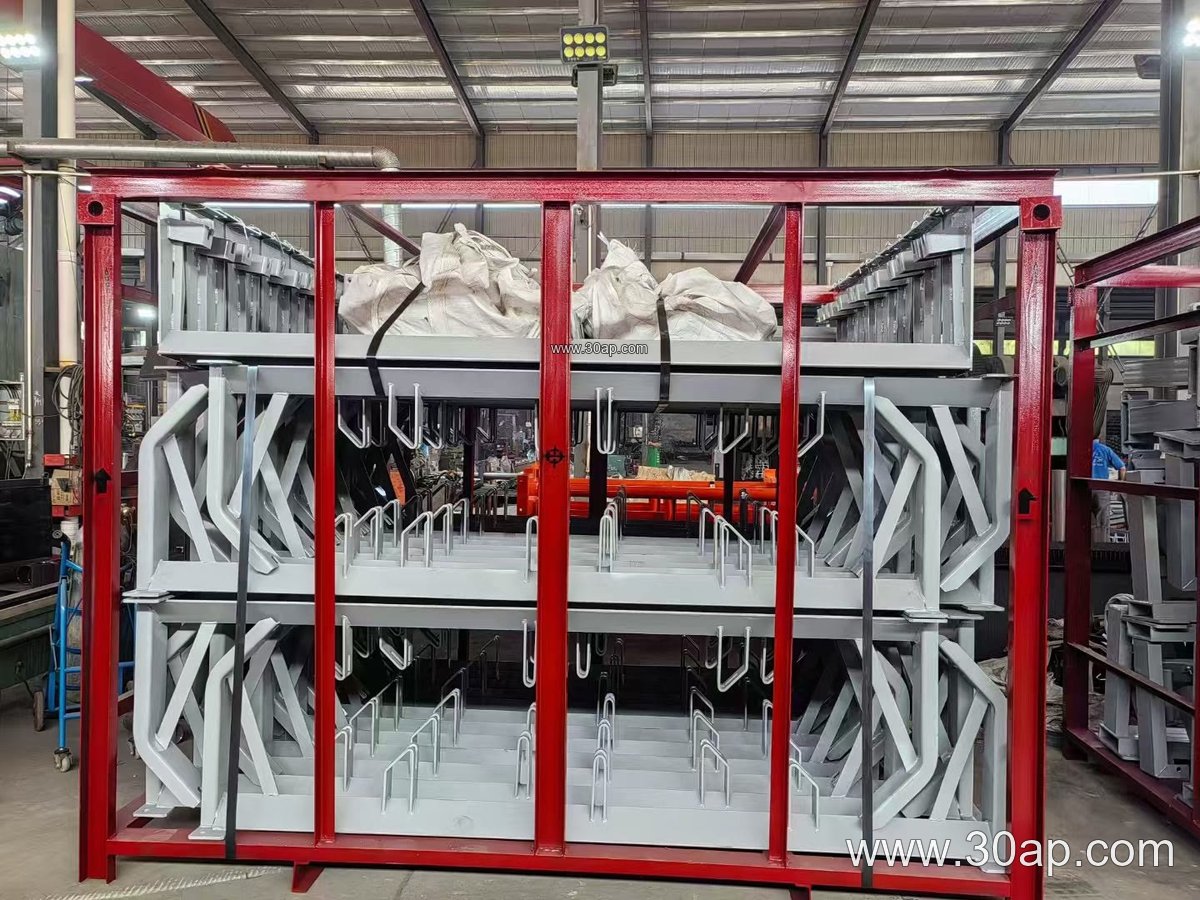
Construction and Surface Protection
Most brackets are fabricated from angle steel, channel steel or folded steel plate. The frame is welded or bolted, then hot-dip galvanized to a zinc coating that resists rust in dusty, humid or coastal conditions. Galvanizing also helps in plants where washdown or condensation is routine.
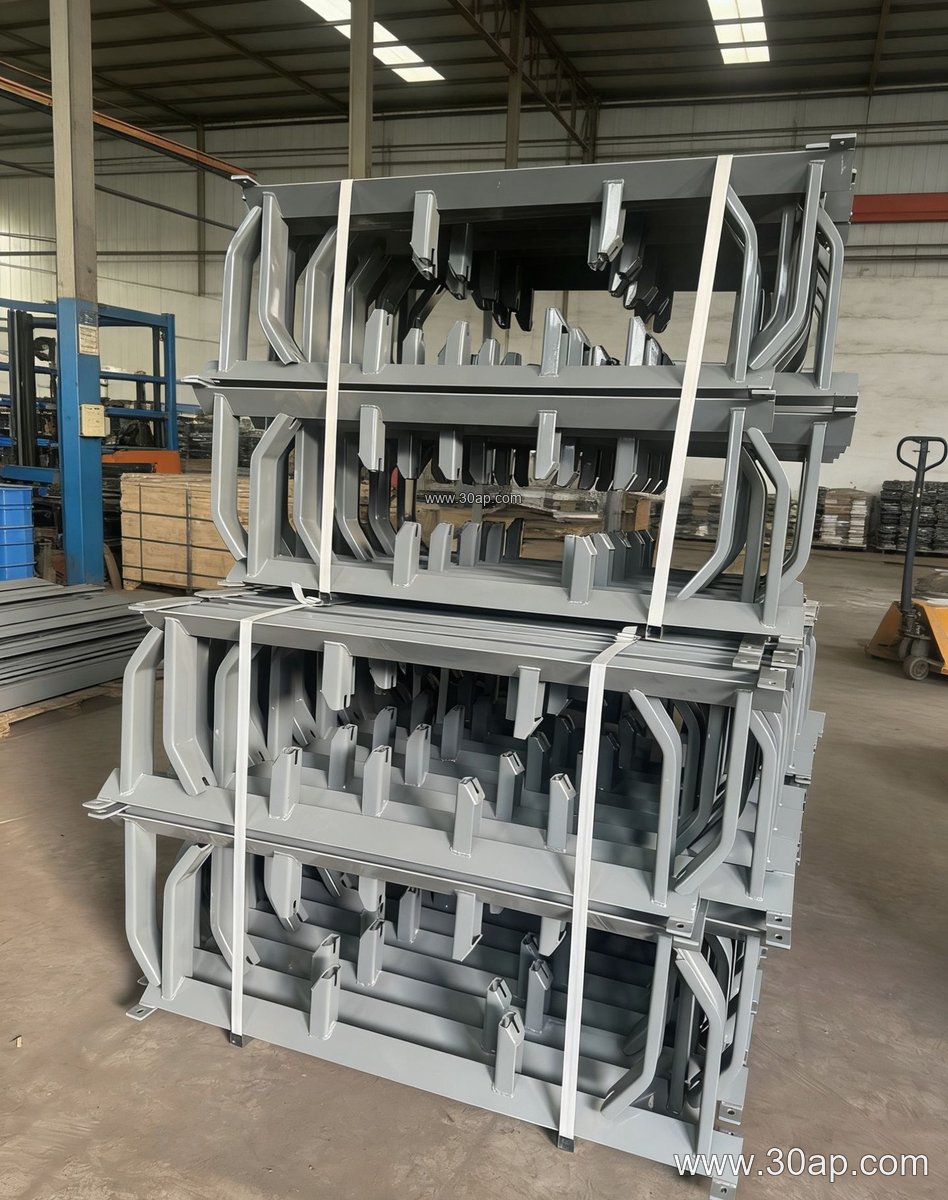
A bracket usually includes mounting holes, a crossbeam or base plate, and notches or slots that locate the idler shaft. Installation hole spacing and crossbeam length follow the belt width and trough angle, so these dimensions are set by design rather than fixed across all conveyors.
Common Forms and Where They Fit
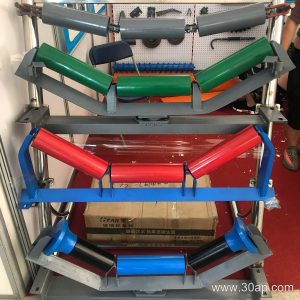
- Troughing bracket supports carrying idlers at 20, 30, 35 or 45 degrees.
- Transition bracket eases the belt from flat to troughed profile near the pulleys.
- Return bracket and V-return bracket support the return strand.
- Impact bracket sits at loading points and works with impact rollers.
- Self-aligning bracket helps correct belt tracking, often with forward-leaning rollers.
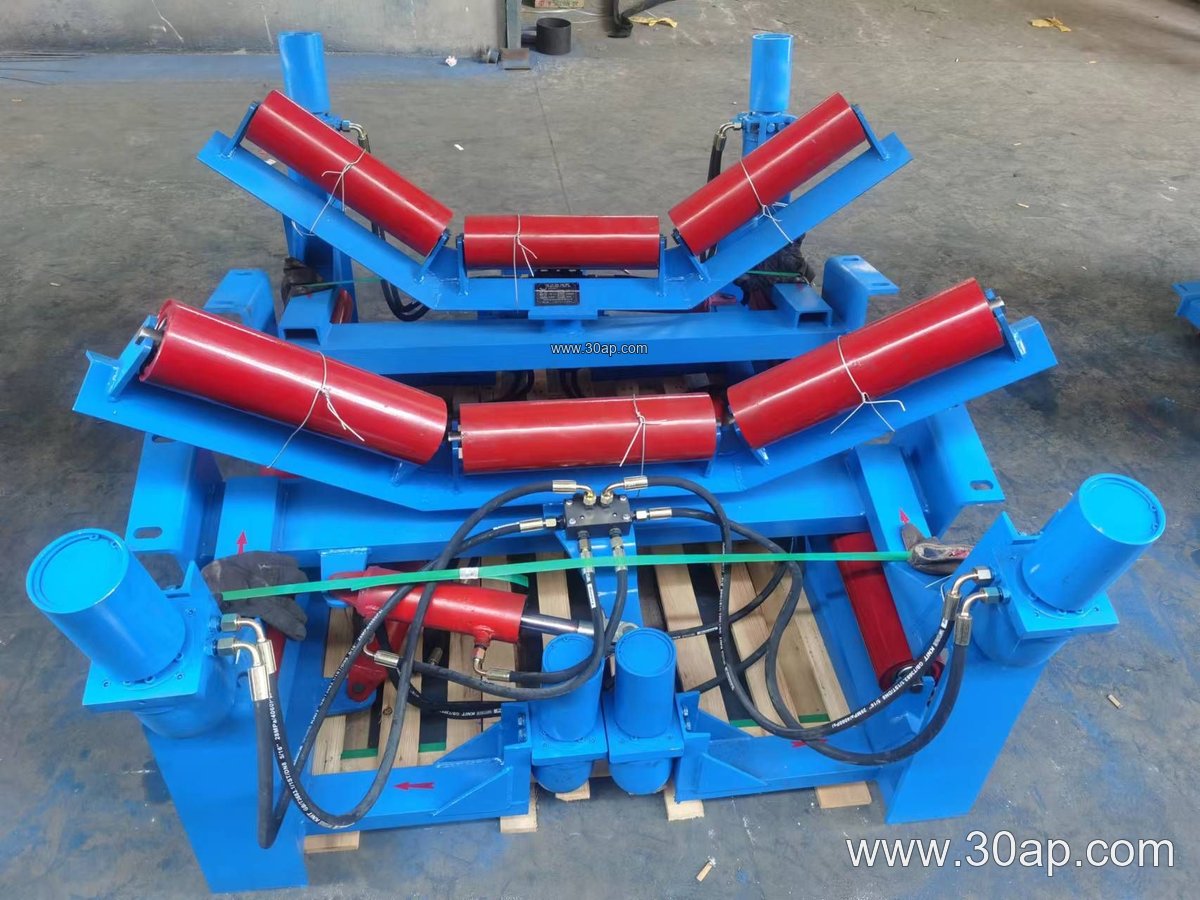
- Adjustable bracket allows the trough angle to be changed within a range on site.
These forms are not interchangeable. A return bracket is not a substitute for a troughing bracket, and a transition bracket is not a replacement for a standard carrying bracket. Each has its own position and purpose in the conveyor line.
Typical Applications
Galvanized brackets appear wherever belt conveyors move bulk material. In a limestone quarry or a sand and gravel line, they support the belt through crushing and screening sections. In a cement plant, they hold idlers on clinker and raw material lines. Power plant coal handling, port ship loading, and steel plant sintering conveyors also use them.
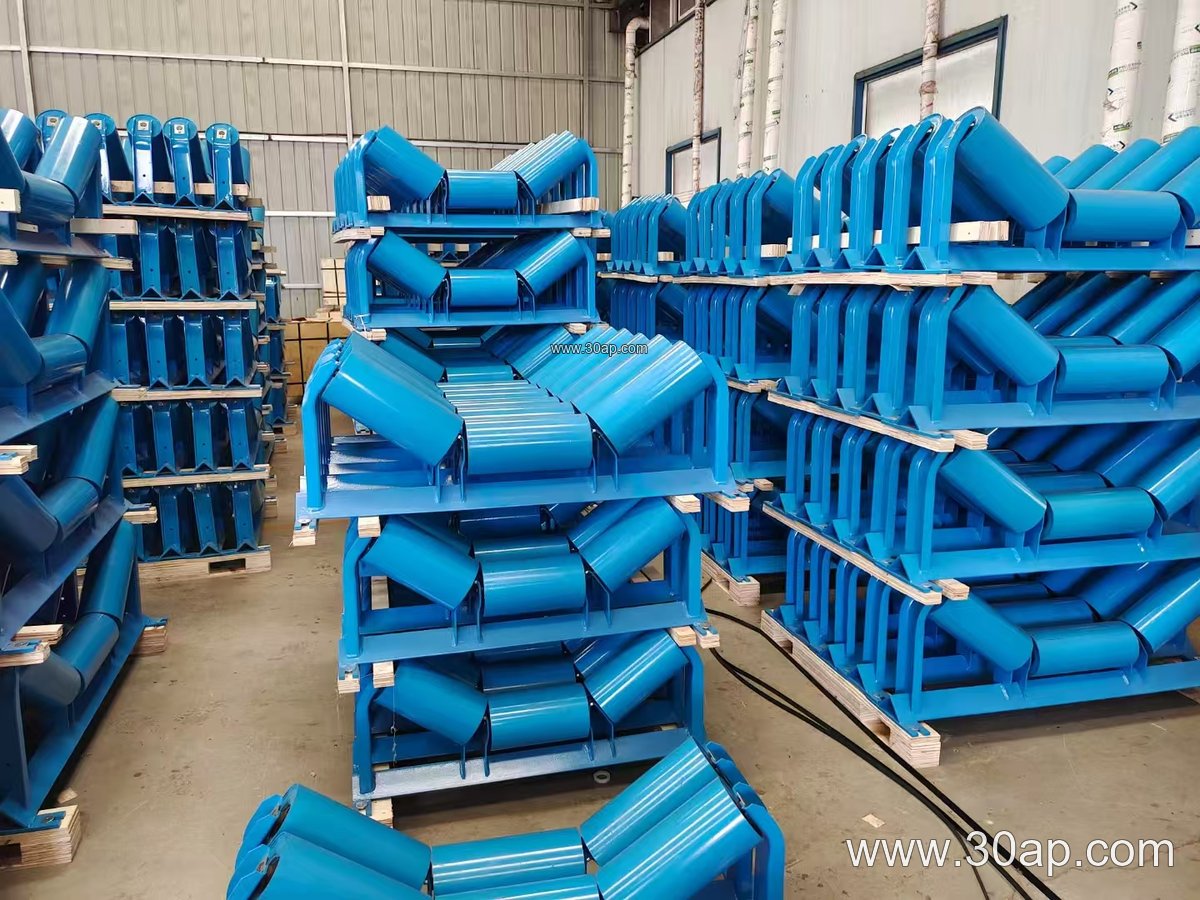
The bracket works together with the conveyor belt, the idler roller and the conveyor pulley to keep the belt running smoothly. For abrasive ore duties, a heavy-duty mining conveyor belt or an abrasion resistant conveyor belt may be paired with robust brackets and rollers. In coal mining, a flame retardant conveyor belt or PVG conveyor belt is often specified, while a heat resistant conveyor belt suits hot clinker or sinter service. A steel cord conveyor belt or EP conveyor belt can also run on the same bracket family, provided the roller diameter and frame dimensions match the design.
Reference Dimensions for Selection
The following values are common references only. Actual sizes depend on the conveyor design, load and site conditions.
| Item | Common Reference Values |
|---|---|
| Belt width | B500, B650, B800, B1000, B1200, B1400, B1600, B1800, B2000, B2200 |
| Trough angle | 20, 30, 35, 45 degrees |
| Idler diameter | Ø89, Ø108, Ø133, Ø159, Ø194 |
| Forward lean | about 1.5 to 2 degrees |
A combination such as B800, 35 degrees and Ø108 is a practical example, as is B1200, 45 degrees and Ø133. One belt width is not tied to a single trough angle or roller diameter, and the shaft diameter should be confirmed from the idler and bracket design rather than assumed from belt width.
Buyer Checklist
- Confirm belt width, trough angle and idler diameter before ordering.
- Check the mounting hole pattern and crossbeam length against the frame.
- Ask for the zinc coating thickness and the steel grade used.
- Match the bracket type to its position: carrying, return, transition or impact.
- For corrosive or humid sites, confirm the galvanizing standard and any extra protection.
- Keep spare brackets for wear or damage at loading points.
Whether the plant handles iron ore, copper ore, coal, cement or fertilizer, the right galvanized conveyor bracket keeps rollers aligned, reduces belt edge damage and supports steady operation. Buyers at www.jsconveyor.com can compare bracket types and dimensions with their roller and belt specifications before finalizing an order, and the same approach applies when the line uses a corrugated sidewall conveyor belt or a pipe conveyor belt.