What a Power Plant Conveyor Pulley Does
In a coal-fired power station, the conveyor system is the lifeline between the stockyard, the crusher house, and the boiler bunkers. At the heart of that system sits the power plant conveyor pulley, the rotating drum that transmits drive force to the belt and keeps it tracking under heavy loads. Without a properly specified pulley, even a premium rubber conveyor belt will slip, misalign, or wear prematurely.
A power plant conveyor pulley is not a single item. It is a family of drums, each with a distinct role. Drive pulleys, also called head or discharge pulleys, deliver torque to the belt. Tail pulleys support the belt at the loading end. Bend pulleys redirect the belt around tensioning arrangements, while take-up pulleys maintain tension. These are separate components, not interchangeable names, and each must be selected for its position in the circuit.
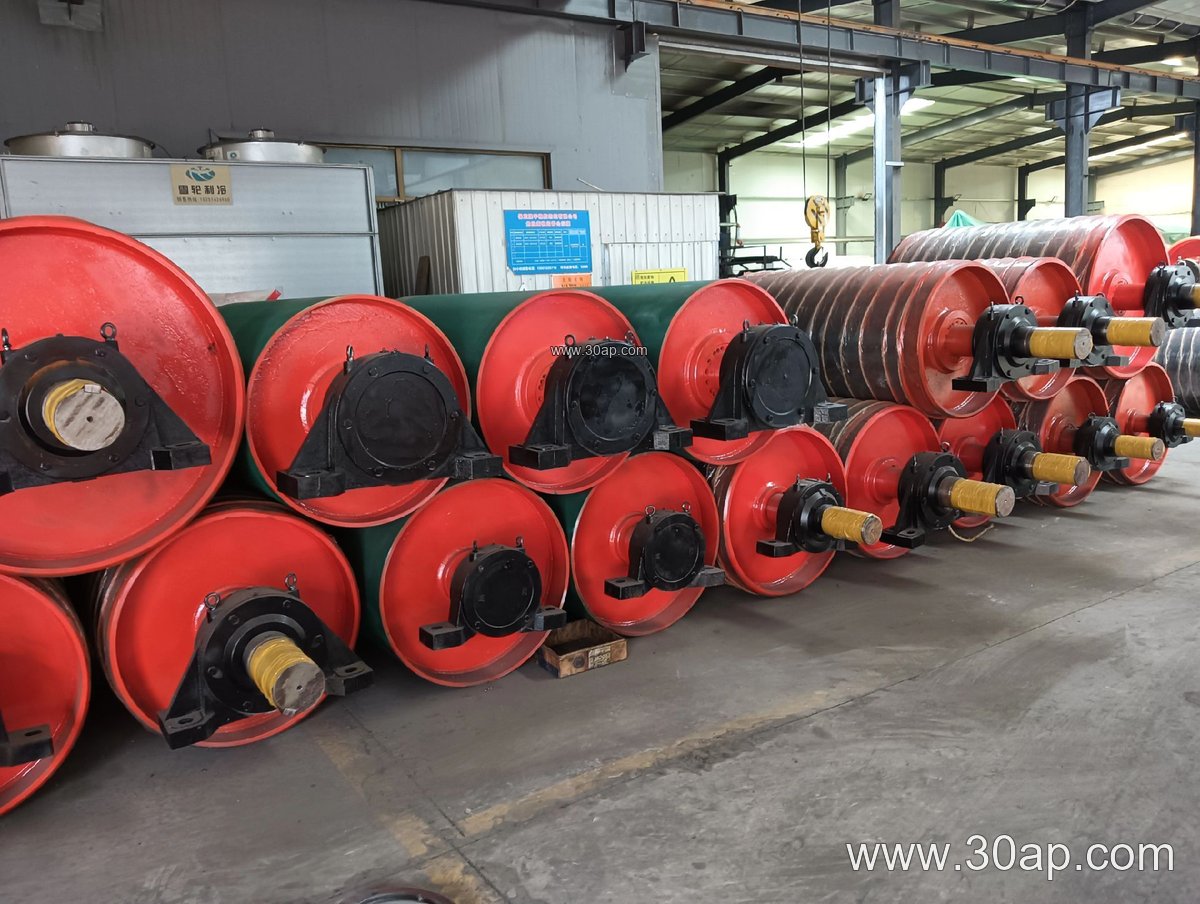
Construction and Surface Options
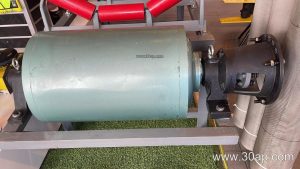
Most pulleys used in coal handling are welded steel drums with a shaft, hub, and bearing assembly. The shell is machined to keep the belt centered, and the ends are fitted with dished or flat plates. Surface treatment matters as much as the shell itself. Plain (smooth) faces suit light-duty return positions. Rubber lagging, applied by cold bonding or hot vulcanizing, improves grip and protects the shell from abrasive coal dust. Diamond or herringbone grooving helps shed water and fines, while ceramic lagging is chosen where slip and wear are severe.
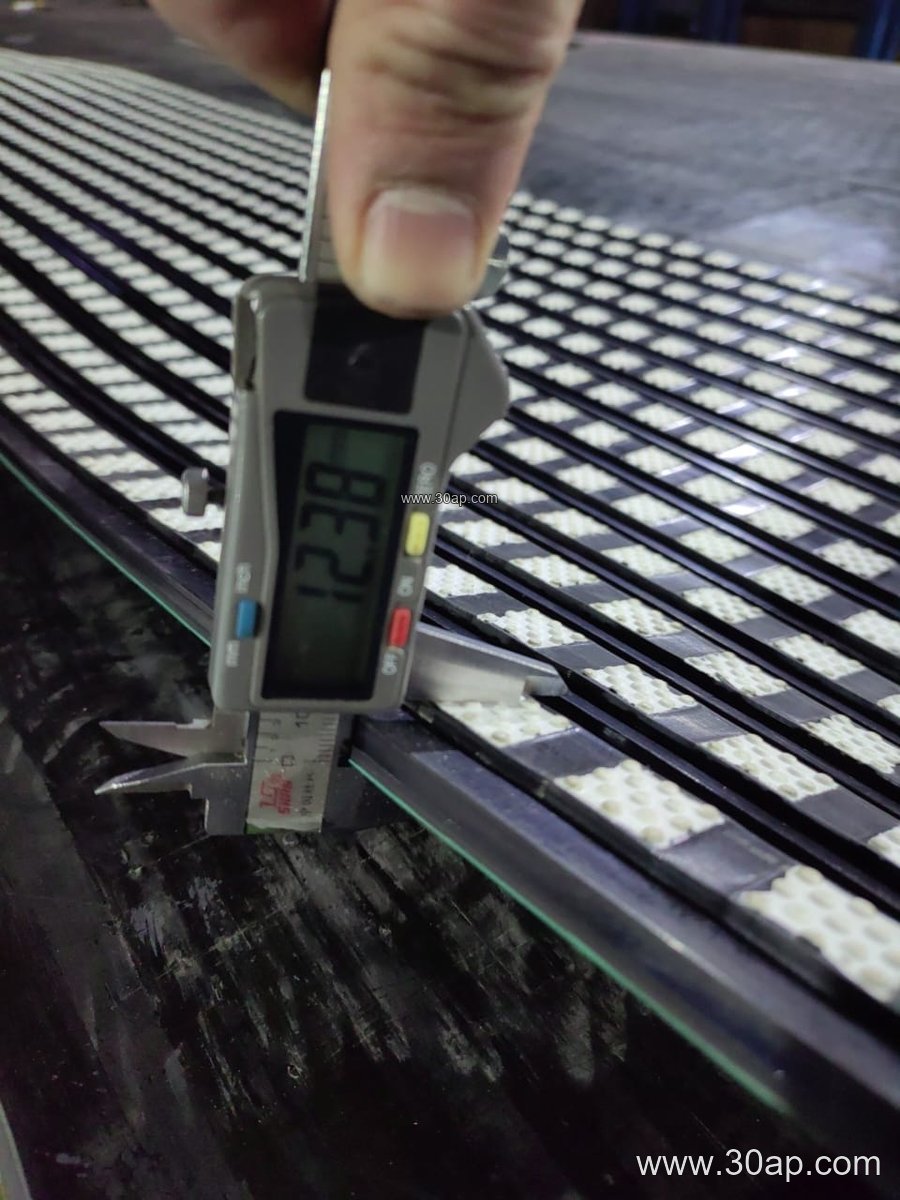
Common lagging thicknesses are 8, 10, 12, 15, and 20 mm. The pulley face width is usually somewhat wider than the belt, for example B800 with roughly 950 mm face, B1200 with about 1400 mm, and B1400 with around 1600 mm. Diameter and shaft size are determined by torque and load, not by belt width alone, so a B1200 belt might run on Ø800 or Ø1000 depending on the drive design.
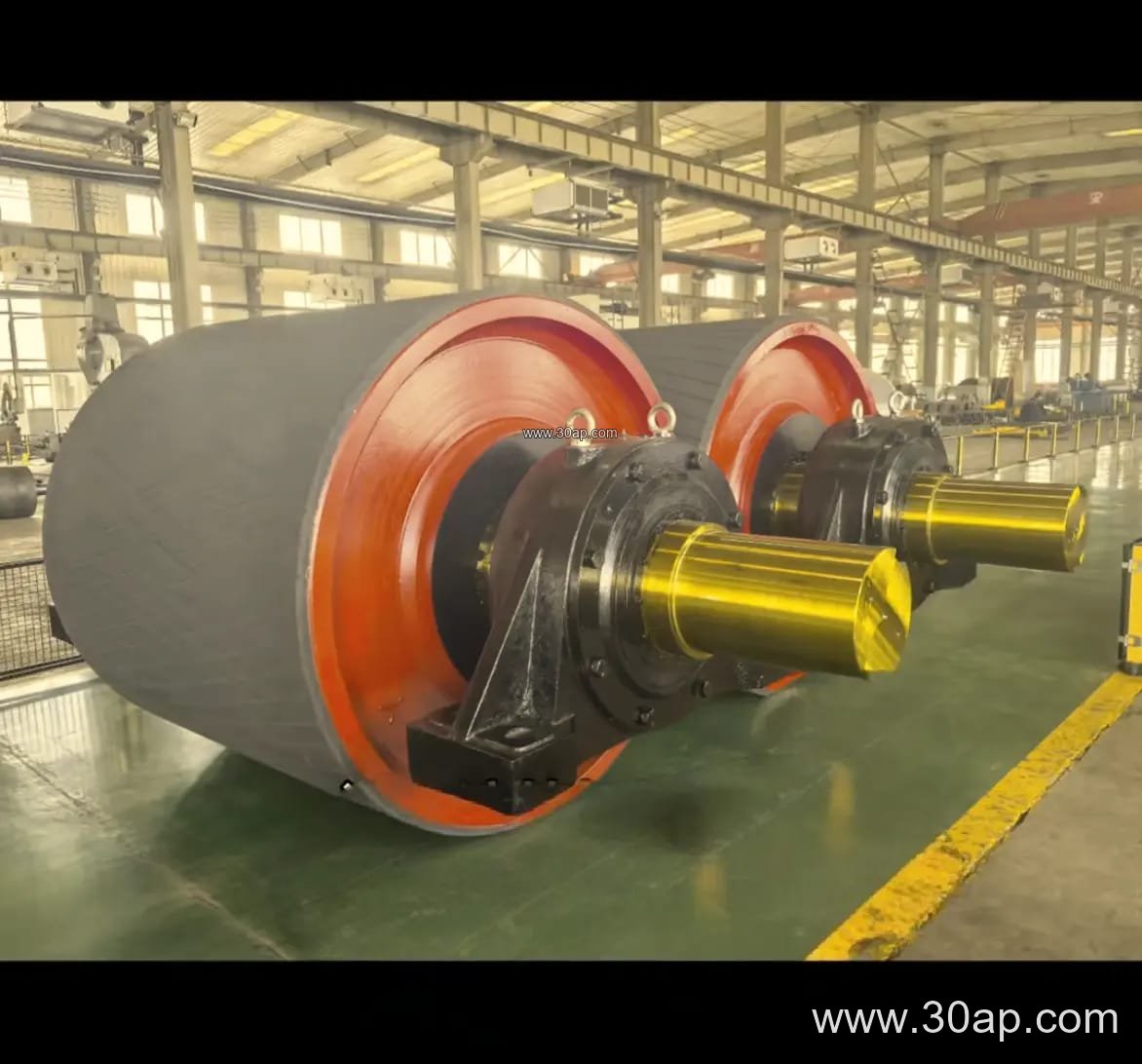
Reference Dimensions for Early Planning
The table below lists commonly seen combinations. Treat these as reference data, not fixed rules or supply promises.
| Belt Width | Typical Pulley Face | Example Diameter | Typical Shaft Range |
|---|---|---|---|
| B500 | about 600 mm | Ø315 to Ø500 | Ø60 to Ø90 |
| B650 | about 750 mm | Ø400 to Ø630 | Ø70 to Ø100 |
| B800 | about 950 mm | Ø500 to Ø800 | Ø80 to Ø120 |
| B1000 | about 1150 mm | Ø630 to Ø1000 | Ø90 to Ø140 |
| B1200 | about 1400 mm | Ø800 to Ø1250 | Ø100 to Ø160 |
| B1400 | about 1600 mm | Ø1000 to Ø1400 | Ø120 to Ø180 |
| B1600 | about 1800 mm | Ø1250 to Ø1600 | Ø140 to Ø200 |
Bearing housings, conveyor brackets, and take-up frames must be matched to the shaft and to the structural steel of the transfer tower. A heavy-duty mining conveyor belt running at high tension will demand a larger shaft than a similar width used on a short yard conveyor.
Where These Pulleys Are Used
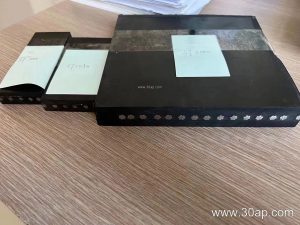
Beyond the boiler house, power plant conveyor pulleys appear in limestone preparation for flue gas desulfurization, in ash handling, and in biomass co-firing lines. The same drum designs serve cement plants moving clinker, iron ore terminals, and quarry conveyor belts feeding crushers. In dusty, corrosive, or flame-sensitive areas, the pulley works alongside a flame retardant conveyor belt or a heat resistant conveyor belt, and lagging selection should reflect that environment.
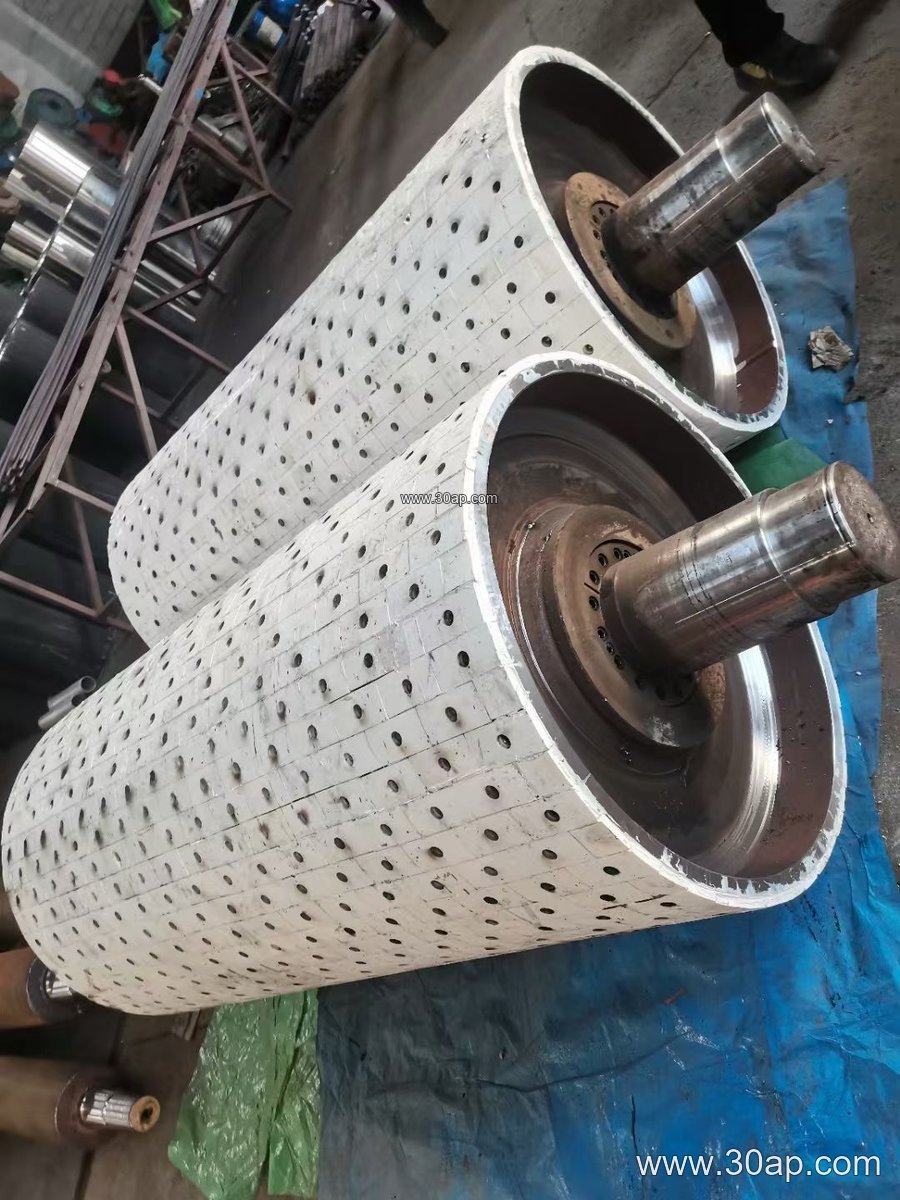
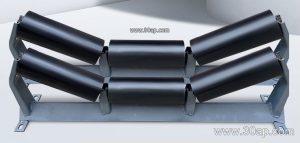
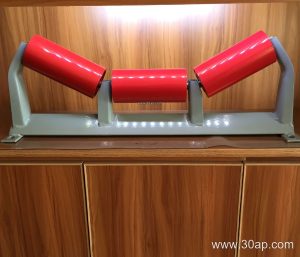
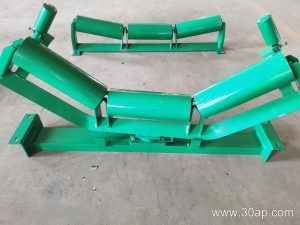
In underground coal mining, compact bend and take-up pulleys are paired with PVG conveyor belts and anti-static belting. On the surface, large drive pulleys move overland coal mining conveyor belt systems where starting torque and belt slip control are critical. Matching the pulley to the conveyor belt, idler roller set, and conveyor bracket layout is a system decision, not a catalog pick.
Buyer Checklist
- Confirm the pulley position and duty: drive, tail, bend, take-up, or snub.
- State belt width, belt type (EP, NN, steel cord), and maximum operating tension.
- Specify lagging form and thickness, plus whether grooving or ceramic is required.
- Provide shaft diameter and bearing size from the drive calculation, not from belt width.
- Check face width, balance grade, and access for maintenance in the transfer tower.
- Confirm the pulley will not conflict with the conveyor belt path, idler roller spacing, or conveyor bracket clearances.
A well-matched power plant conveyor pulley keeps the belt tracking, reduces downtime, and protects the investment in premium belting. Review the whole conveyor, from the drive drum to the last return roller, before locking in dimensions.