What a Multi-Ply Fabric Core Conveyor Belt Is
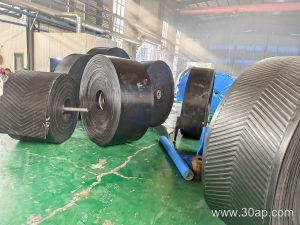
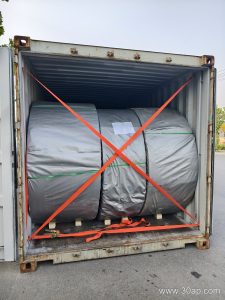
A Multi-Ply Fabric Core Conveyor Belt is a rubber conveyor belt whose load-bearing skeleton is made from several layers of woven fabric, bonded together with rubber and protected by top and bottom cover compounds. The fabric layers, often called plies, give the belt its tensile strength and resistance to impact, while the rubber covers protect the carcass from abrasion, moisture, heat, or oil depending on the compound chosen. In many plants this product is simply called a multi-ply fabric belt or a Fabric Core Conveyor Belt, and it remains one of the most widely used belt constructions for bulk material handling.
The design is different from a Steel Cord Conveyor Belt, where steel wires carry the tension. A fabric carcass is lighter, more flexible, and generally easier to splice, which makes it a practical choice for many conveyor lines in mining, cement, power, quarry, and port operations.
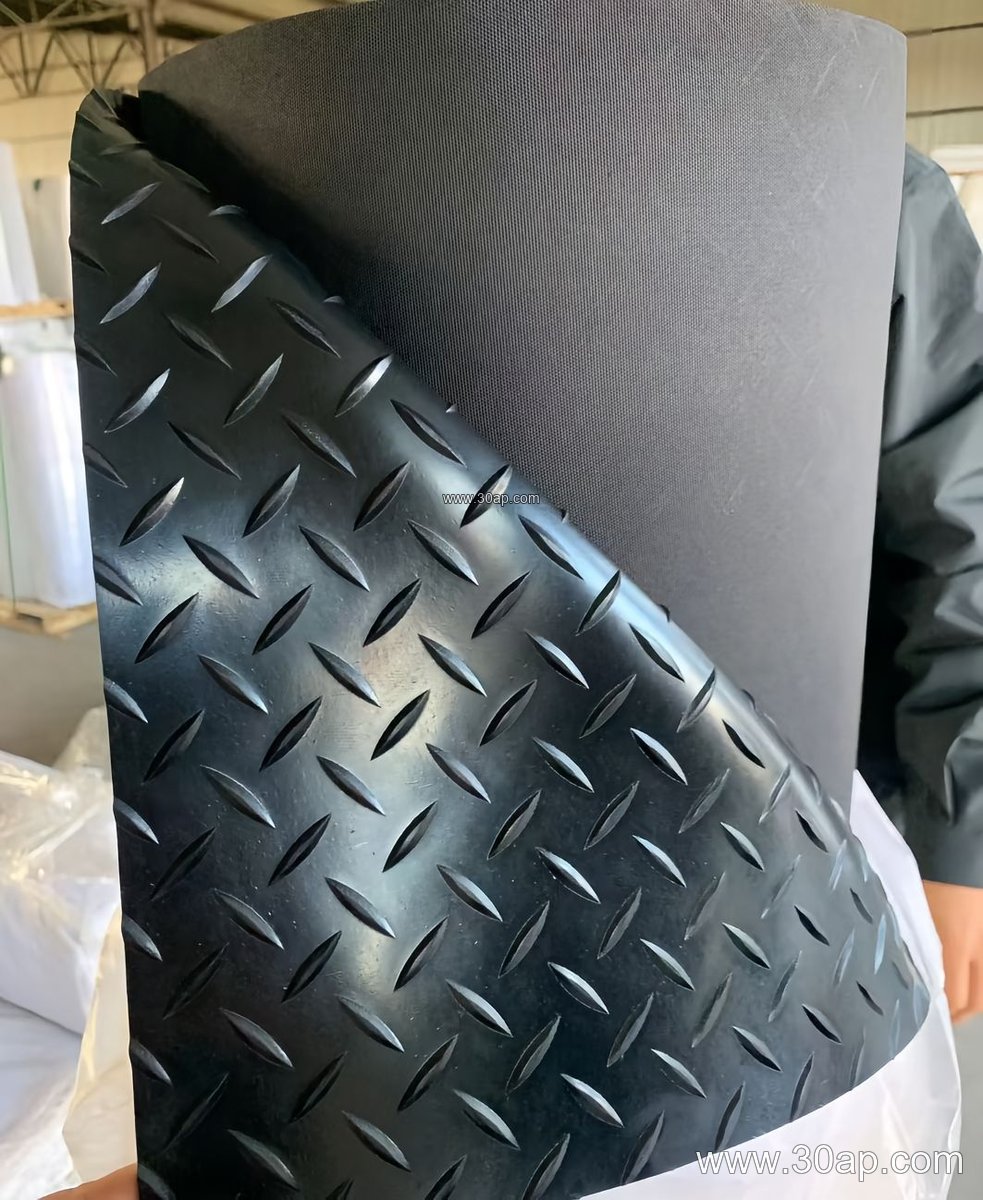
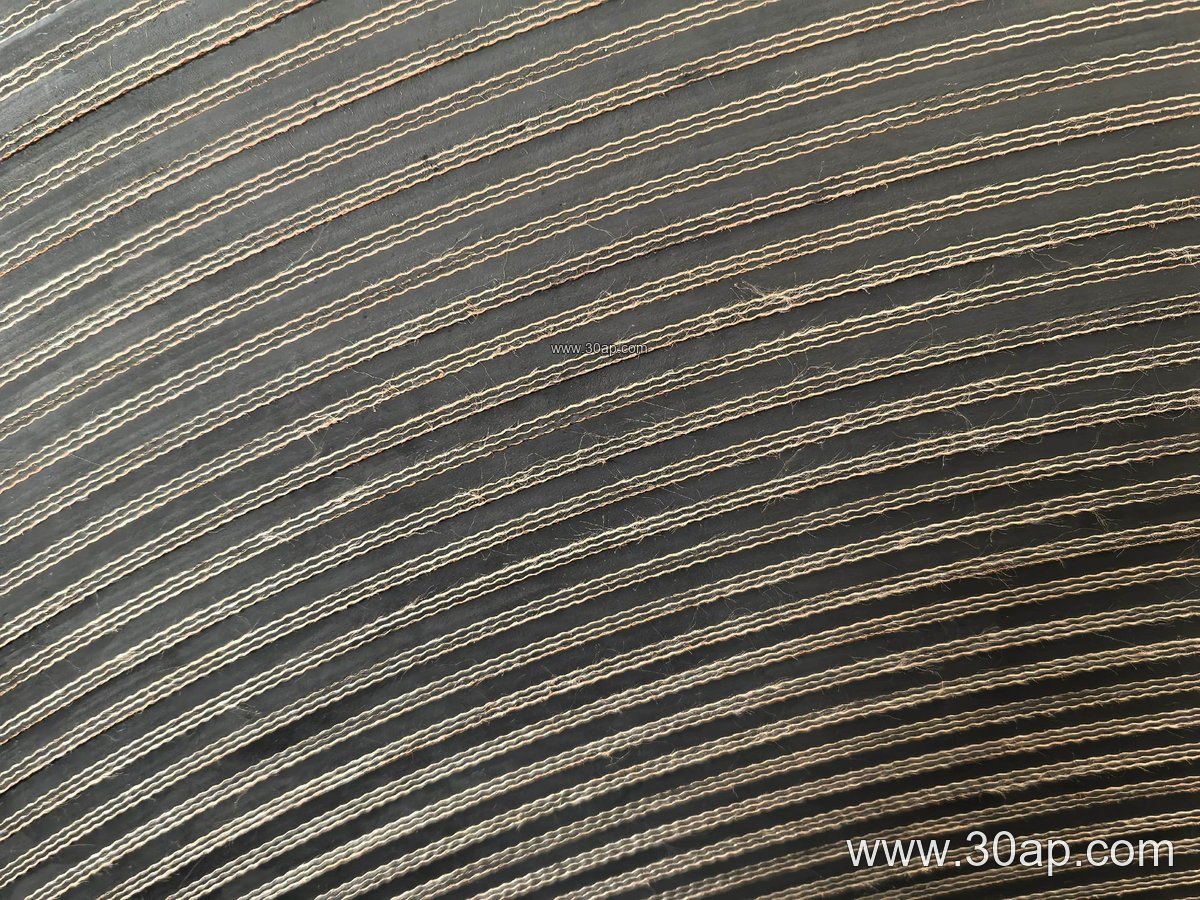
How the Belt Is Built
The carcass usually contains 2 to 6 fabric plies, depending on the required strength and the belt width. EP fabric (polyester warp, nylon weft) and NN fabric (nylon warp, nylon weft) are common carcass materials. EP Conveyor Belt constructions offer low elongation and good dimensional stability, while NN Conveyor Belt grades provide high impact absorption and flexibility. The plies are calendered with rubber, assembled, and then covered with top and bottom rubber layers before vulcanization.
Cover thickness is normally expressed as top plus bottom, for example 3+1.5 mm, 4+2 mm, 5+2 mm, 6+2 mm, or 8+3 mm. These are common reference values, not universal specifications; actual cover thickness should be confirmed with the belt manufacturer for each application.
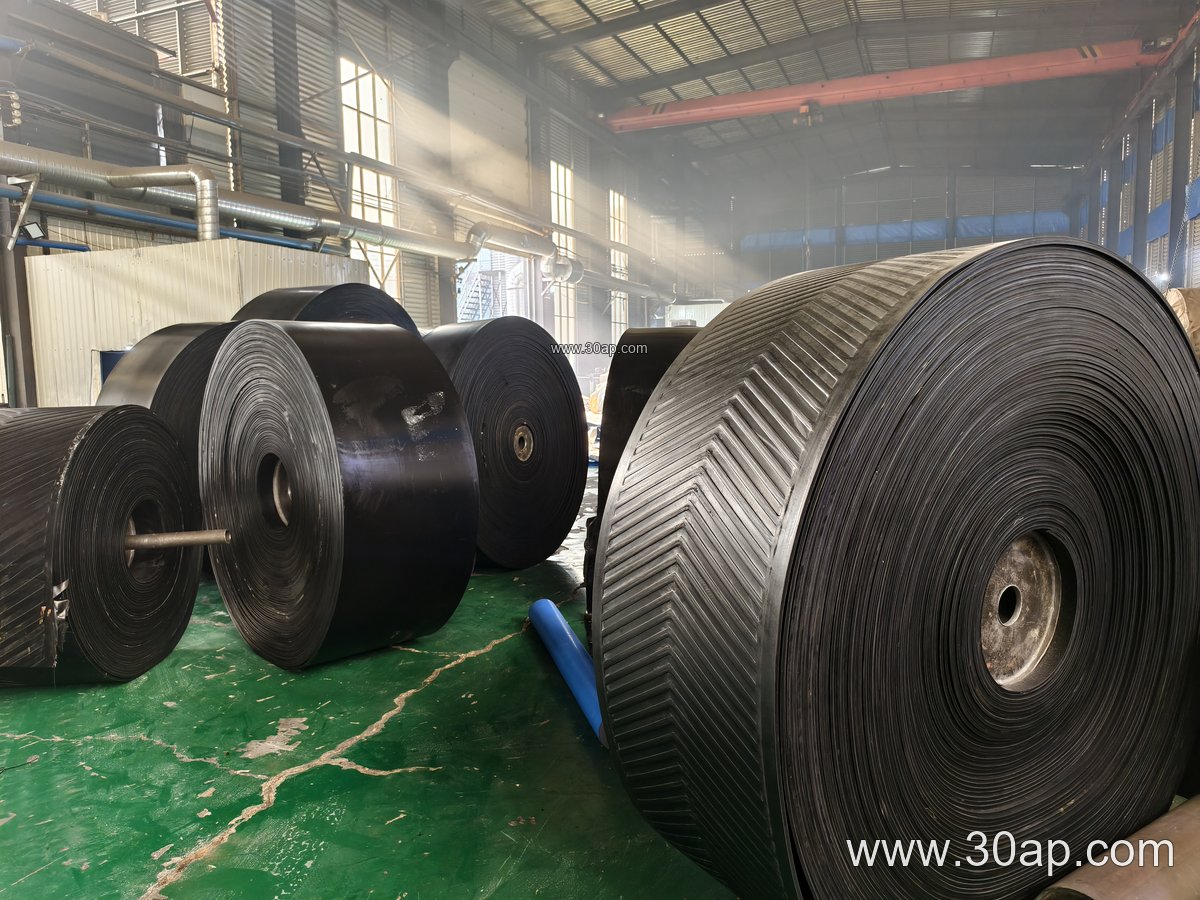
Typical reference data for fabric core belts
| Item | Common reference values |
|---|---|
| Fabric plies | 2 to 6 layers |
| Tensile grades (EP) | EP200, EP315, EP400, EP500, EP630, EP800, EP1000, EP1250, EP1600, EP2000 |
| Belt width | B500, B650, B800, B1000, B1200, B1400, B1600, B1800, B2000 |
| Cover thickness | 3+1.5, 4+2, 5+2, 6+2, 8+3 mm |
These figures are reference data only. A wider belt is not tied to one fixed pulley diameter, and shaft dimensions must be calculated from the full conveyor design, not from belt width alone.
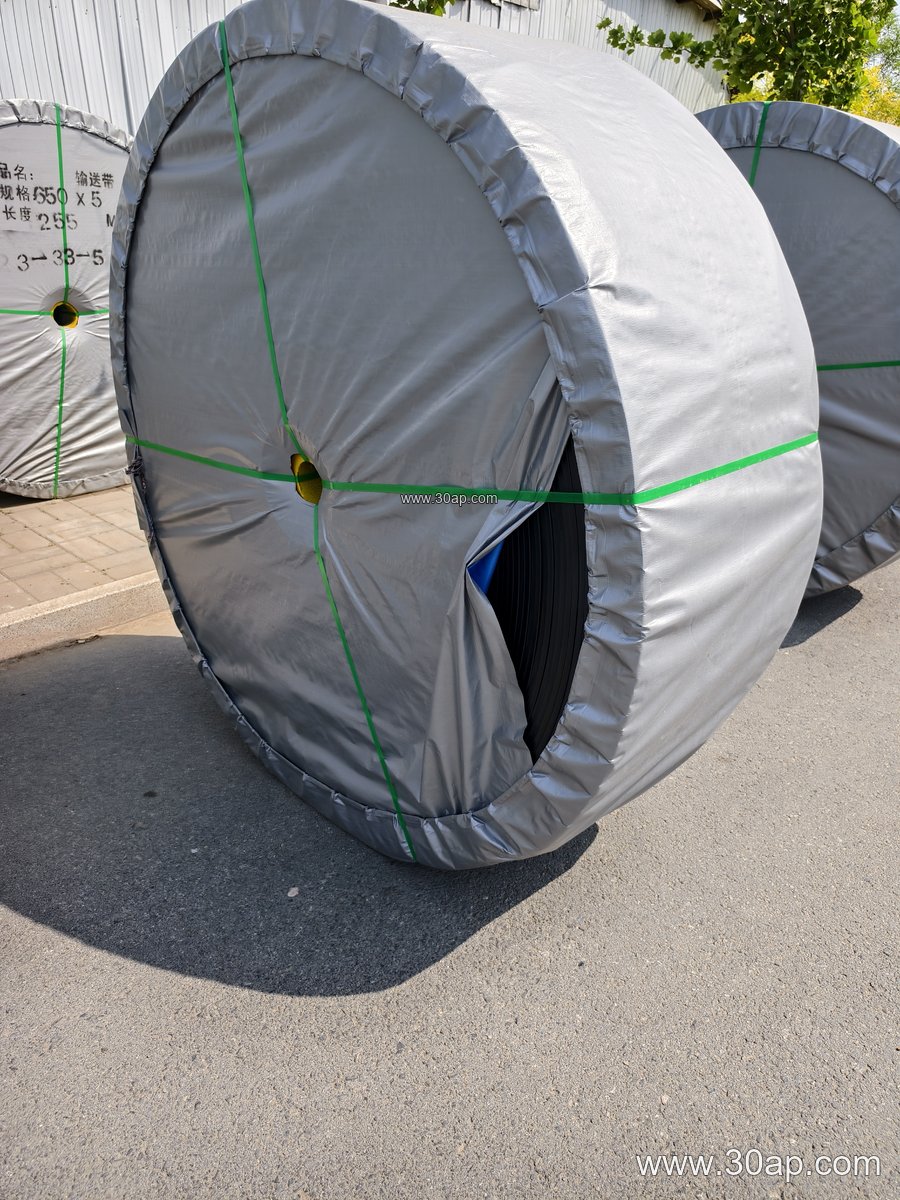
Where It Is Used
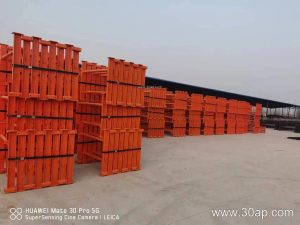
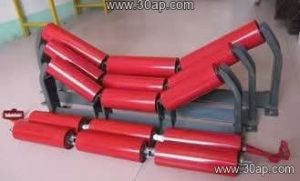
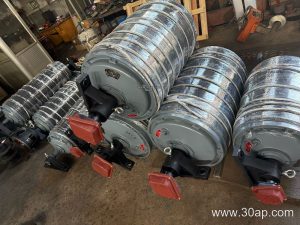
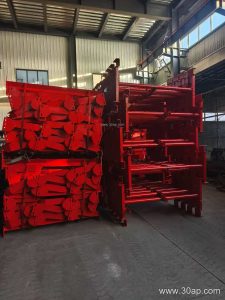
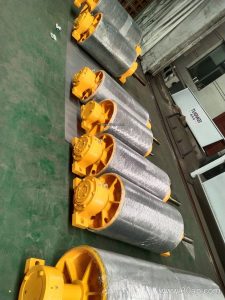
The Multi-Ply Fabric Core Conveyor Belt is common in crushing plants, aggregate yards, cement kilns and clinker lines, coal handling systems, power plant fuel yards, and quarry operations. It handles limestone, coal, clinker, sand, gravel, ore, and other Bulk Material Conveyor Belt duties. In a typical line, the belt runs over idler rollers and around conveyor pulleys, with the drive pulley, tail pulley, and bend pulleys each performing a different function. Conveyor brackets and frames support the whole structure.
For dusty or flammable environments such as Coal Mining Conveyor Belt systems, Flame Retardant Conveyor Belt and Anti-Static Conveyor Belt grades are often specified. For hot clinker or cement, a Heat Resistant Conveyor Belt compound may be needed. Where material is oily, an Oil Resistant Conveyor Belt cover helps protect the carcass. In cold regions, Cold Resistant Conveyor Belt grades keep the rubber flexible.
Buyer Checklist
- Confirm the required tensile grade and number of plies for the duty, for example EP630 or EP1000, rather than choosing by width alone.
- Match cover compound to the material: Abrasion Resistant Conveyor Belt covers for sharp rock, Heat Resistant Conveyor Belt covers for hot loads, and Flame Retardant Conveyor Belt covers for underground or coal work.
- Check belt width against the conveyor frame and pulley face, not against a single fixed shaft size.
- Review splice method and pulley compatibility with the belt supplier before ordering.
For a reliable conveyor belt selection, buyers should share the material type, lump size, capacity, ambient conditions, and pulley layout with the supplier. A well-matched Multi-Ply Fabric Core Conveyor Belt can deliver long service life across mining, cement, power, and quarry applications.