What a Fixed Conveyor Bracket Does
A fixed conveyor bracket is the stationary support that holds idler rollers at a set position under or over a conveyor belt. Unlike an adjustable bracket, its trough angle and roller spacing are locked at the factory or at assembly, so the belt profile stays constant along the run. In a quarry, a cement plant, or a coal handling line, these brackets are the quiet reason a belt tracks straight and the material stays centered.
The product is also called a fixed idler bracket or a fixed roller support frame. It is not a pulley component; drive, tail, and bend pulleys serve different duties and are mounted on separate structures. The bracket works with conveyor pulley systems and idler rollers, but it does not replace them.
How the Bracket Is Built
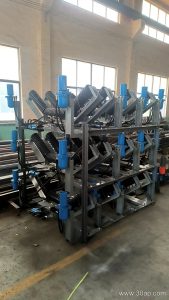
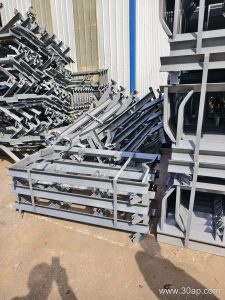
Most fixed brackets start as angle steel, channel steel, or folded steel plate. The frame is drilled or punched for idler shafts, then welded and coated. The trough angle is formed into the side wings, so a 35-degree bracket holds three rollers in a fixed V shape across the belt.

- Material: angle steel, channel steel, or bent plate
- Common trough angles: 20, 30, 35, and 45 degrees
- Roller diameters used with these frames: Ø89, Ø108, Ø133, Ø159, Ø194 mm
- Mounting hole spacing and beam length vary with belt width and trough angle
A fixed bracket may be a carrying bracket on the top run, a return bracket below, or a transition frame near a pulley. Forward-leaning versions, usually around 1.5 to 2 degrees, are a separate design choice and should not be confused with the fixed trough frame itself.
Matching Belt Width and Roller Size
Buyers often ask for a bracket by belt width alone. That is a starting point, not the whole answer. The frame must match the idler shaft, the trough angle, and the load. A B800 belt with 35 degrees and Ø108 rollers is a common arrangement, and a B1200 line may run 45 degrees with Ø133 rollers. Neither combination is a rule, and one belt width can work with more than one roller diameter.
| Belt width | Typical trough angle | Typical roller diameter |
|---|---|---|
| B500 | 20-30 degrees | Ø89 mm |
| B650 | 30-35 degrees | Ø89-Ø108 mm |
| B800 | 35 degrees | Ø108-Ø133 mm |
| B1000 | 35-45 degrees | Ø108-Ø133 mm |
| B1200 | 35-45 degrees | Ø133-Ø159 mm |
| B1400 | 35-45 degrees | Ø133-Ø159 mm |
| B1600 | 45 degrees | Ø159-Ø194 mm |
| B1800-B2000 | 45 degrees | Ø159-Ø194 mm |
These values are reference points, not verified supply promises. Final dimensions are set by design, and the mounting hole distance should be confirmed against the idler drawing before ordering.
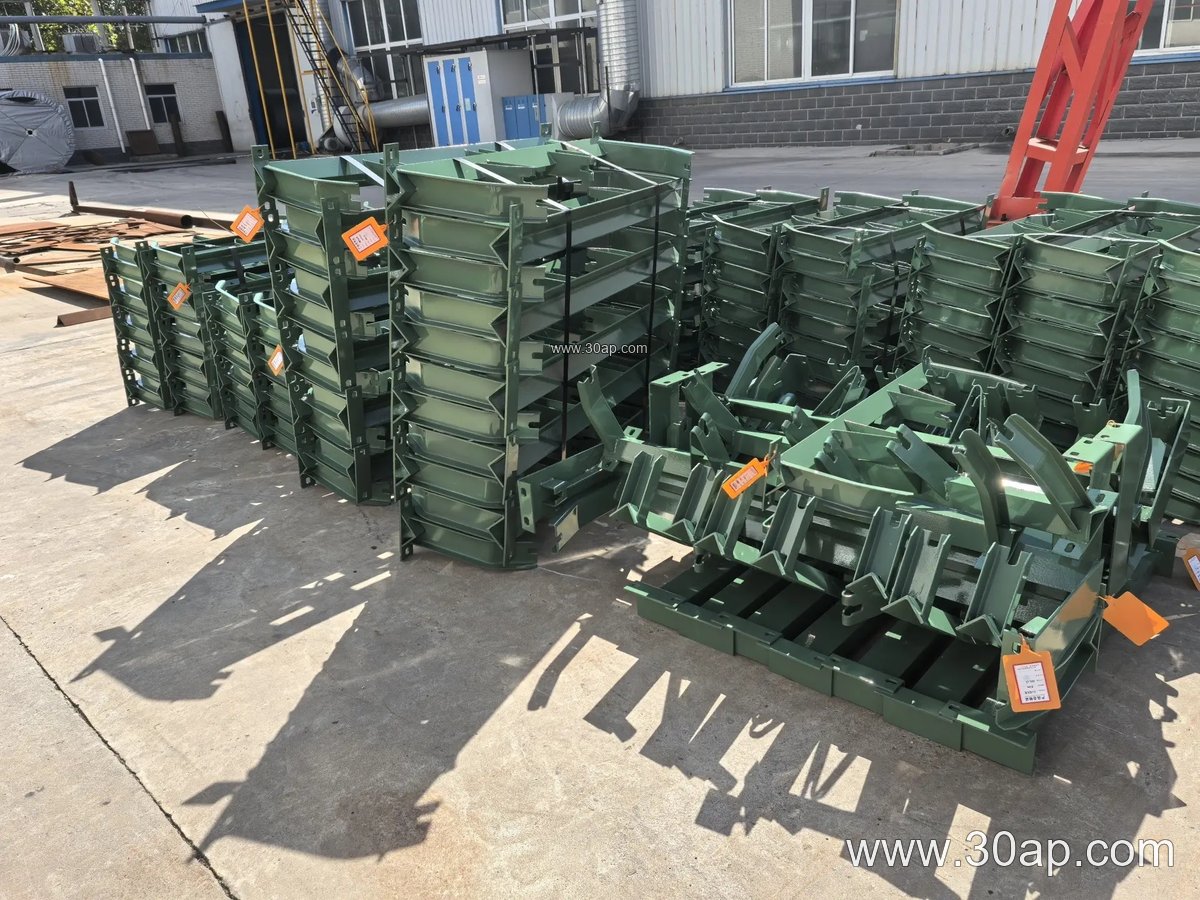
Where Fixed Brackets Are Used
In a limestone mine or a stone crushing line, fixed carrying brackets keep a heavy EP conveyor belt in a stable trough as rock moves from the crusher. In a power plant coal yard, the same frame supports idlers under a flame retardant belt on a long transfer run. Because the bracket does not move, it suits lines where the belt path is fixed and maintenance access is planned.
Where belt loading shifts or the belt needs tuning, an adjustable bracket or a self-aligning frame may be a better fit. That is a comparison, not a substitution: the fixed bracket remains the standard choice for steady, well-aligned runs.
Buyer Checklist
- Confirm belt width, such as B650, B1000, or B1400
- State the trough angle and whether it must be fixed
- Give the idler shaft size and roller diameter
- Check mounting hole spacing and beam length against the drawing
- Match the frame coating and steel thickness to the site conditions
- Confirm whether the frame is for the carrying side, return side, or transition zone
A fixed conveyor bracket is a small part of a belt conveyor, but it decides how evenly the belt sits on its idlers. Get the frame, the roller, and the conveyor belt working as one set, and the line runs quieter in the quarry, the cement plant, or the coal yard.