What a Carbon Steel Conveyor Bracket Does
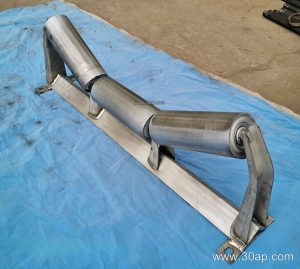
A carbon steel conveyor bracket is the structural part that holds idler rollers at the correct position under or over the conveyor belt. It carries the weight of the belt and the material, keeps the trough shape stable, and transfers load into the conveyor frame. In a quarry or a cement plant, this component is often the quiet reason a line runs straight instead of drifting and spilling.
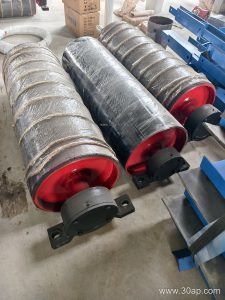
The same item is also called a carbon steel idler bracket or carbon steel roller support bracket. It is a supporting part, not a pulley, and it should not be confused with a drive pulley, tail pulley, or bend pulley. Those are separate components with separate duties.
How the Bracket Is Built
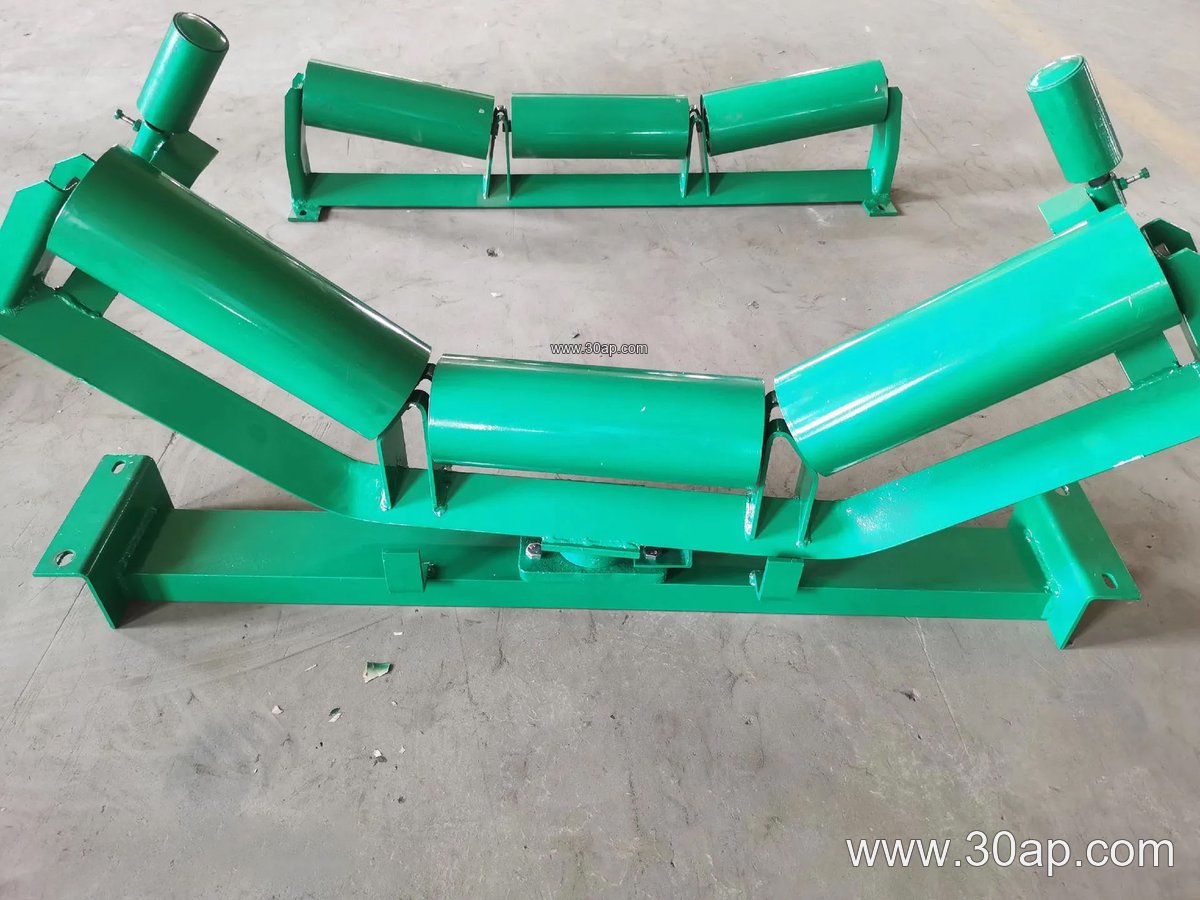
Most brackets are fabricated from angle steel, channel steel, or folded steel plate. The material is cut, punched, and welded into a frame that matches the belt width and the required trough angle. Mounting slots are positioned so the idler shaft sits at the right height and spacing. After welding, a paint or coating step protects the surface from dust and moisture common in aggregate and power plant service.
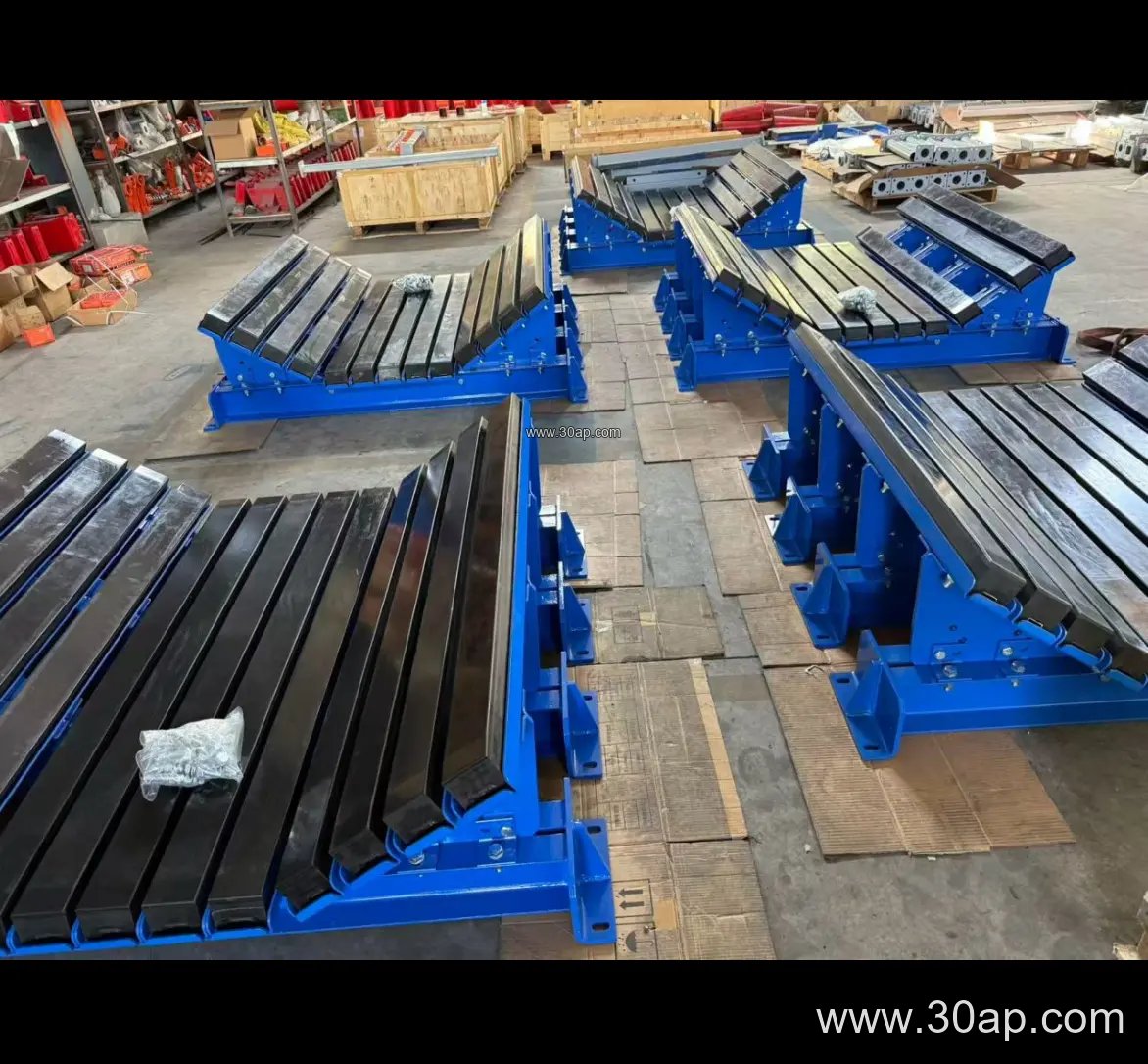
Common forms include trough brackets for the carrying side, transition brackets near pulleys, return brackets for the lower strand, V-return brackets, impact brackets under loading points, and self-aligning brackets that help correct belt drift. Adjustable versions let maintenance teams change the trough angle without replacing the frame.
Typical Sizes and Reference Data
The table below shows reference combinations often seen in design drawings. These are examples, not fixed rules, and the final match depends on belt width, load, and idler diameter chosen by the conveyor designer.
| Belt Width | Trough Angle | Idler Diameter | Typical Bracket Type |
|---|---|---|---|
| B650 | 30 degrees | Ø89 | Trough bracket |
| B800 | 35 degrees | Ø108 | Trough bracket, transition bracket |
| B1000 | 35 degrees | Ø108 / Ø133 | Trough bracket, impact bracket |
| B1200 | 45 degrees | Ø133 | Trough bracket, self-aligning bracket |
| B1400 | 35 degrees | Ø159 | Trough bracket, return bracket |
| B1600 | 45 degrees | Ø159 / Ø194 | Heavy trough bracket |
| B1800 | 35 degrees | Ø194 | Trough bracket, V-return bracket |
Installation hole spacing and crossbeam length change with belt width and trough angle, so these values should always be confirmed against the frame drawing rather than assumed.
Where Carbon Steel Conveyor Brackets Are Used
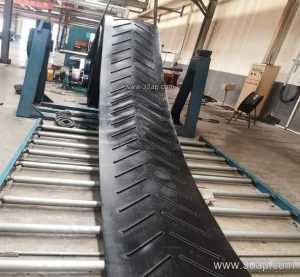
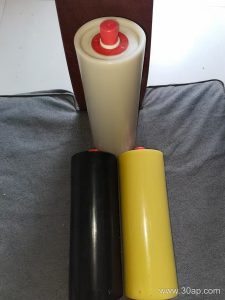
These brackets appear in stone crushing lines, cement plants, and coal handling systems at power stations. A typical installation works together with a conveyor belt, conveyor idler rollers, and a conveyor pulley at each end. In a copper ore or iron ore concentrator, heavy trough brackets support rollers under a steel cord conveyor belt or a high strength fabric belt. In a coal washing plant, flame retardant and anti-static belt grades are common, and the brackets must stay aligned to avoid edge damage.
Port loading systems and bulk material terminals also rely on these frames, often with a wide belt such as 1800mm or 2000mm. The bracket design follows the belt, not the other way around.
Choosing Between Fixed and Adjustable Designs
Fixed brackets are simple and rigid, which suits steady load zones. Adjustable brackets allow the trough angle to be set between common values such as 20, 30, 35, and 45 degrees, and are useful during commissioning or when material flow changes. Forward-leaning brackets, usually around 1.5 to 2 degrees, are used to encourage self-training of the belt.
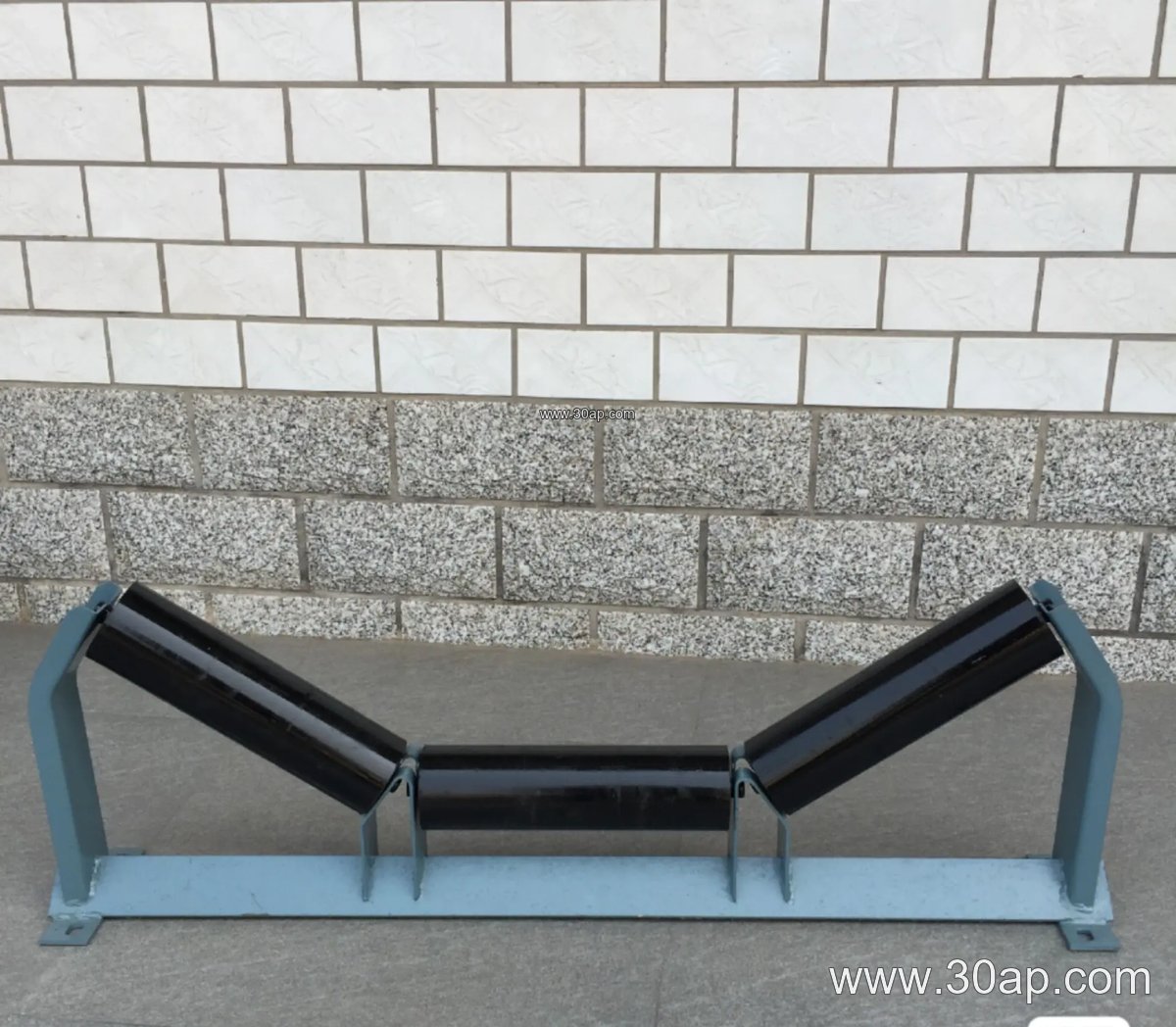
A buyer should check the steel thickness, welding quality, hole tolerance, and coating before ordering. Matching the bracket to the actual idler diameter, belt width, and frame hole pattern matters more than any single catalogue number.
Maintenance Notes
Inspect brackets for bent crossbeams, worn slots, and loose bolts. A misaligned bracket can cause belt edge wear, material spillage, and early idler failure. Keep spare brackets for the most loaded positions so a damaged unit does not stop the line.
For related components such as rubber conveyor belt, EP conveyor belt, NN conveyor belt, and steel cord conveyor belt, choose grades that match the bracket load and the site conditions. A well-matched carbon steel conveyor bracket keeps the whole conveyor train stable.