What the Tail Pulley Does on a Belt Conveyor
The belt conveyor tail pulley sits at the return end of the conveyor, where the belt completes its loop and starts its journey back to the head. Its main job is to support and guide the conveyor belt at that turning point. On many conveyors it also carries the tensioning system, which keeps the belt tight enough to transmit drive force without slipping. Because of this dual role, the tail pulley is often called the return pulley or tension pulley, depending on how it is mounted. It is not a drive pulley; the drive pulley is the powered one at the head. It is not a bend pulley either, since a bend pulley only changes belt direction without tensioning. Keeping these roles separate matters when you order spare parts or plan a rebuild.
Construction Details That Affect Performance
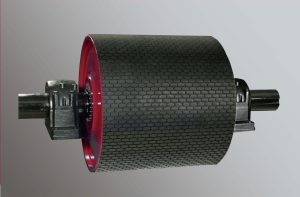
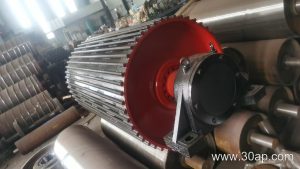
A typical tail pulley is built around a steel drum with end discs, a shaft, and bearing housings. The shell may be machined from pipe or rolled plate. Surface finish ranges from plain steel to rubber lagging. Common lagging options include cold bonded rubber, hot vulcanized rubber, diamond grooved rubber, herringbone rubber, and ceramic lagging. Plain surface is often chosen for light duty or where material build-up is not a problem.
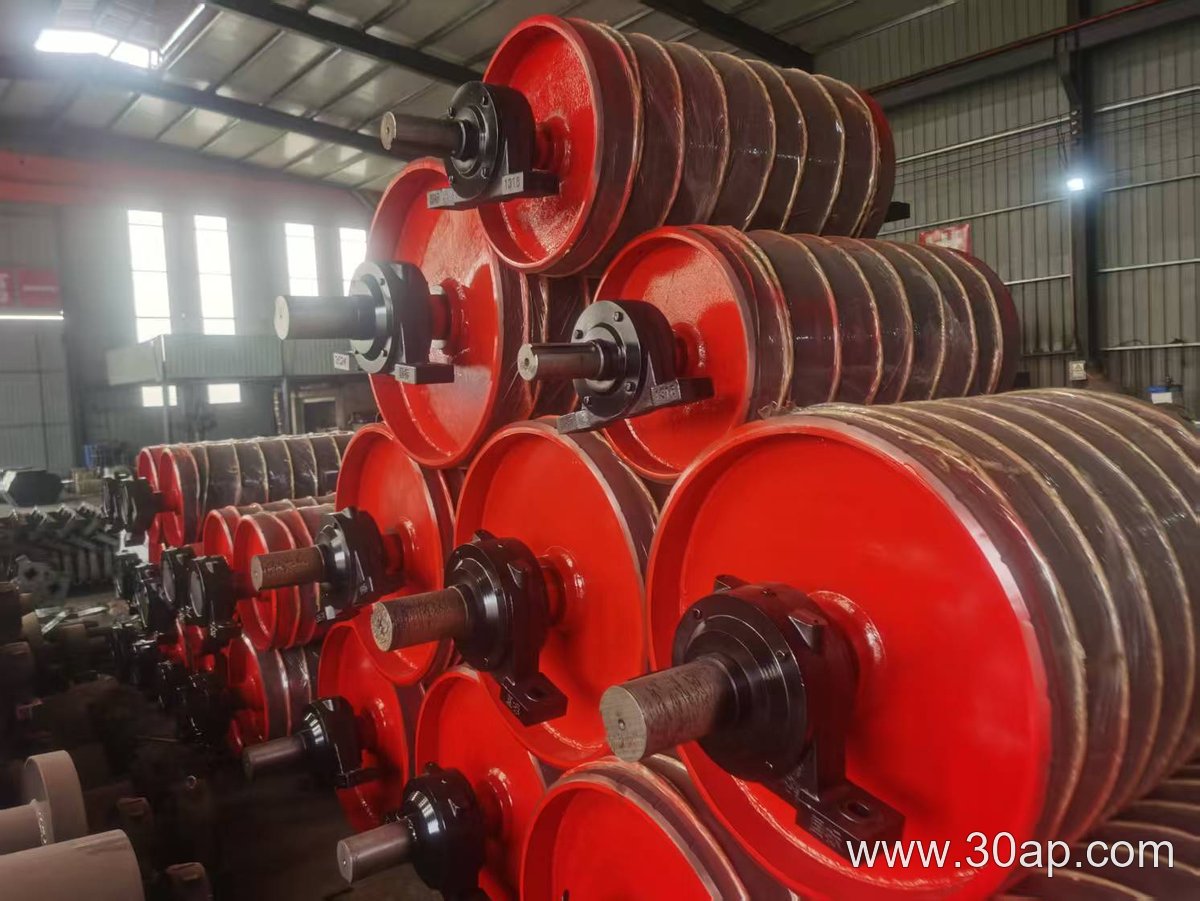
Diameter and face width follow the conveyor design. For example, B800 belt may run over a Ø500 tail pulley with a face width near 950 mm, while a B1200 conveyor might use a Ø1000 tail pulley with a face width around 1400 mm. These pairings are common reference points, not fixed rules. A smaller diameter can be used if the belt construction and tension allow it, and a larger one may be needed to reduce belt bending stress. Shaft diameter is selected from torque and load calculations, not from belt width alone. Typical shaft sizes include Ø50, Ø60, Ø70, Ø80, Ø90, Ø100, Ø120, Ø140, Ø160, Ø180, and Ø200 mm.
Where It Fits in Different Plants
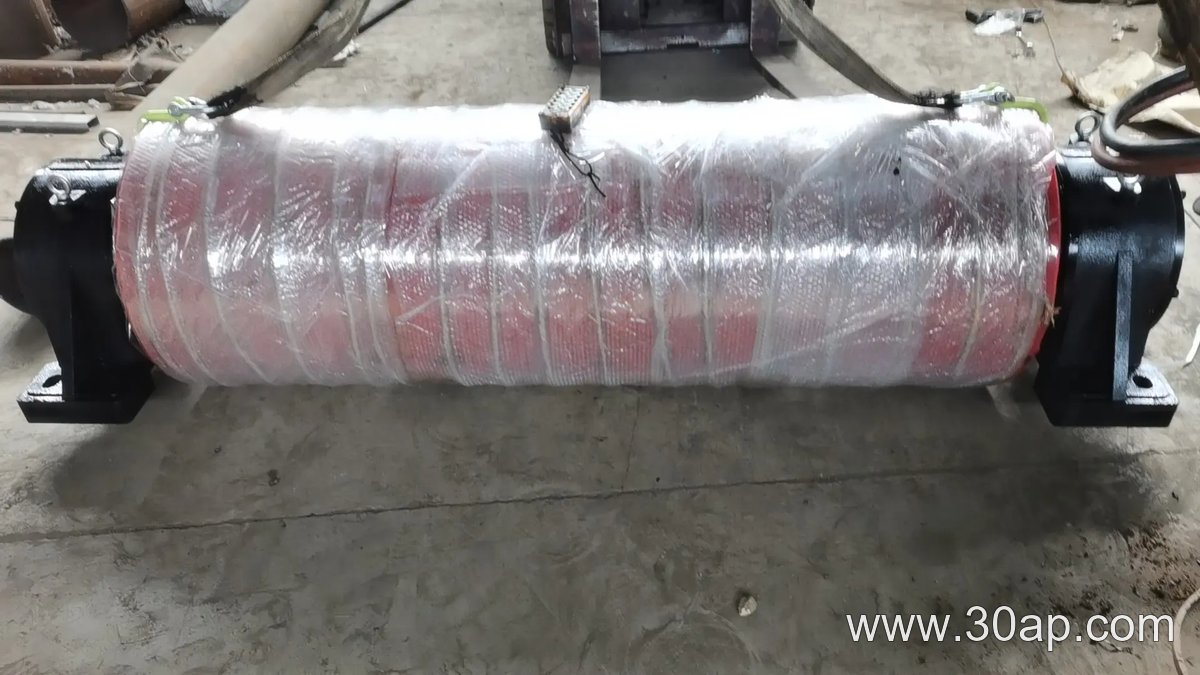
You will find the tail pulley in nearly every continuous bulk handling line. In a crushing and screening circuit, it sits under the crusher discharge or at the start of a transfer conveyor. In a coal washing plant, it helps keep the belt aligned while handling wet, sticky material. In a cement plant, it may be part of a clinker or limestone conveyor. Other common locations include aggregate yards, fertilizer plants, and grain silos. The working environment often decides the surface form: abrasive rock dust favors rubber lagging, while fine powders may run better on a plain or lightly lagged drum.
Selection and Sizing Notes for Buyers
When specifying a belt conveyor tail pulley, start with the belt width and the required take-up travel. Face width is usually wider than the belt. For reference, B400 often matches a face near 500 mm, B500 near 600 mm, B650 near 750 mm, B1000 near 1150 mm, and B1400 near 1600 mm. Diameter should be checked against belt ply, minimum pulley diameter recommended by the belt maker, and the space available for the take-up frame.
Lagging thickness is another choice. Common values are 8, 10, 12, 15, and 20 mm. Thicker lagging lasts longer in abrasive service but adds weight and cost. Bearing type, sealing, and lubrication method also matter in dusty or wet conditions. A conveyor bracket or support frame must match the bearing housing and the take-up mechanism. If the tail pulley is also the tension pulley, confirm the sliding or screw travel and the shaft end design.
Maintenance and Replacement Basics
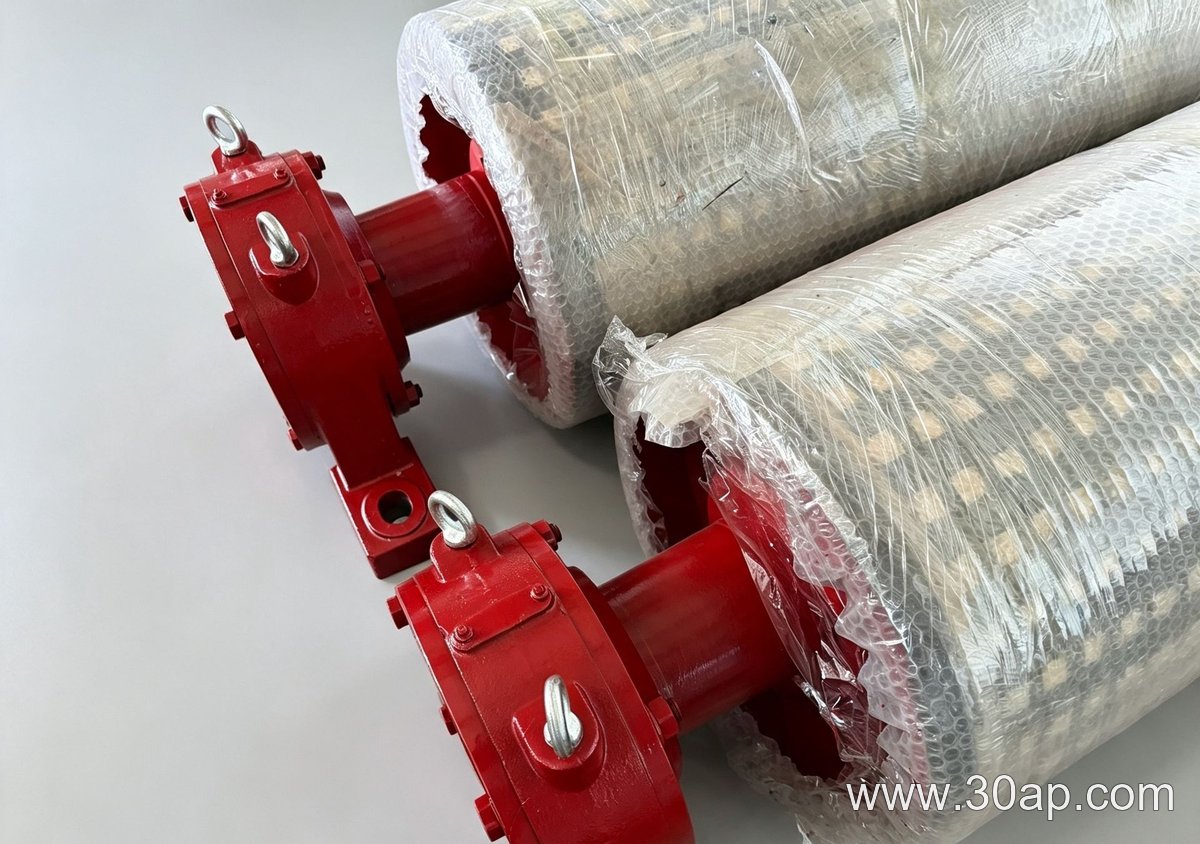
Check the tail pulley for belt tracking, lagging wear, and bearing noise during routine inspections. Misalignment at the tail end often shows up as belt edge wear or material spillage. When lagging wears thin, re-lagging may be possible, but a new drum is sometimes more economical if the shell is also worn. Always confirm the shaft diameter, keyway, bearing number, and face width before ordering. A conveyor pulley that fits the frame but not the belt tension can cause slippage or premature belt failure.
For a reliable replacement, match the tail pulley to the conveyor duty, not just to the belt width. The right combination of diameter, face width, shaft, lagging, and bearing housing keeps the belt running straight and extends service life.