What a Conveyor Belt Self-Aligning Idler Does
A conveyor belt self-aligning idler is a training idler installed on the carrying or return side of a conveyor to keep the belt centered. When a belt drifts toward one side, the self-aligning idler reacts to the misalignment and pivots slightly, steering the belt back toward the centerline. This corrective action happens continuously, without operator input, which is why these units are common on long overland conveyors, stockyard lines, and transfer points where belt wander is difficult to monitor by hand.
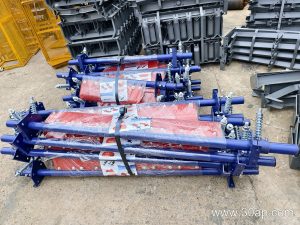
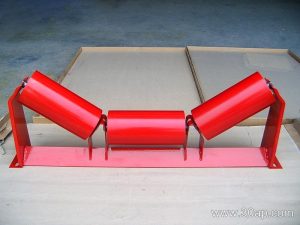
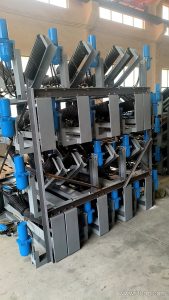
In practice, the device is usually supplied as a self-aligning idler set rather than a single roller. A typical assembly combines two or three idler rollers, a pivoting frame, and a base that mounts to the conveyor bracket. The same product is also described as a self-training idler or belt training idler, and those names refer to the same function. It should not be confused with a drive pulley, tail pulley, or bend pulley, which transmit power or change belt direction rather than correct tracking.
How the Assembly Is Built
Most designs use a vertical pivot at the center of the frame. Friction against the moving belt creates a small turning moment when the belt is off-center, and the frame rotates until the rollers guide the belt back. Friction self-aligning and conical self-aligning versions use slightly different roller profiles to strengthen that response. Return-side training units often take a V-shaped or flat arrangement, while carrying-side units usually follow a three-roll troughing layout.
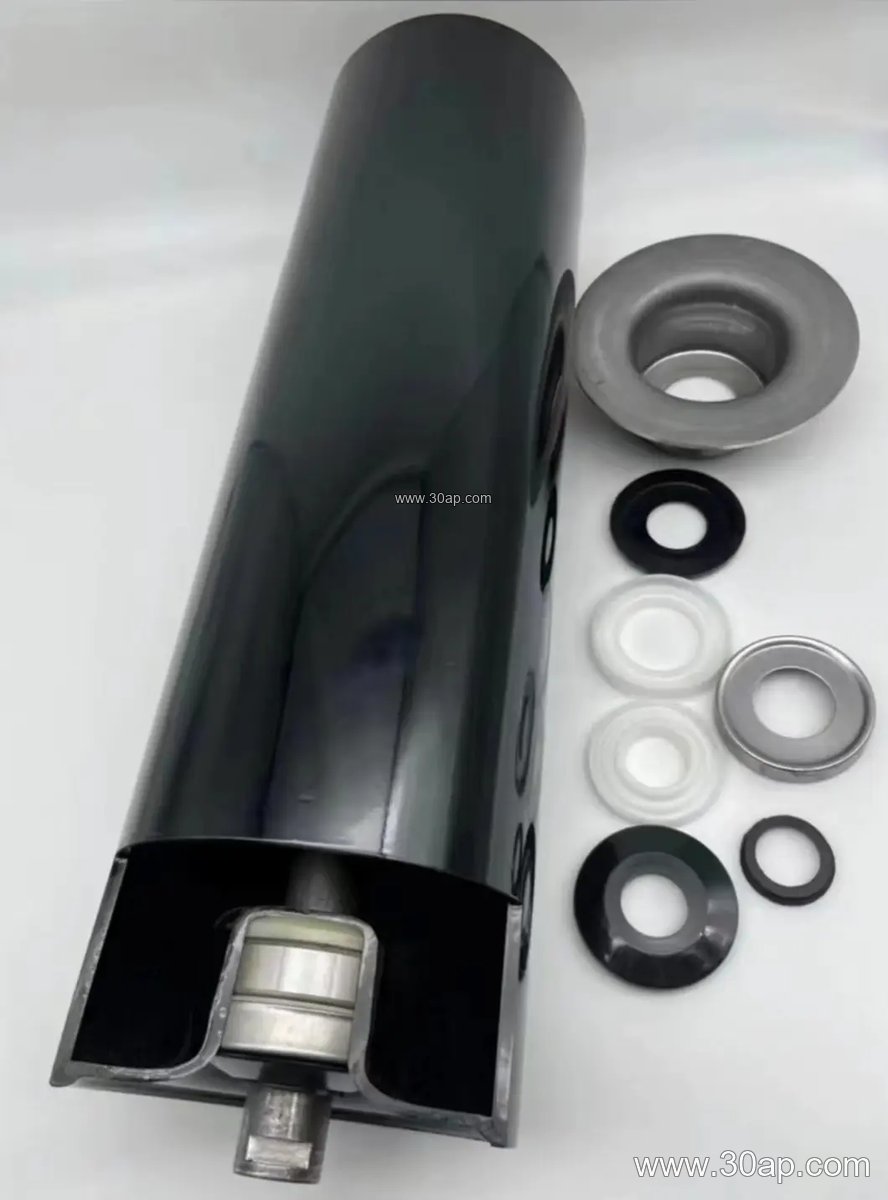
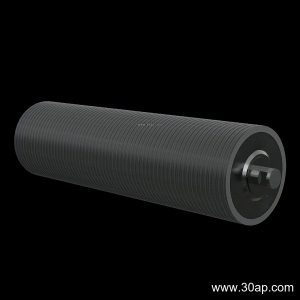
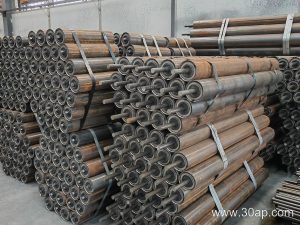
Roller shells are commonly steel tube, and nylon, rubber ring, or ceramic surfaces appear where abrasion or material build-up is a concern. Bearings are typically sealed deep-groove types such as 6204, 6205, 6305, 6306, 6308, or 6310, selected according to load and shaft size rather than belt width alone. Common roller diameters include Ø89, Ø108, Ø127, Ø133, and Ø159 mm, with larger sizes used on heavy-duty lines. Trough angles are usually 20, 30, 35, or 45 degrees. Many training idlers are set with a slight forward tilt of about 1.5 to 2 degrees, which helps the rollers generate the correcting force.
Where Self-Aligning Idlers Fit in a Conveyor
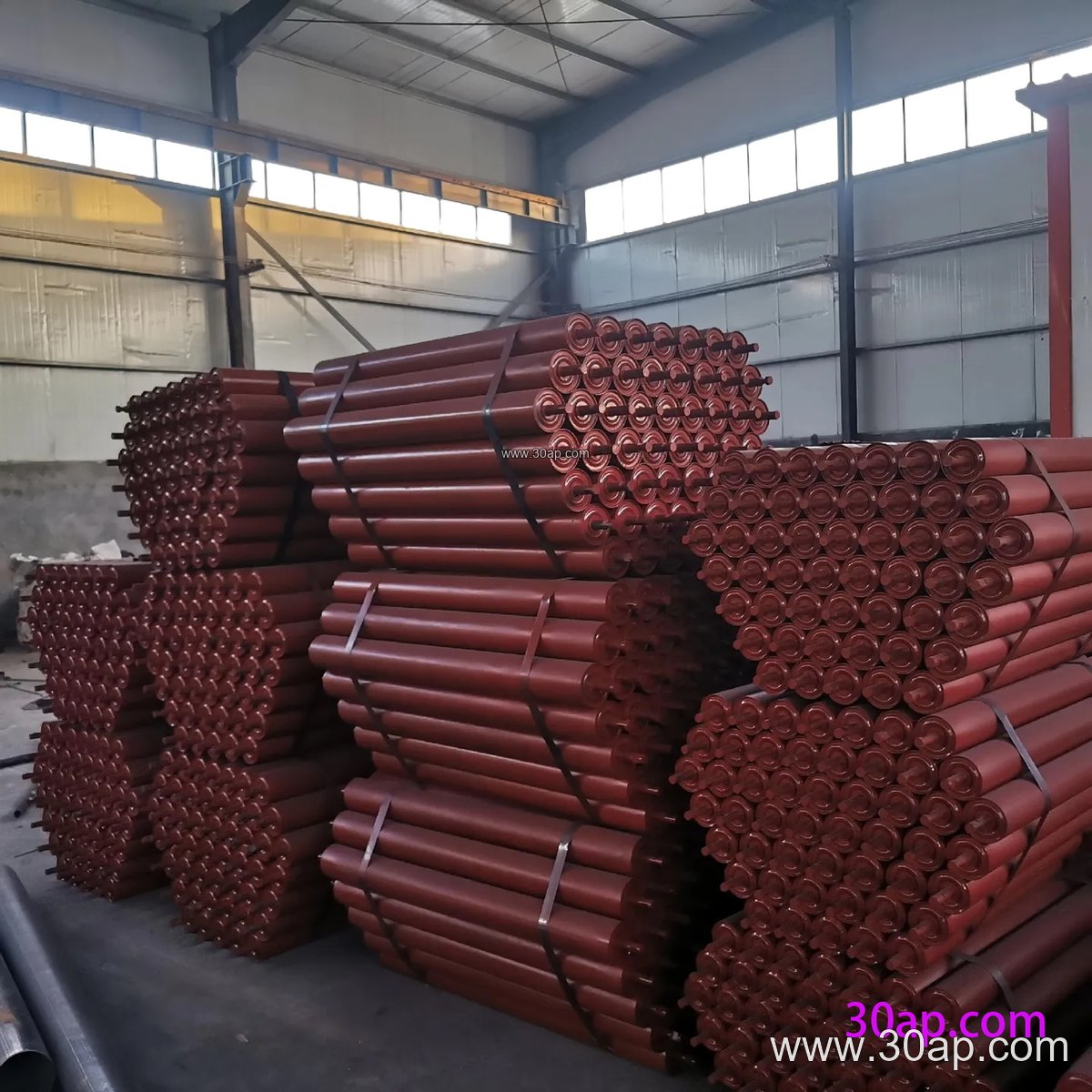
Training idlers are normally placed at intervals along the carrying run, often after curves, at loading zones, and before the head end. On the return run, they are installed to control the belt before it reaches the tail pulley. In a coal mining conveyor or underground coal mining conveyor, tracking problems tend to appear where the belt is loaded unevenly or where structure alignment is imperfect, so self-aligning sets are frequently included in the idler schedule.
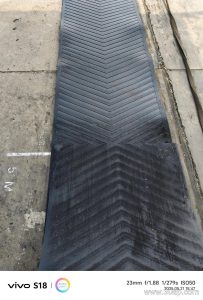
The same logic applies in a quarry conveyor, a cement plant, a power plant coal handling line, and a port ship loading conveyor. A heavy-duty mining conveyor carrying ore or rock benefits from robust training idlers because off-center loading from a crusher conveyor or transfer chute pushes the belt sideways. On lines using a steel cord conveyor belt or a high-strength EP conveyor belt, correct tracking also protects belt edges from rubbing against structure, which matters when the belt represents a significant part of the system cost.
Matching the Idler to Belt Width and Duty
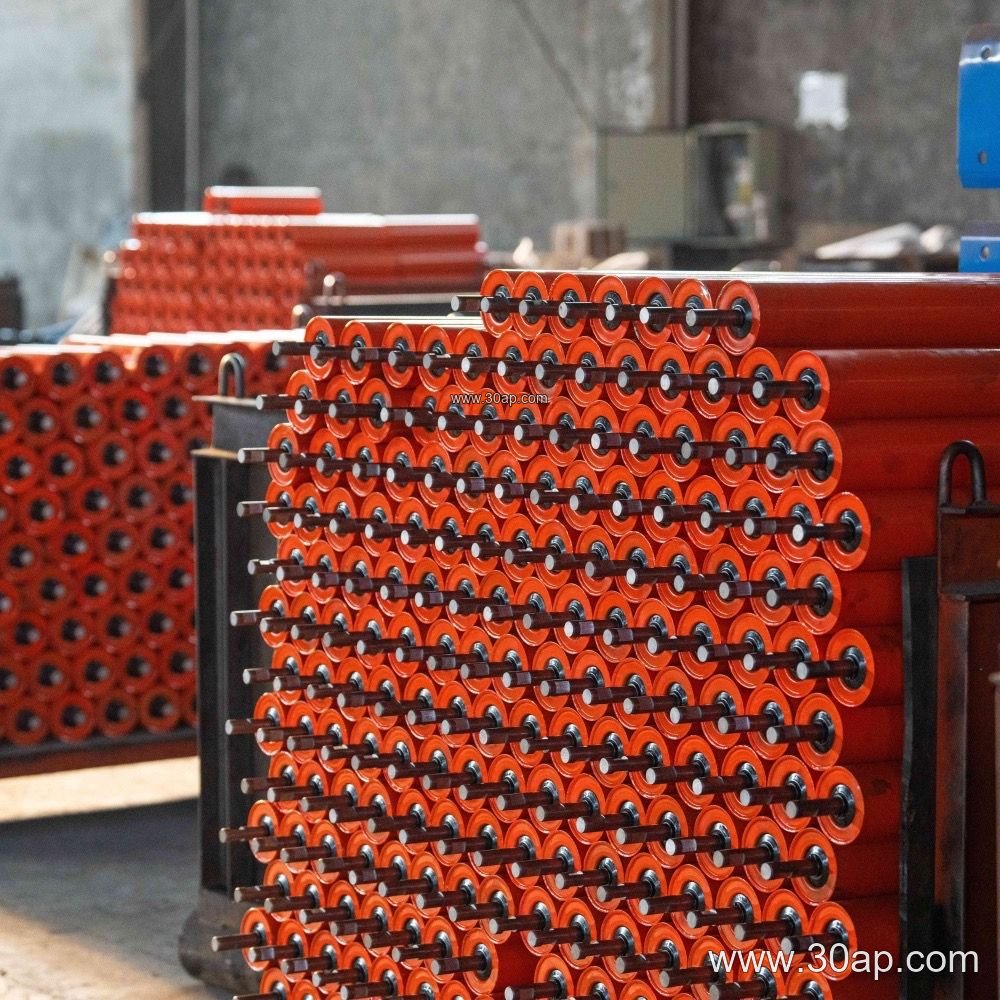
Roller length varies with belt width, trough angle, and roll arrangement. The table below gives common reference values for three-roll troughing sets; side rollers and center rollers may differ, and final dimensions should follow the conveyor design.
| Belt width | Typical roller length (three-roll troughing) | Common idler diameter range |
|---|---|---|
| B500 | about 200 mm | Ø63 to Ø89 mm |
| B650 | about 250 mm | Ø76 to Ø108 mm |
| B800 | about 315 mm | Ø89 to Ø127 mm |
| B1000 | about 380 mm | Ø108 to Ø133 mm |
| B1200 | about 465 mm | Ø108 to Ø159 mm |
| B1400 | about 530 mm | Ø127 to Ø159 mm |
| B1600 | about 600 mm | Ø133 to Ø178 mm |
| B1800 | about 670 mm | Ø133 to Ø194 mm |
| B2000 | about 750 mm | Ø159 to Ø219 mm |
These figures are examples, not fixed pairings. A 1200mm wide conveyor belt may use different roller diameters depending on load, speed, and frame design. Shaft diameter should be confirmed from the idler manufacturer’s drawing and the conveyor bracket interface, never assumed from belt width alone.
Buyer Checklist Before Ordering
- Confirm whether the unit is for the carrying side or return side, and whether a two-roll or three-roll arrangement is needed.
- State belt width, trough angle, and the required roller diameter, plus the mounting bracket dimensions.
- Describe the material being handled: coal, limestone, iron ore, aggregate, or cement clinker all impose different loads and abrasion levels.
- Ask about sealing and bearing protection if the conveyor operates in dust, moisture, or washdown conditions.
- Check that the training idler will not interfere with skirt rubber, belt cleaners, or transition idlers near the loading point.
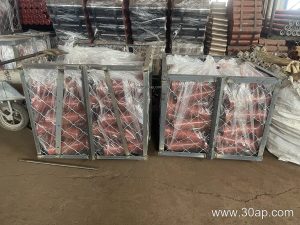
For a belt carrying abrasive rock, a rubber ring or ceramic-faced roller may last longer, while a standard steel shell is often adequate on cleaner bulk material. Buyers comparing quotes should also review the pivot mechanism and frame stiffness, since a loose or worn pivot reduces correcting action. More conveyor idler and roller details are available at our site, and our team can review your belt width and idler layout before shipment.
Installation and Maintenance Notes
Mount training idlers square to the belt centerline and check that the pivot moves freely before tensioning. A self-aligning idler cannot compensate for badly misaligned structure, damaged belt edges, or uneven loading, so those causes should be corrected first. During routine inspection, look for seized rollers, worn pivot pins, and material packed around the frame. Replacing a worn training idler early is usually cheaper than repairing a belt edge damaged by prolonged rubbing.