What a Friction-Type Self-Aligning Idler Does
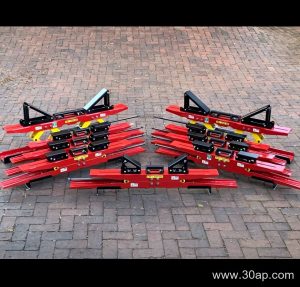
A friction-type self-aligning idler is a training idler that corrects conveyor belt misalignment by using the friction between the belt and a pivoted roller frame. When the belt drifts to one side, it contacts the idler at an angle, generating a friction force that swings the frame slightly so the idler steers the belt back toward the center. This automatic correction helps protect the belt edges, reduce spillage, and keep the conveyor running smoothly in demanding bulk handling operations such as quarry, cement plant, and power plant coal handling. Unlike a fixed troughed idler, the friction self-aligning design responds continuously to tracking errors without external power or sensors.
Construction and Key Components
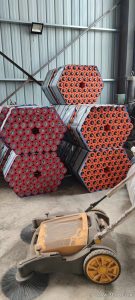
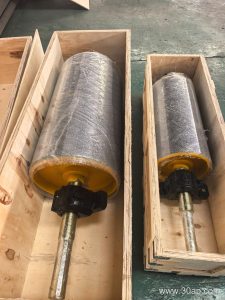
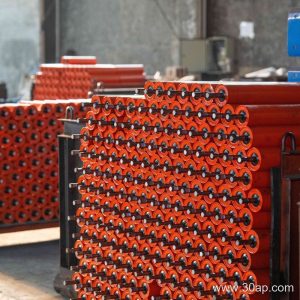
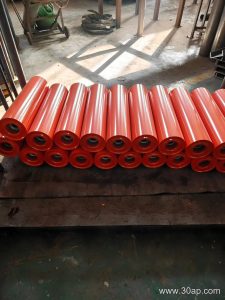
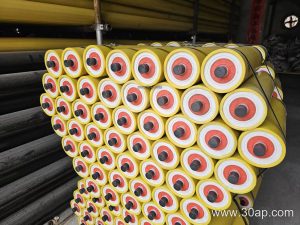
The assembly typically includes a sturdy pivot base, a rotating frame, and one or more idler rollers. The roller shell may be steel, nylon, ceramic, or rubber-covered depending on the duty. Common roller diameters for this type range from Ø89 mm to Ø159 mm, with bearing sizes such as 6205, 6305, or 6308 selected to match the load and speed. The frame pivots on a vertical shaft, and friction between the belt and the roller surface provides the self-steering action. A conveyor bracket connects the unit to the main conveyor structure. The idler length is matched to the belt width and trough angle; for example, a three-roll troughing set on a B800 belt often uses rolls around 315 mm long, while a B1200 set may use rolls near 465 mm. These are typical references, not fixed rules.
Where It Fits on the Conveyor
Friction self-aligning idlers are usually installed on the carrying side at intervals along the belt, especially after curves, transfer points, or long straight runs where drift is likely. They can also be used on the return side in a flat or V-return arrangement. In a coal mining conveyor or underground mining conveyor, proper tracking is critical to avoid belt damage and downtime. The idler works with the conveyor belt and conveyor pulley to maintain stable alignment. It is not a substitute for a drive pulley, tail pulley, or bend pulley; those components serve different functions in power transmission and direction change.
Typical Applications
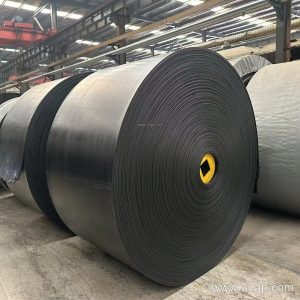
These idlers are common in aggregate conveyor lines, crusher conveyor sections, and cement plant raw material handling. They also suit iron ore and copper ore operations, port ship loading conveyors, and steel plant sinter lines. In dusty or wet conditions, the friction mechanism should be checked for build-up that could affect pivoting. For abrasive materials, a rubber-covered roller can improve grip and reduce wear. The idler is often used alongside a rubber conveyor belt or an EP conveyor belt, and in fire-risk areas a flame retardant conveyor belt may be specified. The self-aligning action helps extend belt life and reduce edge damage on heavy-duty conveyor belts.
Selection and Sizing Notes
Buyers should consider belt width, trough angle, roller diameter, bearing type, and the environment. Common trough angles are 20, 30, 35, and 45 degrees. Roller diameters from Ø63 mm to Ø219 mm are available for different conveyor sizes, but the final choice depends on load and belt speed. The table below shows typical reference values; actual dimensions are determined by the conveyor design.
| Parameter | Common Reference Range | Remarks |
|---|---|---|
| Belt width (B) | B500 to B2000 | Match idler length to belt width and trough angle |
| Roller diameter | Ø89, Ø108, Ø127, Ø133, Ø159 mm | Larger diameters for higher loads |
| Bearing | 6205, 6305, 6306, 6308 | Select based on load and speed |
| Trough angle | 20°, 30°, 35°, 45° | Affects material containment |
| Roll surface | Steel, nylon, rubber, ceramic | Rubber for better friction and wear resistance |
For a B1000 belt, a three-roll set might use rolls around 380 mm long, while a B1400 set could use 530 mm rolls. These examples are for guidance only. The friction self-aligning idler should be specified with the correct pivot clearance and mounting bracket for the conveyor structure.
Maintenance and Buyer Checklist
Regular inspection of the pivot mechanism and roller rotation is important. Dust and material build-up can hinder the self-aligning action, so cleaning around the frame is recommended. Check bearings for noise or play, and replace worn rollers promptly. When ordering, confirm the belt width, trough angle, roller diameter, bearing type, and mounting dimensions. Also consider the belt type in use, such as abrasion resistant conveyor belt, heat resistant conveyor belt, or oil resistant conveyor belt, because the idler friction surface should suit the belt cover. A friction-type self-aligning idler is a practical component for keeping a conveyor belt centered and reducing maintenance costs in mining, quarry, cement, and power plant applications.