What a Conveyor Parts Idler Does on the Line
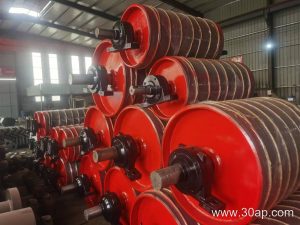
A conveyor parts idler is the rotating support that carries the belt and the load along the length of a conveyor. In a quarry, a coal washing plant, or a cement plant, these components keep the belt tracking smoothly and reduce friction between the belt and the structure. While the drive pulley, tail pulley, and bend pulley handle power transmission and direction changes, the idler is strictly a carrying or return element. Its role is simple but critical: support the belt, absorb impact, and guide the belt path without wearing the carcass.
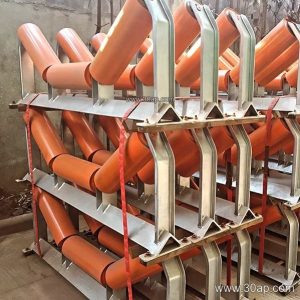
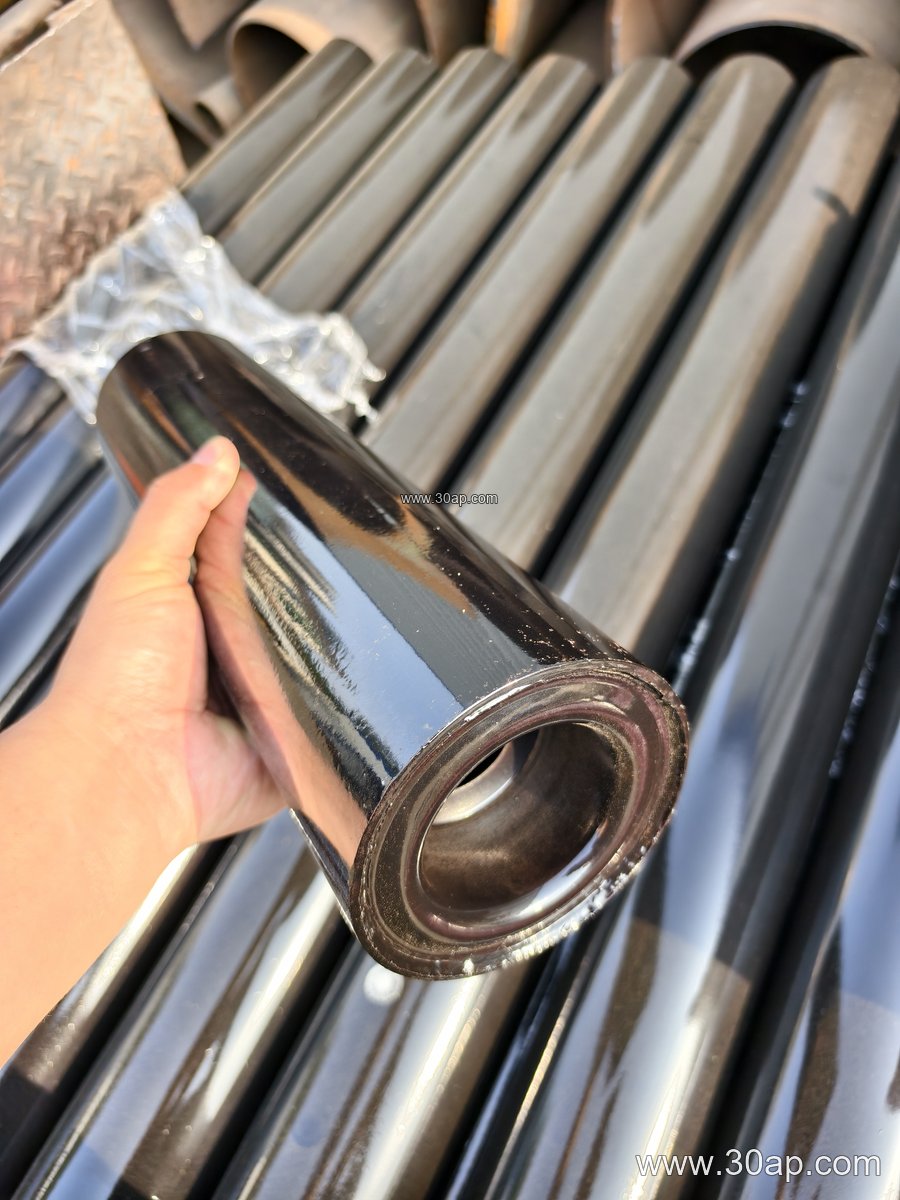
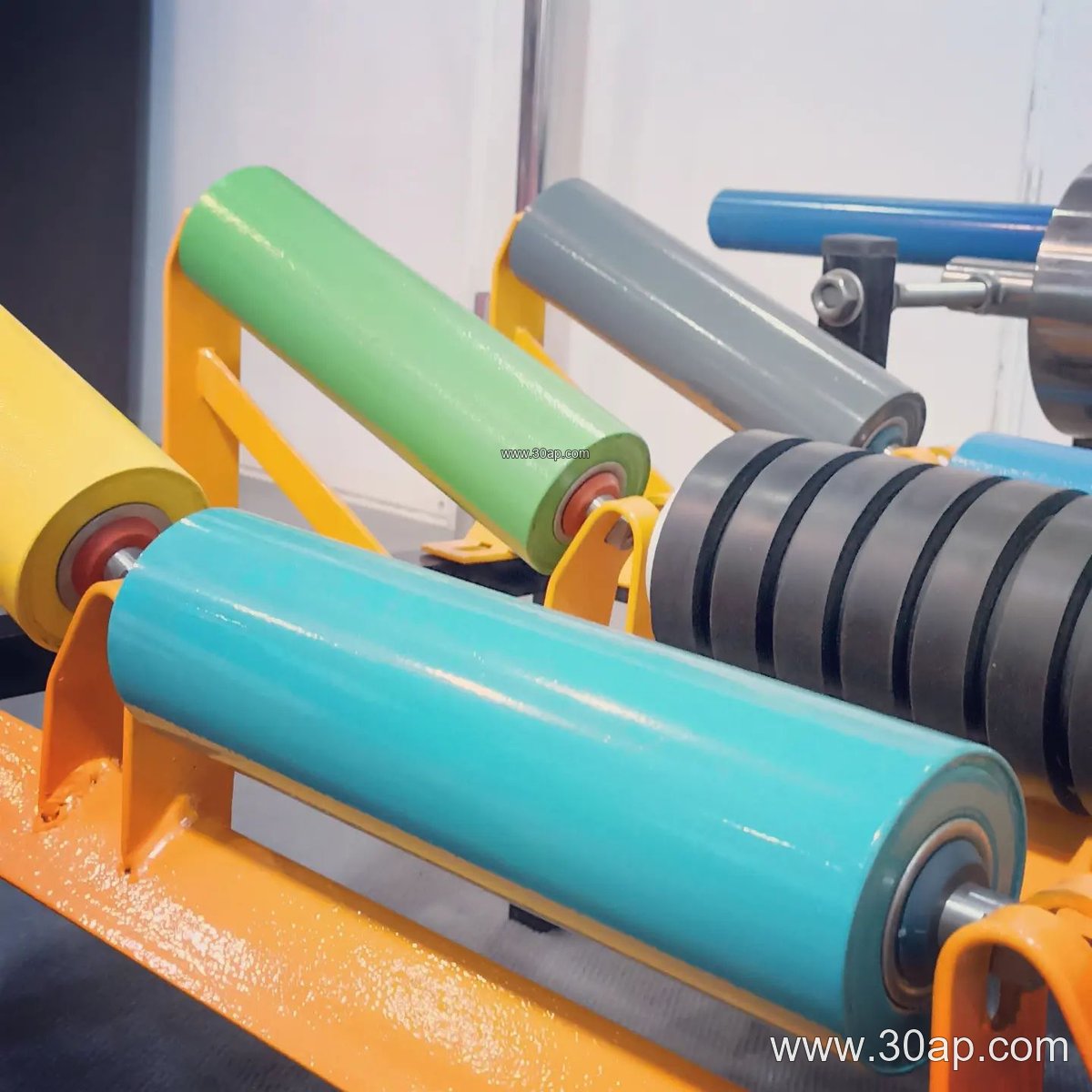
The idler roller assembly typically includes a steel shell, bearing housings, a shaft, and seals. The shell may be plain steel, nylon-coated, ceramic-lined, or fitted with rubber rings for cushioning. Bearing sizes such as 6204, 6205, 6305, 6306, 6308, and 6310 are common, but the correct match depends on the load and speed, not on belt width alone. A well-sealed bearing keeps dust out in stone crushing or sand making plants, where fine particles would otherwise shorten service life.
Common Idler Types and Where They Sit
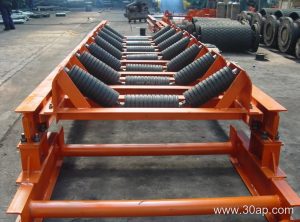
Troughing idlers, also called carrying idlers, are arranged in sets of two or three rolls to form a trough that holds bulk material on the belt. A three-roll troughing set is standard in many aggregate and ore conveying lines. Transition idlers sit between the troughing section and the head or tail pulley to ease the belt from a flat profile into a troughed one. Return idlers support the empty belt on the lower strand; flat return rollers and V-return rollers are both used, with the V shape helping to keep the belt centered.
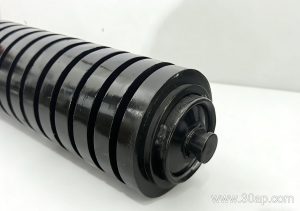
Impact idlers, often with rubber rings, are placed at loading points to absorb the force of falling rock or clinker. Self-aligning idlers, including friction and tapered types, correct belt misalignment on long runs. Spiral idlers help shed sticky material in fertilizer or recycling applications. Each subtype has a specific job, and none should be swapped for a drive or tail pulley.
Sizes, Angles, and Roll Dimensions
Idler selection often starts with belt width and trough angle. Common belt widths include B500, B650, B800, B1000, B1200, B1400, B1600, B1800, and B2000. Trough angles of 20, 30, 35, and 45 degrees are typical, with a slight forward tilt of about 1.5 to 2 degrees used on some self-aligning designs. Roll diameter choices range from Ø63 up to Ø219, depending on load and belt speed. Roll length varies with belt width, trough angle, and roll position—side rolls and center rolls can differ. For example, a three-roll troughing set at B800 might use a center roll around 315 mm, while at B1200 the center roll may be about 465 mm. These are common references, not fixed rules.
| Belt Width (B) | Typical Center Roll Length | Common Roll Diameter Range |
|---|---|---|
| B500 | 200 mm | Ø63–Ø89 |
| B650 | 250 mm | Ø76–Ø108 |
| B800 | 315 mm | Ø89–Ø133 |
| B1000 | 380 mm | Ø102–Ø159 |
| B1200 | 465 mm | Ø108–Ø178 |
| B1400 | 530 mm | Ø127–Ø194 |
| B1600 | 600 mm | Ø133–Ø219 |
| B1800 | 670 mm | Ø159–Ø219 |
| B2000 | 750 mm | Ø178–Ø219 |
Surface form matters too: plain steel rolls are common in dry, abrasive service, while rubber-disc rolls reduce impact and noise. Ceramic lagging on idlers is sometimes used where sticky material builds up. Bearings should be selected by load rating, not by belt width alone; a 6305 bearing may suit one B800 application and a 6308 another, depending on speed and load.
Buyer Checklist for Idler Components
- Confirm belt width, trough angle, and whether the set is two-roll or three-roll.
- Check the roll diameter and shaft size against the load and available bracket space.
- Match the seal type to the environment—dusty crushing circuits, wet wash plants, or hot clinker lines.
- Ask about bearing clearance and lubrication provisions for the intended speed.
- Verify that the idler frame and conveyor bracket align with the existing structure.
- Consider impact rolls with rubber rings at transfer points, and self-aligning rolls on long center distances.
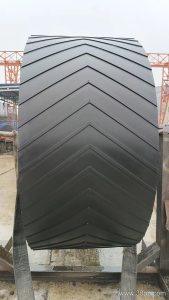
When specifying a conveyor parts idler, the belt itself matters. A heavy-duty mining conveyor belt or a steel cord conveyor belt may require larger roll diameters than a light aggregate belt. In cement plants, heat resistant conveyor belt grades call for idlers that tolerate warm shells. In coal mining, flame retardant conveyor belt and anti-static conveyor belt properties are important, and the idler seals should resist coal dust. For long overland runs, an EP conveyor belt or NN conveyor belt may pair with closely spaced idlers to control sag. The idler does not replace the pulley; it works alongside the drive pulley, tail pulley, and bend pulley to keep the whole system running.
Regular inspection of idler rotation, shell wear, and bearing noise prevents belt damage and unscheduled stops. Keep spare rolls for the most common sizes on site, and record the roll dimensions of each troughing set so replacements match the original design.